
🔍 Read the full analysis: Choosing Among 10 Desktop CPUs For AI, Gaming, And Daily Tasks In 2027 on ThorstenMeyerAI.com

Get games and gaming gear delivered free — and shop member deals
- Fast, free delivery on millions of items
- Access to Prime Big Deal Days deals on October 6–7
- Prime Video, Amazon Music and more included
TL;DR
ThorstenMeyerAI.com compares 10 desktop processors for gaming, everyday use, heavier multi-threaded work and lower-cost builds. It favors the Ryzen 7 9800X3D for gaming, while stressing that platform compatibility, cooling and the buyer’s software matter. The source does not provide 2027 pricing, benchmark results or evidence specific to AI workloads.
ThorstenMeyerAI.com has published a guide to 10 desktop processors for gaming, everyday tasks and demanding multi-threaded work, recommending the AMD Ryzen 7 9800X3D for gaming-led builds and the Ryzen 7 9700X as a more balanced modern choice. The recommendations are workload-based, not a set of verified 2027 performance rankings: the source supplies no benchmark data, prices or AI-specific test results.
The guide compares processors across different buyer needs rather than treating the highest core count as the best choice. It describes the 9800X3D as the gaming-first pick, the Ryzen 7 9700X as a broader AM5 option, and the Ryzen 5 9600X as a fit for gaming and everyday use where large parallel workloads are not the priority. Those judgments are the guide’s recommendations; no test figures are included to quantify performance differences.
For heavier multi-threaded work, the source points to the Ryzen 9 7900X and Intel Core Ultra 9 285K, noting that their additional cores are most useful when software can take advantage of them. The list also includes the Ryzen 7 7800X3D, Ryzen 7 5800X3D, Ryzen 5 5600 and Ryzen 5 5500. It does not provide model details for the tenth processor in the supplied material, so that pick cannot be identified or assessed here.
Cooling and platform costs are part of the comparison. The guide says the Ryzen 5 5600 and 5500 include Wraith Stealth coolers, while buyers should check the package contents for other models rather than assume a cooler is included. It also distinguishes newer AM5 processors from the older AM4 options, which may be useful for owners of compatible existing systems but offer a different upgrade path.
The 10 picks
- 1
 Intel Core Ultra 9 285K Desktop Processor, 24 Cores, Up to 5.7 GHzView on Amazon →
 - 2
 AMD Ryzen 7 9800X3D 8-Core, 16-Thread Desktop ProcessorView on Amazon →
 - 3
 AMD Ryzen 7 7800X3D 8-Core, 16-Thread Desktop ProcessorView on Amazon →
 - 4
 AMD Ryzen 7 5800X3D 8-Core, 16-Thread Desktop ProcessorView on Amazon →
 - 5
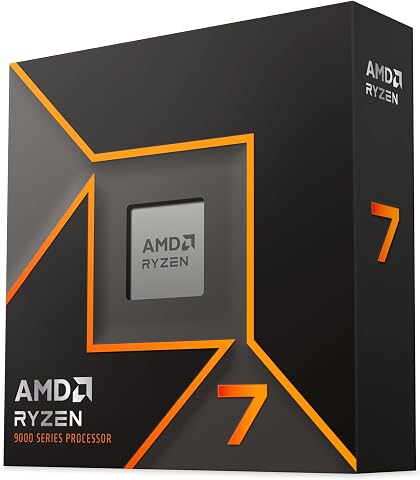 AMD Ryzen 7 9700X 8-Core, 16-Thread Unlocked Desktop ProcessorView on Amazon →
 - 6
 AMD Ryzen 9 7900X 12-Core, 24-Thread Unlocked Desktop ProcessorView on Amazon →
 - 7
 AMD Ryzen 7 5700X 8-Core, 16-Thread Unlocked Desktop ProcessorView on Amazon →
 - 8
 AMD Ryzen 5 9600X 6-Core, 12-Thread Unlocked Desktop ProcessorView on Amazon →
 - 9
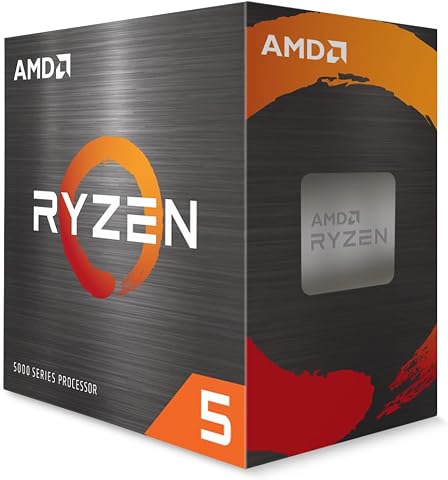 AMD Ryzen 5 5600 6-Core, 12-Thread Unlocked Desktop Processor with Wraith Ste…View on Amazon →
 - 10AMD Ryzen 5 5500 6-Core, 12-Thread Desktop Processor with Wraith Stealth CoolerView on Amazon →
Match the CPU to the Workload
The recommendations matter because a desktop processor affects more than application speed: it shapes the motherboard, memory, cooling and total build budget. A gaming-focused chip may be a better allocation of money for someone whose main task is playing games, while a buyer who regularly renders, encodes or compiles may benefit more from a processor whose cores suit that software.
The guide’s practical warning is against choosing by core count or product tier alone. Spending on unused parallel capacity can leave less budget for other parts, while an older AM4 chip may appear less costly but constrain later upgrades. For AI users, the list is not enough to establish which processor is best: AI performance depends on the specific model, workload and often other system components, and the source offers no comparative AI measurements.
AM4 and AM5 Shape the Build
The selection spans two AMD desktop platforms. The guide groups newer Ryzen choices such as the 9700X, 9600X and 9800X3D with AM5, while the 5600, 5500 and 5800X3D are AM4 options. They are not interchangeable motherboard choices. Anyone considering an upgrade should check the board maker’s supported-processor list and firmware requirements before buying.
The source also compares different processor design priorities: X3D models are presented as gaming-oriented, while higher-core-count parts are directed toward work that can use many threads. Its ranking reflects intended use, platform generation, cooler inclusion and likely build needs. It is not a controlled review covering measured gaming frame rates, productivity throughput, power use or value at a particular price.
“The Ryzen 7 9800X3D is the gaming-first pick in this group.”
— ThorstenMeyerAI.com
Pricing and Test Results Are Missing
The supplied guide does not give prices, release or publication dates, benchmark methods, or measured results. Without those details, readers cannot use it to compare performance per dollar or confirm how the processors perform in a particular game, application or AI workload. The title refers to 10 CPUs, but the source material provided names only nine, leaving the tenth selection unclear.
Cooling recommendations are also not accompanied by temperature, noise or power measurements. Package contents can vary, so the source advises checking the exact product listing. It is also unclear what the author means by AI use: no model size, inference or training task, software setup, or graphics-card configuration is specified.
Check the Full Parts List
Before choosing a processor, buyers should compare current local prices and confirm the motherboard socket, chipset and firmware support. They should also budget for memory and a suitable cooler, verify what the exact CPU package includes, and compare results from tests using their intended games or applications.
A more useful 2027 comparison would identify all 10 models and add dated pricing, repeatable gaming and productivity benchmarks, and clearly described AI workloads. Until that information is available, the guide is best read as workload-based buying advice, not a current performance ranking.
Key Questions
Which CPU does the guide recommend for gaming?
It names the AMD Ryzen 7 9800X3D as its gaming-first option. The supplied material does not include benchmarks to quantify that recommendation.
Which processors does it suggest for heavier multi-threaded work?
The guide points to the Ryzen 9 7900X and Intel Core Ultra 9 285K, while noting that extra cores help most when the software can use them.
Does the article establish which CPU is best for AI?
No. It mentions AI in its intended audience, but supplies no AI-specific benchmarks or workload details. Buyers should seek tests matching their AI software and system configuration.
Are the AM4 and AM5 processors compatible with the same motherboards?
No. The guide distinguishes the older AM4 platform from newer AM5 options. Check the motherboard maker’s CPU support information before purchasing or upgrading.
Does the source identify all 10 processors?
No. The supplied material names nine distinct processors; it does not identify the tenth pick.
Source: ThorstenMeyerAI.com
Fall Picks
fall essentials
As an affiliate, we earn on qualifying purchases.