
TL;DR

Play games on Amazon Luna for your game nights, included with Prime
- A rotating selection of games, no download needed
- Play on TV, laptop or phone
- Fast, free delivery for your gear, too
Some launchers work better on SteamOS because they fit Linux and Steam’s controller-first setup with fewer extra steps. The more a launcher depends on Windows-only services, awkward login windows, heavy background processes, or fragile Proton behavior, the more likely you are to see crashes, tiny text, broken overlays, or controller trouble.
A launcher can make SteamOS feel like a console or like a tiny desktop having a bad day.
You tap Play, hear the fan lift, watch a login box blink, and wonder why one game glides into its menu while another coughs up a browser window and forgets your controller.
This guide explains why some launchers work better than others on SteamOS, what Proton changes, and how you can choose the cleanest path before you waste an evening reinstalling files.
Why Some Launchers Work Better Than Others on SteamOS
Some launchers feel smooth on SteamOS because they fit Linux, Steam Input, Proton, cloud saves, and the controller-first shell with fewer extra steps. Others drag in Windows-only services, fragile login windows, heavy background helpers, and overlays that make a handheld feel like a tiny desktop having a bad day.
The best launcher is the one you barely notice.
If the game opens straight to a readable menu with working controls, the launcher stayed out of the way.
Steam Built-In
Store, install flow, overlay, Steam Input, cloud saves, and Proton selection already meet in one place.
Login & Update Layers
Blank browser panels, tiny text, focus issues, and account prompts often fail before the game itself gets a chance.
Steam
Use the built-in route first for Steam games.
Proton
Runs many Windows games through the Steam client on Linux.
4 Layers
DRM, browser login, patcher, and overlay can each add failure points.
1 Change
Adjust one setting at a time so the fix is traceable.
What decides whether a launcher feels console-clean or desktop-clumsy?
The closer a launcher sits to Linux, SteamOS, Steam Input, and Steam’s own compatibility review assumptions, the fewer translation layers you feel. The trouble starts when the launcher behaves less like a game and more like account software with a browser, updater, tray icon, and background service.
Linux-aware launchers reduce guesswork.
Native or Steam-aware software uses windowing, file paths, menus, and input behavior that SteamOS understands more directly.
Gaming Mode wants big targets.
Tiny password boxes, hidden cursors, and keyboard focus bugs are not raw performance problems. They are launcher UX mismatches.
Helpers can steal the first mile.
Patchers, overlays, DRM checks, and web views all start before the game menu, so one fragile helper can make the whole launch look broken.
Pick the route that matches your library, not your patience.
A Steam copy, a native Linux launcher, a Windows-only client, and a community library manager all solve different problems. The cleanest path is usually the one with the fewest account, update, and overlay layers between Play and the game menu.
| Launcher Path | Why It Can Work Well | Where It Trips | SteamOS Fit |
|---|---|---|---|
| Steam built-in | Tight SteamOS, Steam Input, cloud save, overlay, and Proton support. | Best when the game is already in Steam. | ✓ Cleanest default |
| Native Linux launcher | Runs without Windows translation for the launcher itself. | Native launchers are still less common than Windows launchers. | ✓ Strong fit |
| Proton or Wine launcher | Can run Windows-only store clients and installers. | Web logins, updaters, overlays, and Windows services may behave oddly. | ~ Variable |
| Community library manager | Can organize non-Steam games and simplify prefixes, stores, and installers. | Quality depends on the tool, install method, and individual game. | ~ Useful with care |
| Heavy account launcher | May be required for one specific game or entitlement check. | Extra DRM, browser panels, patchers, and helpers can fail first. | ✗ Most fragile |
Before reinstalling anything, isolate the weak link.
Most launcher problems become easier to read when you separate compatibility rating, Proton version, launch options, install path, and display mode. Change one variable, test, then move on.
Check Rating
Look at the exact Steam Deck or Steam Machine compatibility result before assuming the launcher is fine.
Use Default
Try Steam’s chosen Proton version first, because changing too early adds noise.
Change One
Adjust Proton, launch options, or install path separately so you know what helped.
Mode Test
Try Gaming Mode and Desktop Mode, especially for first-time login windows.
Watch Login
Blank browser panels, tiny text, or missing keyboard input usually mean the launcher is the weak link.
Proton helps most when the launcher behaves like a game.
Proton can run many Windows games on Linux through the Steam client, but it cannot make every launcher feel native. A game can render beautifully while its account client struggles with embedded browsers, focus, services, or overlays.
Launcher Friction Spectrum
The farther right a launcher sits, the more SteamOS must translate before the game even opens. That is where crashes, tiny text, broken overlays, and controller trouble tend to appear.
Steam works because it owns the handshake.
Store, install, controller layer, overlay, cloud saves, suspend-resume, and Proton choice live in the same shell. That makes the experience feel more like a console waking up than a PC session being assembled.
- 1Use Steam’s built-in path first for Steam games.
- 2Treat third-party launchers as account software, not just shortcuts.
- 3Keep logins, downloads, age gates, and updates clean before judging game performance.
- 4Remember that a Windows-only launcher can be the problem even when the game runs well.
From tapping Play to reaching the menu, each layer has to cooperate.
A smooth SteamOS launch is a chain of small agreements: platform fit, translation layer, account state, input focus, and game runtime. Break one link and the whole thing feels unreliable.
Key Takeaways
- Use Steam’s built-in path first for Steam games because SteamOS, Steam Input, cloud saves, overlays, and Proton selection already meet there.
- A Windows-only launcher can be the problem even when the game itself runs well through Proton.
- Check the exact platform and rating, because Steam Deck and Steam Machine compatibility results are separate.
- Change one setting at a time, especially Proton version, launch options, and Gaming Mode versus Desktop Mode.
- Treat third-party launchers as account software, not just shortcuts, and keep logins, downloads, and age ratings clean.
Steam Deck compatible game launchers
As an affiliate, we earn on qualifying purchases.
As an affiliate, we earn on qualifying purchases.
You Feel the Difference Before the Game Opens
Why Some Launchers Work Better Than Others on SteamOS comes down to fit: the closer a launcher sits to Linux, Steam Input, and the Steam client, the less friction you feel. A native or Steam-aware launcher opens like a clean door latch; a Windows-only launcher may rattle through Proton before the game even starts.
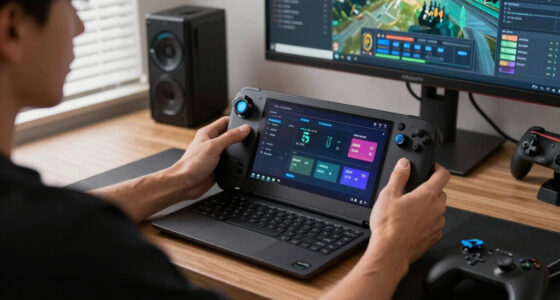
Think about a handheld night on the couch. One game opens straight into a main menu with big text, controller prompts, and cloud saves already awake. Another throws a tiny password box onto the Steam Deck’s 1280×800 screen, hides the cursor, then waits for you to poke the touchscreen.
That difference usually has little to do with raw power. It comes from compatibility surface area. Every extra browser panel, DRM check, updater, overlay, and background service adds another place where SteamOS has to guess what the launcher meant.
The best launcher on SteamOS is the one you barely notice.
Linux-friendly game launcher for SteamOS
As an affiliate, we earn on qualifying purchases.
As an affiliate, we earn on qualifying purchases.
Steam Feels Smoother Because It Owns the Whole Handshake
Steam’s launcher usually feels smoother on SteamOS because it controls the store, install flow, controller layer, overlay, cloud saves, and Proton selection from one place. Valve’s compatibility review checks launchers, controller support, and text input when deciding how a game appears on Steam Deck and Steam Machine [1].
That matters the moment you press the Steam button. You can suspend a game, resume it on the train, bring up the on-screen keyboard, remap a back button, or tweak a Proton version without leaving the same shell. It feels less like PC tinkering and more like a game system waking from sleep.
Valve’s ratings also show why launchers count. A game can be Playable if it works but needs manual help, such as touchscreen use for a launcher. A Verified game should get you to full game function without that kind of fuss [1].
Here is the plain version: Steam works well because SteamOS was built around Steam’s assumptions. Third-party launchers can still run well, but they have to meet SteamOS halfway.
As an affiliate, we earn on qualifying purchases.
Proton Helps Most When the Launcher Behaves Like a Game
Why Some Launchers Work Better Than Others on SteamOS gets obvious when Proton enters the path, because Proton can run many Windows games on Linux but cannot make every launcher act native. According to ValveSoftware’s Proton README, Proton uses Wine so Windows-only games can run through the Steam client on Linux [2].
Proton is like a fluent interpreter at a busy restaurant. If the game asks for normal menu items, the order arrives hot. If the launcher asks for a strange Windows service, an embedded browser login, three background helpers, and a tray icon, the interpreter has more chances to mishear something.
This is why a Windows game can run beautifully while its launcher feels sticky. The game may use graphics APIs that Proton handles well, while the launcher leans on web views, auto-updaters, or copy protection that expects Windows file paths and Windows services.
On Steam Deck running SteamOS 3.x, that may show up as a blank login window, a patcher that never finishes, or a controller that works in the game but not in the launcher. Same hardware. Different first mile.
SteamOS controller-friendly launcher
As an affiliate, we earn on qualifying purchases.
As an affiliate, we earn on qualifying purchases.
Pick the Launcher Path That Matches Your Game Library
The best launcher route depends on whether you need native Linux support, Proton, a Flatpak sandbox, or a wrapper made for non-Steam libraries. A native path tends to feel cleaner, while a Windows launcher inside Proton can feel like asking a doorman to relay every knock before the door opens.
| Launcher path | Why it can work well | Where it can trip you up | Good real-world use |
|---|---|---|---|
| Steam built-in | Tight SteamOS, Steam Input, cloud, overlay, and Proton support | Best when the game is already in Steam | You want a Steam Deck Verified or Playable title to start with one button |
| Native Linux launcher | Runs without Windows translation for the launcher itself | Native launchers are less common than Windows ones | You want clean menus, normal Linux file access, and fewer login surprises |
| Proton or Wine launcher | Can run Windows-only store clients and installers | Web logins, updaters, and overlays may behave oddly | You need a Windows-only launcher for one specific game |
| Community library manager | Can organize non-Steam games and simplify setup details | Quality depends on the tool, install method, and game | You manage several non-Steam titles and want one cleaner library view |
A practical example: if you only play a Steam copy of a strategy game, adding a second launcher creates clutter. If you play a DRM-free installer from another store, a community manager may save you from hand-editing prefixes and launch options at midnight.
Use This 5-Step Check Before You Reinstall Anything
Why Some Launchers Work Better Than Others on SteamOS also shows up in your own setup, because one bad toggle can make a decent launcher feel broken. Run a quick five-step check before you blame Proton, the Deck, or the launcher itself; it often saves you a full reinstall.
- Check the game page first. Look at the current Steam Deck rating on the exact platform you use, since Steam Deck and Steam Machine ratings are separate [1].
- Try the default Proton version. Steam often picks a working path, and changing versions too early can add noise.
- Switch only one thing at a time. Change Proton, launch options, or install path separately so you know what helped.
- Test in Gaming Mode and Desktop Mode. A launcher that works with a mouse may still fight the controller-first shell.
- Watch the login window. If the browser panel is blank, tiny, or missing keyboard input, the launcher is likely the weak link.
Imagine a racing game that fails after an account prompt. If Desktop Mode lets you complete the login once, Gaming Mode may work cleanly after that. Small fix. Big mood shift.
Updates Can Save a Launcher or Sour It Overnight
Launcher updates can fix SteamOS problems because they change the parts that SteamOS touches first: login windows, embedded browsers, patchers, overlays, and background services. The catch is that the same update can also break a working setup if it adds a Windows-only dependency or changes how the window grabs focus.
This is why forum reports can sound messy. One person says a launcher is perfect after Tuesday’s patch. Another says it now opens to a white rectangle. Both can be right if they use different Proton versions, different SteamOS builds, or different hardware.
Valve gives developers time to review compatibility results before those results become customer-visible, and ratings affect store presentation rather than whether the game exists on the store [1]. Still, treat performance claims with their platform attached. Steam Deck LCD on SteamOS 3.x is not the same test case as a desktop PC running a SteamOS-like distro.
If you see a rumor that a launcher will get native Linux support next month, treat it as unconfirmed until the developer posts a real Linux build or release note. Leaks make noisy campfire stories; release notes make repairs.
Treat Login Windows and Store Clients as Security Boundaries
Security and privacy matter on SteamOS because launchers ask for account logins, file access, cloud saves, overlays, and sometimes payment data. A launcher is not just a start button; it is a small airport terminal for your library, with gates, guards, signs, and baggage belts running behind the scenes.
- Download launchers from official sites or trusted package listings. Random helper scripts can hide more than a shortcut.
- Prefer open development when you have a choice. Public issue trackers and readable release notes make problems easier to verify.
- Keep two-factor login enabled. A handheld travels through coffee shops, trains, hotels, and friends’ couches.
- Check game ratings separately. Launchers do not replace ESRB, PEGI, IARC, or store-level age information for the games they open.
A simple scenario: you install a launcher for one mature-rated game, then hand your Steam Deck to a younger cousin for a platformer. Family settings and game age ratings still matter, even if the launcher itself looks like a harmless gray window.
Choose the Least Fancy Path That Starts the Game Cleanly
Your practical choice is simple: use Steam first for Steam games, use native Linux launchers when available, and use Proton-based paths when the game needs a Windows store client. For non-Steam games, community tools can help, but they work best when you treat each title as its own small setup.
That advice sounds plain because the best SteamOS setup usually is plain. Less background noise. Fewer update agents. Fewer tiny windows asking for a mouse you did not bring.
For a big single-player adventure in your Steam library, the cleanest path may be no extra launcher at all. For an older PC game from another store, the cleanest path may be a dedicated prefix with one tested Proton version and a shortcut added to Steam.
Restated in one sentence: the best launcher is the one that adds the fewest moving parts between Play and the main menu.
Frequently Asked Questions
Can you run Windows-only launchers on SteamOS?
Yes, you can often run Windows-only launchers on SteamOS through Proton or Wine, but the result varies by launcher and game. Proton is built to let Windows games run on Linux through Steam, but a store client with web login panels and background services may still need extra setup [2].
Why does a launcher work in Desktop Mode but fail in Gaming Mode?
Desktop Mode gives you a normal mouse-and-window setup, while Gaming Mode expects a controller-first flow. A launcher with tiny buttons, hidden pop-ups, or manual keyboard prompts may feel fine at a desk and clumsy on the couch.
Does Proton always reduce game performance on Steam Deck?
No. Proton does not automatically make a game slow, and many Windows games run well on Steam Deck with SteamOS 3.x. The launcher may still feel slow because it opens browser panels, patchers, or account services before the game reaches the part Proton handles best.
Are community launchers better than installing a Windows launcher directly?
They can be better when they simplify prefixes, shortcuts, artwork, and game-specific settings. They are not magic, so use official downloads, read recent issue reports, and test one game at a time before moving your whole library.
What sources back these SteamOS and Proton claims?
[1] Valve Steamworks Steam Deck and Steam Machine Compatibility Review: https://partner.steamgames.com/doc/steamhardware/compat. [2] ValveSoftware Proton README: https://github.com/ValveSoftware/Proton.Conclusion
If you remember one thing, remember this: SteamOS rewards launchers that stay simple, controller-friendly, and close to Linux or Steam’s own toolchain.
When a launcher opens quietly and drops you straight into the game, the handheld disappears in your hands. That is the feeling you are chasing: one press, one clean launch, and the glow of the menu instead of another login box.
Fall Picks
fall essentials
As an affiliate, we earn on qualifying purchases.