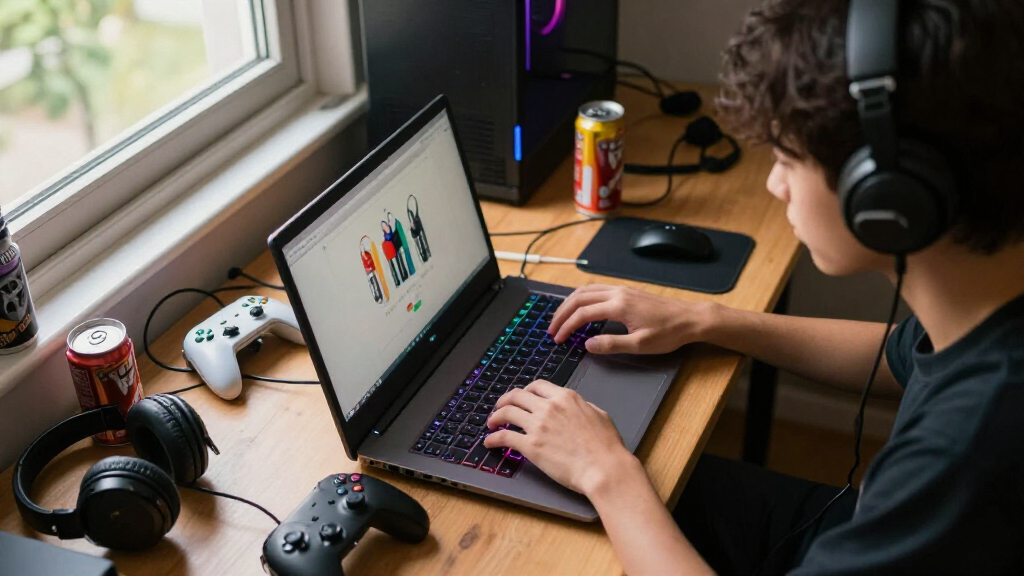

Finding the right gaming laptop as a student involves balancing performance, portability, and price. The best overall pick is the ASUS ROG Strix G16, thanks to its powerful specs and smooth display, but students with tighter budgets may prefer the NIMO 15.6″ IPS FHD Light Gaming Laptop for affordability. Larger screens like the NIAKUN 17.3″ are better for immersive gaming but are less portable for daily students. The main tradeoffs include choosing between raw power and portability or budget constraints versus future-proofing. Continue reading to see how these options compare and which one aligns best with your needs.
Complete the kit


Key Takeaways
- The top performers combine strong graphics cards with fast processors, essential for smooth gaming experiences.
- Portability varies significantly; larger screens tend to be heavier and less convenient for students on the go.
- Price differences reflect hardware quality and features; mid-range options often balance cost and performance effectively.
- RAM and storage configurations influence multitasking and game load times, key factors for student gamers.
- Build quality and battery life are often overlooked but impact daily usability for students carrying their laptops everywhere.
| Gaming Laptop 2026 with Windows 11 Pro, 16GB RAM, 512GB SSD |  | Best for Portability and Everyday Use | Processor: Intel Core i7-7600U up to 3.9GHz | RAM: 16GB DDR3 SDRAM | Storage: 512GB SSD | VIEW LATEST PRICE | See Our Full Breakdown |
| Gaming Laptop 2026 with Windows 11 Pro, 16GB RAM, 1TB SSD | | Best for Storage and Slightly Better Performance | Processor: Intel Core i7-7600U up to 3.9GHz | RAM: 16GB | Storage: 1TB SSD | VIEW LATEST PRICE | See Our Full Breakdown |
| 2026 New Laptop Computer with Intel Twin Lake N150 Processor, 16GB RAM, 512GB SSD, 15.6″ FHD Display, Windows 11 |  | Best for Versatility and Modern Connectivity | Processor: Intel Twin Lake N150 | RAM: 16GB DDR4 | Storage: 512GB NVMe SSD | VIEW LATEST PRICE | See Our Full Breakdown |
| ASUS ROG Strix G16 (2025) Gaming Laptop, 16” FHD+ 165Hz, NVIDIA GeForce RTX 5060, Intel Core i7 14650HX, 16GB DDR5, 1TB SSD, Wi-Fi 7, Windows 11 Home |  | Best for Serious Gamers and Power Users | Display: 16-inch FHD+ 165Hz | Processor: Intel Core i7 14650HX | Graphics: NVIDIA GeForce RTX 5060 | VIEW LATEST PRICE | See Our Full Breakdown |
| Gaming Laptop with AMD Ryzen 7 H255, 24GB DDR5, 512GB NVMe SSD |  | Best for Heavy Multitasking and Versatile Gaming | Processor: AMD Ryzen 7 H255 | Graphics: Radeon 780M | Memory: 24GB DDR5 | VIEW LATEST PRICE | See Our Full Breakdown |
| Acer Nitro V 16S AI Gaming Laptop (ANV16S-41-R2AJ) |  | Best Overall for Portability and AI-Enhanced Performance | Processor: AMD Ryzen 7 2600 | GPU: NVIDIA GeForce RTX 5060 Laptop GPU (572 AI TOPS) | Display: 16″ WUXGA IPS, 1920 x 1200, 180Hz, 100% sRGB | VIEW LATEST PRICE | See Our Full Breakdown |
| Gaming Laptop with 16GB RAM, 512GB SSD, 16-inch IPS FHD Display, Intel Core i5 |  | Best for Balanced Daily Gaming and Schoolwork | Processor: Intel Core i5 up to 3.60 GHz | Display: 16-inch IPS FHD, 1920×1200 | RAM: 16GB DDR3 | VIEW LATEST PRICE | See Our Full Breakdown |
| Light Gaming Laptop with AMD Ryzen 7430U, 16GB RAM, 512GB SSD |  | Best for Portability and Everyday Gaming | Processor: AMD Ryzen 7430U (up to 4.3GHz) | Graphics: Integrated AMD Radeon | Display: Full HD (FHD) | VIEW LATEST PRICE | See Our Full Breakdown |
| NIMO 15.6″ IPS FHD Light Gaming Laptop with AMD Ryzen 5 6600H, 16GB DDR5 RAM, 512GB SSD, Backlit Keyboard, Fingerprint Sensor |  | Best for High-Performance Multitasking and Security | Processor: AMD Ryzen 5 6600H (up to 4.5GHz) | Graphics: AMD Radeon 660M (integrated) | Display: 15.6″ FHD IPS | VIEW LATEST PRICE | See Our Full Breakdown |
| Gaming Laptop with Core Processor, 16GB RAM, 512GB SSD, 15.6 Inch FHD Display |  | Best for General Purpose Gaming and School Tasks | Processor: Core up to 3.40 GHz | Display: 15.6″ FHD anti-glare | RAM: 16GB | VIEW LATEST PRICE | See Our Full Breakdown |
| NIMO 15.6″ AI Creator Laptop – AMD Ryzen 5 6600H, 16GB DDR5 RAM, 512GB PCIe SSD, FHD IPS Display |  | Best Overall for Versatile Student Use | Display: 15.6″ FHD IPS 1920×1080 | Processor: AMD Ryzen 5 6600H (6 cores, up to 4.5GHz) | Graphics: AMD Radeon 660M (integrated) | VIEW LATEST PRICE | See Our Full Breakdown |
| NIAKUN 17.3″ Gaming Laptop, 16GB RAM, 512GB SSD, Intel Core i5-7Y57 |  | Best for Large Screen Entertainment and Casual Gaming | Screen Size: 17.3 inches | Resolution: 1920 x 1080 (Full HD) | Processor: Intel Core i5-7Y57 (up to 3.2 GHz) | VIEW LATEST PRICE | See Our Full Breakdown |
| gaming laptops for student | Processor | Storage | Display | RAM |
|---|---|---|---|---|
| Gaming Laptop 2026 with Window | Intel Core i7-7600U up to 3.9GHz | 512GB SSD | 15.6-inch Full HD (1920 x 1080) | 16GB DDR3 SDRAM |
| Gaming Laptop 2026 with Window | Intel Core i7-7600U up to 3.9GHz | 1TB SSD | 15.6-inch Full HD (1920 x 1080) | 16GB |
| 2026 New Laptop Computer with | Intel Twin Lake N150 | 512GB NVMe SSD | 15.6" FHD (1920×1080) | 16GB DDR4 |
| ASUS ROG Strix G16 | Intel Core i7 14650HX | 1TB PCIe Gen 4 SSD | 16-inch FHD+ 165Hz | — |
| Gaming Laptop with AMD Ryzen 7 | AMD Ryzen 7 H255 | 512GB NVMe SSD | 16-inch IPS, 1920×1200 | — |
| Acer Nitro V 16S AI Gaming Lap | AMD Ryzen 7 2600 | 1TB PCIe Gen 4 SSD | 16" WUXGA IPS, 1920 x 1200, 180Hz, 100% sRGB | 32GB DDR5 5600MHz |
| Gaming Laptop with 16GB RAM | Intel Core i5 up to 3.60 GHz | 512GB SSD | 16-inch IPS FHD, 1920×1200 | 16GB DDR3 |
| Light Gaming Laptop with AMD R | AMD Ryzen 7430U (up to 4.3GHz) | 512GB SSD | Full HD (FHD) | 16GB DDR4 |
| NIMO 15.6" IPS FHD Light Gamin | AMD Ryzen 5 6600H (up to 4.5GHz) | 512GB SSD | 15.6" FHD IPS | 16GB DDR5 |
| Gaming Laptop with Core Proces | Core up to 3.40 GHz | 512GB SSD | 15.6" FHD anti-glare | 16GB |
| NIMO 15.6" AI Creator Laptop | AMD Ryzen 5 6600H (6 cores, up to 4.5GHz) | 512GB PCIe SSD (upgradeable to 4TB) | 15.6" FHD IPS 1920×1080 | 16GB DDR5 (upgradeable to 64GB) |
| NIAKUN 17.3" Gaming Laptop | Intel Core i5-7Y57 (up to 3.2 GHz) | 512 GB SSD | — | 16 GB |
More Details on Our Top Picks
Gaming Laptop 2026 with Windows 11 Pro, 16GB RAM, 512GB SSD
This model stands out for its lightweight design and versatile performance, making it a solid choice for students who want a gaming-capable laptop that’s easy to carry between classes and coffee shops. Compared with the ASUS ROG Strix G16, it offers a more portable form factor but sacrifices high-end gaming graphics, as it relies on integrated Intel HD Graphics 620. Its older 7th-gen processor limits raw power for demanding tasks, but the 16GB RAM and SSD provide smooth multitasking and quick load times. The 15.6-inch Full HD display is adequate for gaming and work, while the backlit keyboard enhances usability in dim environments. This pick makes the most sense for students needing a lightweight device for casual gaming, schoolwork, and media consumption, but not for high-end gaming or intensive creative tasks.
Pros:- Lightweight and portable at just 3.5 lbs
- Fast 512GB SSD for quick system boot and data access
- Backlit keyboard for comfortable typing in low light
Cons:- Processor is from 7th generation, limiting performance compared to newer CPUs
- Integrated graphics restrict high-end gaming capabilities
Best for: Students who prioritize portability, battery life, and casual gaming on a budget
Not ideal for: Hardcore gamers or students requiring high-end graphics performance for AAA titles
- Processor:Intel Core i7-7600U up to 3.9GHz
- RAM:16GB DDR3 SDRAM
- Storage:512GB SSD
- Display:15.6-inch Full HD (1920 x 1080)
- Graphics:Intel HD Graphics 620
- Weight:3.5 lbs
Our verdict“A well-rounded option for students seeking a portable, everyday laptop with casual gaming potential.”
Gaming Laptop 2026 with Windows 11 Pro, 16GB RAM, 1TB SSD
This model offers a significant upgrade in storage capacity with a 1TB SSD, making it ideal for students who need space for large files, projects, or games. Its Intel Core i7 processor provides more current performance than the older 7th-gen chip in the previous model, though it still isn’t the latest high-end CPU for gaming. The 16GB RAM and full HD display ensure smooth multitasking and clear visuals, similar to the other 15.6-inch options. However, it lacks mention of dedicated gaming graphics, which means it’s better suited for casual gaming and productivity rather than demanding titles. Its portable, lightweight design makes it easy to carry but doesn’t include dedicated graphics, so students should consider their gaming needs carefully. This laptop makes the most sense for students who want ample storage and reliable multitasking without needing top-tier gaming power.
Pros:- Large 1TB SSD for extensive storage
- Powerful enough for multitasking and casual gaming
- Lightweight and portable at 3.5 lbs
Cons:- Processor is somewhat outdated for the latest gaming titles
- No dedicated graphics card mentioned, limiting high-end gaming
Best for: Students who need plenty of storage for games and multimedia without high-end graphics demands
Not ideal for: Students aiming for high-performance gaming or intensive creative work involving advanced graphics
- Processor:Intel Core i7-7600U up to 3.9GHz
- RAM:16GB
- Storage:1TB SSD
- Display:15.6-inch Full HD (1920 x 1080)
- Battery:5000mAh (38.5Wh)
- Weight:3.5 lbs
Our verdict“A practical choice for students who prioritize storage and general performance over top-tier gaming graphics.”
2026 New Laptop Computer with Intel Twin Lake N150 Processor, 16GB RAM, 512GB SSD, 15.6″ FHD Display, Windows 11
This laptop introduces a newer Intel Twin Lake N150 processor paired with 16GB DDR4 RAM, offering efficient multitasking and solid performance for students balancing work and play. The 15.6-inch FHD display provides immersive visuals, and the inclusion of multiple ports and Wi-Fi 6 supports versatile connectivity. Its AMD Radeon RX Vega 8 graphics handle casual gaming and multimedia tasks reasonably well, especially compared to non-dedicated graphics options. Its light weight and long battery life make it suitable for on-the-go use, although details on actual battery longevity are limited. The absence of a dedicated high-end GPU means it’s less suited for demanding gaming, but it strikes a good balance for students who need a responsive, modern machine for daily tasks and light gaming. This model is ideal for students seeking a contemporary, well-connected device for multitasking and multimedia consumption.
Pros:- Powerful Intel N150 processor with efficient multitasking
- Bright 15.6-inch Full HD display
- Modern Wi-Fi 6 and Bluetooth 5.0 connectivity
Cons:- Limited details on actual battery life duration
- No dedicated gaming graphics card for demanding titles
Best for: Students who want a modern, portable laptop with good multitasking and multimedia capabilities
Not ideal for: Students requiring high-end gaming or intensive creative workflows involving advanced graphics
- Processor:Intel Twin Lake N150
- RAM:16GB DDR4
- Storage:512GB NVMe SSD
- Display:15.6″ FHD (1920×1080)
- Graphics:AMD Radeon RX Vega 8
- Weight:1.6 kg
Our verdict“A flexible, modern laptop well-suited for students who prioritize portability and connectivity for daily multitasking.”
ASUS ROG Strix G16 (2025) Gaming Laptop, 16” FHD+ 165Hz, NVIDIA GeForce RTX 5060, Intel Core i7 14650HX, 16GB DDR5, 1TB SSD, Wi-Fi 7, Windows 11 Home
The ASUS ROG Strix G16 (2025) is a premium gaming machine that excels in performance and visuals, making it ideal for students who want a device capable of handling demanding games and multitasking. Its 16-inch FHD+ display with a 165Hz refresh rate offers smooth visuals, especially during fast-paced gaming. The powerful Intel Core i7 14650HX processor paired with the NVIDIA GeForce RTX 5060 GPU ensures high frame rates and graphics fidelity. The 16GB DDR5 RAM and 1TB PCIe Gen 4 SSD deliver quick load times and ample storage. While its size and weight lean toward portability’s sacrifice, the performance gains are notable. The premium price reflects its high-end components, but for serious gamers or students involved in creative work, this offers a compelling blend of power and efficiency. It’s less suitable for students who need a lightweight, budget-friendly device for casual use.
Pros:- High-performance Intel Core i7 14650HX and RTX 5060 GPU
- Fast 165Hz display perfect for gaming
- Large 1TB SSD for extensive storage
Cons:- Heavy and bulky for portability
- Premium price point may be prohibitive for some students
Best for: Students who need a high-performance gaming and multitasking machine for demanding titles and creative workflows
Not ideal for: Students looking for a lightweight or budget-friendly laptop primarily for schoolwork
- Display:16-inch FHD+ 165Hz
- Processor:Intel Core i7 14650HX
- Graphics:NVIDIA GeForce RTX 5060
- Memory:16GB DDR5
- Storage:1TB PCIe Gen 4 SSD
- Connectivity:Wi-Fi 7
Our verdict“A top-tier gaming laptop suited for students who demand high-end performance and are willing to carry extra weight and pay a premium.”
Gaming Laptop with AMD Ryzen 7 H255, 24GB DDR5, 512GB NVMe SSD
This AMD Ryzen 7 H255-based machine emphasizes high memory capacity, with 24GB DDR5 RAM that benefits students juggling multiple applications or demanding multitasking. The Radeon 780M graphics, while not dedicated, handle casual gaming and multimedia tasks effectively. The 16-inch IPS display with 1920×1200 resolution offers a wider aspect ratio and immersive visuals. Its lightweight all-metal chassis supports students on the move, and the 512GB SSD provides quick load times—though storage might soon require expansion for large game libraries. The absence of a dedicated high-end GPU limits performance in the most demanding titles, but it still offers solid multitasking and gaming capabilities. This model appeals to students who need a balanced, portable device with a focus on multitasking and general gaming, rather than hardcore AAA gaming.
Pros:- High-speed 24GB DDR5 RAM enhances multitasking
- Powerful AMD Ryzen 7 H255 CPU with high boost clock
- Lightweight all-metal chassis for portability
Cons:- 512GB storage may fill quickly, requiring expansion
- Limited details on battery life, which may vary
Best for: Students seeking a high-performance, portable machine for multitasking and casual gaming
Not ideal for: Students requiring a dedicated high-end GPU for AAA titles or intensive creative work
- Processor:AMD Ryzen 7 H255
- Graphics:Radeon 780M
- Memory:24GB DDR5
- Storage:512GB NVMe SSD
- Display:16-inch IPS, 1920×1200
- Ports:2x Type-C, HDMI 2.0, USB 3.2, TF card, 3.5mm
Our verdict“A versatile, high-capacity laptop suited for students who prioritize multitasking and casual gaming in a portable form.”
Acer Nitro V 16S AI Gaming Laptop (ANV16S-41-R2AJ)
This model stands out for combining a sleek, lightweight design with high-end GPU power, making it ideal for students who need a portable yet capable gaming machine. Its AMD Ryzen 7 2600 processor ensures robust multitasking, while the NVIDIA GeForce RTX 5060 with 572 AI TOPS delivers impressive ray tracing and AI-driven enhancements. The 16-inch IPS display with 180Hz refresh rate and 100% sRGB coverage guarantees smooth gameplay and vibrant visuals. Compared to bulkier options like the Gaming Laptop with Core Processor, this model sacrifices some raw CPU power for portability. A key tradeoff is the limited display resolution (1920×1200), which prevents QHD clarity, and RAM maxes out at 32GB, offering no upgrade path. This pick makes the most sense for students seeking a balanced blend of performance and mobility without sacrificing gaming quality.
Pros:- High-end RTX 5060 GPU with strong AI and ray tracing capabilities
- Fast 180Hz display with full sRGB coverage for smooth, vibrant visuals
- Slim chassis with quad-intake cooling for reliable performance on the go
Cons:- RAM is capped at 32GB, limiting future upgrades
- Display resolution is limited to 1920×1200, no QHD option
Best for: Students who want high performance in a slim, portable package for gaming and multitasking.
Not ideal for: Heavy multitaskers or content creators who need extensive RAM upgrade options or higher display resolutions.
- Processor:AMD Ryzen 7 2600
- GPU:NVIDIA GeForce RTX 5060 Laptop GPU (572 AI TOPS)
- Display:16″ WUXGA IPS, 1920 x 1200, 180Hz, 100% sRGB
- RAM:32GB DDR5 5600MHz
- Storage:1TB PCIe Gen 4 SSD
- Cooling:Quad-intake
Our verdict“This is a well-rounded choice for students prioritizing portability and decent gaming performance without needing the absolute highest CPU power.”
Gaming Laptop with 16GB RAM, 512GB SSD, 16-inch IPS FHD Display, Intel Core i5
This laptop makes a solid choice for students who need reliable performance for both gaming and everyday tasks. Its Intel Core i5 up to 3.60 GHz processor is sufficient for most modern games and multitasking, especially when compared with the Light Gaming Laptop with AMD Ryzen 7430U, which offers better CPU speed but less gaming focus. The 16GB DDR3 RAM and 512GB SSD ensure smooth multitasking and fast load times, though the DDR3 memory is older and less future-proof than DDR5 options. The 16-inch FHD IPS display provides clear visuals, but it lacks the refresh rates of gaming-optimized screens. The lightweight build and backlit keyboard make it convenient for students on the move. The main tradeoff is the lack of a dedicated GPU, which limits high-end gaming potential. This model is ideal for students who want dependable performance without the need for top-tier graphics or very high resolutions.
Pros:- Reliable Core i5 processor suitable for gaming and multitasking
- Bright 16-inch IPS FHD display with anti-glare coating
- Backlit keyboard and multiple ports for connectivity
Cons:- Older DDR3 RAM limits upgrade potential and future-proofing
- No dedicated graphics card restricts high-end gaming
Best for: Students seeking a versatile laptop that handles gaming and schoolwork reliably in a portable form.
Not ideal for: Gamers aiming for maximum graphical fidelity or those interested in competitive eSports with high refresh rates.
- Processor:Intel Core i5 up to 3.60 GHz
- Display:16-inch IPS FHD, 1920×1200
- RAM:16GB DDR3
- Storage:512GB SSD
- Graphics:Integrated
- Dimensions:14.1″ x 9.6″ x 3″
Our verdict“This is a good all-around choice for students who prioritize dependable performance with portability and moderate gaming needs.”
Light Gaming Laptop with AMD Ryzen 7430U, 16GB RAM, 512GB SSD
This lightweight option appeals to students who need a portable machine capable of handling light gaming and daily tasks. Its AMD Ryzen 7430U processor, with up to 4.3GHz, provides quick performance for multitasking and media consumption. The integrated AMD Radeon graphics are suitable for casual gaming but fall short for demanding titles compared to dedicated GPUs like the RTX 5060 in the Acer Nitro V. The 16GB DDR4 RAM and 512GB SSD support smooth multitasking and rapid load times, making it a practical choice for students on the move. The full HD display offers decent visuals, but the absence of a dedicated GPU limits gaming at higher settings. Connectivity options are plentiful, including WiFi 6 and Bluetooth 5.2, enhancing versatility. The main tradeoff is the limited graphics power, which keeps this model from handling recent AAA games at high settings. It’s best suited for students who prioritize lightweight design and casual gaming.
Pros:- Powerful AMD Ryzen 7430U processor with high clock speed
- Lightweight and portable design for easy transport
- Rich connectivity options including WiFi 6 and Bluetooth 5.2
Cons:- Integrated Radeon graphics limit gaming performance at high settings
- 512GB storage may be small for large game libraries or media files
Best for: Students who want a portable, capable laptop for light gaming, media, and schoolwork.
Not ideal for: Hardcore gamers or those seeking high-end graphics for demanding titles.
- Processor:AMD Ryzen 7430U (up to 4.3GHz)
- Graphics:Integrated AMD Radeon
- Display:Full HD (FHD)
- RAM:16GB DDR4
- Storage:512GB SSD
- Connectivity:WiFi 6, Bluetooth 5.2
Our verdict“This lightweight machine is perfect for students needing mobility and casual gaming capability without high-end graphics demands.”
NIMO 15.6″ IPS FHD Light Gaming Laptop with AMD Ryzen 5 6600H, 16GB DDR5 RAM, 512GB SSD, Backlit Keyboard, Fingerprint Sensor
The NIMO 15.6-inch model offers a compelling mix of performance and security features, making it appealing for students who need more than just gaming. Its AMD Ryzen 5 6600H with up to 4.5GHz supports demanding applications, and the 16GB DDR5 RAM ensures fast multitasking. Compared to the Light Gaming Laptop with AMD Ryzen 7430U, this model’s CPU is better suited for heavier workloads and gaming at modest settings. The 15.6″ FHD IPS display provides immersive visuals, while the fingerprint sensor and backlit keyboard add convenience and security. The 512GB SSD supports quick load times but might fill up quickly with large files or games. The main tradeoff is its reliance on integrated Radeon graphics, which aren’t ideal for high-end gaming. This is perfect for students balancing gaming, content creation, and security needs in a portable device.
Pros:- Powerful AMD Ryzen 5 6600H CPU for demanding tasks
- High-speed DDR5 RAM and fast SSD storage
- Security features like fingerprint sensor and backlit keyboard
Cons:- Limited to integrated Radeon 660M graphics, not dedicated GPU
- Battery life may suffer under heavy gaming or multitasking loads
Best for: Students who want a high-performance, secure laptop capable of gaming, productivity, and multitasking.
Not ideal for: Gamers seeking dedicated GPU power or students who need extensive upgrade options.
- Processor:AMD Ryzen 5 6600H (up to 4.5GHz)
- Graphics:AMD Radeon 660M (integrated)
- Display:15.6″ FHD IPS
- RAM:16GB DDR5
- Storage:512GB SSD
- Security:Fingerprint sensor
Our verdict“This laptop suits students who need a capable, secure device that handles gaming and productivity well without high-end graphics.”
Gaming Laptop with Core Processor, 16GB RAM, 512GB SSD, 15.6 Inch FHD Display
This model offers a straightforward approach, combining a decent Core processor with sufficient RAM and storage, making it suitable for students who need a dependable machine for both gaming and daily schoolwork. Its Core processor up to 3.40GHz provides reliable performance, especially when compared with the Gaming Laptop with Intel Core i5 which has a similar clock speed but may differ in core count and overall efficiency. The 16GB RAM and 512GB SSD ensure smooth multitasking and quick data access. The 15.6″ FHD anti-glare display provides clear visuals for long study or gaming sessions. The main limitation is the absence of a dedicated graphics card, which restricts gameplay on more demanding titles. The battery capacity is modest, and details on upgrade options are limited. This is an ideal choice for students seeking a balanced, affordable gaming laptop for casual use.
Pros:- Reliable Core processor suitable for multitasking and gaming
- Bright 15.6-inch anti-glare FHD display
- Decent 16GB RAM and 512GB SSD for performance and storage
Cons:- No dedicated GPU limits gaming performance at high settings
- Limited information on battery life and upgrade options
Best for: Students who want a reliable, affordable gaming laptop for school and casual gaming without high-end graphics demands.
Not ideal for: Hardcore gamers or those requiring high refresh rate screens for competitive play.
- Processor:Core up to 3.40 GHz
- Display:15.6″ FHD anti-glare
- RAM:16GB
- Storage:512GB SSD
- Graphics:Integrated
Our verdict“This is a balanced, budget-friendly option for students who want a dependable machine for casual gaming and schoolwork.”
NIMO 15.6″ AI Creator Laptop – AMD Ryzen 5 6600H, 16GB DDR5 RAM, 512GB PCIe SSD, FHD IPS Display
The NIMO 15.6″ AI Creator Laptop stands out for combining solid performance with upgradeability, making it a versatile choice for students who need to balance gaming, creative tasks, and daily productivity. Its AMD Ryzen 5 6600H processor offers strong multitasking capabilities, especially compared to less capable dual-core options, though it’s not designed for demanding AAA gaming. The inclusion of 16GB DDR5 RAM and an upgrade path to 64GB provides future-proofing, unlike some budget options like the NIAKUN, which has only 16GB and is less flexible. The rich port selection, including two full-function USB-C ports, supports multiple peripherals—an advantage over more limited models. However, with only integrated Radeon graphics, it’s unsuitable for high-end gaming or heavy creative work, and the base 512GB storage might be tight for media-heavy students. This model is best suited for students who want a balanced device capable of multitasking and light gaming without sacrificing upgrade potential.
Pros:- Strong AMD Ryzen 5 6600H performance for multitasking
- Upgradeable RAM (up to 64GB) and storage (up to 4TB)
- Rich port selection including dual full-function USB-C
Cons:- Integrated graphics only; not suitable for demanding games
- 512GB base storage may be limiting for media-heavy users
Best for: Students who need a flexible, upgradeable laptop for multitasking, light gaming, and creative projects.
Not ideal for: Students focused solely on AAA gaming or heavy multimedia editing, who need dedicated graphics and higher storage out of the box.
- Display:15.6″ FHD IPS 1920×1080
- Processor:AMD Ryzen 5 6600H (6 cores, up to 4.5GHz)
- Graphics:AMD Radeon 660M (integrated)
- RAM:16GB DDR5 (upgradeable to 64GB)
- Storage:512GB PCIe SSD (upgradeable to 4TB)
- Operating System:Windows 11
- Battery:53.58Wh
- Ports:2x USB-C, 3x USB-A, HDMI 2.0, Micro SD, 3.5mm audio
- Warranty:2-year
Our verdict“This laptop is ideal for students seeking a balanced machine with upgrade options for productivity and light gaming.”
NIAKUN 17.3″ Gaming Laptop, 16GB RAM, 512GB SSD, Intel Core i5-7Y57
The NIAKUN 17.3″ Gaming Laptop offers a generous display size ideal for immersive gaming and multitasking, making it suitable for students who prioritize screen real estate over raw power. Its 17.3-inch Full HD IPS display provides a clear and comfortable viewing experience, especially compared to smaller screens like the NIMO. The 16GB RAM and 512GB SSD ensure smooth multitasking and quick load times, but the older Intel Core i5-7Y57 processor, with a maximum of 3.2 GHz, limits its effectiveness for demanding gaming or heavy creative workloads. The inclusion of Windows 11 Pro plus Office 365 adds productivity value, yet the dual-core CPU is underpowered compared to newer models like the ASUS ROG Strix G16 for serious gaming. The battery life, around 6 hours, is decent but less impressive considering the larger display and overall weight of 4.2 pounds. This pick makes sense for students who want a large screen, casual gaming, and reliable multitasking in a portable package.
Pros:- Large 17.3-inch Full HD IPS display with low blue light technology
- 16GB RAM and 512GB SSD support smooth multitasking
- Comprehensive 2-year warranty and Office 365 included
Cons:- Older 7th Gen dual-core processor limits gaming performance
- Battery life around 6 hours may be insufficient for full-day use
- Dated DDR3 graphics RAM reduces gaming and creative potential
Best for: Students who value a large display, basic gaming, and productivity tools in a lightweight, portable design.
Not ideal for: Students aiming for high-end gaming or intensive creative work, due to limited CPU power and aging graphics capabilities.
- Screen Size:17.3 inches
- Resolution:1920 x 1080 (Full HD)
- Processor:Intel Core i5-7Y57 (up to 3.2 GHz)
- RAM:16 GB
- Storage:512 GB SSD
- Operating System:Windows 11 Pro
- Weight:4.2 lbs
- Battery:5000mAh, up to 6 hours
- Ports:Type-C, USB 3.0, Mini HDMI, TF Card, 3.5mm Audio
Our verdict“This laptop is best for students seeking a large-screen device for casual gaming, media, and everyday multitasking without high-end gaming requirements.”

How We Picked
This lineup was curated based on performance benchmarks, build quality, and value for students. We prioritized laptops with capable GPUs and CPUs that can handle modern games while remaining portable enough for daily carry. Additional factors included screen quality, battery life, and price to ensure options suit different budgets and usage patterns. Each product was ranked to highlight the best overall, best value, and specialized picks, helping students find a balanced fit for both gaming and academic tasks.Factors to Consider When Choosing Gaming Laptops For Students
Choosing a gaming laptop for students requires considering several key factors that impact both gaming performance and daily usability. While high-end specs are tempting, they often come at a premium, so understanding your priorities helps avoid overpaying or ending up with an underpowered device. The right balance depends on your gaming needs, mobility requirements, and budget. Here are some critical considerations to keep in mind when selecting a gaming laptop for student life.Performance and Graphics Power
For gaming, a dedicated graphics card like NVIDIA GeForce RTX 3060 or AMD Radeon RX series is essential. These GPUs handle modern games smoothly and future titles better than integrated graphics. However, more powerful GPUs typically increase weight and cost, so consider what level of gaming performance is necessary for your favorite titles. For casual or less demanding games, a mid-tier GPU may suffice, saving money and reducing weight.
Portability and Screen Size
Size and weight are crucial for students who need to carry their laptops daily. A 15.6-inch display offers a good balance between screen real estate and portability, while larger 17.3-inch models provide immersive visuals but are bulkier. Smaller 13-14 inch models are highly portable but may sacrifice some gaming comfort. Consider how often you’ll bring your laptop to classes or gaming sessions, and choose accordingly.
Battery Life and Power Management
Long battery life can be a game-changer for students who spend hours away from power outlets. Gaming laptops tend to drain batteries quickly, especially with high-performance GPUs. Look for models with efficient power management and at least 6-8 hours of real-world battery life for lighter tasks. Having a reliable charger and knowing when to optimize settings can extend usability during long days on campus.
Build Quality and Durability
Since students often carry their laptops between classes and activities, durability is vital. Metal chassis tend to be more robust than plastic ones, and features like reinforced hinges or spill-resistant keyboards add longevity. A sturdy build prevents damage from daily bumps and knocks, ensuring your investment lasts through your academic journey and gaming sessions alike.
Price and Future-Proofing
Balancing budget with future needs is a common challenge. Cheaper models might save money upfront but could require upgrades sooner. Investing slightly more in a laptop with a better CPU, more RAM, and a capable GPU can extend its relevance over several years. Keep in mind, however, that premium features come with higher costs, so define what performance level is essential for your gaming and academic tasks.
Frequently Asked Questions
How important is a dedicated GPU for a student gaming laptop?
A dedicated GPU significantly improves gaming performance, allowing smoother gameplay and better graphics quality. For students who play modern or demanding titles, a dedicated GPU like an RTX 3060 offers a noticeable upgrade over integrated graphics. However, if gaming is light or occasional, integrated graphics may suffice, helping to save on weight and battery life. Consider your gaming frequency and titles to decide whether the investment in a dedicated GPU is justified.
Should I prioritize portability over performance?
It depends on your daily routine and gaming habits. If you carry your laptop to classes, campus, or cafes often, a lighter, more portable model makes sense, even if it means sacrificing some gaming power. Conversely, if gaming is a primary activity and mobility is less important, a slightly heavier, more powerful machine can deliver better performance and longevity. Balance your lifestyle needs with your gaming expectations.
Is it worth paying extra for a higher refresh rate display?
Yes, a higher refresh rate, such as 120Hz or 165Hz, provides smoother visuals during fast-paced gaming, which can enhance responsiveness and reduce motion blur. For competitive or fast-action games, this feature can improve your gameplay experience. However, higher refresh rates often come at a premium and may decrease battery life. Evaluate how much you value smooth gameplay versus the added cost and power consumption.
Can I use a gaming laptop for academic tasks?
Absolutely. Gaming laptops are generally equipped with powerful CPUs, ample RAM, and fast storage, making them excellent for academic work, including multitasking, multimedia editing, and even some programming. The main consideration is weight and battery life; heavy, high-performance models may be less comfortable for extended portability. Look for a balance that suits both your gaming and study needs.
When should I consider a higher-end gaming laptop?
If you plan to game frequently, play the latest titles, or use demanding applications like video editing or 3D rendering, investing in a higher-end model makes sense. These laptops often feature more powerful GPUs, faster processors, and better build quality, extending their usefulness over several years. For casual gaming or occasional use, a mid-range model might be more cost-effective and still meet your needs well.
Conclusion
For students seeking the best overall balance of power, portability, and value, the ASUS ROG Strix G16 stands out as the top choice. Budget-conscious learners should consider the NIMO 15.6″ IPS FHD Light Gaming Laptop for affordability without sacrificing too much performance. Those who want a premium experience and plan to game extensively might prefer the ASUS ROG Strix G16 or similar high-end options. Beginners or casual gamers will find the NIMO 15.6″ IPS FHD Light Gaming Laptop an accessible starting point, while students with specific needs for larger screens or longer battery life should weigh their priorities carefully before choosing. Ultimately, matching your gaming habits, academic demands, and budget will lead you to the right device.