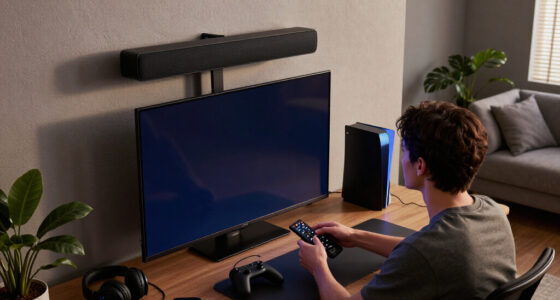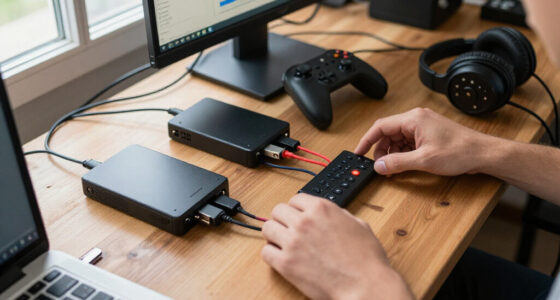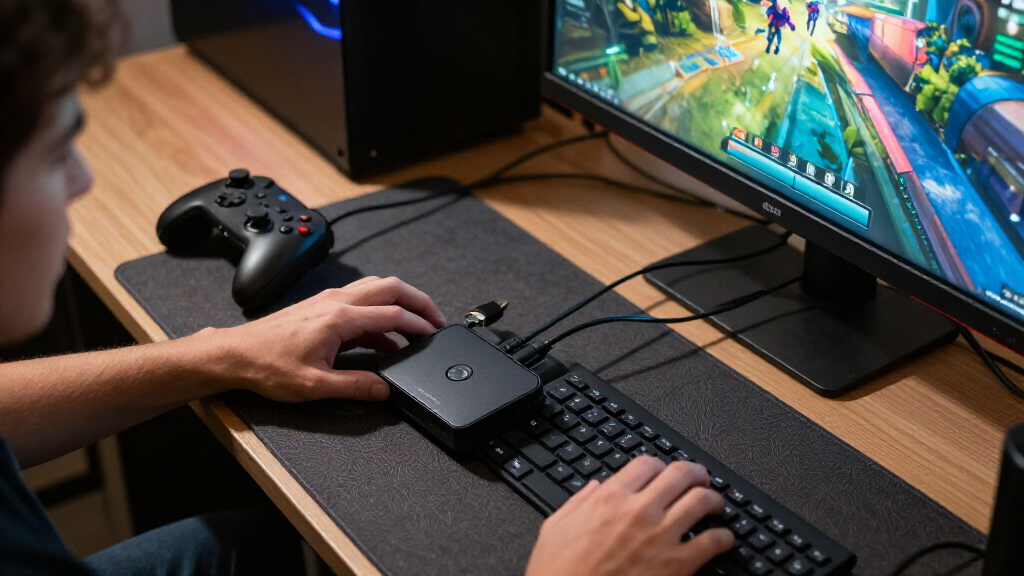

For most console streamers, I’d start with the AVerMedia Live Gamer ULTRA S GC553Pro, a strong fit for 4K60 capture; the Elgato 4K Pro stands out for a desktop setup that calls for an internal card, while the AVerMedia GC311G2 is a simpler USB-C option for 1080p60 capture. The main choice is whether you need high-resolution recording, smooth pass-through to your gaming display, or an affordable plug-in device—and those features don’t always come together in one card. I also weigh connection type, audio inputs, and compatibility, since a mismatch with your console or PC can matter more than the headline resolution. Read on for the full breakdown of all 15 gaming capture cards and which compromises make sense for different setups.

Play games on Amazon Luna for your game nights, included with Prime
- A rotating selection of games, no download needed
- Play on TV, laptop or phone
- Fast, free delivery for your gear, too
Complete the kit

Key Takeaways
- The lineup separates into portable USB cards and an internal PCIe option: the Elgato 4K Pro suits a desktop build, while the AVerMedia GC553Pro offers a more flexible external route.
- Capture resolution and pass-through resolution serve different purposes; several cards accept or pass through 4K signals while recording at 1080p60.
- The AVerMedia GC311G2 is a focused choice for 1080p60 capture with 4K60 HDR pass-through, rather than a high-resolution recording card.
- The Elgato Cam Link 4K is aimed at HDMI cameras as well as other sources, so it may fit a camera-based stream better than a console-first setup.
- Several compact and budget-oriented listings emphasize pass-through or basic 1080p capture, but buyers should check their exact audio, connection, and software needs before choosing.
| AVerMedia Live Gamer ULTRA S GC553Pro 4K60 HDMI Capture Card |  | Best Overall for High-Resolution PC Streaming | Capture resolution: Up to 4K60 | Additional capture modes: 1440p144, 1080p240 | Passthrough: Up to 4K60 with HDR and VRR | VIEW LATEST PRICE | See Our Full Breakdown |
| HeavenBird USB 3.0 Video Capture Card with Microphone Input |  | Best for Simple 1080p60 Streaming | Capture resolution: 1080p | Frame rate: Up to 60 FPS | Interface: USB 3.0 | VIEW LATEST PRICE | See Our Full Breakdown |
| AVerMedia GC311G2 USB-C Game Capture Card, 1080p60 Capture with 4K60 HDR Pass-Through |  | Best for 1080p Capture with 4K HDR Passthrough | Capture resolution: 1080p60 | Passthrough: Up to 4K60 HDR | High-refresh passthrough: Up to 1440p144 HDR or 1080p240 HDR | VIEW LATEST PRICE | See Our Full Breakdown |
| XIIXMASK USB 3.0 HDMI Capture Card with 4K 60Hz Pass-Through |  | Best for Broad Device Compatibility | Capture resolution: 1080p at 60fps or 1440p at 30fps | HDMI input and passthrough: Up to 4K at 60Hz | Hardware interface: USB 3.0 | VIEW LATEST PRICE | See Our Full Breakdown |
| Elgato 4K Pro Internal Capture Card with 8K60 Passthrough |  | Best Premium Internal Capture Card | Hardware interface: HDMI 2.1 | Passthrough resolution: Up to 8K60 | Capture resolution: Up to 4K60, as stated in the product description; another field lists 1080p | VIEW LATEST PRICE | See Our Full Breakdown |
| Elgato 4K S Capture Card for PS5, Xbox Series X/S, and Switch 2 |  | Best for High-Frame-Rate Console Capture | Capture modes: 4K60, 1440p120, 1080p240 | HDR capture: HDR10 on Windows | Passthrough: VRR | VIEW LATEST PRICE | See Our Full Breakdown |
| 4K HDMI Video Capture Card with Loop-Out, 1080P 60FPS USB 3.0 Streaming Device for PC, Xbox, PS4/PS5, and Cameras |  | Best for 4K60 Passthrough on a Full HD Stream | Maximum capture: 1080p at 60 fps | Maximum HDMI input: 4K at 60 Hz | Loop-out: Up to 4K at 60 Hz | VIEW LATEST PRICE | See Our Full Breakdown |
| USB 3.0 HDMI Capture Card, 1080p 60fps with 4K HDMI Input |  | Best Compact Pick for Basic Streaming | Capture resolution: 1080p at 60 fps | HDMI support: 4K HDMI | Computer interface: USB 3.0 | VIEW LATEST PRICE | See Our Full Breakdown |
| 4K HDMI Capture Card with 1080p 60fps Recording, Microphone Input and Headphone Output |  | Best for Hands-On Audio Monitoring | Maximum video input: 4K at 30 Hz | Maximum capture: 1080p at 60 fps | HDMI loop-out: Up to 1080p at 60 Hz | VIEW LATEST PRICE | See Our Full Breakdown |
| Fifine AmpliGame Video Capture Card, 1080p 60fps with 4K HDMI Pass-Through and RGB Lighting |  | Best for a Colorful Desktop Streaming Setup | Capture resolution: 1080p at 60 fps | HDMI passthrough: 4K at 30 fps | Computer interface: USB 3.0 Type-A | VIEW LATEST PRICE | See Our Full Breakdown |
| UGREEN HDMI Capture Card with 4K Loop-Out, 2K 30fps and 1080p 60fps Capture |  | Best for Flexible Device Compatibility | Capture resolution: Up to 2K at 30fps or 1080p at 60fps | HDMI input: Up to 4K at 30Hz (4:4:4) | HDMI loop-out: Up to 4K at 30Hz | VIEW LATEST PRICE | See Our Full Breakdown |
| Guermok USB 3.0 HDMI Capture Card with 4K60 Pass-Through |  | Best for Audio-Connected Streaming Setups | Connection: USB 3.0 | Maximum capture resolution: 1920×1080 at 60Hz or 2560×1440 at 30Hz | Maximum HDMI input: 4K at 60Hz; 1080p at 120Hz | VIEW LATEST PRICE | See Our Full Breakdown |
| Elgato Cam Link 4K HDMI Capture Card |  | Best for Camera-Based Game Streaming | Connection: USB 3.0 | Capture resolution: 1080p at 60fps; up to 4K at 60fps with compatible equipment | Latency: Ultra-low | VIEW LATEST PRICE | See Our Full Breakdown |
| 4K HDMI to USB-C/USB 3.0 Video Capture Card, 1080p at 60 FPS |  | Best for Simple, Compact 1080p Capture | HDMI input: Up to 4K at 30Hz | Capture output: Up to 1080p at 60fps or 2K at 30Hz | Interfaces: HDMI, USB 3.0 Type-A, USB-C | VIEW LATEST PRICE | See Our Full Breakdown |
| Acer USB 3.0 HDMI Capture Card with 4K Loop-Out and 1080p 60Hz Capture |  | Best for Commentary Without Extra Audio Gear | Capture resolution: Up to 1080p at 60Hz; also lists 720p | HDMI input: Up to 4K | HDMI loop-out: Supported | VIEW LATEST PRICE | See Our Full Breakdown |
| gaming capture card | Capture resolution | Operating systems | Weight |
|---|---|---|---|
| AVerMedia Live Gamer ULTRA S G | Up to 4K60 | — | 99 g |
| HeavenBird USB 3.0 Video Captu | 1080p | — | — |
| AVerMedia GC311G2 USB-C Game C | 1080p60 | — | — |
| XIIXMASK USB 3.0 HDMI Capture | 1080p at 60fps or 1440p at 30fps | Windows, macOS, Linux, Android, iPadOS 17 or later | 0.15 kg |
| Elgato 4K Pro Internal Capture | Up to 4K60, as stated in the product description; another field lists 1080p | — | — |
| Elgato 4K S Capture Card for P | — | — | 0.09 kg |
| 4K HDMI Video Capture Card wit | — | Windows, macOS, Linux | — |
| USB 3.0 HDMI Capture Card | 1080p at 60 fps | Windows, macOS | 0.21 kg |
| 4K HDMI Capture Card with 1080 | — | Windows, Linux, macOS | — |
| Fifine AmpliGame Video Capture | 1080p at 60 fps | Windows, Mac OS | 3.36 ounces |
| UGREEN HDMI Capture Card with | Up to 2K at 30fps or 1080p at 60fps | Windows, macOS, Linux, Android 5.0 and above | 88.2 g |
| Guermok USB 3.0 HDMI Capture C | — | Windows, macOS | 66.1 g |
| Elgato Cam Link 4K HDMI Captur | 1080p at 60fps; up to 4K at 60fps with compatible equipment | — | 20.14 g |
| 4K HDMI to USB-C/USB 3.0 Video | — | Windows 10/11, macOS 10.15 or later, Linux, Android | — |
| Acer USB 3.0 HDMI Capture Card | Up to 1080p at 60Hz; also lists 720p | Windows, macOS, Linux | — |
More Details on Our Top Picks
AVerMedia Live Gamer ULTRA S GC553Pro 4K60 HDMI Capture Card
The GC553Pro is the most flexible external option here for a streamer who wants high-resolution capture without giving up smooth play on a compatible display. It captures up to 4K60, with RGB24 full-color capture on Windows, while HDR and VRR passthrough support help preserve the display experience. Compared with the AVerMedia GC311G2, it can capture at 4K rather than 1080p60, making it a stronger fit for creators who want more detail in their recordings. It also accommodates ultrawide input and Windows 5.1-channel audio workflows. The tradeoff is that some advanced features depend on AVerMedia software: VRR recording needs Streaming Center or its OBS plug-in, and 5.1-channel capture is specified for Windows. Choose it for a capable PC-based setup, not a software-free workflow.
Pros:- Captures up to 4K60, with RGB24 full-color capture available on Windows.
- Supports up to 4K60 HDR and VRR passthrough for compatible displays.
- Accepts ultrawide input formats and supports Windows 5.1-channel audio capture.
- Works with Windows, macOS, and iPadOS systems listed in the product specifications.
Cons:- VRR recording requires Streaming Center or Streaming Center Plug for OBS.
- 5.1-channel audio capture is specified for Windows workflows only.
- Its advanced capture options make it less straightforward than a basic 1080p60 card.
Best for: PC streamers who want external 4K60 capture, ultrawide input support, and HDR/VRR passthrough in one card.
Not ideal for: Mac or iPad creators who need Windows-specific RGB24 or 5.1-channel capture features, or anyone who wants VRR recording without AVerMedia software.
- Capture resolution:Up to 4K60
- Additional capture modes:1440p144, 1080p240
- Passthrough:Up to 4K60 with HDR and VRR
- Interface:USB 3.2 Gen 1 Type-C
- Audio capture:5.1-channel on Windows
- Ultrawide input:3440×1440 and 2560×1080
- Compatible platforms:Windows 10/11, macOS 13/14 or later, iPadOS 17 or later
- Weight:99 g
Our verdict“Choose the GC553Pro if you want an external card that can capture 4K60 and support ultrawide gaming, and skip it if you need a simple, software-independent setup.”
HeavenBird USB 3.0 Video Capture Card with Microphone Input
The HeavenBird USB 3.0 card suits a basic capture setup where easy connection and a dedicated microphone jack matter more than advanced passthrough features. It captures up to 1080p at 60 FPS and is described as plug-and-play, so it may be a simpler starting point than the software-dependent VRR recording workflow of the AVerMedia GC553Pro. Its 3.5 mm microphone input and audio output give a creator direct connection options for commentary and monitoring. The limitations are just as relevant: despite “4K” in its product name, the listed capture resolution is 1080p, and the operating-system details are inconsistent—the specifications list Windows 7 and 8, while the description refers more broadly to Windows, Mac, and Linux. I’d choose it for a modest, clearly defined 1080p stream, not for a setup that depends on verified modern OS support or higher-resolution capture.
Pros:- Captures up to 1080p at 60 FPS over USB 3.0.
- Plug-and-play operation is presented as requiring no additional drivers.
- Includes a 3.5 mm microphone input and audio output.
- Listed for use with gaming consoles, cameras, and computers.
Cons:- The listed capture resolution is 1080p, not 4K despite the product name.
- Operating-system compatibility details differ between the description and specifications.
- The product information does not list HDR or high-resolution passthrough support.
Best for: New streamers using a console or camera who need 1080p60 capture and separate microphone and audio-output jacks.
Not ideal for: Creators seeking 4K recording, HDR passthrough, or clear confirmation of compatibility with a specific modern operating-system version.
- Capture resolution:1080p
- Frame rate:Up to 60 FPS
- Interface:USB 3.0
- Audio ports:3.5 mm microphone input and audio output
- Operating systems listed:Linux, Mac OS, Windows 7, Windows 8
- Compatible devices:Cameras, gaming consoles, personal computers
- AV output format:MPEG-4
- Warranty:2 years
Our verdict“Pick the HeavenBird for straightforward 1080p60 capture with analog audio jacks, but look elsewhere if you need 4K capture or unambiguous OS support.”
AVerMedia GC311G2 USB-C Game Capture Card, 1080p60 Capture with 4K60 HDR Pass-Through
The GC311G2 separates what you record from what you see: it captures at 1080p60 while passing through up to 4K60 HDR, so you can play on a sharper compatible display without making 4K recording part of the setup. Its high-refresh passthrough—up to 1440p144 or 1080p240—also makes it a better match for fast gameplay than the HeavenBird, whose listed details stop at 1080p60 capture. It connects by USB-C and supports OBS, AVerMedia Streaming Center, and other listed software, with compatibility extending to USB-C iPads on supported iPadOS. The key compromise is that HDR applies to passthrough, not the captured file: recording is limited to 1080p60 SDR. I’d pick it when smooth, high-resolution play matters more than recording above 1080p.
Pros:- Captures at 1080p60 while passing through up to 4K60 HDR.
- Supports high-refresh passthrough up to 1440p144 or 1080p240.
- Works with OBS and listed Windows, macOS, and iPadOS platforms.
- Shell uses 60% post-consumer recycled plastic.
Cons:- Captured video is limited to 1080p60 SDR; HDR is passthrough only.
- Requires compatible hardware and operating-system versions.
- Does not match the GC553Pro when the priority is 4K recording.
Best for: Console and PC players who want to capture in 1080p60 while playing through a 4K HDR or high-refresh display.
Not ideal for: Creators who need 4K capture or HDR in their recordings rather than HDR passthrough to a display.
- Capture resolution:1080p60
- Passthrough:Up to 4K60 HDR
- High-refresh passthrough:Up to 1440p144 HDR or 1080p240 HDR
- Hardware interface:HDMI and USB 3.0 Type-C
- Output formats:YUY2, NV12, MJPEG
- Supported platforms:Windows, macOS, iPadOS 17 or later
- Supported software:OBS, Camo Studio, AVerMedia Streaming Center
- Recycled material:60% post-consumer recycled plastic
Our verdict“Choose the GC311G2 if 1080p60 recording is enough and you want high-refresh 4K HDR passthrough for play.”
XIIXMASK USB 3.0 HDMI Capture Card with 4K 60Hz Pass-Through
The XIIXMASK capture card is a practical fit for mixed-device setups: its listed operating systems include Windows, macOS, Linux, Android, and iPadOS 17 or later, and it offers both USB-A and USB-C connectivity. For game capture, it records up to 1080p60 or 1440p30 while passing HDMI through at up to 4K60. That gives it more stated capture flexibility than the HeavenBird, but neither card is positioned for 4K recording. The aluminum-alloy housing and 3.5 mm mic input may suit a portable commentary setup, though party-chat audio is explicitly unsupported. Audio also needs some setup attention: OBS may require a restart after configuring sound output. I’d favor it for device variety and connection options, not for seamless party-chat capture or a plug-and-play audio workflow.
Pros:- Passes through HDMI video up to 4K at 60Hz.
- Captures up to 1080p at 60fps or 1440p at 30fps.
- Includes USB-A/USB-C connectivity and a 3.5 mm microphone or headset input.
- Lists compatibility with Windows, macOS, Linux, Android, and iPadOS 17 or later.
Cons:- Party-chat audio is not supported.
- OBS audio setup may require restarting the software.
- 4K is supported for passthrough, not listed capture resolution.
Best for: Streamers who switch among consoles, computers, Android devices, and iPads and want both USB-A and USB-C connections.
Not ideal for: Console creators who need party-chat audio captured, or anyone who wants 4K recording rather than 4K passthrough.
- Capture resolution:1080p at 60fps or 1440p at 30fps
- HDMI input and passthrough:Up to 4K at 60Hz
- Hardware interface:USB 3.0
- Audio input:3.5 mm microphone or headset
- Video format:YUY2
- Operating systems:Windows, macOS, Linux, Android, iPadOS 17 or later
- Material:Aluminum alloy
- Weight:0.15 kg
Our verdict“Choose XIIXMASK for a wide mix of device connections and 4K passthrough, but skip it if party-chat capture is part of your stream.”
Elgato 4K Pro Internal Capture Card with 8K60 Passthrough
The Elgato 4K Pro is the high-end choice for a desktop gaming PC with an available PCIe slot: it pairs HDMI 2.1 passthrough up to 8K60 with stated capture up to 4K60 HDR10, plus VRR and recording up to 1080p240. Compared with the external AVerMedia GC553Pro, its internal design and 8K60 passthrough point to a more dedicated PC setup, while its 4K capture and high-frame-rate modes suit creators who want more than 1080p recording. The tradeoff is substantial system dependence: the listed requirements call for Windows 10 and an open PCIe slot, so it is not a portable or iPad-friendly option. The product data also contains a capture-resolution inconsistency, listing 1080p in one field while describing capture up to 4K60 elsewhere. I’d verify the intended recording mode before buying.
Pros:- HDMI 2.1 passthrough supports up to 8K60.
- Product description lists capture up to 4K60 with HDR10.
- Supports VRR, ultra-low-latency synchronization, and recording up to 1080p240.
- Internal PCIe design suits a fixed desktop capture setup.
Cons:- Requires Windows 10 and an available PCIe slot.
- Product information conflicts: one field lists 1080p capture while the description states up to 4K60.
- Not suited to portable setups or systems without a compatible expansion slot.
Best for: Desktop PC streamers with a free PCIe slot who want HDMI 2.1 passthrough, VRR, and high-resolution HDR capture.
Not ideal for: Laptop, Mac, or iPad users, and anyone without a Windows 10 desktop with an available PCIe slot.
- Hardware interface:HDMI 2.1
- Passthrough resolution:Up to 8K60
- Capture resolution:Up to 4K60, as stated in the product description; another field lists 1080p
- High-frame-rate recording:Up to 1080p240
- HDR:True 10-bit HDR; HDR10 capture
- Variable refresh rate:Supported
- Operating system:Windows 10
- Minimum system requirement:Available PCIe slot
Our verdict“Choose the Elgato 4K Pro for a Windows desktop that needs high-end HDMI 2.1 capture features, after confirming the capture resolution you require.”
Elgato 4K S Capture Card for PS5, Xbox Series X/S, and Switch 2
The Elgato 4K S is the strongest fit here for creators who want to capture beyond standard 1080p60: it records 4K at 60 fps, or trades resolution for faster 1440p120 and 1080p240 modes. VRR passthrough helps keep compatible gameplay smooth on the display while you capture, a more advanced console setup than the basic 1080p cards in this batch. It also works with compatible Macs and iPads, while the Fifine AmpliGame is limited to Windows and Mac computers. The tradeoff is that this card asks more of both the host device and the budget of system resources: it needs USB 3.0 Type-C and a supported, relatively recent operating system. HDR10 capture is Windows-only, so Mac and iPad users should not choose it for HDR recording.
Pros:- Captures up to 4K at 60 fps, with 1440p120 and 1080p240 options.
- VRR passthrough supports smoother gameplay on a compatible display.
- Works with compatible Windows, Mac, and iPad devices.
- 3.5 mm analog input can capture commentary or in-game chat audio.
Cons:- HDR10 capture is available only on Windows.
- Requires a USB 3.0 Type-C connection and a compatible host device.
- Supported operating systems and minimum system requirements rule out some older setups.
Best for: Console streamers with a compatible Windows PC who want 4K60 capture, VRR passthrough, or high-frame-rate 1440p and 1080p modes.
Not ideal for: Mac or iPad creators whose main requirement is HDR capture, or anyone without a USB-C connection and a supported computer or tablet.
- Capture modes:4K60, 1440p120, 1080p240
- HDR capture:HDR10 on Windows
- Passthrough:VRR
- Interface:USB 3.0 Type-C
- Audio input:3.5 mm analog
- Compatible operating systems:Windows 11, macOS 13 or later, compatible iPadOS
- Weight:0.09 kg
- Warranty:2 years
Our verdict“Choose the Elgato 4K S if you want advanced console capture modes and have hardware that can support them.”
4K HDMI Video Capture Card with Loop-Out, 1080P 60FPS USB 3.0 Streaming Device for PC, Xbox, PS4/PS5, and Cameras
This card suits streamers who want their display to receive a 4K60 HDMI signal while the stream itself stays at 1080p60. That split is useful for playing at 4K without demanding a 4K capture workflow, and it gives this model a clearer console-gaming advantage over the B0BWT35QW8, which lists 4K HDMI support but does not specify loop-out resolution. Setup is also straightforward: it connects over USB 3.0, needs no external power, and supports common streaming software across Windows, macOS, and Linux. The main ceiling is its 1080p60 capture limit; it also does not support 4K120 or 4K144 input. Its 3.5 mm mic input handles commentary, but the supplied details say it cannot capture console party chat.
Pros:- Supports 4K60 HDMI loop-out while capturing at up to 1080p60.
- Runs without external power or a driver installation.
- Aluminum alloy body is designed to aid heat dissipation.
- 3.5 mm mic input supports external commentary.
Cons:- Capture is limited to 1080p60.
- Does not support 4K120 or 4K144 input.
- Cannot record party chat audio from consoles.
Best for: Console streamers who play on a 4K60 display but only need to send a 1080p60 feed to OBS or similar software.
Not ideal for: Creators who need 4K recording, 4K120 or 4K144 input, or console party-chat capture.
- Maximum capture:1080p at 60 fps
- Maximum HDMI input:4K at 60 Hz
- Loop-out:Up to 4K at 60 Hz
- Computer interface:USB 3.0 Type-A and USB 3.0 Type-C
- Audio:3.5 mm mic input
- Software support:OBS Studio, Streamlabs, XSplit, VLC, Zoom
- Operating systems:Windows, macOS, Linux
- Power:No external power supply required
Our verdict“Pick this model if you want 4K60 gameplay passthrough but are content with a 1080p60 stream.”
USB 3.0 HDMI Capture Card, 1080p 60fps with 4K HDMI Input
The B0BWT35QW8 is a straightforward choice for a creator who needs 1080p60 capture from a console, PC, or camera and wants a small device to carry between setups. Plug-and-play operation and support for OBS, Streamlabs, and XSplit keep the workflow simple, while real-time preview helps with monitoring the incoming signal. Compared with the B097DKNS1M, however, its supplied specs say only that it supports 4K HDMI—not that it offers a specific 4K loop-out mode—so I would favor the latter when 4K60 display passthrough is a firm requirement. This card also stops at 1080p60 recording, making it a practical entry point rather than a choice for high-resolution capture. It requires a USB 3.0 port and is listed for Windows and macOS, not Linux.
Pros:- Captures HDMI video at up to 1080p60.
- Plug-and-play setup works with common streaming software.
- Compatible with Windows, macOS, consoles, PCs, and cameras.
- Compact form is suited to portable streaming and recording.
Cons:- Capture resolution is limited to 1080p60.
- Requires a USB 3.0 port.
- The listed specs do not state a loop-out resolution.
Best for: New or occasional streamers who want a portable, simple 1080p60 capture device for a Windows or Mac setup.
Not ideal for: Creators who need 4K recording, verified 4K60 loop-out, Linux support, or a capture card for a computer without USB 3.0.
- Capture resolution:1080p at 60 fps
- HDMI support:4K HDMI
- Computer interface:USB 3.0
- Operating systems:Windows, macOS
- Compatible devices:PS5, PS4, Nintendo Switch, Xbox, PC, cameras
- Compatible software:OBS Studio, Streamlabs, XSplit
- Features:Plug and play, real-time preview, audio and video recording, HDMI passthrough
- Weight:0.21 kg
Our verdict“Choose this compact option for uncomplicated 1080p60 capture, but pick the B097DKNS1M if specified 4K60 loop-out matters.”
4K HDMI Capture Card with 1080p 60fps Recording, Microphone Input and Headphone Output
The standout reason to choose this capture card is its separate microphone input and headphone output. That gives streamers a direct way to connect commentary gear and monitor audio, a more explicit audio setup than the B0BWT35QW8, whose listed features do not include dedicated mic and headphone ports. It captures at 1080p60 and accepts video input up to 4K30, which fits a Full HD streaming workflow but does not match the B097DKNS1M’s 4K60 input and loop-out ceiling. Installation is simple on Windows, Linux, or macOS, with no driver or external power supply required. The tradeoff is limited passthrough: loop-out tops out at 1080p60. It also needs a direct USB 3.0 computer port; the supplied details rule out hubs and extension cables.
Pros:- Captures Full HD video at up to 1080p60.
- Includes both a 3.5 mm microphone input and headphone output.
- Works with Windows, Linux, and macOS without a driver.
- Requires no external power supply.
Cons:- HDMI loop-out is limited to 1080p60.
- Accepts input only up to 4K30.
- Requires a direct USB 3.0 port and does not support a USB hub or extension cable.
Best for: Streamers who want dedicated mic and headphone connections for commentary and audio monitoring in a 1080p60 setup.
Not ideal for: Players who need 4K60 passthrough, higher-resolution capture, or flexibility to connect through a USB hub or extension cable.
- Maximum video input:4K at 30 Hz
- Maximum capture:1080p at 60 fps
- HDMI loop-out:Up to 1080p at 60 Hz
- Computer interface:USB 3.0
- Audio ports:3.5 mm microphone input and headphone output
- Operating systems:Windows, Linux, macOS
- Power and drivers:No external power or driver required
- Warranty:1 year
Our verdict“Choose this card for its dedicated commentary and monitoring ports, not for high-resolution passthrough.”
Fifine AmpliGame Video Capture Card, 1080p 60fps with 4K HDMI Pass-Through and RGB Lighting
The Fifine AmpliGame pairs familiar 1080p60 capture with 4K30 HDMI passthrough and a visible desktop accent: nine RGB lighting modes. The lighting is a style feature rather than a gaming-performance gain, so this pick makes most sense for streamers who want their capture gear to match a lit setup and value its built-in line-in and headset ports. Compared with the Elgato 4K S, it is much more limited on capture resolution and frame-rate options; its benefit is a simpler Full HD workflow rather than advanced 4K60 or high-refresh capture. The passthrough is also 4K at 30 fps, not 4K60, so it is a poor fit for players who want higher-refresh 4K gameplay on their display. It connects over USB 3.0 and supports Windows and Mac.
Pros:- Captures video at up to 1080p60.
- Offers 4K30 HDMI passthrough for a connected display.
- Includes HDMI output, line-in, and headset ports.
- Nine RGB lighting modes suit a coordinated desktop setup.
Cons:- Capture resolution is limited to 1080p.
- 4K passthrough is limited to 30 fps.
- Requires a USB 3.0 port and HDMI input/output connections.
Best for: Windows or Mac streamers building an RGB-themed desk who need 1080p60 capture, 4K30 passthrough, and onboard audio ports.
Not ideal for: Players who need 4K60 passthrough, capture above 1080p, or high-frame-rate modes like those offered by the Elgato 4K S.
- Capture resolution:1080p at 60 fps
- HDMI passthrough:4K at 30 fps
- Computer interface:USB 3.0 Type-A
- Ports:HDMI output, line-in, headset
- Lighting:9 RGB modes
- Operating systems:Windows, Mac OS
- Compatible platforms:PlayStation, Xbox, Switch, Mac, Windows
- Weight:3.36 ounces
Our verdict“Choose the Fifine AmpliGame for a Full HD streaming setup where RGB styling and onboard audio ports matter more than higher capture specs.”
UGREEN HDMI Capture Card with 4K Loop-Out, 2K 30fps and 1080p 60fps Capture
The UGREEN is a good fit for streamers who want 1080p at 60fps capture without giving up a higher-resolution display feed: its HDMI loop-out supports 4K at 30Hz, while capture tops out at 2K30 or 1080p60. That distinction matters for gameplay monitoring, but it is not a 4K recording card. Compared with the Acer USB 3.0 HDMI Capture Card, UGREEN adds 2K30 capture and lists Android support; Acer instead includes a 3.5 mm mic input for commentary. Its USB-A and USB-C connections, broad operating-system support, and driver-free setup suit mixed-device setups. The tradeoff is that its 4K input is limited to 30Hz, and players wanting 4K capture or a dedicated microphone connection should choose another option.
Pros:- Captures up to 1080p at 60fps or 2K at 30fps.
- 4K30 HDMI loop-out lets you monitor gameplay on an external display.
- USB-A and USB-C interfaces support a wider range of host devices.
- Driver-free setup and aluminum casing; no external power supply required.
Cons:- Does not capture video in 4K, and loop-out is limited to 4K30.
- No dedicated microphone input is listed for adding commentary.
- Not compatible with Fire TV Stick, and iPhone cannot serve as a data acquisition device.
Best for: Console streamers who need a simple capture device that can connect over USB-A or USB-C and monitor a 4K30 HDMI signal while recording at 1080p60.
Not ideal for: Players recording 4K footage, anyone needing 4K60 pass-through, or iPhone users trying to use the phone as the capture source.
- Capture resolution:Up to 2K at 30fps or 1080p at 60fps
- HDMI input:Up to 4K at 30Hz (4:4:4)
- HDMI loop-out:Up to 4K at 30Hz
- Connection:USB 3.0; USB-A and USB-C
- Video formats:MJPEG, YUY2
- Operating systems:Windows, macOS, Linux, Android 5.0 and above
- Setup:Plug and play; no driver installation or external power required
- Weight:88.2 g
Our verdict“Choose the UGREEN for flexible USB connectivity and 1080p60 gaming capture, but skip it if 4K recording or 4K60 monitoring is a requirement.”
Guermok USB 3.0 HDMI Capture Card with 4K60 Pass-Through
The Guermok stands apart from simpler cards like the 4K HDMI to USB-C/USB 3.0 Video Capture Card by building several audio connections into the device: microphone and audio inputs, headphone monitoring, and speaker output. That can simplify a gaming stream where commentary and game sound need separate connections. It captures at 1080p60 or 1440p30, while pass-through reaches 4K60 in YUV420, so a compatible display can show smoother high-resolution gameplay than the recorded feed. Compared with the UGREEN, Guermok offers faster 4K pass-through and more audio routing, but it lacks the UGREEN’s listed Android support. Capture still depends on software and available USB bandwidth, and its mic input may not work with TRRS headset microphones or USB mics.
Pros:- Passes through HDMI video up to 4K60 in YUV420 mode.
- Captures up to 1080p60 or 1440p30.
- Multiple audio ports support microphone input, audio input, headphone monitoring, and speaker output.
- Driver-free compatibility with common capture software on Windows and macOS.
Cons:- Capture resolution and frame rate depend on software and available USB bandwidth.
- Microphone input may not support TRRS headset microphones or USB microphones.
- Requires capture software to display and record the source.
Best for: PC and console streamers who want 4K60 pass-through plus separate mic, audio, and headphone connections for a software-based streaming setup.
Not ideal for: Users who need 4K recording, use a USB or TRRS headset microphone, or want a capture device that works outside Windows and macOS.
- Connection:USB 3.0
- Maximum capture resolution:1920×1080 at 60Hz or 2560×1440 at 30Hz
- Maximum HDMI input:4K at 60Hz; 1080p at 120Hz
- HDMI pass-through:Up to 4K60 in YUV420; up to 4K30 in RGB/YUV444
- Audio ports:Mic In, Audio In, headphone monitoring, speaker output
- Microphone compatibility:Standard 3.5 mm TRS microphones; TRRS headset and USB mic support may be limited
- Software compatibility:OBS Studio, Streamlabs, VLC, XSplit, Zoom, Teams, and other UVC/UAC software
- Operating systems:Windows, macOS
- Weight:66.1 g
Our verdict“Pick Guermok when audio connections and 4K60 pass-through matter more than 4K recording or broad operating-system support.”
Elgato Cam Link 4K HDMI Capture Card
The Cam Link 4K is the camera-focused pick in this group: it connects a compatible DSLR, mirrorless camera, camcorder, or action camera to a computer, making it useful for face-cam production or streaming gameplay through an external camera. Its headline difference from the UGREEN HDMI Capture Card is 4K capture up to 60fps, rather than a gaming-card-style combination of HDMI loop-out and 1080p60 capture. Low latency can help keep a camera feed aligned with stream audio, and support for OBS Studio, Zoom, and Discord gives it uses beyond gameplay broadcasts. But this is not the most convenient option for a console-first setup: the listed specs do not include HDMI pass-through, and 4K60 depends on both a compatible camera and the latest Cam Link 4K model. Buyers should check their camera and computer compatibility before choosing it.
Pros:- Captures up to 1080p60 or 4K at up to 60fps with compatible equipment.
- Supports DSLR, mirrorless, camcorder, action camera, and iPhone sources.
- Low-latency video suits live streaming and video calls.
- Works with apps including OBS Studio, Zoom, and Discord.
Cons:- 4K60 requires a compatible camera and the latest Cam Link 4K model.
- No HDMI pass-through is listed for monitoring console gameplay on a separate display.
- Operating-system and setup requirements vary, so compatibility needs checking.
Best for: Streamers who already own a compatible camera and want to bring a high-quality camera feed into a PC, Mac, or iPad for gaming broadcasts.
Not ideal for: Console players seeking a capture card with HDMI loop-out, or buyers who need assured 4K60 without checking their camera and device compatibility.
- Connection:USB 3.0
- Capture resolution:1080p at 60fps; up to 4K at 60fps with compatible equipment
- Latency:Ultra-low
- Compatible devices:PC, Mac, iPad
- Compatible video sources:DSLR, mirrorless cameras, camcorders, action cameras, iPhone
- Software compatibility:OBS Studio, Zoom, Discord, and other compatible apps
- Weight:20.14 g
- Included items:Cam Link 4K, USB 3.0 extension cable, Quick Start Guide
Our verdict“Choose Cam Link 4K to capture a compatible camera feed for your gaming stream, not as a general-purpose console card with pass-through.”
4K HDMI to USB-C/USB 3.0 Video Capture Card, 1080p at 60 FPS
This card keeps the setup straightforward: send an HDMI source to a computer over USB, then record or stream through capture software. It accepts 4K30 HDMI input but captures at up to 1080p60 or 2K30, so the 4K label describes the signal it can receive—not the resolution of the recording. Compared with the UGREEN HDMI Capture Card, it has a similar capture ceiling and USB-A/USB-C flexibility, but its one-way design means it cannot loop gameplay out to a separate display. The aluminum alloy housing and lack of external power suit a compact desktop kit. The main compromise is monitoring: you must use software, and video decoding adds latency. A USB 3.0 port is recommended for stable 1080p60, making it a weaker fit for older or restricted host devices.
Pros:- Captures up to 1080p60 or 2K30 from an HDMI source.
- Accepts HDMI input up to 4K30 and connects over USB-A or USB-C.
- Aluminum alloy housing and no external power requirement simplify a small setup.
- Compatible with Windows, macOS, Linux, and Android.
Cons:- One-way HDMI-to-USB transmission provides no HDMI loop-out.
- Capture software is required for viewing and recording.
- Decoding adds latency, and stable 1080p60 capture requires USB 3.0.
Best for: New streamers with a USB 3.0 computer who want a simple HDMI-to-computer connection for recording or streaming at 1080p60.
Not ideal for: Players who need HDMI loop-out for a separate gaming display, want 4K capture, or are sensitive to software-preview latency.
- HDMI input:Up to 4K at 30Hz
- Capture output:Up to 1080p at 60fps or 2K at 30Hz
- Interfaces:HDMI, USB 3.0 Type-A, USB-C
- Transmission direction:HDMI to USB only
- Power:No external power required
- Operating systems:Windows 10/11, macOS 10.15 or later, Linux, Android
- Minimum system requirements:Windows 10/11 64-bit or macOS 10.15 or later; Intel Core i3, AMD Ryzen 3, or equivalent; 4 GB RAM; USB 3.0 port
- Included items:Capture card, USB 3.0 to USB-C adapter, user manual
Our verdict“Choose this card for uncomplicated 1080p60 capture on a USB 3.0 host, but select a loop-out model if you need a separate gameplay display.”
Acer USB 3.0 HDMI Capture Card with 4K Loop-Out and 1080p 60Hz Capture
Acer’s strongest gaming-specific advantage is its combination of HDMI loop-out and a 3.5 mm mic input. That gives a console streamer a route to monitor gameplay on a display while adding commentary, without relying only on a separate USB microphone connection. It captures up to 1080p60 from an HDMI input up to 4K, but the listed capture resolutions stop at 1080p and 720p. Compared with the UGREEN HDMI Capture Card, Acer gives up UGREEN’s listed 2K30 capture and Android compatibility in favor of a built-in mic input; compared with Guermok, it has fewer audio connections and no listed 1440p30 capture. The plug-and-play setup and broad console compatibility are appealing, though a USB 3.0 port is required for its intended performance.
Pros:- Captures up to 1080p60 from an HDMI input of up to 4K.
- HDMI loop-out supports monitoring gameplay on an external display.
- 3.5 mm mic or headset input supports commentary.
- Plug-and-play operation works with Windows, macOS, and Linux without external power.
Cons:- Capture is limited to the listed 1080p and 720p resolutions.
- USB 3.0 is required for USB 3.0 operation.
- Audio connections are more limited than Guermok’s mic, audio, headphone, and speaker ports.
Best for: Console streamers who record at 1080p60, want HDMI loop-out, and plan to connect a 3.5 mm microphone or headset for commentary.
Not ideal for: Gamers who want 2K capture, 4K recording, 4K60 pass-through, or detailed audio routing for multiple separate sources.
- Capture resolution:Up to 1080p at 60Hz; also lists 720p
- HDMI input:Up to 4K
- HDMI loop-out:Supported
- Interfaces:HDMI, USB 3.0 Type-A, USB 3.0 Type-C
- Video formats:YUY2, MJPEG
- Audio input:3.5 mm microphone or headset input
- Operating systems:Windows, macOS, Linux
- Compatible platforms:Nintendo Switch, Switch 2, PlayStation, Xbox
- Power and setup:Plug and play; no external power required
Our verdict“Pick Acer for a straightforward 1080p60 console stream with display loop-out and a 3.5 mm commentary input, not for higher-resolution capture.”
How We Picked
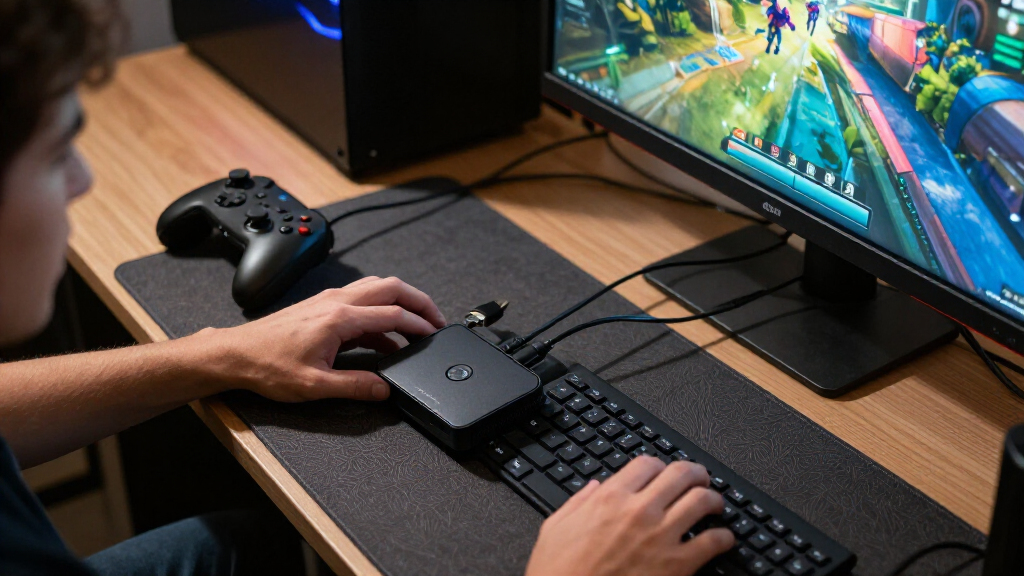
I ranked these gaming capture cards by how clearly their stated features serve common gaming setups: console or PC input, capture resolution and frame rate, pass-through capability, and connection type. I gave more weight to products whose role is clear from their listed specifications, such as a dedicated internal card, a 4K60 capture model, or a camera-oriented HDMI device. I also looked at practical setup needs, including USB versus PCIe installation and whether microphone or headphone connections are part of the listed feature set.
The ranking favors a useful balance of capture performance, gaming-display pass-through, and setup flexibility, rather than treating the highest resolution as an automatic win. A card that records at 1080p60 can still be a sensible choice if that suits the stream and its pass-through preserves a higher-resolution play signal. Product listings that provide fewer details receive a more cautious role, since buyers should verify compatibility and signal support before relying on them. I don’t treat every model as interchangeable: the best fit depends on the gaming display, host computer, console, and audio chain.
Factors to Consider When Choosing Gaming Capture Cards
Before choosing a card, I’d work backward from the signal path: what you play on, what you want viewers to see, and whether you need to keep playing at a higher resolution or refresh rate than you record. These checks often narrow the field faster than comparing feature lists.
Separate Capture Quality From Pass-Through
Capture resolution describes what reaches your recording or streaming software; pass-through describes the signal sent onward to your gaming display. A card advertising 4K input or 4K pass-through may still record at 1080p60, which can be entirely suitable for a stream but won’t produce a 4K recording. Check both figures independently, along with any stated frame-rate limits. Also confirm support for the resolution and refresh rate you actually play at, not only the maximum resolution in the product name. A common mistake is buying for a 4K display and assuming the captured footage will also be 4K. If you mainly publish 1080p video, prioritizing stable 1080p60 capture and a smooth display signal may be the more useful tradeoff.
Choose USB or Internal PCIe Around Your Setup
USB capture cards are easier to move between compatible computers and avoid opening a desktop case, making them a natural match for laptop or console setups. Their real-world fit still depends on the host computer’s available port, connection speed, and the card’s software requirements. An internal PCIe card, such as the Elgato 4K Pro, suits a stationary desktop and can keep the capture hardware inside the system, but it requires an available compatible slot and room in the case. Don’t select USB-C solely because the connector looks modern; check whether your computer supports the required data rate. Likewise, confirm that an internal card will fit alongside your existing graphics card and other expansion hardware. I’d favor portability for a shared or travel setup and an internal card for a fixed streaming PC.
Match the Card to Your Console and Display Signal
Compatibility is about the complete signal path, not just whether the HDMI cable fits. Verify the source console’s output mode, the capture card’s supported input, and the display’s preferred resolution and refresh rate. A capture card may pass through a signal your monitor accepts while recording a lower-resolution version, but the exact supported modes matter. Check the console’s content-protection settings too, since protected video can prevent capture even when gameplay works. If you switch between several consoles, favor a card and setup that support every source’s intended modes rather than relying on a single headline specification. For a one-console setup, there is little value in paying for signal flexibility you won’t use.
Plan Audio Before Buying
Audio routing can make or break a stream setup, especially when game sound, party chat, and a microphone must all reach the recording software. A listed microphone input or headphone output can simplify some arrangements, but it does not prove that every chat or headset configuration will work as expected. Map out where each source connects: console, controller or headset, capture card, computer, and headphones. Check whether your intended software and operating system can select the card’s audio input, and whether you need separate tracks for editing. Buyers often focus on video specifications and discover later that voice chat is routed outside the capture device. If audio is central to your stream, confirm the exact routing instructions before choosing a card.
Treat Software and Computer Load as Part of the Purchase
The capture card is only one part of the recording system; the computer and streaming software also need to handle the incoming video. A high-resolution signal can use more processing, storage, and bandwidth than a basic 1080p stream, especially when recording and broadcasting at once. Check the card maker’s software support and system requirements for your operating system and preferred streaming application. If you plan to capture on a laptop, verify that its USB connection and processor can sustain the workload rather than relying on a port label alone. Decide whether you need a preview window, low-latency monitoring, or separate recording and stream settings. A simpler 1080p60 workflow may be a better match than paying for a higher capture ceiling your computer cannot comfortably use.
Pay for Features Your Setup Can Use
Higher specifications only help when the rest of the setup supports them. A premium card can make sense for a creator who records at higher resolutions, needs a particular pass-through mode, or wants a dedicated internal installation. A beginner streaming at 1080p may get more practical value from a straightforward USB card with the pass-through and audio connections their setup needs. Don’t pay extra for RGB lighting, unused camera features, or a maximum input resolution that your console and recording plan never reach. At the same time, avoid choosing solely by the lowest listed feature level if a missing audio connection or inadequate pass-through would force you to add more hardware. Write down the signal modes and connections you need first, then compare products against that list.
Frequently Asked Questions
Can a capture card let me play in 4K while streaming at 1080p?
Yes, if the card supports the 4K pass-through mode your display uses while capturing at 1080p. Those are separate parts of the signal path, and several products in this lineup pair a higher-resolution pass-through with 1080p60 capture. Check the exact resolution and refresh-rate combinations supported; “4K pass-through” alone may not describe every mode your console or monitor uses. Also confirm the card can send the captured signal to your computer while passing the desired picture to your display. This setup can suit streamers who want a higher-resolution local gaming picture without recording or broadcasting in 4K.
Do I need an internal capture card, or is USB a better choice?
Choose USB when you value portability, use a laptop, or want to avoid opening a desktop case. An internal PCIe card is a better fit for a fixed desktop setup if you have a compatible open slot and prefer the card installed inside the PC. Neither form factor automatically guarantees better capture quality; compare the supported capture and pass-through modes for the specific model. With USB, check the computer’s port capability and the card’s connection requirements, rather than relying on the connector shape. With PCIe, check slot availability, physical clearance, and operating-system support before ordering.
Will a 1080p60 capture card work with a 4K gaming console?
It can work, but the result depends on whether the card accepts the console’s output mode and whether it offers pass-through that suits your display. Some models accept or pass through 4K while recording at 1080p60; others may have more limited input support. Read the specifications for both the input signal and recorded output, including refresh-rate details. If you want 4K recordings, a card that only captures at 1080p60 will not meet that goal even if its listing mentions 4K input. For a 1080p stream, though, 1080p60 capture may be a reasonable match when the pass-through modes fit your setup.
Can I use a gaming capture card for a camera-based stream?
Some HDMI capture devices can accept a camera feed, and the Elgato Cam Link 4K is specifically positioned for HDMI camera use as well as compatible sources. Before buying, check that your camera outputs a clean HDMI signal at a mode the card supports. Confirm how the camera handles overlays, autofocus information, and power for long sessions, since those details can affect the video feed or setup. A console-focused card may still capture a camera signal, but it may not offer the features or workflow you want for a dedicated camera setup. If camera use is the priority, compare camera compatibility and software support alongside gaming specifications.
What should I check if my console video appears but party chat is missing?
Video capture and chat audio can follow different routes, so a visible game picture does not confirm that party chat is reaching the recording. Check the console’s audio output settings, headset connection, and whether chat is sent through HDMI or a separate controller or headset path. Then confirm that the capture software has selected the card’s audio input and that the intended microphone or line input is active, if your model has one. Some setups need an additional audio cable or a change to headset routing, so consult the console and card instructions before purchasing extra gear. Test a short recording with game sound, your voice, and another player’s voice before a live stream.
Conclusion
For the broadest mix of 4K60 capture and external flexibility, I’d choose the AVerMedia Live Gamer ULTRA S GC553Pro as best overall. The AVerMedia GC311G2 is my value-oriented pick for a 1080p60 workflow that benefits from 4K60 HDR pass-through, while the Elgato 4K Pro is the best premium fit for a compatible desktop build and higher-end capture needs. Beginners who want a straightforward external setup should compare the GC311G2 with the other USB cards based on their computer ports and console signal modes. For camera-based streams, the Elgato Cam Link 4K has the clearest specialized role; for a small budget-minded setup, choose among the basic USB options only after confirming audio connections and supported modes. Match the card to your actual recording target and display first, then use the product specifications to check that every link in your setup will work.