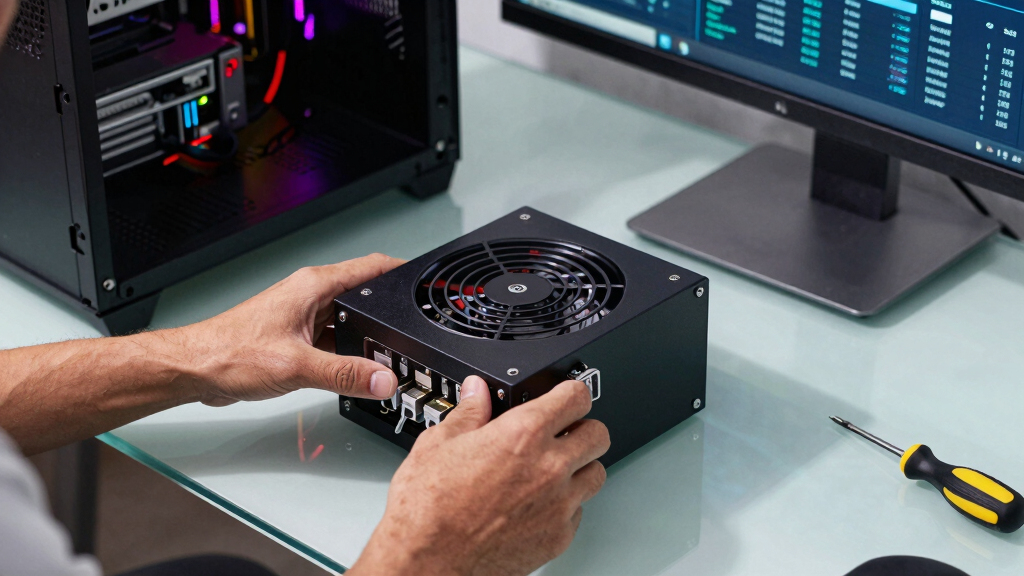
The best power supply for most gaming PCs in this lineup is the CORSAIR RM850x ATX 3.1, because it balances 850W capacity, modern GPU support, quiet operation, and long-term headroom without pushing into overkill pricing. The ASUS ROG Strix 1000W Platinum is the premium pick for high-end RTX builds, while the MSI MAG A650GLS PCIE5 makes more sense for modest gaming rigs that do not need 850W or 1000W. The main tradeoff is between wattage headroom, efficiency tier, cable support for newer GPUs, noise, size, and price. I rank newer ATX 3.1 and PCIe 5.1-ready models higher when they give gamers safer upgrade paths without adding unnecessary bulk or cost. Keep reading for the full breakdown of which PSU fits each kind of gaming PC.

Play games on Amazon Luna for your game nights, included with Prime
- A rotating selection of games, no download needed
- Play on TV, laptop or phone
- Fast, free delivery for your gear, too
Key Takeaways
- The CORSAIR RM850x ATX 3.1 earns the best overall role because 850W is the cleanest fit for many modern gaming PCs, with enough GPU headroom without the cost of a 1000W unit.
- The ASUS ROG Strix 1000W Platinum is the premium standout, mainly because its Platinum efficiency, Lambda A+ noise rating, and GPU-focused voltage features are better matched to expensive high-wattage builds than budget systems.
- The MSI MPG A850GS PCIE5 and CORSAIR RM850e (2025) sit in the strongest value zone for gamers who want ATX 3.1 support but do not need the extra polish of the RM850x.
- The 1000W Gold ASUS TUF models make the most sense for builders who want durability and extra wattage, but they are less efficient than the ROG Strix Platinum and less cost-balanced than the 850W picks.
- The MSI MAG A650GLS PCIE5 is the only clear low-wattage choice here, making it best for midrange or entry gaming PCs, while high-end GPU buyers should move up to 850W or 1000W.
| ASUS ROG Strix 1000W Platinum |  | Best Premium Pick | Wattage: 1000W | Efficiency Rating: 80 Plus Platinum | Form Factor: ATX | VIEW LATEST PRICE | See Our Full Breakdown |
| ASUS TUF Gaming 1000W Gold |  | Best Overall for High-Wattage Gaming Builds | Wattage: 1000W | Efficiency Rating: 80 Plus Gold | Power Standard: ATX 3.0 compatible | VIEW LATEST PRICE | See Our Full Breakdown |
| MSI MPG A850GS PCIE5 | 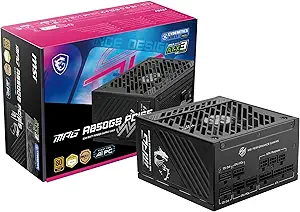 | Best 850W Future-Ready Pick | Wattage: 850W | Efficiency Rating: 80 Plus Gold | Power Standard: ATX 3.1 | VIEW LATEST PRICE | See Our Full Breakdown |
| CORSAIR RM850e (2025) |  | Best Mainstream 850W Pick | Wattage: 850W | Efficiency Rating: Cybenetics Gold | Power Standard: ATX 3.1 compliant | VIEW LATEST PRICE | See Our Full Breakdown |
| CORSAIR RM750e |  | Best for Midrange Gaming PCs | Wattage: 750W | Efficiency Rating: Cybenetics Gold | Power Standard: ATX 3.1 certified | VIEW LATEST PRICE | See Our Full Breakdown |
| MSI MAG A850GL PCIE5 |  | Best Mainstream 850W Pick | Wattage: 850W | Efficiency Rating: 80 Plus Gold | Form Factor: ATX | VIEW LATEST PRICE | See Our Full Breakdown |
| ASUS TUF Gaming 1000W Gold White Edition |  | Best White 1000W Build Pick | Wattage: 1000W | Efficiency Rating: 80 Plus Gold | Form Factor: ATX12V | VIEW LATEST PRICE | See Our Full Breakdown |
| CORSAIR RM850x ATX 3.1 |  | Best Quiet 850W Pick | Wattage: 850W | Efficiency Rating: Cybenetics Gold, up to 91% | Modularity: Fully modular | VIEW LATEST PRICE | See Our Full Breakdown |
| MSI MAG A650GLS PCIE5 |  | Best for Efficient Midrange Builds | Wattage: 650W | Efficiency Rating: 80 Plus Gold, up to 90% | Form Factor: ATX, internal | VIEW LATEST PRICE | See Our Full Breakdown |
More Details on Our Top Picks
ASUS ROG Strix 1000W Platinum
I rank the ASUS ROG Strix 1000W Platinum highest for buyers building around a power-hungry graphics card because its ATX 3.1 support, Platinum efficiency, GaN MOSFET design, and GPU-first voltage sensing all point toward cleaner power delivery under gaming spikes. Compared with the ASUS TUF Gaming 1000W Gold, this is the more refined choice: better efficiency rating, quieter ambitions with Cybenetics Lambda A+, and extra focus on GPU stability. The tradeoff is value. Many gaming PCs do not need 1000W or the premium circuitry, and the Corsair RM850e gives plenty of headroom for less demanding builds. I would buy this for a flagship GPU rig, not a sensible midrange tower.
Pros:- 1000W capacity suits demanding GPU and CPU combinations
- 80 Plus Platinum efficiency reduces wasted power versus Gold-rated picks
- ATX 3.1 support fits newer graphics-card power demands
- GPU-first voltage sensing is aimed at steadier graphics-card delivery
Cons:- Likely more expensive than 850W Gold units that suit many gaming builds
- 1000W is more capacity than most single-GPU PCs need
- Larger 6.3-inch depth can be tighter in compact cases
Best for: Enthusiast builders pairing a high-end GPU with a premium ATX case and wanting extra electrical headroom.
Not ideal for: Midrange gamers using cards below the flagship tier, since much of the 1000W Platinum platform may sit unused.
- Wattage:1000W
- Efficiency Rating:80 Plus Platinum
- Form Factor:ATX
- Power Standard:ATX 3.1
- Cabling:Fully modular
- Cooling:Air cooling with dual ball fan bearings and 0dB technology
- Dimensions:6.3 x 5.9 x 3.4 inches
- Warranty:10 years
Bottom line: This is my premium pick for a no-compromise gaming PC where GPU stability and efficiency matter more than price.
ASUS TUF Gaming 1000W Gold
The ASUS TUF Gaming 1000W Gold earns my overall slot because it balances the things gaming buyers usually need: 1000W headroom, an included 16-pin PCIe cable for up to 600W GPU delivery, fully modular cabling, and a long 10-year warranty. It is not as elite as the ASUS ROG Strix 1000W Platinum, which has a higher efficiency rating and more advanced GPU-focused voltage features, but the TUF model feels easier to justify for a strong gaming tower. Compared with the Corsair RM850e, it gives more upgrade room for future graphics cards, though it may be overbuilt for a single midrange GPU. I like it most when the build target is powerful, durable, and fairly practical.
Pros:- 1000W output gives generous room for high-end GPUs
- ATX 3.0 support and bundled 16-pin PCIe cable suit PCIe Gen 5 graphics cards
- Military-grade components and PCB coating add durability appeal
- Fully modular cables help reduce clutter in gaming cases
Cons:- 80 Plus Gold is less efficient than the ROG Strix Platinum
- May be excessive for mainstream single-GPU gaming PCs
- ATX 3.0 support is a step behind newer ATX 3.1 units in this lineup
Best for: Gamers building a full-size ATX tower around a high-end GPU who want 1000W capacity without moving into premium Platinum pricing.
Not ideal for: Budget or midrange builds where a 750W or 850W unit would leave enough headroom for less money.
- Wattage:1000W
- Efficiency Rating:80 Plus Gold
- Power Standard:ATX 3.0 compatible
- GPU Cable:16-pin PCIe cable rated up to 600W
- Cabling:Fully modular
- Cooling:Axial-tech fan with dual ball bearings
- Component Notes:Japanese capacitors, military-grade capacitors and chokes, protective PCB coating
- Warranty:10 years
Bottom line: This is my balanced 1000W pick for gamers who want serious headroom without paying for every premium refinement.
MSI MPG A850GS PCIE5
The MSI MPG A850GS PCIE5 takes the future-ready 850W role because it pairs ATX 3.1 and PCIe 5.1 readiness with dual 12V-2×6 cables and a 10-year warranty. I would choose it over the Corsair RM850e when cable support and warranty length carry more weight, especially for builders eyeing newer GPUs. It also has 100% Japanese 105C capacitors and a full suite of electrical protections, which matters when gaming loads jump sharply. The downside is physical bulk: its listed 11.5 x 9.5 x 5.4-inch dimensions make it less case-friendly than Corsair’s compact 140mm-long RMe models. It also lacks the premium efficiency jump of the ASUS ROG Strix Platinum.
Pros:- 850W capacity is a strong match for many high-performance single-GPU gaming PCs
- ATX 3.1 and PCIe 5.1 readiness support newer platform requirements
- Dual 12V-2×6 cables give more flexibility than many 850W rivals
- 10-year warranty is longer than Corsair RMe coverage
Cons:- Listed dimensions are much larger than the Corsair RMe units
- Gold efficiency trails the ASUS ROG Strix Platinum
- 850W may be limiting for extreme CPU and flagship GPU pairings
Best for: Gamers choosing an 850W PSU for a current or next-gen GPU build who want dual 12V-2×6 cabling and a long warranty.
Not ideal for: Compact-case builders who need a shorter PSU body and simpler cable routing.
- Wattage:850W
- Efficiency Rating:80 Plus Gold
- Power Standard:ATX 3.1
- GPU Standard:PCIe 5.1 ready
- Cabling:Fully modular with dual 12V-2×6 cables
- Capacitors:100% Japanese 105C capacitors
- Dimensions:11.5 x 9.5 x 5.4 inches
- Warranty:10 years
Bottom line: This is my 850W pick for buyers who care most about newer GPU cabling and long coverage.
CORSAIR RM850e (2025)
The CORSAIR RM850e (2025) is the one I would steer most mainstream gaming builders toward because 850W, ATX 3.1, PCIe 5.1, and a native 12V-2×6 cable cover the needs of many modern single-GPU PCs without jumping to a 1000W unit. Compared with the MSI MPG A850GS PCIE5, it gives up the 10-year warranty and dual 12V-2×6 cable angle, but its shorter 140mm casing is easier to place in more cases. Compared with the ASUS TUF 1000W Gold, it is less suited to extreme upgrades but more sensible for buyers who want tidy cabling and quiet operation. The seven-year warranty is respectable, yet clearly shorter than MSI and ASUS coverage here.
Pros:- 850W output fits many modern gaming PCs without excess capacity
- ATX 3.1 and PCIe 5.1 compliance suit newer graphics-card platforms
- 140mm-long casing is easier to fit than larger units
- Fully modular cabling keeps case interiors cleaner
Cons:- Seven-year warranty is shorter than the 10-year MSI and ASUS options
- Only Gold-level efficiency rather than Platinum
- Less headroom than 1000W models for future high-power upgrades
Best for: Mainstream gamers building around a modern single GPU who want 850W capacity, compact ATX fit, and clean modular cabling.
Not ideal for: Buyers planning a flagship GPU plus heavy overclocking, where a 1000W ASUS model leaves more overhead.
- Wattage:850W
- Efficiency Rating:Cybenetics Gold
- Power Standard:ATX 3.1 compliant
- GPU Standard:PCIe 5.1 compliant
- Cabling:Fully modular with 12V-2×6 cable
- Cooling:120mm rifle bearing fan
- Dimensions:5.91 x 5.51 x 3.35 inches
- Warranty:7 years
Bottom line: This is my sensible 850W choice for a clean, current gaming build that does not need 1000W.
CORSAIR RM750e
The CORSAIR RM750e sits below the 850W and 1000W picks by design, and that is exactly why it belongs here. For a midrange gaming PC, 750W with ATX 3.1, PCIe 5.1 support, and a 600W 12V-2×6 cable can be the cleaner buy than overspending on capacity. Compared with the CORSAIR RM850e, it gives up 100W of headroom but keeps the same compact dimensions, modular cabling, Modern Standby support, and seven-year warranty. Against the ASUS TUF 1000W Gold, it is far less upgrade-heavy, yet easier to justify for efficient builds with a mainstream GPU. I would skip it for flagship cards, but for balanced gaming systems it avoids paying for unused wattage.
Pros:- 750W capacity fits many efficient gaming builds
- ATX 3.1 and PCIe 5.1 readiness keep it current
- Includes a 600W 12V-2×6 cable for newer GPUs
- Compact 140mm-long casing helps with case compatibility
Cons:- Less wattage headroom than the RM850e and MSI MPG A850GS
- Seven-year warranty trails the 10-year ASUS and MSI models
- Not the best match for flagship GPU builds
Best for: Midrange gaming PC builders using efficient CPUs and mainstream GPUs who want current connectors in a compact PSU.
Not ideal for: Gamers planning high-end GPUs, major overclocking, or long upgrade cycles that may call for 850W or 1000W.
- Wattage:750W
- Efficiency Rating:Cybenetics Gold
- Power Standard:ATX 3.1 certified
- GPU Standard:PCIe 5.1 ready
- Cabling:Fully modular with 600W 12V-2×6 cable
- Cooling:120mm rifle bearing fan
- Dimensions:5.91 x 5.51 x 3.35 inches
- Warranty:7 years
Bottom line: This is my pick for midrange gaming PCs where current GPU support matters more than maximum wattage.
MSI MAG A850GL PCIE5
I rank the MSI MAG A850GL PCIE5 as the most balanced 850W choice in this batch because it gives gaming builds the right mix of ATX 3.1 support, PCIe 5.1 readiness, fully modular cabling, and a native 12V-2×6 cable without pushing into premium pricing territory. Compared with the CORSAIR RM850x, it leans more on value and broad availability than refinement, while the MSI MPG A850GS from the wider lineup offers more enthusiast extras. The compact ATX body also helps in mid-tower cases where cable space gets tight. The tradeoff is that its listed fan and connector data are less polished than some rivals, and it lacks the 1000W headroom of the ASUS TUF Gaming 1000W Gold White Edition.
Pros:- 850W output fits many modern gaming PCs without overbuying
- ATX 3.1 and PCIe 5.1 support suit newer GPU power standards
- Fully modular cabling keeps unused leads out of the case
- Compact ATX design can make mid-tower installation easier
Cons:- Less wattage headroom than the 1000W ASUS options
- Not as premium-positioned as the CORSAIR RM850x or ASUS ROG Strix Platinum
- Connector listing is less straightforward than some competing product pages
Best for: Midrange to upper-midrange gaming PC builders using a modern GPU who want an 850W ATX 3.1 PSU with clean cable management.
Not ideal for: Overclocked flagship GPU builds that would benefit from 1000W capacity or buyers who want the quietest premium cable set in the lineup.
- Wattage:850W
- Efficiency Rating:80 Plus Gold
- Form Factor:ATX
- Modularity:Fully modular
- GPU Power Support:Native dual-color 12V-2×6 cable
- Standards:ATX 3.1 and PCIe 5.1 ready
- Fan Size:120 mm
- Warranty:10-year limited warranty
- Dimensions:12 x 8.75 x 4.92 inches
Bottom line: This is my pick for gamers who want a sensible 850W modern PSU without paying for premium extras they may never use.
ASUS TUF Gaming 1000W Gold White Edition
The ASUS TUF Gaming 1000W Gold White Edition earns its place for builders who want both extra wattage headroom and a clean white-theme PSU. Compared with the MSI MAG A850GL PCIE5, the 1000W rating gives more room for power-hungry GPUs, CPU upgrades, and transient spikes, while its dual ball bearing fan and PCB coating point toward durability in hotter or dustier cases. It is not the most subtle choice, though: the white finish only makes sense if the rest of the build matches, and the 1000W capacity can be more than a midrange gaming PC needs. The ASUS ROG Strix 1000W Platinum in the wider lineup is the higher-efficiency luxury route, so this TUF model is better for durability-minded buyers staying at Gold efficiency.
Pros:- 1000W output gives strong upgrade room for high-end gaming parts
- White Edition finish suits showcase builds better than black PSUs
- Dual ball bearing fan is built for longer service life than sleeve designs
- PCB coating helps protect against dust, moisture, and harsh temperatures
Cons:- Overpowered for many mainstream gaming PCs
- Gold efficiency trails Platinum models such as the ASUS ROG Strix 1000W Platinum
- White hardware can clash in darker or closed-panel builds
Best for: White-case gaming PC builders running high-end graphics cards who want 1000W capacity and durable components without stepping up to Platinum pricing.
Not ideal for: Budget midrange builds with single modest GPUs, since 1000W capacity and the white finish may add cost without much practical gain.
- Wattage:1000W
- Efficiency Rating:80 Plus Gold
- Form Factor:ATX12V
- Modularity:Fully modular
- Cooling:Axial-tech fan with dual ball bearings
- Build Features:Military-grade components and protective PCB coating
- Connectors Listed:PCI Express, SATA, 24-pin system connector
- Warranty:10 years
- Dimensions:5.9 x 5.9 x 3.4 inches
Bottom line: This is the 1000W pick I would steer toward white showcase builds that need real power headroom and practical durability features.
CORSAIR RM850x ATX 3.1
The CORSAIR RM850x ATX 3.1 sits above the MSI MAG A850GL for buyers who care more about low-noise operation, cable feel, and efficiency polish than the cheapest path to 850W. Its Cybenetics Gold rating up to 91% matters because wasted power becomes heat, and heat usually means more fan noise during long gaming sessions. The native 12V-2×6 connector also keeps newer GPU installs cleaner than adapter-based setups. Compared with the CORSAIR RM850e (2025) from the wider roundup, this RM850x reads like the nicer cable-and-noise choice rather than the leaner value model. The tradeoff is simple: it does not give the 1000W buffer of the ASUS TUF model, and buyers paying for premium cabling may not see much benefit inside a closed, budget case.
Pros:- Cybenetics Gold rating up to 91% helps cut heat and wasted power
- Native 12V-2×6 connector supports newer graphics cards cleanly
- Fully modular design reduces cable clutter
- Embossed low-profile cables are easier to route in tidy builds
Cons:- 850W leaves less upgrade room than 1000W options
- Likely less cost-effective than simpler 850W models for hidden PSU chambers
- Premium cable features matter less in purely budget-focused builds
Best for: Gamers building a quiet 850W system with a newer GPU who want flexible cables and a direct 12V-2×6 connection.
Not ideal for: Flagship builds that need 1000W or buyers who only care about basic Gold-rated power at the lowest possible price.
- Wattage:850W
- Efficiency Rating:Cybenetics Gold, up to 91%
- Modularity:Fully modular
- Standards:ATX 3.1 compliant and PCIe 5.1 ready
- GPU Power Support:Native 12V-2×6 connector
- Cooling Profile:Low-noise power supply design
- Cable Style:Embossed cables with low-profile combs
- Color:Black
Bottom line: This is the 850W PSU I would choose when noise, cable routing, and a clean modern GPU connection matter more than raw wattage.
MSI MAG A650GLS PCIE5
The MSI MAG A650GLS PCIE5 is the most targeted pick here: it is for gaming PCs that need modern standards but not huge wattage. Compared with the MSI MAG A850GL PCIE5, stepping down to 650W makes more sense for efficient CPUs and midrange GPUs, while the native 12V-2×6 connector still keeps it relevant for newer PCIe 5.1 graphics cards within its power limit. Its 300W GPU cable rating is the dividing line; that is enough for many efficient cards, but not the part I would choose for a power-heavy flagship. The 135 mm FDB fan and compact 150 mm body help with noise and fit, yet the ASUS TUF Gaming 1000W Gold White Edition is the better match if upgrades could move into top-tier GPU territory.
Pros:- 650W capacity suits efficient gaming systems without overspending on unused wattage
- Native 12V-2×6 connector supports newer PCIe 5.1 GPU cabling
- Compact 150 mm-long ATX design leaves more room for cable routing
- 135 mm fluid-dynamic bearing fan supports quieter operation
Cons:- Too limited for many flagship GPU and CPU combinations
- 12V-2×6 output is capped at 300W
- Smaller review count than longer-established models in the lineup
Best for: Efficiency-focused 1080p or 1440p gaming builds using a midrange GPU and a case where cable space and airflow matter.
Not ideal for: High-end GPU buyers, heavy overclockers, or anyone planning a future graphics card that needs more than a 300W 12V-2×6 feed.
- Wattage:650W
- Efficiency Rating:80 Plus Gold, up to 90%
- Form Factor:ATX, internal
- Modularity:Fully modular
- GPU Power Support:Native 12V-2×6 connector, up to 300W
- Standards:ATX 3.1 and PCIe 5.1 ready
- Fan:135 mm fluid-dynamic bearing fan
- Protection Features:OCP, OTP, OPP, SCP, OVP, UVP, SIP, NLO
- Warranty:10-year manufacturer warranty
Bottom line: This is the smart lower-wattage choice for modern midrange gaming PCs, not a PSU for chasing the highest-end graphics cards.
How We Picked
I ranked these power supplies around what matters most in a gaming PC: stable power for modern GPUs, native support for newer graphics card cables, sensible wattage headroom, efficiency, noise control, warranty length, and fit inside real cases. I gave extra weight to ATX 3.1 and PCIe 5.1 readiness, because current and future graphics cards can place short, sharp load demands on a PSU. Fully modular cabling also mattered, since gaming PCs often need cleaner airflow and easier cable management than basic office builds.
The order favors models that give the broadest group of gamers the best mix of performance, usability, and price discipline. The 850W units rank high because they suit far more gaming builds than 650W or 1000W units. The premium 1000W picks move up only when their added efficiency, noise rating, or build features justify the higher spend. Lower-wattage and color-matched models still have clear roles, but I place them behind broader-fit options because they serve narrower build types.
Factors to Consider When Choosing Best Power Supplies For Gaming PCs
Choosing among the best power supplies for gaming PCs is less about chasing the biggest wattage number and more about matching the PSU to the graphics card, case, budget, and upgrade plan. I would treat the power supply as the stability layer of the whole build: it will not raise frame rates by itself, but the wrong one can limit upgrades, add cable clutter, or create noise under load.
Pick Wattage Around the GPU, Not the Whole Wishlist
The graphics card should drive the wattage decision because it is usually the largest and most variable load in a gaming PC. For many mainstream builds, 750W to 850W is the sweet spot, which is why the CORSAIR RM850x, CORSAIR RM850e, and MSI MPG A850GS are so broadly useful. A 650W unit like the MSI MAG A650GLS can still be a smart buy for efficient midrange GPUs, but it leaves less room for a future flagship card. A 1000W model makes sense when the build includes a power-hungry GPU, a high-end CPU, heavy overclocking, or long upgrade plans. Paying for 1000W in a modest system usually shifts money away from parts that affect gaming more directly.
ATX 3.1 Support Matters More Than Old Efficiency Badges Alone
Efficiency ratings still matter, but modern gaming PCs also benefit from ATX 3.1 and PCIe 5.1 support. Newer standards are designed with current GPU power behavior in mind, especially cards that use a 12V-2×6 cable. That is why the newer CORSAIR and MSI models look more practical than older-style units with only adapter-based support. An 80+ Gold PSU with the right modern cable layout can be a better gaming choice than a higher-efficiency older unit that complicates GPU installation. Platinum efficiency, as seen on the ASUS ROG Strix 1000W Platinum, is most attractive when the PC runs often, draws heavy power, or needs lower heat and fan noise.
Cable Design Can Make or Break a Clean Gaming Build
Fully modular cabling is more than a neatness perk in a gaming PC. It lets the builder use only the required cables, which improves airflow, reduces clutter near the GPU, and makes upgrades less awkward. Native 12V-2×6 support is especially useful because it avoids bulky adapter chains near large graphics cards. The MSI MPG A850GS stands out for dual 12V-2×6 cables, while the CORSAIR RM850x keeps the layout cleaner for a typical single-GPU build. Color also matters for showpiece systems, which gives the ASUS TUF Gaming 1000W Gold White Edition a clear role, though appearance should not outrank electrical fit.
Noise Ratings Matter in High-Airflow Gaming Cases
A quiet PSU will not fix a loud GPU cooler, but it can keep the whole PC from adding extra fan noise during long gaming sessions. Models with strong fan design, semi-passive behavior, or third-party noise ratings are easier to recommend for desk-side builds. The ASUS ROG Strix 1000W Platinum has the strongest quiet-build case here because of its Lambda A+ rating and premium platform features. The CORSAIR RM850e and RM750e are better value picks, but buyers chasing the quietest possible high-end build may prefer the RM850x or ROG Strix. In compact or warm cases, lower noise also depends on leaving enough wattage headroom so the PSU fan does not ramp as often.
Do Not Overpay for Headroom You Will Never Use
Extra wattage can be useful, but only when it maps to a realistic upgrade path. A gamer using a midrange GPU and one SSD will rarely benefit from a 1000W unit, which makes the MSI MAG A650GLS or CORSAIR RM750e more sensible. On the other side, an enthusiast planning a flagship GPU should not save a small amount by choosing a PSU that will be near its limit from day one. The best value usually sits where wattage, cable support, and warranty all line up with the next likely GPU upgrade. I would rather buy a well-equipped 850W Gold unit than a barebones higher-wattage model that creates cable or noise compromises.
Frequently Asked Questions
Is 850W Enough for a Modern Gaming PC?
For many gaming PCs, 850W is the best middle ground. It gives enough headroom for strong graphics cards, modern CPUs, several drives, and normal boost behavior without pushing the PSU into 1000W pricing. That is why the CORSAIR RM850x, CORSAIR RM850e, and MSI MPG A850GS rank so well in this roundup. I would move to 1000W for flagship GPUs, heavy overclocking, or a build meant to survive multiple high-end GPU upgrades. For midrange GPUs, 750W or even 650W can still be enough when the rest of the system is efficient.
Should I Buy a 1000W PSU for Future GPU Upgrades?
A 1000W power supply is smart if the next upgrade is likely to be a high-end graphics card rather than a modest step up. The ASUS ROG Strix 1000W Platinum is the stronger premium route because it adds higher efficiency and quieter operation, while the ASUS TUF Gaming 1000W Gold models lean more toward durability and value at that wattage. If the current PC uses a midrange GPU and the next card will probably stay midrange, 1000W may be wasted money. I would only pay for that headroom when the build plan truly points toward power-hungry hardware.
Is ATX 3.1 Really Needed for a Gaming PSU in 2026?
ATX 3.1 is worth prioritizing for a new gaming PC because it is built around the power behavior and cabling needs of newer GPUs. It does not mean every older PSU is bad, but it reduces reliance on adapters and gives the system a cleaner path for future graphics cards. In this lineup, the newer CORSAIR and MSI units benefit from that standard, especially the models with native 12V-2×6 cabling. If two PSUs are close in price, I would choose the ATX 3.1-ready option for a gaming build. The exception is a low-cost build using a GPU that does not need the newer connector.
What Is the Difference Between the CORSAIR RM850x and RM850e?
The CORSAIR RM850x is the more polished 850W choice, while the CORSAIR RM850e is the more cost-conscious option. Both target modern gaming PCs with ATX 3.1 and PCIe 5.1 readiness, but the RM850x is better suited to buyers who care more about quiet operation, long-term refinement, and a higher-end feel. The RM850e still makes sense when the budget is tighter and the build needs strong specs without paying for every premium detail. I would pick the RM850x for a higher-end gaming PC and the RM850e for a value-focused build that still deserves modern GPU support.
When Does a 650W PSU Still Make Sense for Gaming?
A 650W PSU still makes sense for efficient gaming PCs built around midrange graphics cards and sensible CPU choices. The MSI MAG A650GLS PCIE5 is the clearest fit here because it keeps modern cable support while avoiding the cost of bigger units. It is not the right pick for a flagship GPU, heavy overclocking, or a system meant to absorb unknown future upgrades. For a budget-conscious 1080p or 1440p build, though, 650W can be the cleaner buy. I would choose it only after checking the GPU maker’s recommended PSU rating and leaving some headroom for sustained gaming loads.
Conclusion
My best overall pick is the CORSAIR RM850x ATX 3.1, because it hits the strongest balance of wattage, modern GPU support, quiet operation, and upgrade room for most gaming PCs. For best value, I would point buyers to the CORSAIR RM850e (2025) or MSI MPG A850GS PCIE5, depending on whether they prefer CORSAIR’s broad appeal or MSI’s dual 12V-2×6 cable setup. The ASUS ROG Strix 1000W Platinum is the best premium choice for high-end builds where efficiency, noise, and voltage stability matter more than price. The MSI MAG A650GLS PCIE5 is the best beginner-friendly budget pick for modest gaming PCs, while the ASUS TUF Gaming 1000W Gold White Edition is the best specific pick for white-themed builds that still need serious wattage.
Fall Picks
fall essentials
As an affiliate, we earn on qualifying purchases.