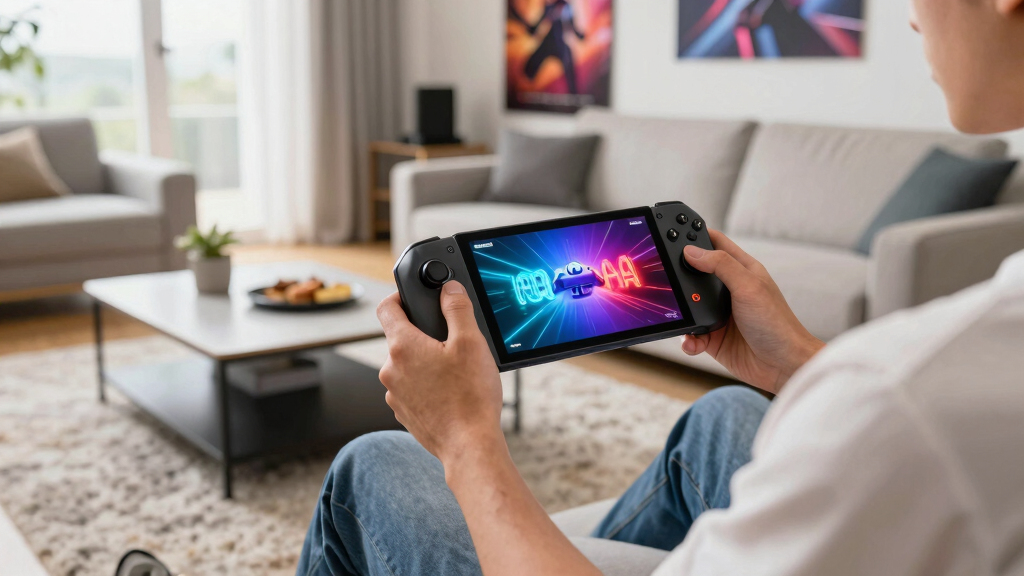

The Valve Steam Deck OLED 512GB is my best overall pick because it offers the strongest mix of OLED quality, software polish, comfort, and price. The AYANEO 3 OLED is the premium choice for buyers who want more Windows PC power and modular controls, while the Steam Deck OLED 1TB is the easier upgrade if storage and anti-glare glass matter more than raw specs. The main tradeoff in this category is simple: Steam Deck models feel smoother and easier, while Windows handhelds offer broader game compatibility at higher prices and with more setup friction. Some listed options stretch the OLED brief, so screen type, usability, and value matter as much as processor specs. Keep reading for the full breakdown by buyer type.

Play games on Amazon Luna for your game nights, included with Prime
- A rotating selection of games, no download needed
- Play on TV, laptop or phone
- Fast, free delivery for your gear, too
Key Takeaways
- The Steam Deck OLED 512GB is the cleanest recommendation because it delivers the OLED benefit without forcing buyers into the highest storage tier.
- The AYANEO 3 OLED is the power-user pick, but its Windows setup, higher price, and modular hardware make it less beginner-friendly than Valve’s handhelds.
- The Steam Deck OLED 1TB is the smarter upgrade over the 2TB bundle for most buyers because it adds storage and anti-glare glass without paying for accessories everyone may not use.
- The MSI Claw A8 and GPD Win 5 are more specialized; they appeal to buyers chasing performance or Windows flexibility, but they need extra scrutiny if OLED is the main reason for buying.
- Storage tiers matter less than ergonomics, display quality, and software; a cheaper OLED handheld plus a microSD card can beat a pricier bundle for many players.


More Details on Our Top Picks
Valve Steam Deck OLED 512GB Handheld Gaming Console
I rank the Steam Deck OLED 512GB highest because it gives the OLED handheld buyer the cleanest mix of HDR screen quality, battery life, storage, and ease of use. Compared with the AYANEO 3, it is less powerful and less flexible, but it is also simpler to live with, especially for players who want a console-like Steam library experience instead of a Windows handheld that may need more tuning. The 1280 x 800 resolution is modest next to the MSI Claw A8’s 1920 x 1200 panel, yet that lower pixel target can help performance and battery life. The main catch is platform fit: SteamOS is excellent for supported games, but buyers who rely on Windows-only launchers may feel boxed in.
Pros:- HDR OLED display makes games look richer than standard LCD handhelds
- 512GB storage is enough for a focused Steam library without forcing an immediate upgrade
- Longer battery life suits travel and couch play better than many high-power Windows handhelds
- Simpler software experience than modular or Windows-first rivals
Cons:- Less raw performance than premium Windows handhelds like the AYANEO 3
- SteamOS can be limiting for some game stores and Windows-only titles
- 1280 x 800 resolution is lower than several larger-screen rivals
Best for: Steam-focused players who want an OLED handheld that feels polished, portable, and easy to manage day to day
Not ideal for: Players who need Windows-only launchers, anti-cheat-heavy games, or the highest raw hardware specs
- Platform:Linux
- Storage:512GB
- Display:OLED with HDR support
- Resolution:1280 x 800
- Input:Gamepad
- Connectivity:Wi-Fi
- Wireless:Wi-Fi
- Color:Black
Bottom line: This is the OLED handheld I would put first for most Steam players who want the best balance instead of the biggest spec sheet.
AYANEO 3 7″ OLED Touchscreen Modular Gaming Handheld PC, AMD Ryzen AI 9 HX370, 32GB RAM, 1TB SSD, Windows 11, Starry Black
The AYANEO 3 earns the premium spot because it pairs a 7-inch 120Hz OLED display with VRR and a far stronger Windows hardware base than the Steam Deck OLED 512GB. Its Ryzen AI 9 HX370, Radeon 890M graphics, 32GB of fast memory, and 1TB SSD make it better suited to demanding PC games, multitasking, and non-Steam libraries. I would choose it over the Steam Deck OLED 1TB for players who value performance and customization more than a streamlined interface. The tradeoff is that its modular controller system adds complexity, and at 650g it is less relaxed for long handheld sessions. It also asks buyers to pay for power they may not need if most of their library runs well on Steam Deck.
Pros:- Ryzen AI 9 HX370 and Radeon 890M provide stronger headroom than Steam Deck OLED models
- 120Hz OLED display with VRR helps motion look smoother when frame rates vary
- 32GB RAM and 1TB SSD suit larger game libraries and multitasking
- Modular controls give hardware tweakers more flexibility
Cons:- 650g weight can make long handheld sessions tiring
- Premium pricing makes less sense for lighter indie or retro gaming
- Modular system may add setup friction for buyers who want simplicity
Best for: PC enthusiasts who want an OLED Windows handheld with high performance, VRR, and customizable controls
Not ideal for: Casual players who want a simple pick-up-and-play device without setup, tuning, or extra weight
- Processor:AMD Ryzen AI 9 HX370
- Graphics:Radeon 890M GPU, RDNA 3.5
- RAM:32GB LPDDR5X-7500
- Storage:1TB NVMe PCIe 4.0 SSD
- Display:7-inch OLED, 120Hz, VRR
- Battery:58Wh
- Weight:650g
- Connectivity:Wi-Fi 6E, Bluetooth 5.3, dual USB4, microSD, 3.5mm jack
- Cooling:Triple copper pipes, fin surface, turbo fan
Bottom line: This is the OLED handheld I would pick for power users who want Windows flexibility and are willing to manage the extra cost and complexity.
Valve Steam Deck OLED 1TB Handheld Gaming Console
The Steam Deck OLED 1TB is the smarter upgrade pick for buyers who already know they want Valve’s ecosystem but want a more premium version than the Steam Deck OLED 512GB. The larger SSD reduces storage juggling, while the anti-glare etched glass matters for players who use a handheld near windows, lamps, or while traveling. Compared with the AYANEO 3, it gives up Windows flexibility and raw performance, but it wins on cohesive software, cooler operation, and a lighter feel versus the older LCD model. I would not rank it above the 512GB Steam Deck for everyone because the core gaming experience is similar. The extra spend makes the most sense when storage, anti-glare treatment, and Wi-Fi 6E are part of the daily use case.
Pros:- 1TB NVMe SSD gives more room for large PC games than the 512GB model
- Anti-glare etched glass is better for mixed lighting and travel
- Wi-Fi 6E supports faster downloads on compatible networks
- Cooler, lighter design improves comfort over older Steam Deck hardware
Cons:- Costs more while sharing much of the same core experience as the 512GB OLED model
- Still less flexible than Windows handhelds for certain launchers and games
- 1280 x 800 resolution is modest beside the MSI Claw A8
Best for: Steam loyalists who install large games and want anti-glare glass without moving to a Windows handheld
Not ideal for: Budget-focused buyers who can manage a smaller library or use external storage instead of paying for 1TB
- Storage:1TB NVMe SSD
- Display:7.4-inch HDR OLED
- Resolution:1280 x 800
- Refresh Rate:Up to 90Hz
- Battery:50Whr, 3-12 hours of gameplay
- Connectivity:Wi-Fi 6E
- Touchscreen:180Hz polling rate
- Cooling:Enhanced thermals with larger fan
Bottom line: This is the Steam Deck OLED to buy when extra storage and anti-glare glass matter more than finding the lowest price.
GPD Win 5 Handheld Gaming PC with AMD Ryzen 395 and Radeon 8060S
The GPD Win 5 is the bold performance pick rather than the safest OLED pick, because its supplied specs focus on power instead of clearly confirming an OLED panel. Against the AYANEO 3, it goes even harder on muscle: a 16-core Ryzen 395, Radeon 8060S graphics, 64GB of LPDDR5X memory, and a 2TB SSD make it the most workstation-like handheld in this group. That matters for players who also emulate, stream, mod, or run creative tools. Still, I would place it behind the confirmed OLED Steam Deck and AYANEO models for an OLED-focused roundup because battery life and portability details are thin. It may be overkill for buyers who mainly want rich contrast, simple controls, and predictable unplugged play.
Pros:- Ryzen 395 and Radeon 8060S make it the strongest performance entry in this batch
- 64GB LPDDR5X RAM supports heavy multitasking and demanding PC workflows
- 2TB SSD gives the largest built-in storage among these reviewed models
- AI acceleration may help creative and future gaming workloads
Cons:- OLED status is not confirmed in the supplied display specs
- Battery life and portability details are too limited for easy comparison
- High-end hardware may require more tuning and thermal management
Best for: Power users who want handheld PC specs for AAA games, emulation, mods, and creative workloads
Not ideal for: OLED-first buyers who want confirmed screen details, clear battery expectations, and a simpler purchase decision
- Processor:AMD Ryzen 395, 16-core
- Graphics:Radeon 8060S, 40 CUs, RDNA 3.5
- Memory:64GB LPDDR5X
- Memory Speed:8000 MT/s
- Storage:2TB SSD
- Display:High-resolution, high-refresh-rate display
- AI Features:Built-in AI acceleration
Bottom line: This is the pick I would reserve for buyers who prize raw handheld PC power more than a clearly defined OLED experience.
MSI Claw A8 PC Gaming Handheld: AMD Ryzen Z2 Extreme, 8″ FHD+ 120Hz Display, 24GB RAM, 1TB SSD, Windows 11 Home, White
The MSI Claw A8 makes the list as the large-screen Windows alternative, but it is also the model I would judge most carefully in an OLED roundup because the supplied specs call out an 8-inch FHD+ 120Hz display rather than confirming OLED. Compared with the Steam Deck OLED 1TB, it offers a sharper 1920 x 1200 resolution, Windows 11 Home, 24GB of RAM, and a 1TB SSD, which suits buyers who want Game Pass, multiple launchers, and a roomier screen. Compared with the AYANEO 3, it looks less specialized because it lacks the modular controls and confirmed OLED VRR panel. Its appeal is practical: bigger display, strong AMD hardware, and familiar Windows access. Its weakness is that screen purists may prefer a confirmed HDR OLED option.
Pros:- 8-inch 1920 x 1200 display gives more screen space than Steam Deck OLED models
- AMD Ryzen Z2 Extreme targets demanding handheld PC gaming
- 24GB RAM and 1TB SSD are strong for Windows gaming and large installs
- Windows 11 Home supports broader launcher and Game Pass access
Cons:- OLED is not confirmed in the supplied product data
- Windows handhelds can require more updates and settings work than Steam Deck OLED
- Premium hardware may cost more than buyers need for lighter games
Best for: Windows gamers who want a larger 8-inch handheld display for Game Pass, launchers, and sharper UI text
Not ideal for: Buyers who specifically want a confirmed OLED panel with HDR-first screen credentials
- Platform:Windows 11 Home
- Processor:AMD Ryzen Z2 Extreme
- RAM:24GB
- Storage:1TB
- Display:8-inch FHD+ 120Hz
- Resolution:1920 x 1200
- Connectivity:Bluetooth, Wi-Fi
- Input:Gamepad
- Color:White
Bottom line: This is the better fit for buyers who want a large Windows handheld first and an OLED-specific screen promise second.
Valve Steam Deck OLED 2TB Handheld Gaming Console with 7-in-1 Kit
Valve Steam Deck OLED 2TB earns its place as my high-capacity pick because it keeps the most buyer-friendly part of the Steam Deck OLED line, the 7.4-inch HDR OLED screen, while removing the storage anxiety that can come with the 512GB and 1TB Steam Deck OLED models. Compared with the AYANEO 3 or MSI Claw A8, this is less about chasing Windows handheld performance and more about library comfort, battery flexibility, and a polished Steam-first experience. The 2TB SSD makes more sense for players who rotate between large PC games without constant installs, and the 7-in-1 kit adds travel value. The tradeoff is price and size: it is still bulkier than smaller handhelds, and battery life can swing sharply depending on game load.
Pros:- Large 2TB SSD reduces uninstalling and reinstalling big games
- 7.4-inch HDR OLED display gives better contrast and richer color than LCD handhelds
- 90Hz refresh rate makes lighter games feel smoother
- Accessory kit adds practical value for travel and docking setups
Cons:- Higher price than the 512GB and 1TB Steam Deck OLED models
- Bulkier than more compact handheld gaming systems
- Battery life can drop heavily in demanding games
Best for: Steam library owners who want OLED visuals, lots of installed games, and a ready-to-travel accessory bundle
Not ideal for: Players who want the smallest handheld or a Windows-first device for launchers outside Steam
- Display:7.4-inch HDR OLED
- Resolution:1280 x 800
- Refresh Rate:90Hz
- Processor:6nm AMD APU with Zen 2 CPU and RDNA 2 graphics
- Memory:16GB LPDDR5
- Storage:2TB SSD
- Battery:50Wh, rated for 3-12 hours
- Connectivity:Wi-Fi 6E and Bluetooth 5.3
- Weight:Approximately 1.41 lbs
Bottom line: This is the Steam Deck OLED to buy if storage space and travel readiness matter more than getting the lowest price.
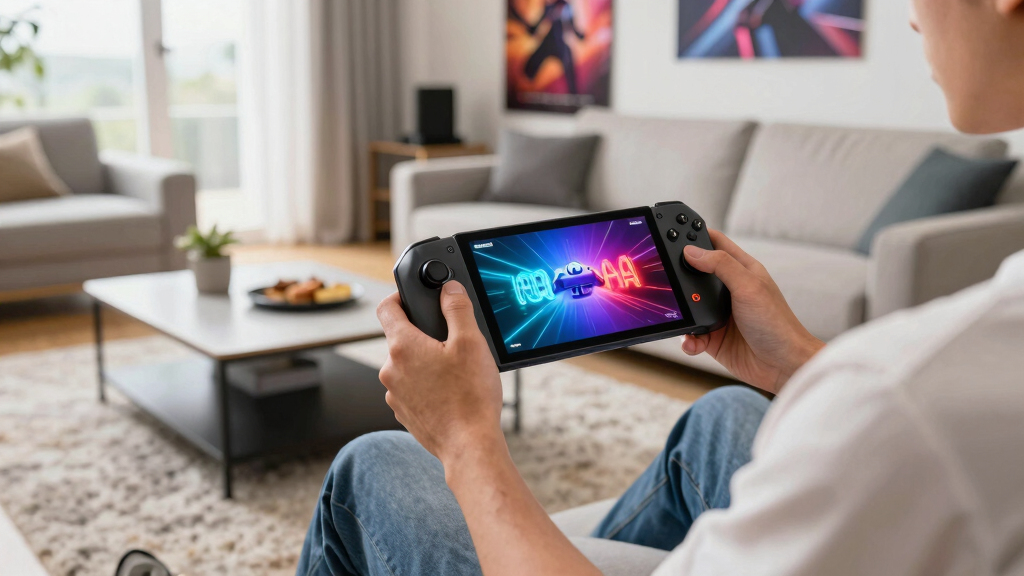
How We Picked
I ranked these handhelds around the question a buyer is really asking: which device gives the best OLED handheld gaming PC experience, not just the longest spec sheet. Display quality, game compatibility, comfort, battery expectations, thermals, software friction, storage value, and repair or accessory ecosystem all carried weight. A handheld with a faster chip moved down if it made everyday play harder, cost far more, or blurred the OLED promise.
The order favors systems that make OLED gaming feel easy and worthwhile. That is why the Steam Deck OLED 512GB lands ahead of the more expensive Steam Deck bundles: it captures the main screen upgrade at a better price. The AYANEO 3 OLED ranks high because it offers more ambitious hardware, but it asks more from the buyer. The Windows-first options are included for specific needs, yet they sit behind Valve’s OLED models when simplicity, value, and display-led enjoyment matter most.
Factors to Consider When Choosing Best OLED Handheld Gaming PCs
Choosing between the best OLED handheld gaming PCs is less about picking the biggest number on a spec sheet and more about matching the device to the way you play.OLED Is Only Worth Paying For If The Rest Of The Handheld Fits
OLED screens improve contrast, black levels, and perceived richness, which helps handheld games feel more vivid on a small display. That said, OLED does not fix awkward controls, weak battery life, loud cooling, or a clumsy interface. I would treat the screen as the reason to start the shortlist, then judge the whole device around it. The Steam Deck OLED models work well because the screen upgrade is paired with a mature handheld interface. A premium Windows model can look sharper on paper, but if it needs more tweaking before each session, the OLED panel may not feel like the main benefit. Buyers who mostly play indoors, dock often, or run older games may get more value from software comfort than from chasing the most advanced hardware.
SteamOS Versus Windows Changes The Daily Experience
SteamOS is easier for couch-style play, while Windows is better for broad launcher and anti-cheat compatibility. That split matters more than many spec comparisons suggest. A Steam Deck OLED can feel more console-like, with quick suspend, cleaner updates, and a library view built around handheld play. A Windows handheld such as the AYANEO 3, MSI Claw A8, or GPD Win 5 can run more stores and PC utilities, but small-screen Windows can add friction. If the buyer wants Game Pass PC, Epic, Battle.net, or niche launchers with fewer workarounds, Windows earns its keep. If the goal is to play Steam games with less setup, Valve’s OLED handhelds are the safer match.
Performance Matters, But Battery And Heat Decide Comfort
A faster processor is only useful if the handheld can sustain it comfortably. High-end chips can raise frame rates, but they can also drain the battery faster, create more fan noise, and make the device warmer during longer sessions. This is where buyer expectations need to be realistic: handheld PCs are not tiny desktop replacements. For indie games, older AAA titles, and tuned settings, the Steam Deck OLED line can feel balanced. For demanding modern games, a stronger Windows handheld may be the better fit, but only for buyers willing to manage power profiles and settings. I would rather pick a slightly slower handheld that feels stable than a hotter device that only wins in short benchmark-style bursts.
Storage Upgrades Are Useful, But Bundles Can Hide Poor Value
OLED handhelds fill up quickly because modern PC games can take huge chunks of storage. A 1TB model is convenient if the buyer keeps several large games installed, while 512GB can still work well with careful library management or microSD expansion. The tricky part is paying extra for bundles that add storage and accessories before deciding what is actually needed. The Steam Deck OLED 2TB with 7-in-1 kit may suit buyers who want an all-at-once package, but it is not automatically the best value. A dock, case, or adapter set is easy to buy later, while comfort and software fit cannot be added after purchase. I would spend more on built-in storage before paying a large premium for accessories.
Size And Controls Should Match The Games You Actually Play
Handheld comfort changes by genre. Action games benefit from stable grips and reliable sticks, strategy games may need touchpads or a good touchscreen, and retro or indie games often feel better on a lighter device. The Steam Deck OLED has an advantage for players who use trackpads or community controller profiles, while the AYANEO 3 stands apart with its modular control idea. Larger screens, like the MSI Claw A8’s 8-inch class display, can make text easier to read but can also add bulk. Compactness is not always better if it makes controls cramped. The best pick is the one that fits the buyer’s library, not the one with the most dramatic spec sheet.
Frequently Asked Questions
Which OLED Handheld Gaming PC Should Most People Buy?
Most buyers should start with the Valve Steam Deck OLED 512GB. It gives the main OLED advantage, a polished handheld interface, strong community support, and a lower price than the larger Steam Deck storage tiers. Compared with the AYANEO 3 OLED, it is less powerful and less flexible as a Windows PC, but it is easier to live with. Compared with the Steam Deck OLED 1TB, it saves money while keeping the same core screen and software experience. I would only move up if storage, anti-glare glass, or Windows compatibility is a clear need.
Is The Steam Deck OLED 1TB Worth It Over The 512GB Model?
The Steam Deck OLED 1TB makes sense if the buyer wants more internal storage and values the anti-glare glass. It is the better pick for people who install large AAA games and dislike swapping titles often. The 512GB model is stronger for value because it keeps the same OLED display class and core performance. A microSD card can cover a lot of storage needs, though internal storage is still cleaner for very large games. I would choose the 1TB version for convenience, not because it changes the handheld’s basic gaming ability.
Should I Buy A Windows OLED Handheld Instead Of A Steam Deck OLED?
A Windows handheld is better if the buyer wants wider launcher support, PC Game Pass, certain anti-cheat games, or more traditional PC control over settings. The AYANEO 3 OLED is the strongest fit here because it pairs a premium OLED screen with ambitious hardware. The tradeoff is that Windows can feel less graceful on a small handheld than SteamOS. Updates, power profiles, launcher pop-ups, and sleep behavior may need more attention. I would pick Windows for flexibility and Steam Deck OLED for a smoother handheld-first routine.
Is A Bigger Screen Better For OLED Handheld Gaming PCs?
A bigger display can help with small text, strategy games, and modern PC interfaces, but it also affects weight, grip comfort, and portability. An 8-inch class handheld may feel more immersive, yet it can become tiring during longer sessions if the body is heavy. OLED quality also depends on calibration, refresh behavior, and brightness, not only size. The Steam Deck OLED models hit a practical middle ground because the screen feels large enough without turning the device into a bulky slate. Buyers who play mostly at home may enjoy a larger screen, while commuters may prefer balance and comfort.
Is The 2TB Steam Deck OLED Bundle The Best Long-Term Buy?
The Steam Deck OLED 2TB with 7-in-1 kit can be useful for buyers who want maximum storage and accessories from day one. It is less compelling for value shoppers because the core handheld experience is still very close to the 512GB and 1TB models. Accessories are personal: some buyers need a dock, while others mostly play handheld and leave extras in a drawer. The 2TB capacity is appealing for large libraries, but it should not be treated as the automatic best model. I would buy it only if the storage and included kit match the buyer’s actual setup.
Conclusion
For most people, I would choose the Valve Steam Deck OLED 512GB as the best overall OLED handheld gaming PC because it balances screen quality, comfort, software polish, and price better than the rest. The Steam Deck OLED 1TB is the best value upgrade for buyers who want more storage and anti-glare glass, while the AYANEO 3 OLED is the best premium pick for power users who want Windows flexibility and higher-end hardware. The Steam Deck OLED 512GB is also the best for beginners because it asks the least setup work. For specific needs, the GPD Win 5 suits buyers chasing unusual performance-focused hardware, the MSI Claw A8 fits those who want a larger Windows handheld format, and the Steam Deck OLED 2TB bundle works for buyers who want storage and accessories bundled together from the start.
Evergreen bestsellers Picks
bestsellers
As an affiliate, we earn on qualifying purchases.