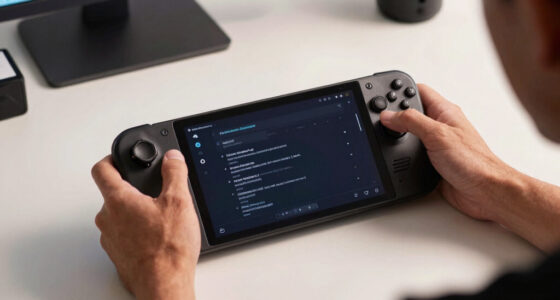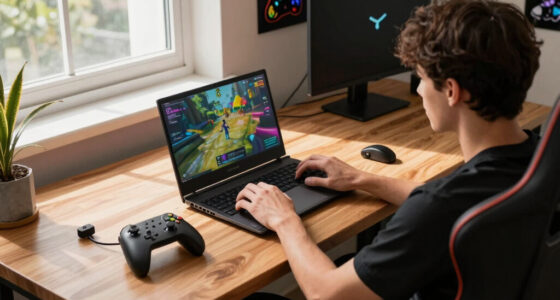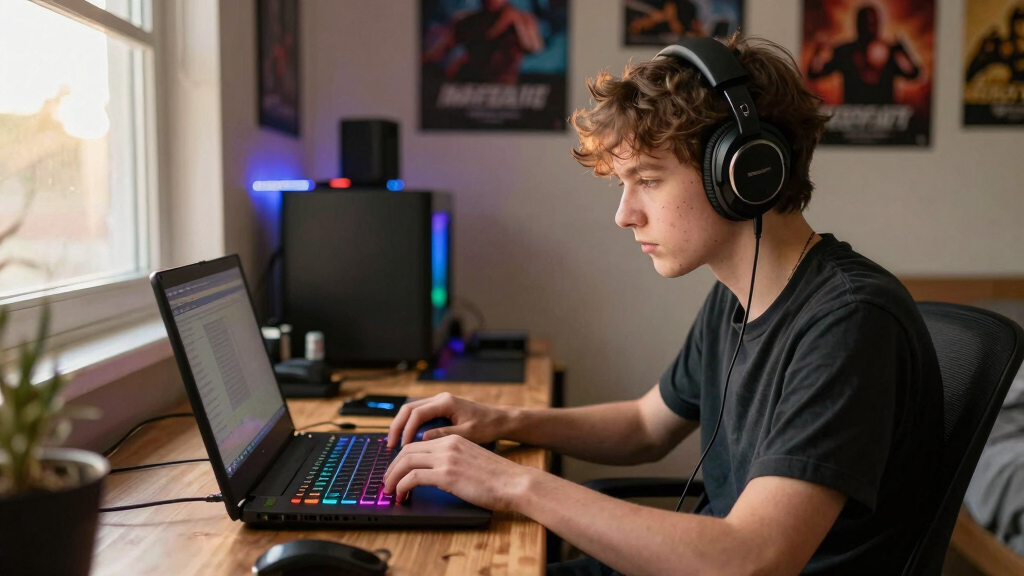

This guide provides clear steps for students to choose a gaming laptop that fits their gaming needs and academic requirements. It covers key features to consider, common pitfalls, and how to verify a good match. Designed for students with some knowledge of computers, it aims to help identify a device that offers good gaming performance without sacrificing portability or budget.

Get games and gaming gear delivered free — and shop member deals
- Fast, free delivery on millions of items
- Access to Prime Big Deal Days deals on October 6–7
- Prime Video, Amazon Music and more included

15.6" FHD Student Laptop with AMD Ryzen 5, 16GB RAM, 512GB SSD, Radeon Vega 8 GPU, Fast Charging, Webcam Privacy Shutter, Numpad
- ✔ Display: 15.6-inch FHD
- ✔ Processor: AMD Ryzen 5
- ✔ RAM: 16GB

Acer Nitro V Gaming Laptop with Intel Core i5-13420H and NVIDIA GeForce RTX 4050
- ✔ Display: 15.6" FHD IPS 165Hz
- ✔ Processor: Intel Core i5-13420H
- ✔ Graphics: NVIDIA GeForce RTX 4050

NIMO 15.6" Light-Gaming Laptop with AMD Ryzen 7 Pro 6850U, 32GB RAM, 1TB SSD, Radeon 680M, Backlit Keyboard, 2-Year Warranty
- ✔ Display: 15.6 inches, FHD
- ✔ Processor: AMD Ryzen 7 Pro 6850U
- ✔ Graphics: Radeon 680M RDNA 2
Difficulty: Intermediate | Time: 30-60 minutes
What You’ll Need
Tools & Materials:
- Internet access
- Budget range in mind
- Notebook for notes
Knowledge:
- Basic understanding of laptop specifications
- Awareness of gaming preferences
15.6" FHD Student Laptop with AMD Ryzen 5, 16GB RAM, 512GB SSD, Radeon Vega 8 GPU, Fast Charging, Webcam Privacy Shutter, Numpad
<p>This model stands out for its balanced approach, offering a powerful AMD Ryzen 5 processor, ample RAM, and fast SSD storage, making it suitable for everyday student tasks and light gaming. Its slim, lightweight design with up to 10 hours of battery life makes it perfect for students who need mobility. However, its integrated Radeon Vega 8 graphics limit high-end gaming performance, and the display resolution is standard FHD, not 4K, which may matter for creative work or media consumption. Compared with the Acer Nitro V, it sacrifices raw gaming power but wins on portability and security features like the webcam privacy shutter.</p>
Pros:
- Powerful AMD Ryzen 5 processor with fast performance
- Long-lasting battery with quick charging
- Secure webcam privacy shutter
- Lightweight and portable
Cons:
- Limited gaming performance for demanding titles
- No dedicated graphics card
- Standard FHD display
Best for: Students seeking a portable, versatile laptop for school and casual gaming
Not ideal for: Heavy gamers or students needing high-end creative software performance
Bottom line: A well-rounded choice for students prioritizing portability and everyday performance over high-end gaming capability.
“A well-rounded choice for students prioritizing portability and everyday performance over high-end gaming capability.”
Acer Nitro V Gaming Laptop with Intel Core i5-13420H and NVIDIA GeForce RTX 4050
<p>Compared with the other options, the <strong>Acer Nitro V</strong> offers a significant leap in gaming performance thanks to its NVIDIA GeForce RTX 4050 GPU and a fast 165Hz display, making it ideal for students who want a dedicated gaming experience or heavy multitasking. Its Intel Core i5 processor complements the GPU well, providing smooth gameplay and responsive productivity. However, with only 8GB RAM out of the box, it requires an upgrade for demanding multitasking, and its weight and battery life are less suited for portability. This pick makes the most sense for students who prioritize gaming but still need a capable workhorse.</p>
Pros:
- Powerful Intel Core i5 processor with RTX 4050
- Vibrant 165Hz FHD IPS display
- Wi-Fi 6 and Thunderbolt 4 connectivity
Cons:
- Limited RAM out of the box, upgrade recommended
- Heavier and less portable
- Uncertain battery longevity under gaming load
Best for: Students seeking high-performance gaming and multitasking capabilities
Not ideal for: Students who need lightweight, long-lasting battery devices for daily commuting
Bottom line: Ideal for students who want a gaming-capable laptop that can also handle intense multitasking, provided they upgrade the RAM.
“Ideal for students who want a gaming-capable laptop that can also handle intense multitasking, provided they upgrade the RAM.”
NIMO 15.6" Light-Gaming Laptop with AMD Ryzen 7 Pro 6850U, 32GB RAM, 1TB SSD, Radeon 680M, Backlit Keyboard, 2-Year Warranty
<p>The <strong>NIMO 15.6"</strong> is tailored for students who need a high-performance device for content creation, AI workflows, and multitasking. Its AMD Ryzen 7 Pro 6850U processor and 32GB RAM ensure seamless handling of demanding creative applications, while the Radeon 680M graphics support moderate creative workloads but are not meant for high-end gaming. Its 1TB SSD provides ample storage for large media files, and the lightweight design with fast charging enhances mobility. Compared with the other options, it is a premium device that excels in multitasking and creative tasks but is less suited for heavy gaming or users on a tight budget.</p>
Pros:
- Powerful AMD Ryzen 7 Pro processor
- High-speed 32GB RAM and 1TB SSD
- Lightweight with fast charging
- Ideal for AI workflows and creative software
Cons:
- Limited discrete graphics for high-end gaming
- Higher price point
- Battery life may be less under extended heavy load
Best for: Creative students and those needing high multitasking performance for AI or content creation
Not ideal for: Students primarily focused on gaming or casual use
Bottom line: The best choice for creative students demanding high multitasking capability and portability, with some compromises on gaming performance.
“The best choice for creative students demanding high multitasking capability and portability, with some compromises on gaming performance.”
As an Amazon Associate we earn from qualifying purchases.
Before You Start
Ensure you know your budget limit and list your must-have features, such as preferred games, portability needs, and any specific hardware preferences. Be aware that higher specs usually come with higher costs, and balancing performance against price is key.Step-by-Step Instructions
Step 1: Determine your budget range
Set a clear budget for your gaming laptop, considering both your gaming and academic needs. Typical student budgets range from $800 to $2000, depending on performance requirements.
Tip: Consider allocating more budget if you plan to play demanding games regularly or need better portability.
Check: You have a defined budget range that guides your search, helping filter options effectively.
Step 2: Identify essential hardware features
List the key specifications needed, such as a dedicated GPU (like NVIDIA GeForce RTX or GTX series), at least 8GB RAM, a fast SSD storage, and a recent multi-core processor (Intel i5 or AMD Ryzen 5 or better).
Tip: Prioritize GPU and CPU based on the most demanding games you want to run. SSD storage improves load times for both games and school work.
Check: Your list reflects the minimum hardware you’d require for smooth gaming and multitasking.
Step 3: Research suitable models
Use reputable tech review sites, online stores, and student forums to find laptops that match your specifications and budget. Read reviews focusing on gaming performance and build quality.
Tip: Filter options by user ratings, recent reviews, and warranty support. Avoid models with frequent overheating or hardware issues mentioned by users.
Check: You have a shortlist of 3-5 gaming laptops that meet your specs and budget.
Step 4: Compare portability and battery life
Check the weight and battery capacity of your shortlisted models. Ensure the weight is manageable for daily carry and battery life supports your typical gaming or study sessions.
Tip: Look for reviews mentioning real-world battery performance during gaming and academic use.
Check: You select a model that balances performance with portability suitable for daily student life.
Step 5: Verify compatibility with your needs
Ensure the chosen laptop supports your preferred operating system, has enough ports (USB-C, HDMI), and fits within your academic software requirements.
Tip: Confirm that the laptop’s hardware can run essential academic applications smoothly alongside gaming.
Check: Your selected laptop meets both gaming and academic compatibility needs.
Common Mistakes to Avoid
- Choosing a laptop with high specs but poor portability. — Prioritize lightweight and battery-efficient models if you plan to carry the laptop daily.
- Overlooking thermal performance, leading to overheating during gaming. — Read reviews about cooling systems and consider models with good cooling solutions.
- Ignoring upgradability, which limits future performance. — Select models with accessible RAM and storage slots for future upgrades.
Troubleshooting
Problem: Laptop overheats after a few hours of gaming.
Solution: Use a cooling pad and ensure vents are unobstructed; update BIOS and drivers for optimal thermal management.
Problem: Battery drains quickly during gaming sessions.
Solution: Adjust power settings to optimize battery life; consider gaming on AC power for intensive sessions.
Problem: Games run poorly despite meeting specs.
Solution: Update graphics drivers; lower in-game settings; close background applications.
What Success Looks Like
You have selected a gaming laptop that runs your preferred games smoothly, lasts for a reasonable period on battery, is portable enough for daily use, and fits within your budget. The laptop performs well in both gaming and academic tasks without overheating or lagging.
Next Steps
Set up your new laptop by installing essential software, updating drivers, and configuring settings for optimal performance. Keep your system updated regularly. Test the laptop with your favorite games and academic applications to confirm suitability. Consider purchasing accessories like a mouse or cooling pad for enhanced experience.
Frequently Asked Questions
How much should I spend on a gaming laptop as a student?
Budget ranges from $800 to $2000, depending on the performance level needed. Prioritize your essential features within your budget to find the best value.
Can a gaming laptop also be good for studying?
Yes, gaming laptops tend to have powerful processors and ample RAM, making them suitable for multitasking, programming, and other academic tasks beyond gaming.
Is it better to buy a new or refurbished gaming laptop?
New laptops offer the latest hardware and warranties, but refurbished models can save money. Ensure refurbished units are from reputable sources with warranties and good return policies.
How do I keep my gaming laptop cool during extended gaming sessions?
Use a cooling pad, ensure vents are unobstructed, clean dust from fans regularly, and avoid gaming on soft surfaces that block airflow.
Fall Picks
fall essentials
As an affiliate, we earn on qualifying purchases.