
TL;DR
Wireless PC VR streaming works by having your PC encode gameplay as video and your headset decode it in real time, which demands 100–500 Mbps of sustained local throughput and under ~5 ms of latency on the wireless hop. The 5 GHz band delivers the channel width and clean airtime this requires, while 6 GHz (Wi-Fi 6E/7) adds up to 1,200 MHz of interference-free spectrum with no DFS radar dropouts. Your internet speed is irrelevant — only the router-to-headset link matters.
You’re mid-swing in Beat Saber, combo climbing, when the world smears into blocky mush for half a second. Combo dead. That stutter wasn’t your GPU, and it wasn’t your internet plan. It was your Wi-Fi band — the invisible pipe between your router and your headset.
Here’s the twist most people miss: wireless VR streaming is a local network problem, not a broadband problem. Your PC and headset are shouting at each other across your living room at up to 500 Mbps, and the frequency band they use decides whether that conversation stays crisp or collapses into judder.
In this guide you’ll learn why 5 GHz and 6 GHz Wi-Fi matter for VR streaming, what actually goes wrong on 2.4 GHz, the hidden radar trap inside 5 GHz, and the exact same-room setup that makes wireless PC VR feel like a cable.
Wireless VR is a LAN problem: you need 100–500 Mbps sustained and under ~5 ms latency on the router-to-headset hop — your internet speed is irrelevant.
2.4 GHz can’t sustain VR bitrates and suffers constant interference from neighbors, Bluetooth, and microwaves; never let your headset connect to it.
Random mid-session dropouts on 5 GHz are usually DFS radar events; pinning channels 36–48 or moving to 6 GHz eliminates them.
6 GHz (Wi-Fi 6E/7) offers up to seven clean 160 MHz channels with no DFS, but its short range makes it a same-room technology.
The enthusiast-standard setup is a dedicated Wi-Fi 6/6E access point in the playspace, PC wired over Ethernet, headset as the only client.
Why 5 GHz & 6 GHz Wi-Fi Matter for VR Streaming
Wireless PC VR is a local network problem, not a broadband problem. Your PC encodes gameplay as video, your headset decodes it in real time — and the frequency band between router and headset decides whether that conversation stays crisp or collapses into judder. Your internet speed is irrelevant; only the router-to-headset link matters.
One Live Broadcast, Zero Buffer
Air Link, Virtual Desktop, Steam Link and ALVR all follow the same recipe: the PC encodes gameplay as H.264, HEVC or AV1 video, and the headset decodes it dozens of times per second. A Netflix stream can buffer seconds ahead to hide hiccups. Your headset can’t — a late frame is a useless frame.
Every frame is a live broadcast of your own actions. On a congested band, encoded frames queue behind phones, TVs and laptops like cars at a toll booth — the headset starts dropping them, and you see macroblocks mid-swing. A clean band, not a faster internet plan, prevents it.

TP-Link AXE5400 Tri-Band WiFi 6E Router (Archer AXE75), 2025 PCMag Editors' Choice, 2.5Gbps WAN Port for Gaming & Streaming, 6GHz Band, 160MHz, OneMesh, Dual-Core CPU, VPN & WPA3 Security
Tri-Band WiFi 6E Router – Up to 5400 Mbps WiFi for faster browsing, streaming, gaming and downloading, all…
As an affiliate, we earn on qualifying purchases.
As an affiliate, we earn on qualifying purchases.
Where the Motion-to-Photon Budget Goes
Motion-to-photon latency — the time between turning your head and seeing the world move — is the make-or-break metric. Encoding, network travel and decoding all share one tiny allowance, so every millisecond of Wi-Fi jitter eats directly into your comfort.
One 30 ms jitter spike shatters the entire budget. The scene lags your head movement, the world swims, and motion sickness creeps in. A gigabit fiber plan does nothing to prevent that — a clean band does.
Total budget: ~20 ms
Arris Surfboard Wi-Fi 6E Access Point | W6U | Dedicated 6 GHz Band for Compatible Devices | 2.5 Gbps Port | Works with Any Wi-Fi Device | Upgrade Your Network to Wi-Fi 6E
Adapt with the future of Home Networking: The ARRIS SURFboard mAX Wi-Fi 6E Access Point allows customers to…
As an affiliate, we earn on qualifying purchases.
As an affiliate, we earn on qualifying purchases.
2.4 GHz vs 5 GHz vs 6 GHz for VR
Three bands, three very different tenants. The 6 GHz column is highlighted: it’s the only band that combines wide channels with zero radar-sharing obligations and zero legacy devices.
| Specification | 2.4 GHz | 5 GHz | 6 GHz · Wi-Fi 6E / 7 |
|---|---|---|---|
| Channels | 3 non-overlapping × 20 MHz | More spectrum, but ~2 usable 160 MHz | Up to 7 × 160 MHz non-overlapping |
| Channel Width | 20 MHz only | 80 / 160 MHz | 160 / 320 MHz (Wi-Fi 7) |
| DFS Radar Risk | ✓ None — but crowded | ✗ Channels 52–140 force instant hops | ✓ No DFS under LPI rules |
| Interference | ✗ Neighbors, Bluetooth, microwaves, IoT | ~ Moderate; legacy devices present | ✓ Essentially zero — 6E/7 clients only |
| Range | Longest through walls | Medium | ~ Short — a same-room technology |
| VR Verdict | ✗ Slideshow — never connect | ~ Workable minimum (clean 80 MHz) | ✓ Gold standard |
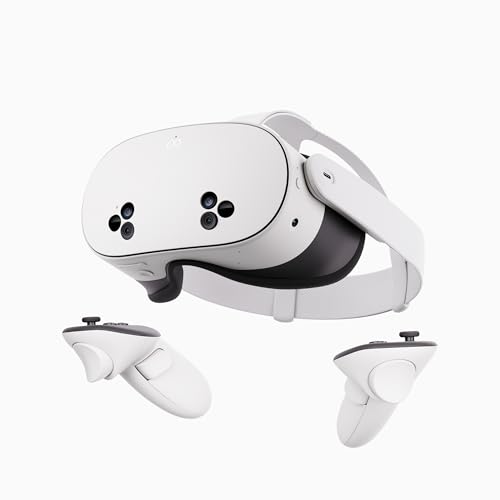
Meta Quest 3S 128GB | VR Headset — Thirty-Three Percent More Memory — Virtual Reality Without Wires — Access to 40+ Games with a 3-Month Trial of Meta Horizon+ Included (Renewed Premium)
NO WIRES, MORE FUN — Break free from cords. Game, play, exercise and explore immersive worlds — untethered…
As an affiliate, we earn on qualifying purchases.
As an affiliate, we earn on qualifying purchases.
Usable Spectrum, Band by Band
Width is capacity. VR at 150–500 Mbps needs a wide, quiet lane — and only 6 GHz delivers one that isn’t shared with radar or the neighborhood.
The Crowded Market
Neighbors’ routers, Bluetooth, smart bulbs, baby monitors — everyone shouts over everyone else. Microwave leakage sits right in-band: pop popcorn mid-session and your world dissolves into watercolor.
The DFS Trap
Channels 52–140 are shared with weather and military radar. Your router must legally abandon the channel the instant it hears radar — no warning, just a forced hop and a dropped session 20 flawless minutes in.
The 160 MHz Mirage
Wide 160 MHz channels at 5 GHz almost always span DFS ranges, so they’re often unusable in practice. At 6 GHz, seven of them are practical, common and radar-free.
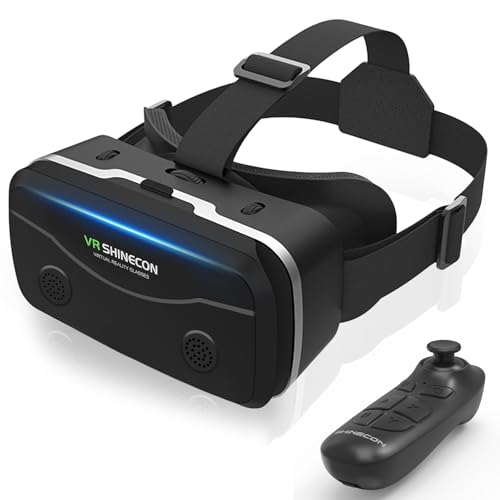
COCERKET VR Headset with Bluetooth Remote for 4.7-7" iPhone & Android Phones, HD Aspheric Lenses, Adjustable Focus & Pupil Distance, Heat Dissipation Design
【With Bluetooth controller】 Equipped with an advanced Bluetooth controller, these VR headset make it easy to switch between…
As an affiliate, we earn on qualifying purchases.
As an affiliate, we earn on qualifying purchases.
The Same-Room Setup That Kills Stutter
The community-standard recipe: Wi-Fi carries only the PC-to-headset hop, and the band it uses is clean, wide and uncontended.
Dedicated AP
Wi-Fi 6 / 6E access point placed inside the playspace — not the router across the house.
Wired PC
Gigabit Ethernet from PC to AP. Wi-Fi should never carry the PC side of the link.
Only Client
The headset is the sole device on that AP — nothing else queues ahead of your frames.
Pin the Channel
On 5 GHz, pin non-DFS channels 36–48. On 6 GHz, any 160 MHz channel is clean.
Same Room
6 GHz attenuates fast through walls — keep line of sight between AP and headset.
Read the Symptom, Find the Band
Every classic wireless-VR complaint traces back to the same root: which frequency band the conversation is happening on.
Blocky smearing mid-fight, combo killed
Congested band — frames queue behind other traffic
Dedicated in-room AP; headset as the only client
Random dropout after 20 flawless minutes
DFS radar event — router logs show a channel change
Pin channels 36–48, or move to DFS-free 6 GHz
Syrupy lag everywhere, constant judder
Headset roamed onto 2.4 GHz — physics, not settings
Split SSIDs; force the headset onto 5 / 6 GHz only
Crisp near the router, mush one room over
6 GHz attenuates quickly through walls
Treat 6 GHz as same-room, line-of-sight only
Your Internet Speed Doesn’t Matter — Your Wi-Fi Band Does
5 GHz and 6 GHz Wi-Fi matter for VR streaming because the fragile link in the chain sits between your router and your headset, not between your house and your ISP. Wireless PC VR demands roughly 100–200 Mbps of sustained throughput — up to around 500 Mbps at maximum quality — delivered with latency under about 5 ms on the wireless hop.
Think of it like a private water pipe in your house. The municipal supply (your internet) can be enormous, but if the pipe to your bathroom is a kinked garden hose, your shower still trickles. Local VR streaming never touches the municipal supply at all.
The number that rules everything is motion-to-photon latency — the time between turning your head and seeing the world move. For comfortable local streaming, your total budget is about 20 ms. Encoding, network travel, and decoding all share that tiny allowance, so every millisecond of Wi-Fi jitter eats directly into your comfort.
When the budget breaks, you feel it immediately: the scene lags your head movement, the world swims, and motion sickness creeps in. A gigabit fiber plan does nothing to prevent that. A clean band does.
How Wireless PC VR Actually Works (and Why It Exposes Weak Wi-Fi)
Wireless PC VR streaming works by having your PC encode gameplay as a compressed video stream — H.264, H.265/HEVC, or AV1 — and your headset decode that stream in real time, dozens of times per second. Tools like Meta Air Link, Virtual Desktop, Steam Link, and ALVR all follow this same recipe.
This is one of the most important aspects of the whole setup to grasp: you’re not downloading a game, you’re watching a live broadcast of your own actions, where every frame expires in milliseconds. A Netflix stream can buffer seconds ahead to hide network hiccups. Your headset can’t — a late frame is a useless frame.
Picture a concrete scenario. You’re playing Half-Life: Alyx over Air Link at 150 Mbps. Your router is also juggling a phone uploading photos, a smart TV, and a laptop. On a congested band, your encoded frames queue behind that traffic like cars at a toll booth, and the headset starts dropping them. You see macroblocks and feel a sharp silence in the action — a hitch that’s almost audible.
Newer hardware raises the ceiling. GPUs like NVIDIA’s RTX 40-series and AMD’s RX 7000-series support AV1 encoding, and headsets such as the Quest 3 can decode it, squeezing better image quality from every megabit. But AV1 still needs a band that can carry it steadily.
Why 2.4 GHz Turns Your Game Into a Slideshow
The 2.4 GHz band fails at VR streaming because it offers only three non-overlapping 20 MHz channels, and those channels are shared with nearly every wireless thing ever made. It physically cannot sustain VR bitrates with stable latency.
Walk through your home and count the tenants on 2.4 GHz: your neighbors’ routers bleeding through the walls, Bluetooth controllers and headphones, smart bulbs, robot vacuums, baby monitors. It’s organized chaos — a crowded farmers’ market where everyone shouts over everyone else.
Then there’s the classic killer: the microwave oven. Pop a bag of popcorn mid-session and watch your beautiful VR world dissolve into a smeared watercolor painting. Microwave leakage sits right in the 2.4 GHz range, and your stream loses every time.
Even without interference, the band’s narrow channels cap real-world throughput well below what high-bitrate VR wants, and congestion injects latency jitter — random spikes that smash your 20 ms motion-to-photon budget. One 30 ms spike is all it takes for your stomach to notice.
If your headset ever connected to 2.4 GHz and felt like wading through syrup, this is why. It’s not a settings problem. It’s physics.
What 5 GHz Gets Right — and the DFS Trap That Drops Your Stream
The 5 GHz band became the historical minimum for acceptable wireless VR because it offers far more spectrum, 80 MHz and 160 MHz channel widths, and denser modulation — 256-QAM on Wi-Fi 5 and 1024-QAM on Wi-Fi 6 — than 2.4 GHz ever could. On a clean 80 MHz channel, it carries 150–200 Mbps VR streams comfortably.
But 5 GHz hides a trap called DFS, or Dynamic Frequency Selection. A large slice of the band (channels 52–140) is shared with weather and military radar, and your router must legally abandon any of those channels the instant it hears radar. No warning. Just a forced channel hop — and a dropped VR session.
If your 5 GHz stream stutters or disconnects at seemingly random times, check for DFS events in your router logs before blaming your headset. Pinning a non-DFS channel (36–48) is the classic fix.
Here’s a real-world pattern: your stream runs flawlessly for twenty minutes, then dies mid-fight. The router logs show a channel change at that exact moment. That’s a radar event — possibly from an airport or weather station kilometers away — yanking the channel out from under you.
The practical consequence: those lovely wide 160 MHz channels in 5 GHz usually span DFS ranges, so they’re often unusable in practice. You get a band that’s fast but, depending on where you live, quietly unreliable.
Why 6 GHz Is the New Gold Standard for Wireless VR
The 6 GHz band is the new gold standard for VR streaming because it adds up to 1,200 MHz of fresh spectrum — room for up to seven non-overlapping 160 MHz channels, versus roughly two usable ones in 5 GHz. Wi-Fi 6E and Wi-Fi 7 devices get this entire playground to themselves.
Two design decisions make it feel almost unfair. First, no legacy devices allowed: only Wi-Fi 6E and Wi-Fi 7 clients can operate on 6 GHz, so the band is free of the ancient, slow gadgets clogging 2.4 and 5 GHz. Second, no DFS: under low-power indoor rules, there’s no radar sharing, so no forced channel changes and no mystery dropouts.
It’s like upgrading from a congested public highway to a private express lane with your name on it. The tradeoff is range — 6 GHz signals fade faster through walls, so treat it as a same-room, line-of-sight technology.
The FCC opened the full 1,200 MHz for unlicensed Wi-Fi in April 2020 [1]. The EU and UK approved a smaller slice (5945–6425 MHz, 480 MHz), and China designated 6 GHz for 5G instead — so availability depends on your region. On the hardware side, the Meta Quest 3 (October 2023) was the first mainstream standalone headset with Wi-Fi 6E [2], the Quest Pro also supports it, while the Quest 2 tops out at Wi-Fi 6 on 5 GHz and Apple Vision Pro ships with Wi-Fi 6, not 6E. Wi-Fi 7 certification arrived in January 2024, adding 320 MHz channels and Multi-Link Operation [3].
| Band | Usable wide channels | Congestion | DFS risk | VR verdict |
|---|---|---|---|---|
| 2.4 GHz | Three 20 MHz | Severe | None | Avoid for VR |
| 5 GHz | ~Two 160 MHz (often DFS-blocked) | Moderate | Yes, channels 52–140 | Good baseline |
| 6 GHz | Up to seven 160 MHz | Minimal | None | Best for VR |
The Same-Room Setup That Kills Stutter for Good
The most reliable wireless VR setup is a dedicated Wi-Fi 6 or 6E access point in the same room as your headset, wired to your PC, serving no other clients. Follow these steps in order — each one removes a specific failure point:
- Wire your PC with gigabit Ethernet. Wi-Fi should carry only the PC-to-headset hop. Two wireless hops is the single most common setup mistake, and no router upgrade fixes it.
- Add a dedicated router or access point near your playspace. A mid-range Wi-Fi 6/6E unit wired back to the PC outperforms a shared whole-home mesh for VR. Mesh backhauls and powerline adapters add latency and jitter — skip them.
- Make the headset its only client. Split your bands into separate SSIDs so the headset locks onto 5 or 6 GHz instead of band-steering down to 2.4 GHz at the worst moment.
- Pick your channel deliberately. On 5 GHz, pin a non-DFS channel (36–48). On 6 GHz, any wide channel works — it’s the empty freeway.
- Tune your stream settings. Choose HEVC or AV1 where supported (AV1 needs an RTX 40-series or RX 7000-series GPU and a compatible headset like the Quest 3). Start around 100–150 Mbps and raise the bitrate until artifacts appear, then back off a notch.
Note the platform fine print: the Quest 2 is 5 GHz-only, so step two means Wi-Fi 6 on 5 GHz for that headset. Wi-Fi 7 routers are a nice-to-have — MLO and 320 MHz channels are genuinely useful — but Wi-Fi 6E already exceeds what most headsets can use, and headset-side Wi-Fi 7 support remains rare. Any claims about upcoming headsets adding it are unconfirmed until the manufacturers say so.
Frequently Asked Questions
Do I need Wi-Fi 6E (6 GHz) for the Quest 3, or is 5 GHz good enough?
5 GHz Wi-Fi 6 on a clean 80 MHz channel works well for most players, and it’s what many Quest 3 owners happily use today. Wi-Fi 6E becomes a meaningful upgrade in congested apartments or when you want to push bitrates toward 200 Mbps and beyond, where the empty 6 GHz spectrum keeps latency flat.
Why does my 5 GHz VR stream randomly drop or stutter mid-game?
The usual suspects are DFS radar events, channel congestion, or your router auto-switching channels. Check your router logs for channel changes, then pin a non-DFS channel (36–48) and split your SSIDs so the headset can’t wander onto 2.4 GHz. If dropouts persist, 6 GHz removes the DFS problem entirely.
Should I buy a dedicated router just for VR?
For enthusiasts, yes — it’s the community-standard recommendation. A mid-range Wi-Fi 6 or 6E router wired to your PC, placed in the playspace with the headset as its only client, consistently outperforms a shared mesh system. If your household Wi-Fi is lightly used and your router already sits in the same room, you can try that first.
Does 6 GHz have worse range than 5 GHz?
Yes — 6 GHz signals attenuate faster through walls than 5 GHz and much faster than 2.4 GHz. That’s why 6 GHz VR streaming is essentially a same-room, line-of-sight technology. It’s superb for a dedicated playspace and a poor choice for whole-home coverage.
Will a better router fix my lag if my PC is also on Wi-Fi?
No — wire the PC first. When both the PC and headset use Wi-Fi, every frame crosses the air twice, doubling latency and jitter on the wireless hop. Gigabit Ethernet from PC to router is the foundation; only the PC-to-headset hop should ever be wireless.
Is Wi-Fi 7 worth it for VR right now?
It’s a nice-to-have, not a requirement. Wi-Fi 7 brings 320 MHz channels, Multi-Link Operation, and 4096-QAM, all genuinely relevant to latency and stability — but Wi-Fi 6E already exceeds most current headsets’ needs, and headset-side Wi-Fi 7 support is still rare. Buy Wi-Fi 7 for future-proofing, not because VR demands it today.
Conclusion
If you remember one thing, make it this: your VR stream is only as strong as the band it rides on. Wire the PC, put a Wi-Fi 6E access point in the room, give the headset its own 6 GHz lane, and the wire-free dream stops stuttering.
Tonight, before your next session, check which band your headset actually connected to. That thirty-second check might be the difference between smeary mush and a world that moves exactly when your head does.