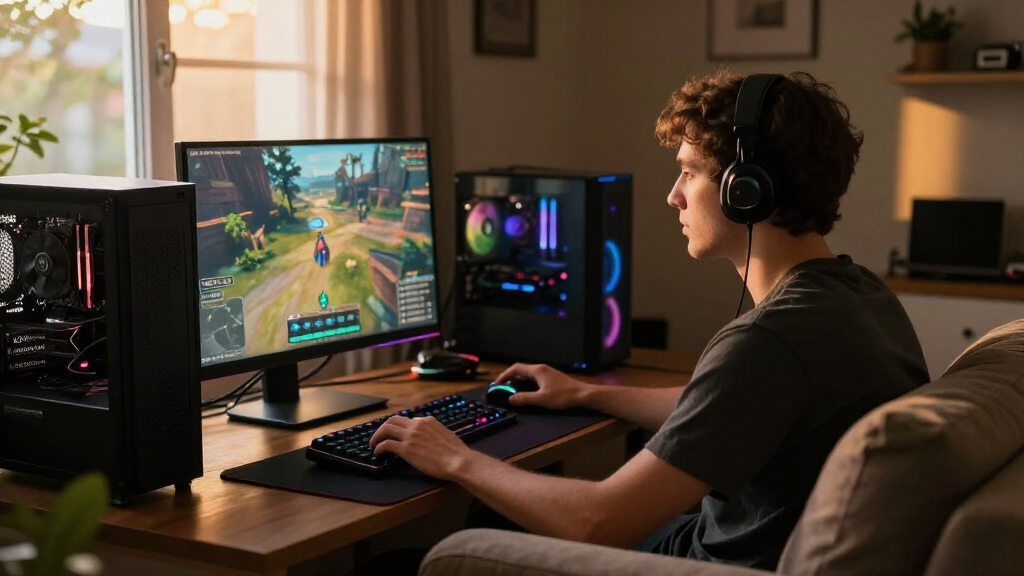

Finding the best DLSS-compatible gaming GPUs in 2026 involves balancing performance, price, and features. The ASUS GeForce RTX 5070 stands out as the top overall pick, offering a solid mix of power and reliability. The GIGABYTE GeForce RTX 5080 Gaming OC is a premium choice for enthusiasts who want absolute performance, while the PNY GeForce RTX 4060 provides excellent value for budget-conscious gamers. Buyers face tradeoffs between raw power, thermal management, and price, making it essential to prioritize what matters most for their gaming setup. Continue reading for a detailed breakdown of each option and help narrowing down the perfect GPU for your needs.
Open a free Amazon Business account
Business pricing, bulk buying and tax-exempt orders.
Create a free accountAs an affiliate, we earn on qualifying purchases.
Complete the kit


Key Takeaways
- The top-tier models like the GIGABYTE RTX 5080 deliver unmatched performance but come with a higher price tag and larger size.
- Budget-friendly options like the PNY RTX 4060 still support DLSS 3 effectively, making them suitable for gamers on a tighter budget.
- Build quality and cooling solutions vary widely; premium models tend to have more robust cooling, which impacts longevity and noise levels.
- Not all DLSS support is equal—some GPUs excel at higher resolutions or ray tracing, influencing your choice based on game preferences.
- Power supply and case compatibility are often overlooked but are critical to ensure your GPU fits and runs stably.
| ASUS GeForce RTX 5070 Graphics Card (12GB GDDR7, PCIe 5.0, HDMI/DP 2.1, 2.5-Slot, Axial-tech Fans, Dual BIOS, 3-Year Warranty) |  | Best Compact DLSS-Compatible GPU for Small Builds | GPU Architecture: NVIDIA Blackwell | Memory: 12GB GDDR7 | Interface: PCIe 5.0 | VIEW LATEST PRICE | See Our Full Breakdown |
| GIGABYTE GeForce RTX 5070 Ti Gaming OC 16G Graphics Card |  | Best High-Performance DLSS 4 Card for Enthusiasts | Memory: 16GB GDDR7 | Memory Interface: 256-bit | Architecture: NVIDIA Blackwell | VIEW LATEST PRICE | See Our Full Breakdown |
| PNY NVIDIA GeForce RTX 5060 Ti 16GB OC Dual-Fan Graphics Card |  | Best for Creative and High-Resolution Gaming | Graphics Coprocessor: NVIDIA GeForce RTX 5060 Ti | RAM: 16 GB | GPU Clock Speed: 2407 MHz | VIEW LATEST PRICE | See Our Full Breakdown |
| GIGABYTE GeForce RTX 5070 Gaming OC 12G Graphics Card |  | Best Balanced DLSS 4 Card for Gaming and Productivity | Memory: 12GB GDDR7 | Memory Interface: 192-bit | Architecture: NVIDIA Blackwell | VIEW LATEST PRICE | See Our Full Breakdown |
| PNY NVIDIA GeForce RTX 5070 Epic-X RGB OC Triple-Fan Graphics Card |  | Best Premium DLSS 4 Gaming and Creative Powerhouse | Graphics Coprocessor: NVIDIA GeForce RTX 5070 | Memory: 12GB GDDR7 | GPU Clock Speed: 2325 MHz | VIEW LATEST PRICE | See Our Full Breakdown |
| GIGABYTE GeForce RTX 5080 Gaming OC 16G Graphics Card |  | Best Overall for High-End Gaming and Creative Work | Architecture: NVIDIA Blackwell | Memory: 16GB GDDR7 | Memory Interface: 256-bit | VIEW LATEST PRICE | See Our Full Breakdown |
| GIGABYTE GeForce RTX 5060 WINDFORCE OC 8G Graphics Card |  | Best Mid-Range DLSS Gaming GPU for Performance and Cooling | Memory: 8GB GDDR7 | Memory Interface: 128-bit | Architecture: NVIDIA Blackwell | VIEW LATEST PRICE | See Our Full Breakdown |
| PNY GeForce RTX 4070 12GB XLR8 Gaming Verto Epic-X RGB Triple Fan Graphics Card |  | Best for High-Performance 1440p and Entry-Level 4K Gaming | Memory: 12GB GDDR6X | CUDA Cores: 5888 | Core Clock: 1920MHz | VIEW LATEST PRICE | See Our Full Breakdown |
| PNY GeForce RTX 4060 Ti 8GB XLR8 Gaming Verto RGB Triple Fan Graphics Card |  | Best Budget-Friendly DLSS 3 Gaming GPU for 1080p/1440p | Memory: 8GB GDDR6 | CUDA Cores: 4352 | Core Clock: 2310MHz | VIEW LATEST PRICE | See Our Full Breakdown |
| ASUS Dual GeForce RTX 5060 Ti 16GB GDDR7 OC Edition Gaming Graphics Card |  | Best for Creative and High-Performance Gaming with Large VRAM | Memory: 16GB GDDR7 | Architecture: NVIDIA Blackwell | Fan Design: Axial-tech | VIEW LATEST PRICE | See Our Full Breakdown |
| PNY GeForce RTX 4060 8GB XLR8 Gaming Verto Dual Fan OC Graphics Card DLSS 3 |  | Best for Budget-Conscious Gamers Seeking DLSS 3 Support | Memory: 8GB GDDR6 | Memory Interface: 128-bit | Core Clock: 1830MHz | VIEW LATEST PRICE | See Our Full Breakdown |
| DLSS-compatible gaming GPU | Memory |
|---|---|
| ASUS GeForce RTX 5070 Graphics | 12GB GDDR7 |
| GIGABYTE GeForce RTX 5070 Ti G | 16GB GDDR7 |
| PNY NVIDIA GeForce RTX 5060 Ti | — |
| GIGABYTE GeForce RTX 5070 Gami | 12GB GDDR7 |
| PNY NVIDIA GeForce RTX 5070 Ep | 12GB GDDR7 |
| GIGABYTE GeForce RTX 5080 Gami | 16GB GDDR7 |
| GIGABYTE GeForce RTX 5060 WIND | 8GB GDDR7 |
| PNY GeForce RTX 4070 12GB XLR8 | 12GB GDDR6X |
| PNY GeForce RTX 4060 Ti 8GB XL | 8GB GDDR6 |
| ASUS Dual GeForce RTX 5060 Ti | 16GB GDDR7 |
| PNY GeForce RTX 4060 8GB XLR8 | 8GB GDDR6 |
More Details on Our Top Picks
ASUS GeForce RTX 5070 Graphics Card (12GB GDDR7, PCIe 5.0, HDMI/DP 2.1, 2.5-Slot, Axial-tech Fans, Dual BIOS, 3-Year Warranty)
The ASUS GeForce RTX 5070 stands out for its small form factor combined with high performance, making it ideal for compact gaming rigs where space is limited. Unlike the larger GIGABYTE RTX 5070 Ti, it offers a more manageable size without sacrificing core features, thanks to its advanced cooling system and PCIe 5.0 support. While ASUS provides reliable dual BIOS options, the lack of detailed performance benchmarks and overclocking info suggests it’s better suited for users prioritizing size and reliability over raw overclocking headroom. This model is perfect for gamers with limited case space who want cutting-edge DLSS performance without expansion headaches, but those seeking maximum overclocking potential should look elsewhere.
Pros:- Compact design ideal for small builds
- Advanced cooling with axial-tech fans and thermal pad
- Supports PCIe 5.0 for high bandwidth performance
- Dual BIOS for added flexibility
Cons:- Limited details on performance benchmarks
- No overclocking capabilities specified
- Potentially higher price for its compact size
Best for: Small-form-factor PC builders needing a DLSS-compatible GPU that fits tight spaces.
Not ideal for: Enthusiasts seeking aggressive overclocking or high-end cooling customizations, due to limited overclocking info.
- GPU Architecture:NVIDIA Blackwell
- Memory:12GB GDDR7
- Interface:PCIe 5.0
- Video Outputs:HDMI 2.1, DisplayPort 2.1
- Design:2.5-slot
- Cooling:Axial-tech fans, phase-change GPU thermal pad
Our verdict“This GPU is best for small-form-factor PC users prioritizing space-efficient high performance with reliable cooling.”
GIGABYTE GeForce RTX 5070 Ti Gaming OC 16G Graphics Card
The GIGABYTE RTX 5070 Ti Gaming OC with DLSS 4 and 16GB GDDR7 targets gamers demanding top-tier performance and ample VRAM. Its effective WINDFORCE cooling system ensures stable operation under heavy loads, making it a clear choice over the ASUS RTX 5070 for those prioritizing raw power. However, compared with the PNY RTX 5070 Epic-X, it may consume more power and require a larger case, which could be a concern for space-constrained setups. This makes it an excellent pick for gamers who want maximum performance, especially at higher resolutions, but it involves a higher price and power draw that may not suit budget-conscious buyers.
Pros:- 16GB GDDR7 memory for demanding applications
- DLSS 4 support enhances frame rates and image quality
- Effective WINDFORCE cooling system
- Supports PCIe 5.0 for faster data transfer
Cons:- Potentially high power consumption
- Requires a large case for optimal cooling
- Premium price point
Best for: High-end gamers and content creators seeking maximum DLSS performance with 16GB VRAM.
Not ideal for: Casual gamers or users with smaller cases and limited power supplies, due to its size and high power requirements.
- Memory:16GB GDDR7
- Memory Interface:256-bit
- Architecture:NVIDIA Blackwell
- DLSS:4
- PCIe:5.0
- Cooling System:WINDFORCE
Our verdict“This GPU is best for enthusiasts who want maximum DLSS benefits and high VRAM at the expense of size and cost.”
PNY NVIDIA GeForce RTX 5060 Ti 16GB OC Dual-Fan Graphics Card
The PNY RTX 5060 Ti 16GB offers a compelling balance of high VRAM and AI capabilities, making it a strong choice for content creators and gamers aiming for high-res gaming up to 7680×4320. Its NVIDIA Blackwell architecture and DLSS 4 support outperform lower VRAM cards like the RTX 4060 Ti, especially in demanding workloads. The dual-fan cooling system keeps thermals in check, but the card’s requirement for a PCIe x8 slot may limit compatibility with some motherboards. Additionally, while it shines in high-resolution scenarios, the high power draw and uncertain pricing could deter budget-focused buyers or those with limited upgrade options.
Pros:- 16GB GDDR7 memory for demanding workloads
- Supports ultra-high resolutions up to 7680×4320
- Advanced AI features with DLSS 4
- Dual-fan cooling for thermal management
Cons:- Requires PCIe x8 slot, limiting upgrade options
- Potentially high power consumption
- Limited info on pricing and availability
Best for: Creative professionals and high-resolution gamers needing large VRAM and AI features.
Not ideal for: Budget-conscious or mid-range system builders with limited PCIe slot availability, due to compatibility constraints.
- Graphics Coprocessor:NVIDIA GeForce RTX 5060 Ti
- RAM:16 GB
- GPU Clock Speed:2407 MHz
- Video Output Interface:DisplayPort, HDMI
- Graphics RAM Type:GDDR7
- Maximum Resolution:7680 x 4320
Our verdict“Ideal for users needing serious VRAM and AI features for professional or high-res gaming setups.”
GIGABYTE GeForce RTX 5070 Gaming OC 12G Graphics Card
The GIGABYTE RTX 5070 Gaming OC with DLSS 4 and 12GB GDDR7 offers a strong balance of performance and affordability. While it doesn’t match the 16GB VRAM of the GIGABYTE RTX 5070 Ti, it still handles high-resolution gaming and creative workloads effectively thanks to its NVIDIA Blackwell architecture. Its WINDFORCE cooling system keeps thermals stable, and its $/performance ratio makes it appealing for gamers who want solid DLSS 4 benefits without overspending. Its main limitation is the need for a PCIe 5.0 slot and potential power consumption concerns, which could limit compatibility in some builds. Still, this card is a practical choice for mid-tier systems seeking DLSS 4 support.
Pros:- Effective DLSS 4 support boosts performance
- 12GB GDDR7 memory suitable for most gaming and creative tasks
- Reliable WINDFORCE cooling system
- Good value for mid-tier performance
Cons:- Requires PCIe 5.0 slot, limiting upgrade paths
- Potentially high power consumption
- Price premium compared to non-DLSS cards
Best for: Mid-range gamers and content creators wanting DLSS 4 without going all-in on the high-end models.
Not ideal for: Users with small cases or older motherboards lacking PCIe 5.0 support, due to compatibility issues.
- Memory:12GB GDDR7
- Memory Interface:192-bit
- Architecture:NVIDIA Blackwell
- DLSS:4
- PCIe:5.0
- Cooling System:WINDFORCE
Our verdict“Best for mid-range users seeking DLSS 4 benefits without premium high-end specs.”
PNY NVIDIA GeForce RTX 5070 Epic-X RGB OC Triple-Fan Graphics Card
The PNY RTX 5070 Epic-X RGB OC stands out for its triple-fan cooling system and high clock speeds, making it ideal for gamers and creators demanding robust performance and visuals. Its 12GB GDDR7 memory and DLSS 4.5 support deliver cutting-edge AI-enhanced gaming at high resolutions up to 7680×4320. Compared to the ASUS RTX 5070, its triple-fan design provides superior thermals, but the larger size and high power draw make it less suitable for smaller cases or budget builds. Its premium price may be a barrier for some, yet it offers a compelling mix of performance, aesthetics, and AI features for demanding users.
Pros:- Triple-fan cooling for superior thermal management
- High clock speeds and DLSS 4.5 support
- Supports high resolutions up to 7680×4320
- NVIDIA Blackwell architecture with AI acceleration
Cons:- Requires PCIe x16 slot and ample space
- High power consumption
- Premium price may be prohibitive
Best for: Gamers and creators wanting a high-performance, visually stunning GPU with excellent cooling and AI features.
Not ideal for: Small case owners or budget-conscious buyers who cannot accommodate its size or price point.
- Graphics Coprocessor:NVIDIA GeForce RTX 5070
- Memory:12GB GDDR7
- GPU Clock Speed:2325 MHz
- Video Output Interface:DisplayPort, HDMI
- Graphics RAM Type:GDDR7
- Additional Details:Boost Speed: 2685 MHz, 3-slot, PCIe 5.0
Our verdict“This GPU is ideal for enthusiasts seeking maximum performance, cooling, and AI features in a premium package.”
GIGABYTE GeForce RTX 5080 Gaming OC 16G Graphics Card
The GIGABYTE GeForce RTX 5080 Gaming OC stands out for its powerful NVIDIA Blackwell architecture and generous 16GB GDDR7 memory, making it ideal for demanding gaming, 4K rendering, and content creation. Compared with the RTX 5070, it offers a substantial leap in performance and memory capacity, but this comes with increased power consumption and a higher price tag. The WINDFORCE cooling system ensures thermal stability during extended sessions, though the high power draw may require a robust power supply. This card is best suited for enthusiasts who prioritize raw power and are willing to invest in premium hardware, while it might be overkill for casual gamers or those with limited case space.
Pros:- Exceptional performance enabled by NVIDIA Blackwell architecture
- Large 16GB GDDR7 memory supports demanding workloads
- Effective WINDFORCE cooling system maintains thermal stability
Cons:- Very high power consumption increases operational costs
- Premium cost may be prohibitive for casual users
Best for: High-end gamers and creators demanding maximum performance and large memory buffers.
Not ideal for: Budget-conscious users or those with small or less capable power supplies.
- Architecture:NVIDIA Blackwell
- Memory:16GB GDDR7
- Memory Interface:256-bit
- PCIe Version:PCIe 5.0
- Cooling System:WINDFORCE
Our verdict“This card is best for enthusiasts seeking top-tier performance and large memory capacity, accepting the premium price and power requirements.”
GIGABYTE GeForce RTX 5060 WINDFORCE OC 8G Graphics Card
The GIGABYTE RTX 5060 WINDFORCE OC offers a compelling balance between performance and affordability, with NVIDIA’s Blackwell architecture and DLSS 4 support. Its 8GB GDDR7 memory and PCIe 5.0 support make it a capable choice for 1440p gaming and demanding applications, outperforming lower-tier options like the RTX 4060 Ti. The WINDFORCE cooling system ensures stable operation, although the card’s size and power demands might challenge smaller cases or less capable power supplies. This pick makes the most sense for gamers who want solid DLSS performance without splurging on high-end models, but it may feel limited for future 4K or VR workloads.
Pros:- Strong NVIDIA Blackwell architecture with DLSS 4 support
- Effective WINDFORCE cooling system for thermal stability
- Supports PCIe 5.0 for fast data transfer
Cons:- High power consumption for its class
- Larger size may limit compatibility in tight cases
Best for: Mid-range gamers seeking good DLSS performance and cooling efficiency in a balanced package.
Not ideal for: Small case owners or budget users who prefer minimal power draw and simpler cooling.
- Memory:8GB GDDR7
- Memory Interface:128-bit
- Architecture:NVIDIA Blackwell
- DLSS:Yes
- PCIe:5.0
- Cooling System:WINDFORCE
Our verdict“This GPU suits gamers who want dependable DLSS performance and cooling in a mid-range form factor, accepting some size and power tradeoffs.”
PNY GeForce RTX 4070 12GB XLR8 Gaming Verto Epic-X RGB Triple Fan Graphics Card
The PNY RTX 4070 XLR8 leverages NVIDIA’s Ada Lovelace architecture with DLSS 3 support, making it a strong choice for gamers aiming at high-performance 1440p and some 4K gaming. Its 12GB GDDR6X memory and 5888 CUDA cores deliver a noticeable boost over previous generation models like the RTX 3060 Ti, especially with ray tracing and DLSS enabled. The triple fan design and heatsink ensure effective cooling, though it may be loud during intensive workloads and requires a large case for optimal airflow. This card is ideal for players seeking a balance of performance and cost, but it might be less suitable for users with smaller cases or those seeking maximum VRAM for future-proofing.
Pros:- Powerful Ada Lovelace architecture with DLSS 3
- Large 12GB GDDR6X memory supports demanding games
- Triple fan cooling for thermal management
Cons:- High power consumption increases operational costs
- Loud fan noise possible under load
Best for: High-performance gamers targeting 1440p or entry-level 4K with advanced ray tracing and DLSS 3.
Not ideal for: Small case owners or those on a very tight budget, as it commands a premium price for its features.
- Memory:12GB GDDR6X
- CUDA Cores:5888
- Core Clock:1920MHz
- Boost Clock:2475MHz
- Memory Bandwidth:504GB/sec
- Outputs:DisplayPort, HDMI
Our verdict“This GPU is well-suited for gamers wanting high-end 1440p performance with room for some 4K, accepting higher noise levels and cost.”
PNY GeForce RTX 4060 Ti 8GB XLR8 Gaming Verto RGB Triple Fan Graphics Card
The PNY RTX 4060 Ti XLR8 offers a compelling entry point for gamers seeking DLSS 3 and solid performance at 1080p and 1440p. Its Ada Lovelace architecture with 8GB GDDR6 memory and 4352 CUDA cores makes it a capable performer for most modern titles, especially when DLSS is enabled to boost frame rates. The triple fan setup and heatsink effectively manage thermals, though it may get noisy under load, and its PCIe 4.0 interface could limit compatibility with the latest systems. This card is a good fit for budget-conscious gamers who want decent future-proofing, but it may struggle with demanding 4K workloads or future titles with higher VRAM needs.
Pros:- DLSS 3 support with Ada Lovelace architecture
- Triple fan cooling for thermal stability
- Good performance at 1080p and 1440p
Cons:- Limited VRAM for future AAA titles
- Requires PCIe 4.0 system for optimal bandwidth
Best for: Budget gamers aiming for high frame rates at 1080p or 1440p with DLSS 3 support.
Not ideal for: Small form factor builds or users seeking maximum VRAM for future-proofing 4K gaming.
- Memory:8GB GDDR6
- CUDA Cores:4352
- Core Clock:2310MHz
- Boost Clock:2535MHz
- Memory Bandwidth:up to 288GB/sec
- Outputs:HDMI, DisplayPort
Our verdict“This GPU is ideal for gamers who prioritize affordability and high frame rates at 1080p/1440p with DLSS 3, accepting some limitations in VRAM and system compatibility.”
ASUS Dual GeForce RTX 5060 Ti 16GB GDDR7 OC Edition Gaming Graphics Card
The ASUS Dual RTX 5060 Ti OC offers a substantial 16GB GDDR7 memory, making it a standout for gamers who also do creative work or future-proofing. Its NVIDIA Blackwell architecture with DLSS 4 supports high frame rates and improved image quality at 1440p and beyond. The axial-tech fans and dual BIOS options provide efficient cooling and customizable operation, but its large 2.5-slot design could pose compatibility issues in smaller cases. While lacking specific user reviews, it’s a strong pick for users needing extensive VRAM and flexible cooling options, though it might be less appealing to those seeking a compact or lower-cost build.
Pros:- Massive 16GB GDDR7 VRAM for demanding applications
- Efficient axial-tech fan design for cooling and quieter operation
- Dual BIOS for performance and quiet modes
Cons:- Large size may limit compatibility in smaller cases
- No specific pricing or user feedback available
Best for: Gamers and creators needing high VRAM and flexible cooling in a large, reliable card.
Not ideal for: Small case owners or budget-conscious buyers who prefer a more compact or affordable solution.
- Memory:16GB GDDR7
- Architecture:NVIDIA Blackwell
- Fan Design:Axial-tech
- Design:2.5-slot
- Cooling Technology:0dB technology
- Modes:Quiet and Performance BIOS
Our verdict“This card is ideal for power users requiring extensive VRAM and flexible cooling, accepting size and potential cost constraints.”
PNY GeForce RTX 4060 8GB XLR8 Gaming Verto Dual Fan OC Graphics Card DLSS 3
The PNY GeForce RTX 4060 stands out for delivering solid gaming performance with DLSS 3, making it a compelling choice for gamers on a budget who still want access to the latest NVIDIA features. Compared with the RTX 5070 options, it offers a more affordable entry point but at the cost of fewer CUDA cores and lower VRAM, which could impact performance in demanding titles or high-resolution settings. Its dual 90mm fans and heatsink design provide effective cooling, though it requires a system with PCIe 4.0 support and can draw significant power, potentially limiting compatibility with older setups. The 8GB VRAM may also fall short for very high-end workloads or future-proofing, but for most current games at 1080p or 1440p, it strikes a good balance between price and performance.
Pros:- Affordable price point with DLSS 3 support
- Effective cooling with dual fans and heat pipes
- Decent performance for 1080p and 1440p gaming
- Multiple output options including HDMI and DisplayPort
Cons:- Requires PCIe 4.0 support, limiting older system compatibility
- Limited to 8GB VRAM, which might be insufficient for future or demanding titles
- Potentially high power consumption for some setups
Best for: Budget-minded gamers who want DLSS 3 and decent performance without investing in the highest-tier cards.
Not ideal for: Enthusiasts aiming for 4K gaming or workloads that demand extensive VRAM and maximum CUDA cores, as this card may struggle in those scenarios.
- Memory:8GB GDDR6
- Memory Interface:128-bit
- Core Clock:1830MHz
- Boost Clock:2475MHz
- CUDA Cores:3072
- Memory Bandwidth:272GB/sec
- Interface:PCIe 4.0
- Outputs:HDMI, DisplayPort
- Cooling:Dual 90mm fans, heatsink
Our verdict“This GPU makes the most sense for budget-conscious gamers seeking DLSS 3 support and solid performance at 1080p or 1440p, but it may fall short for high-end or future-proofing needs.”
How We Picked
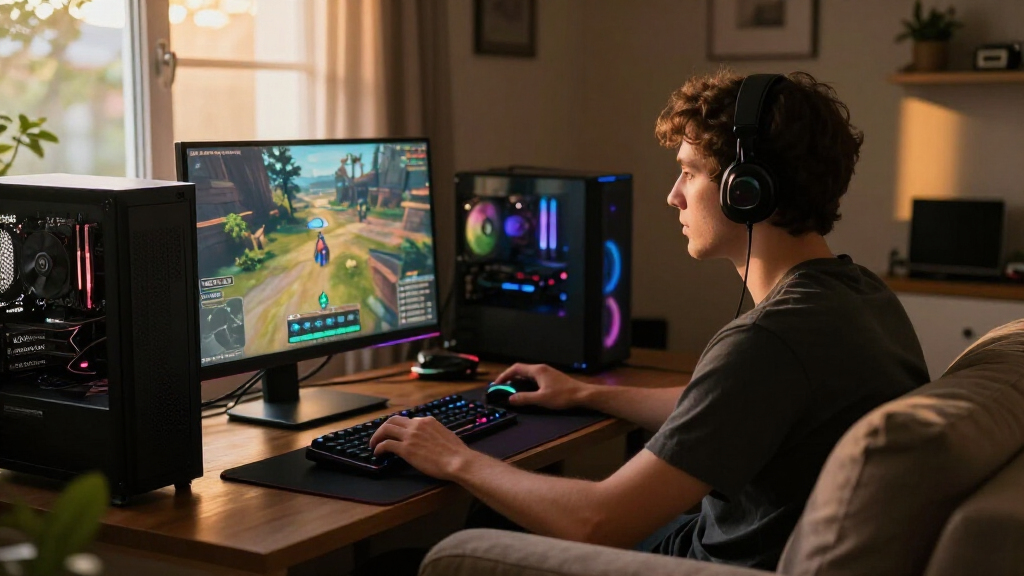
In selecting the best DLSS-compatible gaming GPUs, I evaluated each model based on performance benchmarks relevant to modern gaming, usability features like cooling and noise levels, build quality, and overall value for the price. Compatibility with DLSS 3 was a baseline requirement, but I also considered factors such as VRAM, power consumption, and additional features like RGB lighting or dual BIOS options. Ranking was determined by how well each GPU balances these elements, with a focus on real-world gaming performance at high settings. This approach aims to help gamers of different budgets and needs find a model that offers the best performance within their price range.Factors to Consider When Choosing Best DLSS-compatible Gaming GPUs
Choosing the best DLSS-compatible GPU involves more than just raw specs; understanding how features translate into real-world gaming and future-proofing is key. A well-rounded approach considers performance at your typical resolution, cooling and noise levels, compatibility with your system, and long-term value. Avoiding common pitfalls, like overestimating VRAM needs or ignoring power supply limits, can save you money and frustration. Here’s what to keep in mind when evaluating your options.Performance and Resolution Balance
Matching your GPU to your gaming resolution is vital. Higher resolutions like 4K demand more power, so choosing a GPU with enough CUDA cores and VRAM ensures smooth gameplay. While DLSS helps upscale lower resolutions, a GPU that struggles at native resolution will hamper your experience regardless. Consider your current and future monitor setup to select a GPU that balances performance and longevity.
Cooling and Noise Levels
Effective cooling solutions prevent thermal throttling and extend GPU lifespan. Premium models often feature advanced heatsinks, larger fans, or hybrid cooling options. However, these can increase noise levels or size, which may be an issue in smaller cases. Evaluate your system’s airflow and noise tolerance before opting for a high-end model with elaborate cooling.
Power Supply and System Compatibility
A GPU’s power draw can significantly impact your overall system stability. Check your power supply wattage and the necessary connectors before purchase. Larger, more powerful cards may require additional case space or specific PCIe slots. Failing to verify compatibility can result in costly upgrades or installation issues down the line.
Future-Proofing and Feature Set
Features like PCIe 5.0 support, advanced ray tracing, and larger VRAM pools enhance longevity. DLSS support is just one piece—consider other enhancements like HDMI 2.1 or multiple DisplayPort outputs for better connectivity. Investing in a slightly more capable GPU now can save money later as game requirements evolve.
Price and Value Considerations
While premium GPUs offer top performance, they come with a steep price. Mid-range options often deliver excellent DLSS performance without breaking the bank. Be cautious of models with inflated prices due to flashy features you may not need. A balanced approach ensures you get the best value for your intended use.
Frequently Asked Questions
Does DLSS support vary between different GPUs?
Yes, DLSS support differs based on the GPU architecture. Nvidia’s RTX 30 and 40 series generally support DLSS 3, while older models may only support DLSS 2 or lack support altogether. The effectiveness of DLSS also depends on the specific implementation in each GPU, so newer, more powerful models tend to deliver better upscaling quality and performance benefits.
Can I upgrade my existing system with a DLSS-compatible GPU without other changes?
Upgrading to a DLSS-compatible GPU is often straightforward if your system meets the power supply and physical space requirements. However, ensure your CPU isn’t bottlenecking performance in your typical gaming resolutions. Also, check for the latest driver support and compatibility with your motherboard’s PCIe slot to maximize DLSS benefits.
Is VRAM a critical factor for DLSS performance?
VRAM size influences how well a GPU handles high-resolution textures and future games with increasing demands. While DLSS can compensate for lower resolution rendering, insufficient VRAM can cause stuttering or lower image quality at high settings. For 4K gaming, aim for at least 10-12GB VRAM, especially in high-end GPUs.
Should I prioritize ray tracing performance over DLSS support?
Both features enhance visual fidelity, but DLSS often provides a more noticeable performance boost at higher resolutions. If you value ray-traced visuals, look for a GPU with strong ray tracing cores and DLSS support to balance aesthetics and performance. Neglecting this balance might result in less immersive experiences or lower frame rates.
How important is the size and cooling system of a GPU?
Size and cooling are critical for maintaining performance and longevity. Larger, well-cooled cards tend to run quieter and stay cooler under load, reducing thermal throttling. Smaller cases may require more compact models, which might have less effective cooling. Always verify your case’s dimensions and airflow capabilities before choosing a GPU.
Conclusion
For gamers seeking the best overall performance, the GIGABYTE GeForce RTX 5080 Gaming OC stands out as a top choice, though it comes at a premium price. Budget-conscious players should consider the PNY GeForce RTX 4060 for solid DLSS support without overspending. Enthusiasts and streamers who want the latest features will find the ASUS GeForce RTX 5070 to be a reliable all-rounder. For newcomers, a balance of price, performance, and ease of use makes mid-range options like the PNY RTX 4070 appealing. Ultimately, your decision should align with your resolution, budget, and gaming priorities, ensuring you get the best DLSS experience tailored to your setup.
As an affiliate, we earn on qualifying purchases.Grilling season Picks
grills