
When it comes to the best gaming tablets in 2026, the decision usually comes down to raw platform power versus screen and memory advantages at a lower cost. The Apple iPad 11-inch (A16) takes the top spot because its A16 chip still outclasses every Android tablet here for sustained gaming performance and long-term game library support. If you want a bigger, faster display without the Apple premium, the TECLAST 13.4-inch with its 120Hz screen and 20GB of RAM is the strongest alternative, while the BESTTAB T60 wins on value by bundling a keyboard, mouse, and stylus with a smooth 90Hz panel. The main tradeoff you will face: iPads deliver the most consistent frame rates and the deepest game catalog, but the Android options counter with larger screens, higher refresh rates, expandable configurations, and cellular connectivity. Read on for the full breakdown of each pick and who each one suits best.

Play games on Amazon Luna for your game nights, included with Prime
- A rotating selection of games, no download needed
- Play on TV, laptop or phone
- Fast, free delivery for your gear, too
Complete the kit


Key Takeaways
- The iPad 11-inch (A16) wins overall not because of its spec sheet but because Apple‘s chip delivers sustained frame rates in demanding titles that the Android options here cannot reliably match, even with 20GB of RAM.
- RAM figures on Android gaming tablets are misleading: the TECLAST and TABWEE models advertise 20GB, but much of that is virtual memory — real gaming performance still trails the iPad’s tighter hardware-software integration.
- Refresh rate was the biggest differentiator among Android picks: the TECLAST models’ 120Hz panels feel noticeably smoother in fast-paced games than the BESTTAB T60’s 90Hz screen.
- The two iPads in this lineup are identical except for color, so the choice between Silver and Yellow is purely cosmetic — no performance or storage difference justifies paying more.
- Bundled accessories matter for value: the BESTTAB T60’s included keyboard, mouse, and stylus effectively offset its mid-tier performance, making it the best all-in-one package for casual gamers who also want a productivity tablet.
| Apple iPad 11-inch (A16 chip, 128GB, Wi-Fi) — Silver |  | Best Overall | Display: 11-inch Liquid Retina with True Tone | Chip: Apple A16 | Storage: 128GB (up to 512GB) | VIEW LATEST PRICE | See Our Full Breakdown |
| BESTTAB T60 12.2-Inch Android 16 Tablet, 2.4K 90Hz Display, 256GB Storage, Keyboard, Mouse and Stylus |  | Best Value Bundle | Display: 12.2-inch 2400 × 1600, 90Hz | Processor: Unisoc T7280 octa-core, up to 2.2GHz | Memory: 12GB physical RAM + 36GB virtual | VIEW LATEST PRICE | See Our Full Breakdown |
| TECLAST 13.4-Inch Android Tablet, 120Hz, 20GB RAM, 128GB Storage, 4G LTE |  | Best Big-Screen Gamer | Display: 13.4-inch 1920 × 1200 IPS, 120Hz | Processor: A75-based octa-core, up to 2.2GHz | Memory: 6GB physical + virtual expansion to 20GB advertised | VIEW LATEST PRICE | See Our Full Breakdown |
| Apple iPad 11-inch (A16 chip, 128GB, Wi-Fi, Yellow) |  | Best Premium Pick for Apple Families | Display: 11-inch Liquid Retina with True Tone | Chip: Apple A16 | Storage: 128GB (up to 512GB available) | VIEW LATEST PRICE | See Our Full Breakdown |
| TABWEE T60 12.2-Inch Android 16 Tablet with Keyboard | 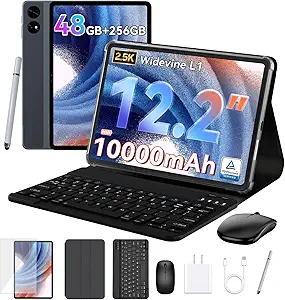 | Best Productivity-and-Play Hybrid | Display: 12.2-inch 2.5K CSOT LCD, 99% sRGB | Memory: 12GB physical + 36GB virtual | Storage: 256GB UFS, expandable up to 1TB | VIEW LATEST PRICE | See Our Full Breakdown |
| TECLAST T65 13.4-Inch Android 16 4G Tablet, 20GB RAM, 128GB Storage, 120Hz Display |  | Best Big-Screen Budget Gaming Tablet | Display: 13.4-inch IPS touchscreen, 1920×1200 | Refresh rate: 120Hz | Processor: Octa-core A75, up to 2.2GHz | VIEW LATEST PRICE | See Our Full Breakdown |
| gaming tablet | Display | Storage | Connectivity | Battery |
|---|---|---|---|---|
| Apple iPad 11-inch | 11-inch Liquid Retina with True Tone | 128GB (up to 512GB) | Wi-Fi 6, USB-C | All-day battery life |
| BESTTAB T60 12.2-Inch Android | 12.2-inch 2400 × 1600, 90Hz | 256GB, expandable to 2TB via MicroSD | — | 10,000mAh with 18W fast charging |
| TECLAST 13.4-Inch Android Tabl | 13.4-inch 1920 × 1200 IPS, 120Hz | 128GB, expandable up to 1TB | 4G LTE, dual-band Wi-Fi, GPS | — |
| Apple iPad 11-inch | 11-inch Liquid Retina with True Tone | 128GB (up to 512GB available) | Wi-Fi 6, USB-C | — |
| TABWEE T60 12.2-Inch Android 1 | 12.2-inch 2.5K CSOT LCD, 99% sRGB | 256GB UFS, expandable up to 1TB | — | 10,000mAh |
| TECLAST T65 13.4-Inch Android | 13.4-inch IPS touchscreen, 1920×1200 | 128GB, expandable up to 1TB | 4G LTE, dual-band Wi-Fi, GPS | 8000mAh |
More Details on Our Top Picks
Apple iPad 11-inch (A16 chip, 128GB, Wi-Fi) — Silver
The A16 chip inside this iPad is simply a performance class above every Android option in this lineup. Where the BESTTAB T60 and TECLAST 13.4-inch rely on budget octa-core processors with mostly virtual memory, the iPad delivers genuine flagship-grade gaming performance that handles demanding titles without frame drops or thermal throttling. The Liquid Retina display with True Tone keeps colors accurate and long sessions comfortable, and all-day battery life means a full gaming day is realistic. The tradeoff is accessory cost: Apple Pencil and Magic Keyboard Folio are sold separately, and 128GB fills up fast if you install large games. Compared with the bundled Android tablets, you get far more raw power but fewer extras in the box.
Pros:- A16 chip delivers flagship-level gaming and multitasking performance
- All-day battery life supports extended play sessions
- Bright Liquid Retina display with True Tone for comfortable long-term viewing
- Strong accessory ecosystem with Apple Pencil and Magic Keyboard Folio support
Cons:- Apple Pencil and Magic Keyboard Folio are sold separately, adding real cost
- 128GB base storage is limiting for large game libraries and can’t be expanded
Best for: Mobile gamers who want flagship performance and long software support for graphically demanding titles
Not ideal for: Buyers on a tight budget who want a complete setup — accessories cost extra and storage isn’t expandable
- Display:11-inch Liquid Retina with True Tone
- Chip:Apple A16
- Storage:128GB (up to 512GB)
- Connectivity:Wi-Fi 6, USB-C
- Cameras:12MP front with Center Stage, 12MP rear with 4K video
- Battery:All-day battery life
- Accessory support:Apple Pencil (USB-C, 1st gen), Magic Keyboard Folio
Our verdict“This is the pick for anyone who prioritizes raw gaming performance and longevity over bundled extras and screen size.”
BESTTAB T60 12.2-Inch Android 16 Tablet, 2.4K 90Hz Display, 256GB Storage, Keyboard, Mouse and Stylus
This option stands out for everything included in the box: keyboard, mouse, and stylus, which the iPad lineup charges handsomely for. The 2.4K display at 90Hz makes games feel smoother than standard 60Hz budget panels, and the nano-matte finish reduces glare during long sessions. With 256GB onboard and expansion up to 2TB, storage anxiety is a non-issue — a real advantage over the TECLAST 13.4-inch, which starts at just 128GB. The honest catch is the Unisoc T7280 processor and virtual RAM padding: only 12GB of the advertised memory is physical, so this won’t match an iPad’s A16 for demanding 3D titles. For casual and mid-tier Android gaming plus productivity, though, the package is hard to argue with.
Pros:- Sharp 2.4K 90Hz display with anti-glare nano-matte finish and low blue light certification
- 256GB storage expandable up to 2TB for large game libraries
- Keyboard, mouse, and stylus all included
- 10,000mAh battery with 18W fast charging
Cons:- Only 12GB of the advertised 48GB RAM is physical — the rest is slow virtual memory
- Unisoc T7280 processor limits performance in graphically demanding games
Best for: Students and casual gamers who want a complete tablet-plus-accessories setup without paying iPad prices
Not ideal for: Competitive players of demanding 3D games — the Unisoc chip can’t match Apple’s A16 performance
- Display:12.2-inch 2400 × 1600, 90Hz
- Processor:Unisoc T7280 octa-core, up to 2.2GHz
- Memory:12GB physical RAM + 36GB virtual
- Storage:256GB, expandable to 2TB via MicroSD
- Battery:10,000mAh with 18W fast charging
- Operating system:Android 16
- Included accessories:Bluetooth keyboard, wireless mouse, stylus
Our verdict“The strongest value-per-dollar pick if you want accessories, big storage, and a smooth display for casual gaming.”
TECLAST 13.4-Inch Android Tablet, 120Hz, 20GB RAM, 128GB Storage, 4G LTE
If screen real estate is the priority, this model makes the most sense — 13.4 inches is the largest display here, and its 120Hz refresh rate beats the BESTTAB T60’s 90Hz for visual smoothness in fast-paced games. Add 4G LTE connectivity and built-in GPS, and this becomes the only tablet in the lineup suited to gaming away from Wi-Fi, whether that’s a commute or a road trip. Widevine L1 support also means HD streaming actually works on the big panel. The compromises are real, though: only 6GB of the advertised 20GB is physical RAM, and at 720g it’s noticeably heavier than the 11-inch iPad, which makes extended handheld play tiring. It’s best treated as a two-handed or tabletop gaming device.
Pros:- Largest display in the lineup at 13.4 inches with a 120Hz refresh rate
- 4G LTE and dual-band Wi-Fi for gaming away from home
- Widevine L1 and stereo speakers make it a strong streaming device
- Storage expandable up to 1TB
Cons:- Only 6GB of the advertised 20GB RAM is physical memory
- At 720g, it’s heavy for extended handheld gaming sessions
Best for: Media-loving mobile gamers who want a huge smooth display and cellular connectivity for gaming on the go
Not ideal for: Players who game handheld for hours — at 720g, wrist fatigue sets in quickly
- Display:13.4-inch 1920 × 1200 IPS, 120Hz
- Processor:A75-based octa-core, up to 2.2GHz
- Memory:6GB physical + virtual expansion to 20GB advertised
- Storage:128GB, expandable up to 1TB
- Connectivity:4G LTE, dual-band Wi-Fi, GPS
- Operating system:Android 16
- Weight:720g
Our verdict“Choose this for big-screen immersion and LTE freedom; skip it if you play in long handheld stretches.”
Apple iPad 11-inch (A16 chip, 128GB, Wi-Fi, Yellow)
Functionally, this Yellow iPad is identical hardware to the Silver A16 iPad — same chip, display, cameras, and battery — so the choice between them comes down purely to color preference and household role. Where this pick earns its place is as the family-sharing option: if you already own an iPad and want a second device in a household with kids, the distinctive color helps prevent mix-ups, and Apple’s ecosystem sharing, parental controls, and Apple Arcade subscription work best with multiple iPads. Gaming performance again outclasses every Android tablet here, from the TABWEE T60 to the TECLAST, though the same caveats apply: pencil and keyboard cost extra, and 128GB of non-expandable storage disappears quickly under modern game installs.
Pros:- Same flagship A16 performance as the Silver iPad at no premium
- Distinctive Yellow finish makes it easy to identify in multi-device households
- Excellent parental controls and Apple Arcade ecosystem for family gaming
- All-day battery and bright True Tone display
Cons:- Accessories like Apple Pencil and Magic Keyboard Folio sold separately
- 128GB base storage fills quickly with large games and cannot be expanded
Best for: Apple households adding a second device, or buyers who want flagship gaming in a fun, distinctive color
Not ideal for: Anyone already buying the Silver model — the hardware is the same, so it’s redundant in one household
- Display:11-inch Liquid Retina with True Tone
- Chip:Apple A16
- Storage:128GB (up to 512GB available)
- Connectivity:Wi-Fi 6, USB-C
- Cameras:12MP Center Stage front, 12MP Wide rear with 4K video
- Security:Touch ID, Apple Pay
- Color:Yellow
Our verdict“Pick this over the Silver iPad only if the color appeals or you’re building a two-iPad household — the gaming experience is otherwise identical.”
TABWEE T60 12.2-Inch Android 16 Tablet with Keyboard
Compared with the similarly named BESTTAB T60, this tablet’s differentiator is display quality: the 2.5K CSOT panel with 99% sRGB coverage produces more accurate, vibrant color — a genuine plus for games where visual detail matters. It’s also the most complete bundle here, adding a protective case on top of keyboard, mouse, and stylus, and matching 256GB of UFS storage for faster load times than standard eMMC budget tablets. The four-year warranty outlasts what Apple offers on either iPad. The drawbacks mirror its rival: 36GB of the advertised 48GB RAM is virtual, and the expansion ceiling is 1TB, not the 2TB the title implies — worth noting before you shop for memory cards. Performance remains budget-tier rather than flagship.
Pros:- Color-accurate 2.5K display with 99% sRGB for vibrant, detailed visuals
- Complete bundle including a protective case the BESTTAB T60 omits
- 256GB of UFS storage for faster game load times
- Four-year warranty provides long-term peace of mind
Cons:- Only 12GB of the advertised 48GB RAM is physical
- Storage expansion caps at 1TB despite marketing suggesting 2TB
- Budget-tier processor limits demanding game performance
Best for: Buyers who want one device for both work and casual gaming, with a color-accurate screen and every accessory included
Not ideal for: Spec-literal shoppers — the advertised RAM and expansion figures overstate what the hardware actually provides
- Display:12.2-inch 2.5K CSOT LCD, 99% sRGB
- Memory:12GB physical + 36GB virtual
- Storage:256GB UFS, expandable up to 1TB
- Battery:10,000mAh
- Operating system:Android 16
- Features:GPS, Widevine L1, GMS certified
- Included accessories:Keyboard, mouse, stylus, protective case
- Warranty:4 years
Our verdict“The best pick if display color quality and an all-in-one accessory bundle matter more than raw gaming horsepower.”
TECLAST T65 13.4-Inch Android 16 4G Tablet, 20GB RAM, 128GB Storage, 120Hz Display
The TECLAST T65 makes the list for one simple reason: it offers the biggest screen in this lineup at the lowest barrier to entry. A 13.4-inch 120Hz display means games feel fluid and immersion comes cheap, and the generously listed 20GB of RAM keeps multiple apps and browser tabs alive between gaming sessions. Compared with the BESTTAB T60, you give up the bundled keyboard, mouse, and stylus — but the T65 counters with 4G LTE connectivity, so you can keep playing away from Wi-Fi, something neither iPad in this roundup can do at this price class. The tradeoffs are real: the older A75 octa-core chip handles casual and mid-tier titles comfortably but will struggle with the most demanding 3D games, and at 720g, long handheld sessions will tire your arms. Storage expansion up to 1TB partly offsets the modest 128GB baseline, and the preinstalled tempered glass is a nice practical touch.
Pros:- Large 13.4-inch display with a smooth 120Hz refresh rate for fluid gameplay
- 4G LTE plus dual-band Wi-Fi and GPS allow true mobile gaming away from home networks
- Expandable storage up to 1TB offsets the modest 128GB base capacity
- Preinstalled tempered glass screen protector saves an immediate accessory purchase
Cons:- At 720g, it is noticeably heavier than typical tablets and tiring for extended handheld use
- The A75 octa-core processor lags behind newer chips and will struggle with graphically demanding titles
- Storage and performance claims in the listing are incomplete and hard to verify against real-world use
Best for: Budget-conscious casual gamers who want a huge smooth screen for titles like mobile RPGs, puzzlers, and streaming game services
Not ideal for: Competitive players who need flagship-grade chip performance and low latency, or anyone who plans long handheld sessions — the 720g weight and mid-tier processor both work against them
- Display:13.4-inch IPS touchscreen, 1920×1200
- Refresh rate:120Hz
- Processor:Octa-core A75, up to 2.2GHz
- RAM:20GB
- Storage:128GB, expandable up to 1TB
- Connectivity:4G LTE, dual-band Wi-Fi, GPS
- Battery:8000mAh
- Weight:720g (8.5mm thick)
Our verdict“This pick makes the most sense for casual gamers who prioritize screen size and mobile connectivity over raw processing power, and who mostly play docked or propped up rather than held in hand.”
How We Picked
I evaluated these six tablets through a gaming-first lens, weighting sustained performance, display quality, and thermal headroom above general tablet features like cameras or productivity software. Chip capability came first, because games like Genshin Impact and Call of Duty: Mobile punish weak processors with dropped frames within minutes. Display specs came second — refresh rate, brightness, and screen size directly shape how games feel, which is why the 120Hz TECLAST panels ranked above the 90Hz BESTTAB despite similar internals.
Beyond raw specs, I factored in platform ecosystem and total package value. The iPad’s access to Apple Arcade and day-one optimization for major titles gives it a durability advantage that spec sheets hide. For the Android picks, I credited bundled accessories, memory configurations, and cellular options, since those change what a buyer gets for the same class of device. Durability of software support — how many years of updates each tablet will receive — also shaped the final order, because a gaming tablet that stops receiving updates ages faster than its hardware does.
| gaming tablet | Processor |
|---|---|
| Apple iPad 11-inch | — |
| BESTTAB T60 12.2-Inch Android | Unisoc T7280 octa-core, up to 2.2GHz |
| TECLAST 13.4-Inch Android Tabl | A75-based octa-core, up to 2.2GHz |
| Apple iPad 11-inch | — |
| TABWEE T60 12.2-Inch Android 1 | — |
| TECLAST T65 13.4-Inch Android | Octa-core A75, up to 2.2GHz |
Factors to Consider When Choosing Best Gaming Tablets
Choosing a gaming tablet involves more than picking the highest numbers on a spec sheet. These are the factors that actually separate a satisfying gaming experience from a frustrating one, and where buyers most often go wrong.Sustained Performance Beats Peak Specs
The number that matters most in a gaming tablet is not peak benchmark scores — it is how the chip performs after twenty minutes of load, when heat builds up and cheaper tablets throttle their performance. Many budget Android tablets post respectable short-burst numbers but lose a third of their frame rate in extended sessions, which is exactly when demanding games feel worst. Apple’s A-series chips have historically managed thermals well inside the iPad’s chassis, which is a big part of why the iPad 11-inch ranks first despite Android rivals advertising more RAM. Before buying any Android gaming tablet, look for evidence of how it handles long sessions, not just launch-day reviews. A device that holds a steady frame rate at 60fps will feel better than one that spikes to 120fps and then stutters. This is the single most common mistake buyers make: paying for headline specs that the device cannot sustain.
Refresh Rate and Screen Size Shape the Feel of Play
A 120Hz display makes swipe-based and fast-paced games feel dramatically more responsive than a 60Hz panel, and the difference is larger than most other upgrades you can buy. However, refresh rate only helps if the chip can actually push frames that fast — a 120Hz screen driven by a modest processor gives you smooth menus and stuttery gameplay. Screen size matters differently by genre: large 13.4-inch panels like the TECLAST models are superb for strategy games and emulation but can feel unwieldy in portrait-mode titles designed around thumb reach. An 11-inch screen hits a comfortable middle ground for most game types. Match the display to the games you actually play rather than chasing the biggest number, because a gorgeous panel paired with weak internals wastes its potential.
RAM Claims Deserve Skepticism
Android tablet listings increasingly advertise large RAM figures that combine physical memory with virtual memory borrowed from storage, and the 20GB claims on several tablets in this roundup follow that pattern. Virtual memory is far slower than physical RAM and does little for gaming, so a tablet with 8GB of real RAM may outperform one advertising 20GB in this blended fashion. Apple takes the opposite approach, shipping modest RAM counts that are tightly optimized alongside the chip and operating system. The practical lesson for buyers: treat RAM as a tiebreaker between similar devices, not a primary selection criterion. What matters more is the processor generation and how well the software manages memory under load. If a listing does not clarify physical versus virtual RAM, assume the real number is smaller than the headline.
Ecosystem and Game Library Longevity
A gaming tablet is only as good as the games it can run well, and platform ecosystem affects that more than any single spec. Major game studios frequently optimize first for iPad hardware, and Apple Arcade adds a rotating catalog of premium games with no ads or in-app purchases. Android counters with better emulation support, more sideloading freedom, and services like cloud gaming that work across devices. Software update policy is the hidden factor: a tablet that receives five or six years of updates will keep running new game releases long after a budget device has been abandoned by its maker. Check the manufacturer’s update commitment before buying, especially for lesser-known brands, because a cheap tablet that stops receiving updates in two years is a poor value regardless of its launch specs.
Accessories, Connectivity, and Hidden Value
Bundled accessories can quietly shift the value equation. A tablet that ships with a keyboard, mouse, and stylus saves you from buying them separately and turns a gaming device into a homework or work machine — a real advantage for students and families. Cellular connectivity is another underweighted factor: 4G LTE tablets let you game and stream away from Wi-Fi without tethering to a phone, which suits commuters and travelers. Against that, weigh what you give up — accessory-bundled tablets often cut corners on the processor to hit a price point. Decide whether you are buying a pure gaming machine or a hybrid device, because that answer determines whether bundles help you or distract you from weaker internals. Storage expansion matters too, since modern games regularly consume multiple gigabytes each.
Frequently Asked Questions
Is the iPad 11-inch (A16) really better for gaming than Android tablets with more RAM and higher refresh rates?
For demanding 3D games, yes — and the reason is architectural rather than raw specs. The A16 chip delivers more real-world graphics throughput than the mid-range processors in the Android tablets here, and Apple’s tight hardware-software integration means games hold stable frame rates over long sessions. The 20GB RAM figures on the TECLAST models sound impressive, but a large portion is virtual memory swapped from storage, which does not help gaming performance. That said, the Android tablets win on display fluidity in less demanding titles thanks to their 120Hz panels, and their larger screens suit emulation and strategy games. If you play graphically heavy games primarily, the iPad is the safer choice; if you play lighter or older titles, the refresh-rate advantage of Android becomes more relevant.
Should I buy the iPad in Silver or Yellow — is there any difference besides color?
No, the two iPad 11-inch (A16) models in this lineup are functionally identical: same chip, same 128GB storage, same Wi-Fi configuration, and same display. The only difference is the finish, so the decision comes down to personal taste and, occasionally, availability. Silver is the safer long-term aesthetic choice if you plan to resell later, since neutral colors tend to have broader appeal on the used market. Yellow suits buyers who want a more distinctive look, particularly younger players or anyone matching a colorful case. My advice is to pick whichever color you prefer and put any price difference toward a good controller or protective case, which will affect your gaming experience far more than the finish ever will.
Do I need 4G LTE on a gaming tablet, or is Wi-Fi enough?
It depends entirely on where you play. If your gaming happens at home, school, or places with reliable Wi-Fi, cellular adds cost and a data plan without benefit, and you should put that money toward a better processor or more storage. If you commute, travel frequently, or want to game during lunch breaks away from networks, the TECLAST models’ 4G LTE support becomes genuinely useful — though be aware that online multiplayer games consume data quickly, and latency on cellular can vary by location. Cloud gaming services in particular eat through data plans fast. A middle path many buyers take: use your phone as a hotspot occasionally, and only pay for built-in cellular if you game on the move every week. Honestly assess your habits before paying the cellular premium.
Are bundled keyboard and stylus packages like the BESTTAB and TABWEE T60 actually good for gaming?
The bundles are better thought of as productivity bonuses than gaming upgrades. A keyboard and mouse barely matter for most touch-native mobile games, and serious mobile gamers typically prefer a dedicated Bluetooth controller anyway. Where the bundles shine is versatility: a student or family gets a device that handles schoolwork, note-taking with the stylus, and casual gaming in one purchase, which is real value if you would otherwise buy those accessories separately. The tradeoff is that these bundles usually signal a mid-tier processor — manufacturers add accessories to compensate for internals that cannot compete on performance alone. If pure gaming is your priority, spend the same budget on a tablet with a stronger chip and skip the accessories. If you want one device for everything, the bundles make sense.
How long will a budget Android gaming tablet stay relevant compared to an iPad?
Generally, expect a shorter useful life from budget Android tablets — often two to three years before new game releases start exceeding their capabilities, versus four to six years for a current iPad. The gap comes from two directions: Apple supports iPads with operating system updates for many years, and game developers keep optimizing for Apple’s hardware long after launch. Lesser-known Android brands frequently provide limited or slow updates, which means a tablet may still work fine but lose access to new game versions and security fixes. That said, if you play casual, older, or cloud-streamed games, a budget Android tablet can stay useful much longer because the demands stay constant. The iPad is the better buy if you want one purchase to last; the Android tablets make sense if you prefer replacing hardware more often at a lower cost each time.
Conclusion
Mapping these six tablets to buyer types makes the decision straightforward. For the best overall gaming experience, the Apple iPad 11-inch (A16) is the clear pick — its sustained performance, game library access, and years of software support justify choosing between Silver and Yellow purely on color preference. The best value goes to the BESTTAB T60, whose 90Hz display and bundled keyboard, mouse, and stylus deliver the most complete package for casual gamers and students on a budget. For the best premium Android experience, the TECLAST 13.4-inch stands out with its 120Hz panel, 20GB memory configuration, and 4G LTE for gaming anywhere.
For beginners and younger players, the TABWEE T60 offers a forgiving entry point with the same accessory bundle and Android 16 software at a gentler commitment level. The TECLAST T65 suits a specific need: buyers who want the large-screen, high-refresh-rate experience with the latest Android version and cellular connectivity, and who accept mid-tier performance to get it. Whichever direction you take, the pattern across this lineup is consistent — pay for sustained performance and software longevity if gaming is serious business, and lean on displays, bundles, and connectivity if versatility matters more.
Fall Picks
fall essentials
As an affiliate, we earn on qualifying purchases.