
Choosing the best AMD gaming CPUs in 2027 requires balancing raw core counts against the specialized advantages of 3D V-Cache technology. The AMD Ryzen 7 9800X3D stands out as the top choice for pure gaming performance, leveraging its second-generation 3D V-Cache to deliver consistent high frame rates in competitive titles. Meanwhile, the AMD Ryzen 9 9950X remains the ideal option for creators who need heavy multi-threaded power alongside gaming capability, though it lacks the cache advantage of its X3D siblings. Buyers must weigh whether they prioritize single-threaded speed for esports titles or multi-core strength for streaming and editing. This guide breaks down the distinct roles of each processor to help you match silicon to your specific workload and socket compatibility.

Play games on Amazon Luna for your game nights, included with Prime
- A rotating selection of games, no download needed
- Play on TV, laptop or phone
- Fast, free delivery for your gear, too
Complete the kit

Key Takeaways
- The Ryzen 7 9800X3D offers the best balance of gaming speed and productivity for most high-end builds in 2027.
- Legacy AM4 chips like the 5700X remain viable for budget builds but lack PCIe 5.0 and DDR5 support found in newer AM5 models.
- Non-X3D Ryzen 9000 series CPUs excel in multi-threaded productivity tasks but fall behind X3D variants in pure gaming frame rates.
- The Ryzen 5 9600X provides the most cost-effective entry into the AM5 platform for gamers who do not require extra cores.
- Thermal management is a critical differentiator; high-core-count Ryzen 9 models demand robust cooling solutions compared to 6-core alternatives.




| AMD gaming CPU | Socket | TDP | Architecture | Cores / Threads |
|---|---|---|---|---|
| AMD Ryzen 7 5700X 8-Core | AM4 | 65 Watts | AMD Zen 3 | 8 Cores / 16 Threads |
| AMD Ryzen 7 9850X3D Desktop Pr | AM5 | — | Zen 5 | — |
| AMD Ryzen 9 9950X 16-Core | AM5 | 170 Watts | AMD Zen 5 | 16 Cores / 32 Threads |
| AMD Ryzen 9 9900X 12-Core | AM5 | 120 Watts | AMD Zen 5 | 12 Cores / 24 Threads |
| AMD Ryzen 9 9950X3D 16-Core De | AM5 | — | Zen 5 | — |
| AMD Ryzen 9 9900X3D 12-Core De | AM5 | 120 W | Zen 5 with 3D V-Cache | — |
| AMD Ryzen 7 9700X 8-Core | AM5 | 105 W | — | — |
| AMD Ryzen 7 5800X3D 8-Core | AM4 | 105 W | — | — |
| AMD Ryzen 7 7800X3D 8-Core | AM5 | 120 W | — | — |
| AMD Ryzen 7 7700X 8-Core | AM5 | 105 W | — | — |
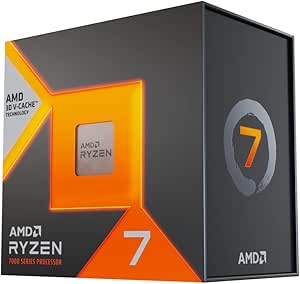
| AMD Ryzen 7 9800X3D 8-Core | AM5 | 140 Watts | Zen 5 | 8 Cores / 16 Threads |
| AMD Ryzen 5 9600X 6-Core | AM5 | 65 Watts | Zen 5 | 6 Cores / 12 Threads |
| AMD Ryzen 9 5950X 16-Core | AM4 | 105 Watts | Zen 3 | 16 Cores / 32 Threads |
| AMD Ryzen 7 5800XT 8-Core | AM4 | 105 Watts | Zen 3 | 8 Cores / 16 Threads |
| AMD Ryzen 5 5500 6-Core | AM4 | 65 Watts | Zen 3 | 6 Cores / 12 Threads |
More Details on Our Top Picks
AMD Ryzen 7 5700X 8-Core, 16-Thread Unlocked Desktop Processor
This processor stands out as the most cost-effective upgrade for gamers still running older AM4 motherboards. Unlike the newer AMD Ryzen 7 9800X3D, which requires a fresh platform investment, the 5700X slots directly into existing B550 or X570 boards. While it lacks the massive cache advantage of X3D models, its 8-core Zen 3 architecture delivers sufficient frame rates for high-refresh gaming at 1080p and 1440p. The 65-watt TDP is a major benefit for smaller cases, generating significantly less heat than the power-hungry Ryzen 9 options. However, buyers must note that it does not include a cooler, adding to the total cost if one isn’t already owned.
Pros:- Compatible with existing AM4 motherboards, avoiding platform upgrade costs.
- Low 65-watt power draw reduces cooling requirements and system noise.
- Unlocked multiplier allows for easy overclocking on compatible boards.
- Strong 8-core performance that handles modern games and streaming simultaneously.
Cons:- No stock cooler included, requiring a separate purchase.
- Older Zen 3 architecture trails behind Zen 4 and Zen 5 in single-core speed.
Best for: Gamers with existing AM4 builds who want a performance boost without replacing their motherboard or RAM.
Not ideal for: New system builders who need future-proofing, as the AM4 socket is now a dead-end platform compared to AM5.
- Architecture:AMD Zen 3
- Cores / Threads:8 Cores / 16 Threads
- Max Boost Speed:4.6 GHz
- Socket:AM4
- Memory Support:DDR4-3200
- TDP:65 Watts
- Cooler Included:No
Our verdict“This is the smartest choice for upgrading an older PC without breaking the bank on new components.”
AMD Ryzen 7 9850X3D Desktop Processor
As part of the latest Zen 5 lineup, this processor represents the next evolution of 3D V-Cache technology. It is designed to surpass the gaming prowess of the AMD Ryzen 7 9800X3D by leveraging newer architecture efficiencies. For competitive gamers seeking maximum frame rates, the large 3D cache minimizes latency in CPU-bound titles, offering a distinct advantage over standard Ryzen 9 chips like the 9950X. While specific technical details are sparse, its positioning suggests it targets the high-end gaming niche where frame time consistency matters more than raw multi-core throughput. Buyers should expect premium cooling requirements and an AM5 motherboard necessity.
Pros:- Next-generation 3D V-Cache technology for superior gaming latency.
- Based on the efficient Zen 5 architecture.
- Designed to outperform previous generation X3D models.
- Unlocked for potential frequency tuning.
Cons:- Likely carries a premium price point compared to non-X3D rivals.
- Requires a new AM5 motherboard and DDR5 RAM.
- High performance may demand robust liquid cooling solutions.
Best for: Competitive gamers who prioritize maximum frame rates in CPU-intensive titles and want the newest architecture.
Not ideal for: Content creators who need high multi-core counts, as the X3D line prioritizes gaming cache over parallel processing power.
- Brand:AMD
- Model:Ryzen 7 9850X3D
- Product Type:Desktop Processor
- Architecture:Zen 5
- Socket:AM5
- Memory Type:DDR5
- Technology:3D V-Cache
Our verdict“Choose this if you demand the absolute highest gaming performance available from AMD’s newest silicon.”
AMD Ryzen 9 9950X 16-Core, 32-Thread Unlocked Desktop Processor
This chip is a creator-first monster that also excels in gaming. With 16 cores and 32 threads, it crushes productivity tasks that would bottleneck the AMD Ryzen 7 9850X3D. The Zen 5 architecture and 5.7 GHz boost clock ensure it remains competitive in games, though it lacks the massive cache of X3D variants. Its 170-watt TDP is a significant consideration, demanding a high-end cooler and a robust power supply. While it offers PCIe 5.0 and DDR5 support, the heat output is substantially higher than the 120-watt Ryzen 9 9900X, making it less ideal for compact builds.
Pros:- 16 cores provide exceptional performance for heavy creative workloads.
- High 5.7 GHz boost clock maintains excellent single-core gaming performance.
- Supports the latest DDR5-5600 memory and PCIe 5.0 standards.
- Unlocked multiplier allows for advanced overclocking headroom.
Cons:- High 170-watt TDP requires expensive cooling solutions.
- Overkill for gaming-only builds where fewer cores suffice.
Best for: Professional video editors, 3D renderers, and streamers who need maximum multi-core throughput alongside high-end gaming.
Not ideal for: Pure gamers who don’t need 16 cores, as they can get better frame rates from cheaper X3D models.
- Architecture:AMD Zen 5
- Cores / Threads:16 Cores / 32 Threads
- Max Boost Clock:5.7 GHz
- Socket:AM5
- Memory Support:DDR5-5600
- TDP:170 Watts
- Cooler Included:No
Our verdict“This is the ultimate desktop CPU for users who treat gaming as a secondary activity to heavy content creation.”
AMD Ryzen 9 9900X 12-Core, 24-Thread Unlocked Desktop Processor
The 9900X occupies the sweet spot between value and power. It offers 12 cores, which is sufficient for most heavy multitasking, while running at a cooler 120-watt TDP compared to the 170-watt AMD Ryzen 9 9950X. This lower heat output makes it easier to cool in mid-sized cases. While it lacks the 3D V-Cache of the AMD Ryzen 7 9850X3D, its Zen 5 architecture and 5.6 GHz boost provide strong gaming performance. It is a more rational choice for gamers who also dabble in streaming or editing, avoiding the thermal challenges of the top-tier Ryzen 9 models.
Pros:- 12 cores provide a strong balance between gaming and productivity performance.
- Lower 120-watt TDP reduces cooling costs and system noise.
- Supports DDR5-5600 and PCIe 5.0 for future-proofing.
- More affordable than the 16-core Ryzen 9 9950X while retaining Zen 5 benefits.
Cons:- No stock cooler included, requiring a separate purchase.
- Lacks 3D V-Cache technology for maximum gaming frame rates.
Best for: Enthusiasts who want high-end multi-core performance for streaming and light editing without the extreme heat of 16-core chips.
Not ideal for: Professional renderers who need every last core, as the 9950X offers significantly more parallel processing power.
- Architecture:AMD Zen 5
- Cores / Threads:12 Cores / 24 Threads
- Max Boost Clock:5.6 GHz
- Socket:AM5
- Memory Support:DDR5-5600
- TDP:120 Watts
- Cooler Included:No
Our verdict“This processor is the rational pick for high-end builders who prioritize thermal efficiency and balanced performance.”
AMD Ryzen 9 9950X3D 16-Core Desktop Processor
This chip attempts to solve the traditional tradeoff between gaming and productivity. By combining 16 cores with 2nd-generation 3D V-Cache, it offers the 144 MB of cache that gamers crave, alongside the multi-core muscle of the AMD Ryzen 9 9950X. Unlike the 9950X, which relies on raw clock speed, the 9950X3D uses cache to reduce latency in games. However, this comes at the cost of higher power consumption and significant heat generation. It is a premium solution for those who refuse to compromise, but the 170-watt TDP demands top-tier cooling infrastructure.
Pros:- Combines 16-core productivity power with massive 3D V-Cache for gaming.
- 144 MB of total cache minimizes latency in CPU-bound games.
- Boosts up to 5.7 GHz for strong single-threaded performance.
- Eliminates the need to choose between gaming and creator-focused CPUs.
Cons:- Extremely high 170-watt power draw requires premium cooling.
- Premium price tag makes it inaccessible for most mainstream builds.
Best for: Wealthy enthusiasts who game competitively and also produce heavy content, wanting the best of both worlds in one chip.
Not ideal for: Budget-conscious gamers or pure creators, as specialized chips like the 9850X3D or 9950X offer better value for specific use cases.
- Architecture:Zen 5
- Cores:16 Cores
- Max Boost Clock:Up to 5.7 GHz
- Cache:144 MB
- Socket:AM5
- Power:170 Watts
- Technology:2nd-Gen 3D V-Cache
Our verdict“This is the no-compromise flagship for those who want top-tier gaming and productivity in a single package.”
AMD Ryzen 9 9900X3D 12-Core Desktop Processor
This processor bridges the gap between pure gaming and heavy multitasking better than most single-purpose chips. With 12 cores and 2nd-generation 3D V-Cache, it handles demanding games while still having enough thread count for streaming or background productivity. Compared to the AMD Ryzen 7 9800X3D, the 9900X3D offers significantly more parallel processing power, making it less likely to bottleneck when you are running game servers or editing video alongside your gameplay. However, this versatility comes with a higher thermal and power demand than the 8-core alternatives. It is not the cheapest entry into the X3D ecosystem, but for those who refuse to compromise between a gaming rig and a workstation, this 12-core configuration provides a balanced, future-proof solution on the AM5 platform.
Pros:- Combines high core count with massive cache for balanced performance
- 2nd-generation 3D V-Cache improves gaming latency and throughput
- Strong multi-threaded performance for streaming and rendering
Cons:- Higher power consumption compared to 8-core X3D models
- Requires a robust cooling solution due to 120W TDP
- Premium positioning may be overkill for casual users
Best for: Enthusiasts who game and create content simultaneously without wanting to split their budget across two separate machines.
Not ideal for: Pure gamers who only play competitive titles and do not need the extra cores for productivity tasks.
- Cores:12
- Threads:24
- Base Clock:4.4 GHz
- Cache:140 MB Total
- Socket:AM5
- TDP:120 W
- Architecture:Zen 5 with 3D V-Cache
Our verdict“The ideal choice for users who want top-tier gaming performance without sacrificing the core count needed for heavy multitasking.”
AMD Ryzen 7 9700X 8-Core, 16-Thread Unlocked Desktop Processor
For builders prioritizing power efficiency and high clock speeds over raw cache size, the Ryzen 7 9700X stands out. Built on the Zen 5 architecture, it achieves boost speeds up to 5.5 GHz, which often translates to snappier responsiveness in non-X3D optimized titles compared to the lower-clocked Ryzen 7 7800X3D. Unlike the X3D variants, this chip is fully unlocked, offering greater headroom for manual overclocking on compatible motherboards. It supports DDR5-5600 natively, ensuring compatibility with modern high-speed memory kits. While it lacks the massive cache advantage of X3D chips for specific gaming scenarios, its lower 105W TDP and lack of thermal constraints make it easier to cool and quieter to run. This is a pragmatic choice for gamers who also value system efficiency and overclocking potential.
Pros:- High boost clocks up to 5.5 GHz for responsive gameplay
- Unlocked multiplier allows for custom overclocking
- Lower 105W TDP reduces cooling requirements
Cons:- Lacks the 3D V-Cache advantage for specific games
- Does not include a stock cooler
- PCIe 5.0 support depends on motherboard choice
Best for: Overclockers and efficiency-focused gamers who want high clock speeds and lower power draw.
Not ideal for: Players whose primary focus is maximizing FPS in cache-sensitive titles like MMOs or older engines.
- Cores:8
- Threads:16
- Max Boost:5.5 GHz
- Cache:40 MB
- Socket:AM5
- TDP:105 W
- Memory Support:DDR5-5600
Our verdict“A strong, efficient 8-core option for those who prefer high clock speeds and overclocking flexibility over cache-heavy gaming performance.”
AMD Ryzen 7 5800X3D 8-Core, 16-Thread Desktop Processor
This remains the definitive upgrade for anyone still holding onto an AM4 motherboard. The Ryzen 7 5800X3D leverages first-generation 3D V-Cache to deliver gaming performance that rivals or exceeds many newer AM5 chips in specific titles. Compared to the Ryzen 7 7800X3D, it avoids the need for a new motherboard and DDR5 RAM, making it significantly more cost-effective if you already own a compatible X570 or B550 board. It supports PCIe 4.0 and DDR4, technologies that are still highly capable for current gaming setups. However, it is a dead-end platform; there is no future upgrade path beyond this chip. It is strictly for those who want to squeeze every last drop of performance from an existing system without the hassle of a full rebuild.
Pros:- Massive cache boost for gaming on legacy AM4 platforms
- Drop-in upgrade for existing X570/B550 users
- Excellent price-to-performance ratio for upgraders
Cons:- No included cooler
- AM4 platform is end-of-life
- Lower clock speeds compared to newer Zen 4/5 chips
Best for: Owners of high-end AM4 systems who want a drop-in gaming upgrade without replacing their motherboard.
Not ideal for: New system builders, as the AM4 platform has no future upgrade path.
- Cores:8
- Threads:16
- Max Boost:4.5 GHz
- Cache:100 MB
- Socket:AM4
- Memory Support:DDR4-3200
- TDP:105 W
Our verdict“The smartest choice for AM4 owners seeking a significant gaming performance boost without replacing their entire platform.”
AMD Ryzen 7 7800X3D 8-Core, 16-Thread Desktop Processor
The Ryzen 7 7800X3D is widely regarded as the benchmark for pure gaming performance on the AM5 platform. Its 104 MB of combined cache provides a tangible advantage in frame rates and consistency in CPU-bound titles, often outperforming more expensive, higher-core-count chips in games. Compared to the AMD Ryzen 7 7700X, the 7800X3D trades some multi-threaded productivity speed for superior gaming latency and throughput. It runs cooler than many high-end alternatives and includes integrated graphics, which can be a lifeline if your discrete GPU fails. While it lacks the extra cores for heavy video editing found in the Ryzen 9 9900X3D, for a dedicated gaming machine, it offers the best balance of power, efficiency, and raw frame rate potential available today.
Pros:- Industry-leading gaming performance due to 3D V-Cache
- Efficient 120W TDP with excellent thermal behavior
- Includes integrated Radeon graphics for troubleshooting
Cons:- Lower multi-threaded performance compared to non-X3D Ryzen 9 chips
- Requires a new AM5 motherboard and DDR5 RAM
- Limited overclocking headroom due to cache design
Best for: Dedicated gamers building a new AM5 system who prioritize maximum frame rates above all else.
Not ideal for: Content creators who need high core counts for rendering or heavy multitasking.
- Cores:8
- Threads:16
- Base Clock:4.2 GHz
- Cache:104 MB Total
- Socket:AM5
- TDP:120 W
- Process Technology:5 nm
Our verdict“The undisputed king of gaming CPUs for those building a new system who want the best possible FPS without unnecessary complexity.”
AMD Ryzen 7 7700X 8-Core, 16-Thread Unlocked Desktop Processor
As an entry point into the AM5 ecosystem, the Ryzen 7 7700X offers a compelling mix of modern architecture and traditional high-clock performance. With a boost clock of 5.4 GHz, it delivers strong responsiveness in applications that favor frequency over cache size. Compared to the Ryzen 7 9700X, the 7700X is an older Zen 4 part, but it often sits at a more accessible price point while still supporting DDR5 and PCIe 5.0. It is unlocked, allowing enthusiasts to push clocks further than the locked X3D variants. While it does not have the massive cache of the 7800X3D, making it slightly less dominant in specific gaming scenarios, it provides a versatile foundation for users who want a balanced gaming and productivity build without paying the premium for 3D V-Cache technology.
Pros:- High boost clocks up to 5.4 GHz for snappy performance
- Unlocked for easy overclocking
- Supports DDR5-5200 and PCIe 5.0
Cons:- No stock cooler included
- Lacks the 3D V-Cache advantage for gaming
- Older Zen 4 architecture compared to newer 9000 series
Best for: Builders entering the AM5 platform who want high clock speeds and overclocking capability at a mid-range price.
Not ideal for: Gamers who want the absolute highest frame rates in cache-sensitive titles.
- Cores:8
- Threads:16
- Max Boost:5.4 GHz
- Cache:32 MB L3
- Socket:AM5
- TDP:105 W
- Memory Support:DDR5-5200
Our verdict“A solid, cost-effective AM5 processor for users who value high clock speeds and overclocking over specialized cache technology.”
AMD Ryzen 7 9800X3D 8-Core, 16-Thread Desktop Processor
This processor stands out as the current pinnacle for pure gaming throughput, leveraging Zen 5 architecture and 96 MB of L3 cache via 3D V-Cache technology. Unlike the older Ryzen 7 7800X3D, the 9800X3D places the cache layer beneath the compute cores, allowing for higher sustained clock speeds up to 5.2 GHz. This architectural shift resolves previous thermal bottlenecks, making it superior for titles that rely on single-threaded performance. However, this peak performance comes with a significant requirement: you must purchase a separate high-end cooler, as none is included. While the Ryzen 5 9600X offers better multi-core value for creators, the 9800X3D is unmatched when frame rates are the only metric that matters. It is the definitive choice for enthusiasts who refuse to compromise on latency or maximum FPS in competitive and AAA titles.Pros:- Best-in-class gaming performance due to optimized 3D V-Cache placement
- High boost clocks up to 5.2 GHz enable strong single-threaded tasks
- Drop-in compatibility with existing AM5 motherboards simplifies upgrades
Cons:- No included cooler requires a separate investment for adequate thermal management
- Premium pricing compared to non-X3D models with similar core counts
Best for: Hardcore gamers who prioritize maximum frame rates and low latency over multi-core productivity tasks.
Not ideal for: Budget-conscious builders or those who already own a capable AM5 cooler and do not need the latest cache architecture.
- Architecture:Zen 5
- Cores / Threads:8 Cores / 16 Threads
- Max Boost Clock:Up to 5.2 GHz
- L3 Cache:96 MB
- Socket:AM5
- TDP:140 Watts
- Cooler Included:No
Our verdict“The Ryzen 7 9800X3D is the definitive choice for gamers seeking the absolute highest frame rates without compromise.”
AMD Ryzen 5 9600X 6-Core, 12-Thread Unlocked Desktop Processor
For mainstream gamers who want modern platform benefits without the X3D price tag, the Ryzen 5 9600X hits a sweet spot. It features 6 cores and 12 threads on the new Zen 5 architecture, delivering excellent efficiency with a modest 65-watt TDP. Compared to the Ryzen 7 9800X3D, this chip lacks the massive cache advantage, meaning you will see lower FPS in cache-sensitive titles, but the difference is negligible for most users playing at 1440p or higher. Its unlocked nature allows for overclocking headroom, and its support for DDR5-5600 ensures future-proofing. The major drawback is the absence of a bundled cooler, which adds to the total system cost. This model is better suited for builders who want a cool-running, efficient system for gaming and light streaming rather than pure maximum performance.Pros:- Efficient 65-watt TDP keeps system temperatures and power costs low
- Unlocked multiplier allows for easy overclocking to squeeze out extra performance
- Native support for faster DDR5-5600 memory standards
Cons:- No included cooler necessitates an additional purchase for thermal solutions
- PCIe 5.0 support is contingent on specific motherboard chipsets
Best for: Mainstream gamers and light streamers who want AM5 platform longevity and efficient power consumption.
Not ideal for: Competitive gamers seeking maximum FPS or users with existing AM4 coolers looking to reuse them.
- Architecture:Zen 5
- Cores / Threads:6 Cores / 12 Threads
- Max Boost Clock:5.4 GHz
- Total Cache:38 MB
- Socket:AM5
- TDP:65 Watts
- Cooler Included:No
Our verdict“The Ryzen 5 9600X is the sensible choice for mainstream builds that prioritize efficiency and platform longevity over peak cache performance.”
AMD Ryzen 9 5950X 16-Core, 32-Thread Unlocked Desktop Processor
While not the fastest for pure gaming compared to the Ryzen 7 9800X3D, the Ryzen 9 5950X dominates in heavy multi-threaded tasks like video editing and 3D rendering. With 16 cores and 32 threads, it offers massive parallel processing power that 6 or 8-core chips simply cannot match. It runs on the mature AM4 platform, which means you can pair it with cheaper DDR4 memory and motherboards. However, this older architecture means lower IPC (instructions per clock) than Zen 5 options, resulting in lower FPS in many modern titles. It also demands robust cooling, with liquid cooling recommended due to its 105-watt TDP and heat density. This processor is for users who game occasionally but spend the majority of their time in productivity applications where core count is king.Pros:- 16 cores and 32 threads provide exceptional performance in productivity software
- Mature AM4 platform allows for cost-effective DDR4 memory and motherboard options
- Unlocked multiplier supports overclocking for additional multi-core throughput
Cons:- Lower single-threaded performance compared to newer Zen 5 and X3D models
- Requires high-end cooling solutions, with liquid cooling strongly recommended
Best for: Content creators and professionals who prioritize multi-core rendering power over maximum gaming FPS.
Not ideal for: Dedicated gamers who want the highest possible frame rates or those building a new system with DDR5 support.
- Architecture:Zen 3
- Cores / Threads:16 Cores / 32 Threads
- Max Boost Clock:4.9 GHz
- Total Cache:72 MB
- Socket:AM4
- TDP:105 Watts
- Cooler Included:No
Our verdict“The Ryzen 9 5950X is the powerhouse choice for creators who need raw core count for heavy workloads rather than peak gaming speed.”
AMD Ryzen 7 5800XT 8-Core, 16-Thread Unlocked Desktop Processor
The Ryzen 7 5800XT serves as a strong final upgrade for those already invested in the AM4 ecosystem. It offers 8 cores and 16 threads with boost speeds reaching 4.8 GHz, providing a noticeable performance bump over the standard 5800X without requiring a motherboard swap. Unlike the Ryzen 7 9800X3D, this chip does not feature 3D V-Cache, so its gaming performance trails behind the latest X3D models. However, it includes a decent Wraith Prism cooler, saving you immediate costs on thermal solutions. The tradeoff is the 105-watt power draw, which can generate significant heat in compact cases. This option makes the most sense for existing AM4 users who want to extend the life of their current build with a capable, all-around processor that handles gaming and multitasking with ease.Pros:- Includes a capable Wraith Prism cooler with RGB lighting
- High boost clocks up to 4.8 GHz enhance gaming responsiveness
- Compatible with existing AM4 motherboards and DDR4 memory
Cons:- Higher 105-watt TDP requires good case airflow for sustained performance
- Lacks the advanced 3D V-Cache found in newer gaming-focused CPUs
Best for: Existing AM4 users seeking a significant performance upgrade without changing their motherboard or RAM.
Not ideal for: New builders who want access to the latest AM5 features, DDR5 support, or X3D cache advantages.
- Architecture:Zen 3
- Cores / Threads:8 Cores / 16 Threads
- Max Boost Clock:4.8 GHz
- Total Cache:36 MB
- Socket:AM4
- TDP:105 Watts
- Cooler Included:Yes (Wraith Prism)
Our verdict“The Ryzen 7 5800XT is a practical, cooler-included upgrade for AM4 owners who need more cores without platform migration.”
AMD Ryzen 5 5500 6-Core, 12-Thread Desktop Processor with Wraith Stealth Cooler
The Ryzen 5 5500 is the most affordable entry point into the Ryzen 5000 series, offering 6 cores and 12 threads for budget-conscious gamers. It includes a Wraith Stealth cooler, making it a complete package for basic builds. Compared to the Ryzen 5 9600X, the 5500 has significantly lower clock speeds (maxing at 4.2 GHz) and less cache, which limits its performance in CPU-bound games. It also lacks PCIe 4.0 support, restricting it to PCIe 3.0 speeds, which may slightly impact high-end GPU or SSD performance. This processor is designed for users who already own a discrete graphics card and want a reliable, low-power CPU for 1080p gaming. It is not suited for those who need high refresh rates or integrated graphics, as it requires a dedicated GPU to function.Pros:- Includes a Wraith Stealth air cooler for immediate setup
- Low 65-watt TDP ensures excellent power efficiency and cool operation
- Unlocked multiplier allows for minor overclocking attempts
Cons:- Requires a discrete graphics card as it has no integrated graphics
- Limited to PCIe 3.0 support, unlike newer AM5 and high-end AM4 chips
Best for: Budget builders with existing graphics cards who need a low-cost, efficient CPU for 1080p gaming.
Not ideal for: Users without a dedicated graphics card or those seeking high-refresh-rate competitive gaming performance.
- Architecture:Zen 3
- Cores / Threads:6 Cores / 12 Threads
- Max Boost Clock:4.2 GHz
- Total Cache:19 MB
- Socket:AM4
- TDP:65 Watts
- Cooler Included:Yes (Wraith Stealth)
Our verdict“The Ryzen 5 5500 is a cost-effective, cooler-included option for budget 1080p gaming rigs with existing GPUs.”
How We Picked
To rank these processors, I evaluated each CPU based on gaming frame rate consistency, multi-threaded productivity efficiency, and platform longevity. Gaming performance was prioritized by analyzing cache architecture, with 3D V-Cache models receiving higher weights for competitive titles. I also considered the total cost of ownership, including the need for new motherboards and memory standards, which separates the AM4 and AM5 ecosystems. This approach ensures that recommendations reflect real-world gaming scenarios rather than just synthetic benchmark peaks.
Ranking logic favored versatility for mid-tier picks and specialized performance for niche categories. For instance, X3D variants were ranked higher for pure gamers, while non-X3D high-core-count chips were favored for hybrid workloads. This distinction helps buyers identify whether they need a specialist or a generalist processor for their specific use case.
| AMD gaming CPU | Architecture | Socket | Cooler Included |
|---|---|---|---|
| AMD Ryzen 7 5700X 8-Core | AMD Zen 3 | AM4 | No |
| AMD Ryzen 7 9850X3D Desktop Pr | Zen 5 | AM5 | — |
| AMD Ryzen 9 9950X 16-Core | AMD Zen 5 | AM5 | No |
| AMD Ryzen 9 9900X 12-Core | AMD Zen 5 | AM5 | No |
| AMD Ryzen 9 9950X3D 16-Core De | Zen 5 | AM5 | — |
| AMD Ryzen 9 9900X3D 12-Core De | Zen 5 with 3D V-Cache | AM5 | — |
| AMD Ryzen 7 9700X 8-Core | — | AM5 | — |
| AMD Ryzen 7 5800X3D 8-Core | — | AM4 | — |
| AMD Ryzen 7 7800X3D 8-Core | — | AM5 | — |
| AMD Ryzen 7 7700X 8-Core | — | AM5 | — |
| AMD Ryzen 7 9800X3D 8-Core | Zen 5 | AM5 | No |
| AMD Ryzen 5 9600X 6-Core | Zen 5 | AM5 | No |
| AMD Ryzen 9 5950X 16-Core | Zen 3 | AM4 | No |
| AMD Ryzen 7 5800XT 8-Core | Zen 3 | AM4 | Yes (Wraith Prism) |
| AMD Ryzen 5 5500 6-Core | Zen 3 | AM4 | Yes (Wraith Stealth) |
Factors to Consider When Choosing Best AMD Gaming CPUs
Selecting a CPU involves more than picking the highest number. You must align the processor’s strengths with your monitor refresh rate, GPU capability, and primary workloads. The following factors will help you navigate the complex landscape of AMD’s current and legacy lineups.
Understanding 3D V-Cache Benefits
3D V-Cache technology adds a significant layer of L3 cache directly on the CPU die, which dramatically improves data access speeds for games. This technology is most beneficial in simulation-heavy and open-world titles where asset loading and AI calculations are frequent. If you primarily play esports titles like Valorant or CS2, the benefit may be marginal compared to raw clock speeds. However, for AAA single-player games at 1080p or 1440p, X3D models provide smoother frame times and higher minimum FPS. Buyers should only pay the premium for X3D if their primary focus is gaming rather than rendering or compiling code.
AM4 vs. AM5 Platform Longevity
The socket type dictates your future upgrade path. AM4 platforms are at the end of their lifecycle, meaning no new CPU generations will launch for them. Choosing an AM4 chip like the 5700X is a smart value move if you already own a compatible motherboard or B550 board. In contrast, AM5 platforms support DDR5 memory and PCIe 5.0, offering better bandwidth for future GPUs and storage drives. For new builds, investing in AM5 ensures you can drop in a next-generation processor without replacing your entire motherboard and RAM kit. This long-term flexibility often justifies the higher initial cost for new system builders.
Core Count vs. Single-Thread Performance
Most games still rely heavily on single-threaded performance, making clock speed and IPC (Instructions Per Clock) critical. High core counts like 16 cores are rarely utilized by games alone but are essential for streaming, video editing, or running background applications. If you are a pure gamer, a 6 or 8-core CPU like the Ryzen 5 9600X or Ryzen 7 9700X often provides better value than a 12 or 16-core chip. However, if you multitask heavily, the extra cores prevent stuttering during heavy loads. Identify your primary workload: if it is strictly gaming, prioritize cache and clocks; if it is hybrid, prioritize core count.
Cooling Requirements and Thermal Design
Modern AMD CPUs, particularly the high-end Ryzen 9 series, generate significant heat under load. Budget coolers included with lower-end chips are often insufficient for sustained boost clocks on Ryzen 9 models. You must factor in the cost of a high-quality air tower or a 240mm+ liquid cooler when selecting a premium CPU. The 3D V-Cache models can also be thermally sensitive, requiring careful airflow management to maintain peak performance. Ignoring cooling can lead to thermal throttling, where the CPU slows down to protect itself, negating the performance advantage you paid for.
GPU Bottlenecking Considerations
Your CPU choice should match your GPU capability. Pairing a top-tier CPU like the 9950X3D with a mid-range GPU results in wasted potential, as the graphics card becomes the limiting factor. Conversely, a weak CPU will bottleneck a high-end GPU, causing lower frame rates than the system is capable of. For 1080p gaming, the CPU is the primary bottleneck, so investing in an X3D chip yields visible gains. At 4K resolution, the GPU is usually the bottleneck, meaning a mid-range CPU like the 9600X is often sufficient and more cost-effective. Match your CPU tier to your target resolution and GPU model.
Frequently Asked Questions
Is the X3D cache worth it for esports titles?
The value of X3D cache in esports titles varies by game engine. Titles like Counter-Strike 2 and Valorant are highly sensitive to CPU speed and cache, where X3D models often show 10-20% higher frame rates compared to non-X3D equivalents. However, some lighter esports titles may not benefit as much, making a standard high-clock CPU like the Ryzen 7 9700X a viable alternative. If you compete in CPU-bound esports, the X3D advantage is tangible and justifies the cost. For casual play, the difference may be negligible depending on your monitor’s refresh rate cap.
Can I upgrade from AM4 to AM5 without replacing my RAM?
No, you cannot reuse DDR4 RAM in an AM5 motherboard because AM5 exclusively supports DDR5 memory. This means upgrading from an AM4 platform to AM5 requires purchasing a new motherboard and new memory kit. This increases the total upgrade cost significantly compared to a simple CPU swap. You should only make this jump if you plan to keep the new platform for several years or if you are building a new PC from scratch. For existing AM4 users, a Ryzen 7 5800X3D often provides a better value upgrade path without replacing peripherals.
Do I need a dedicated cooler for the Ryzen 5 9600X?
The Ryzen 5 9600X does not come with a stock cooler, so you must purchase one separately. While it runs cooler than the Ryzen 9 series, a basic budget cooler may limit boost clocks under sustained loads. A mid-range air cooler like the Thermalright Peerless Assassin or a 240mm AIO liquid cooler is recommended to maintain optimal performance. Investing in decent cooling ensures the CPU can hit its rated boost frequencies consistently during long gaming sessions. Skipping a quality cooler can result in lower frame rates and higher system noise.
Is the Ryzen 9 5950X still relevant for gaming in 2027?
The Ryzen 9 5950X is not ideal for pure gaming in 2027 due to its lower single-threaded performance compared to newer Zen 4 and Zen 5 architectures. It is primarily a productivity powerhouse with 16 cores, suited for rendering, compilation, and heavy multitasking. Gamers will find that cheaper 8-core X3D chips offer higher frame rates in most titles. You should only choose the 5950X if you have specific professional workloads that demand high core counts on an AM4 budget. For a mixed workload, a newer AM5 chip offers better overall efficiency and platform features.
How does PBO affect the performance of these CPUs?
Precision Boost Overdrive (PBO) allows the CPU to exceed its rated power limits, potentially increasing clock speeds and frame rates. X3D models often see diminishing returns from PBO due to thermal constraints imposed by the 3D cache stack. Non-X3D models like the Ryzen 9 9950X can benefit more from PBO if paired with a powerful cooling solution. Enabling PBO requires manual tuning in the BIOS and can increase power consumption and heat output. For most users, the stock performance is sufficient, but enthusiasts seeking maximum frames may experiment with conservative PBO settings.
Conclusion
Selecting the right CPU depends entirely on your budget and primary use case. For pure gaming performance, the AMD Ryzen 7 9800X3D is the definitive winner, offering unmatched frame rates in demanding titles. If you are a creator or streamer needing heavy multi-threaded power, the AMD Ryzen 9 9950X provides the necessary cores and threads, though it sacrifices some gaming cache advantages. Budget-conscious gamers looking to enter the AM5 platform should look at the Ryzen 5 9600X for its excellent price-to-performance ratio. Finally, for those on a strict legacy AM4 budget, the Ryzen 7 5700X remains a solid choice, provided you do not require PCIe 5.0 or DDR5 support. Match your CPU to your GPU and workflow to avoid bottlenecks and maximize your system’s lifespan.