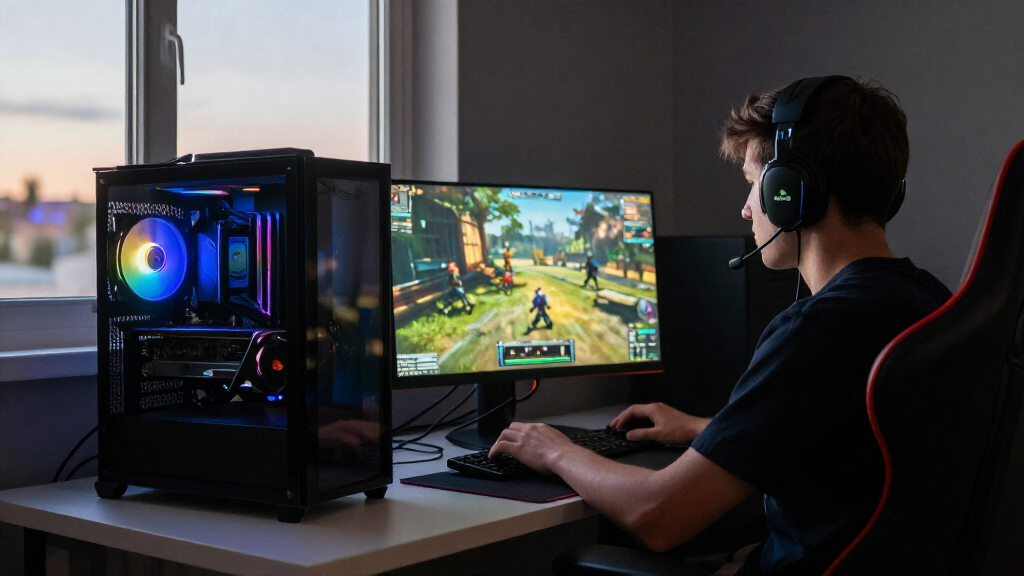

Choosing the right GPU defines your gaming experience, balancing raw power against thermal constraints and budget limits. The ASUS TUF Gaming GeForce RTX 5080 stands out as the best overall pick, delivering elite 4K performance with robust cooling and reliable build quality. For those prioritizing value, the ASUS Prime Radeon RX 9070 EVO offers compelling 1440p capabilities without the premium price tag of flagship NVIDIA cards. Meanwhile, the MSI GeForce RTX 3050 Ventus 2X remains a viable entry point for 1080p gaming on a tight budget. This guide breaks down the tradeoffs between frame rates, VRAM capacity, and power efficiency to help you select the ideal card for your specific needs.

Play games on Amazon Luna for your game nights, included with Prime
- A rotating selection of games, no download needed
- Play on TV, laptop or phone
- Fast, free delivery for your gear, too
Complete the kit

Key Takeaways
- The NVIDIA RTX 50-series dominates the high-end segment with superior ray tracing and AI-driven upscaling features compared to AMD’s RX 9000-series.
- 16GB of VRAM has become the new standard for mid-range and high-end cards, making 8GB options less future-proof for modern AAA titles.
- Power efficiency varies widely; newer architectures like Ada Lovelace and RDNA 4 offer better performance-per-watt, reducing cooling and electricity demands.
- Physical dimensions matter significantly; high-end cards often require 3-slot clearance and larger cases, limiting compatibility with compact builds.
- Budget options like the RTX 3060 and RX 7600 remain relevant for 1080p gaming but lack the longevity of newer 12GB+ architectures.
| ASUS Prime GeForce RTX 5080 16GB GDDR7 Gaming Graphics Card |  | Best Overall | GPU: NVIDIA GeForce RTX 5080 | Memory: 16GB GDDR7 | Boost Clock: 2617 MHz (default) / 2640 MHz (OC) | VIEW LATEST PRICE | See Our Full Breakdown |
| ASUS Prime Radeon RX 9070 EVO 16GB GDDR6 OC Edition Gaming Graphics Card |  | Best AMD Alternative | GPU: AMD Radeon RX 9070 | Memory: 16GB GDDR6 | Boost Clock: up to 2610 MHz (OC) | VIEW LATEST PRICE | See Our Full Breakdown |
| MSI GeForce RTX 3050 Ventus 2X 6G OC Graphics Card |  | Best Budget Entry | GPU: NVIDIA GeForce RTX 3050 | Memory: 6GB GDDR6 | Memory Interface: 96-bit | VIEW LATEST PRICE | See Our Full Breakdown |
| GIGABYTE GeForce RTX 3060 Gaming OC 12G (REV2.0) Graphics Card |  | Best Value for 1080p/1440p | GPU: NVIDIA GeForce RTX 3060 | Memory: 12GB GDDR6 | Memory Interface: 192-bit | VIEW LATEST PRICE | See Our Full Breakdown |
| ASUS TUF Gaming GeForce RTX 5060 8GB GDDR7 OC Edition Graphics Card |  | Best Mid-Range | GPU: NVIDIA GeForce RTX 5060 | Memory: 8GB GDDR7 | Clock Speed: 2640 MHz (default) / 2677 MHz (OC) | VIEW LATEST PRICE | See Our Full Breakdown |
| XFX Swift AMD Radeon RX 9070 XT Graphics Card, 16GB GDDR6, Triple-Fan Cooling |  | Best for High-Resolution Radeon Gaming | Chipset: AMD Radeon RX 9070 XT | Memory: 16GB GDDR6 | Boost Clock: Up to 2970 MHz | VIEW LATEST PRICE | See Our Full Breakdown |
| ASRock Radeon RX 7600 Challenger Pro OC 8GB Graphics Card |  | Best for Mainstream 1080p Gaming | GPU: AMD Radeon RX 7600 | Architecture: RDNA 3 | Memory: 8GB GDDR6, 128-bit | VIEW LATEST PRICE | See Our Full Breakdown |
| ASUS PRIME GeForce RTX 5070 12GB GDDR7 OC Edition Gaming Graphics Card |  | Best Compact GeForce Option | GPU: NVIDIA GeForce RTX 5070 | Memory: 12GB GDDR7 | Clock Speed: 2587 MHz OC / 2557 MHz default | VIEW LATEST PRICE | See Our Full Breakdown |
| ASUS TUF Gaming GeForce RTX 5080 16GB GDDR7 OC Edition Graphics Card | 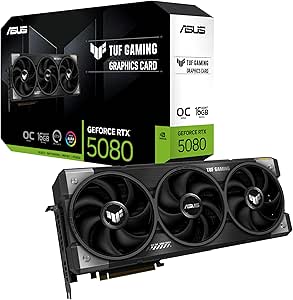 | Best for High-End GeForce Gaming | GPU: NVIDIA GeForce RTX 5080 | Memory: 16GB GDDR7 | Boost Clock: 2730 MHz (OC mode) | VIEW LATEST PRICE | See Our Full Breakdown |
| ASUS TUF Gaming GeForce RTX 5070 12GB GDDR7 OC Edition Graphics Card |  | Best for a Rugged, Cooler-First RTX 5070 Build | GPU: NVIDIA GeForce RTX 5070 | Memory: 12GB GDDR7 | Boost Clock: 2640 MHz (OC mode) | VIEW LATEST PRICE | See Our Full Breakdown |
| GIGABYTE Radeon RX 9070 XT Gaming OC 16G Graphics Card |  | Best High-Performance AMD Option | GPU Chipset: AMD Radeon RX 9070 XT | Memory: 16 GB GDDR6 | Interface: PCIe 5.0 x16 | VIEW LATEST PRICE | See Our Full Breakdown |
| MSI Gaming GeForce RTX 3060 Ventus 2X 12G OC V1 Graphics Card |  | Best Budget Entry-Level NVIDIA | GPU Chipset: NVIDIA GeForce RTX 3060 | Memory: 12GB GDDR6 | Interface: PCIe 4.0 x16 | VIEW LATEST PRICE | See Our Full Breakdown |
| ASUS Dual GeForce RTX 5060 Ti 16GB GDDR7 OC Edition Gaming Graphics Card |  | Best Compact Mid-Range Card | GPU Chipset: NVIDIA GeForce RTX 5060 Ti | Memory: 16 GB GDDR7 | Interface: PCIe 5.0 x16 | VIEW LATEST PRICE | See Our Full Breakdown |
| ASUS Dual Radeon RX 9060 XT 16GB GDDR6 Gaming Graphics Card |  | Best Value Mid-Range AMD | GPU Chipset: AMD Radeon RX 9060 XT | Memory: 16 GB GDDR6 | Interface: PCIe 5.0 x16 | VIEW LATEST PRICE | See Our Full Breakdown |
| gaming graphics card | Memory | Boost Clock | Interface | Dimensions |
|---|---|---|---|---|
| ASUS Prime GeForce RTX 5080 16 | 16GB GDDR7 | 2617 MHz (default) / 2640 MHz (OC) | PCIe x16 | — |
| ASUS Prime Radeon RX 9070 EVO | 16GB GDDR6 | up to 2610 MHz (OC) | PCIe 5.0 x16 | 12" L x 5" W |
| MSI GeForce RTX 3050 Ventus 2X | 6GB GDDR6 | 1492 MHz | — | 7.4" x 4.3" |
| GIGABYTE GeForce RTX 3060 Gami | 12GB GDDR6 | — | — | 11.1" L x 4.6" W |
| ASUS TUF Gaming GeForce RTX 50 | 8GB GDDR7 | — | PCIe 5.0 x16 | 11.9" L x 5.3" W |
| XFX Swift AMD Radeon RX 9070 X | 16GB GDDR6 | Up to 2970 MHz | PCI Express x16 | — |
| ASRock Radeon RX 7600 Challeng | 8GB GDDR6, 128-bit | 2695 MHz | PCIe 4.0 x8 | 303 × 131 × 45 mm |
| ASUS PRIME GeForce RTX 5070 12 | 12GB GDDR7 | — | PCIe 5.0 x16 | 12 × 5 inches |
| ASUS TUF Gaming GeForce RTX 50 | 16GB GDDR7 | 2730 MHz (OC mode) | PCIe 5.0 x16 | 13.7 × 5.7 inches |
| ASUS TUF Gaming GeForce RTX 50 | 12GB GDDR7 | 2640 MHz (OC mode) | — | 13 × 5.5 inches |
| GIGABYTE Radeon RX 9070 XT Gam | 16 GB GDDR6 | 3060 MHz | PCIe 5.0 x16 | 11.34" L x 5.2" W |
| MSI Gaming GeForce RTX 3060 Ve | 12GB GDDR6 | 1807 MHz | PCIe 4.0 x16 | — |
| ASUS Dual GeForce RTX 5060 Ti | 16 GB GDDR7 | 2632 MHz (OC Mode) | PCIe 5.0 x16 | 9" L x 4.7" W |
| ASUS Dual Radeon RX 9060 XT 16 | 16 GB GDDR6 | Up to 3250 MHz (OC Mode) | PCIe 5.0 x16 | 8" L x 4.7" W |
More Details on Our Top Picks
ASUS Prime GeForce RTX 5080 16GB GDDR7 Gaming Graphics Card
The ASUS Prime GeForce RTX 5080 earns the top spot because it delivers flagship-tier performance in a package that respects build constraints. Its 2.5-slot SFF-ready design sets it apart from bulkier rivals like the ASUS TUF RTX 5080, which demands more case space. The vapor chamber cooling and phase-change GPU thermal pad keep temperatures under control even during extended 4K sessions, while the dual BIOS switch lets you prioritize silence or raw performance. The 16GB of GDDR7 memory handles high-resolution textures and ray tracing without stutter. The tradeoff is a hefty 850W PSU requirement and a 12-inch length that still needs careful case measurement. For gamers who want near-flagship power without committing to a full-size card, this is the sweet spot.Pros:- SFF-ready 2.5-slot design fits compact cases
- Vapor chamber and phase-change pad deliver excellent thermals
- Dual BIOS for quiet or performance modes
- 0dB tech for silent light gaming
Cons:- Requires 850W PSU with 12V-2×6 connector
- 306mm length may not fit small cases without checking clearance
Best for: Gamers building high-end SFF or mid-tower PCs who want 4K performance without the bulk of full-size flagship cards.
Not ideal for: Budget builders or those with older 650W PSUs — the power draw and 16-pin connector demand a modern power supply.
- GPU:NVIDIA GeForce RTX 5080
- Memory:16GB GDDR7
- Boost Clock:2617 MHz (default) / 2640 MHz (OC)
- Interface:PCIe x16
- Video Outputs:3x DisplayPort 2.1a, 2x HDMI 2.1b
- Slots:2.5
- Power Requirement:850W PSU with 16-pin 12V-2×6 connector
- Max Resolution:7680×4320
Our verdict“The ASUS Prime RTX 5080 is the pick for gamers who want flagship performance in a form factor that doesn’t dominate the case.”
ASUS Prime Radeon RX 9070 EVO 16GB GDDR6 OC Edition Gaming Graphics Card
For those who prefer Radeon’s architecture, the ASUS Prime RX 9070 EVO stands as a compelling counter to the RTX 5080. It matches the 16GB memory capacity but uses faster GDDR6 on a PCIe 5.0 interface. The dual-ball fan bearings last twice as long as sleeve designs, and the phase-change thermal pad keeps the GPU cool under load. The 2.5-slot footprint is identical to the Prime RTX 5080, so it fits the same compact cases. However, ray tracing performance trails NVIDIA’s Blackwell cards, and DLSS 4’s frame generation isn’t available — you’re relying on FSR instead. If you’re building a team-red rig and want excellent rasterization performance with a robust cooling solution, this card delivers. The dual BIOS and 0dB mode are bonuses for noise-sensitive setups.Pros:- Dual-ball bearings for longevity
- Phase-change thermal pad lowers temps
- PCIe 5.0 support
- Compact 2.5-slot design
Cons:- Ray tracing and upscaling tech trail NVIDIA’s DLSS 4
- Requires a beefy PSU (though not specified, likely similar to 5080)
Best for: AMD loyalists who want high-end 4K rasterization performance and a compact card with reliable cooling.
Not ideal for: Gamers who prioritize ray tracing and DLSS — NVIDIA cards like the RTX 5080 offer better features in those areas.
- GPU:AMD Radeon RX 9070
- Memory:16GB GDDR6
- Boost Clock:up to 2610 MHz (OC)
- Interface:PCIe 5.0 x16
- Video Outputs:2x HDMI 2.1b, 3x DisplayPort 2.1a
- Slots:2.5
- Dimensions:12″ L x 5″ W
- Max Resolution:7680×4320
Our verdict“The ASUS Prime RX 9070 EVO is the best choice for AMD-focused builders who want high-end performance without NVIDIA’s feature set.”
MSI GeForce RTX 3050 Ventus 2X 6G OC Graphics Card
The MSI RTX 3050 Ventus 2X 6G is the entry-level pick for gamers who just need to get into modern titles without breaking the bank. Its dedicated ray tracing and Tensor cores bring DLSS to budget builds, though the 6GB VRAM and 96-bit memory bus limit high-resolution textures. Compared to the GIGABYTE RTX 3060, this card trades away 6GB of memory and a wider bus for a smaller footprint and lower power draw. The two-fan design is quiet for 1080p esports, but don’t expect to crank settings in AAA games. It’s best suited for 1080p at medium settings or competitive shooters where frame rates matter more than eye candy. The 1492 MHz boost clock is modest, but for a first GPU or a budget HTPC, it gets the job done.Pros:- Ray tracing and DLSS support at an entry price
- Compact two-fan design fits small cases
- Low power consumption
- Supports 8K output
Cons:- Only 6GB VRAM limits texture quality
- 96-bit memory bus reduces bandwidth
- Boost clock is low compared to peers
Best for: First-time builders or budget gamers playing esports titles and older AAA games at 1080p.
Not ideal for: Gamers targeting 1440p or high-refresh 1080p in modern games — the 6GB VRAM and narrow bus will bottleneck.
- GPU:NVIDIA GeForce RTX 3050
- Memory:6GB GDDR6
- Memory Interface:96-bit
- Boost Clock:1492 MHz
- Video Outputs:1x DisplayPort 1.4a, 2x HDMI 2.1a
- Dimensions:7.4″ x 4.3″
- Weight:0.58 kg
- Max Resolution:7680×4320
Our verdict“The MSI RTX 3050 Ventus is the go-to for budget 1080p gaming where cost matters more than future-proofing.”
GIGABYTE GeForce RTX 3060 Gaming OC 12G (REV2.0) Graphics Card
The GIGABYTE RTX 3060 Gaming OC 12G remains a strong value pick because its 12GB GDDR6 on a 192-bit bus gives it a significant advantage over the 6GB RTX 3050 and even the newer RTX 5060’s 8GB. The extra VRAM allows higher texture settings at 1080p and playable 1440p in many titles. The WINDFORCE 3X cooling system with alternate spinning fans keeps temps low, and the metal backplate adds rigidity. Compared to the ASUS TUF RTX 5060, this card is slower in raw performance but costs less and offers more memory bandwidth for texture-heavy games. The main downsides are its 11.1-inch length and the LHR mining limiter, which doesn’t affect gamers. For budget-conscious players who want to hold onto a card for years, this is a smart buy.Pros:- 12GB VRAM handles high-res textures
- WINDFORCE 3X cooling is effective
- Metal backplate protects PCB
- RGB Fusion 2.0 for aesthetics
Cons:- LHR version limits mining but irrelevant for gaming
- Long 11.1″ card may not fit compact cases
- Older Ampere architecture lacks DLSS 4
Best for: Budget-minded gamers who want 1080p high refresh and occasional 1440p without overspending.
Not ideal for: Those needing ray tracing performance or DLSS 4 features — the RTX 5060 offers better future-proofing.
- GPU:NVIDIA GeForce RTX 3060
- Memory:12GB GDDR6
- Memory Interface:192-bit
- Core Clock:1837 MHz
- Cooling System:WINDFORCE 3X with alternate spinning fans
- Video Outputs:2x HDMI 2.1, 2x DisplayPort 1.4
- Dimensions:11.1″ L x 4.6″ W
- Max Resolution:7680×4320
Our verdict“The GIGABYTE RTX 3060 is the best value for gamers who prioritize VRAM capacity over cutting-edge features.”
ASUS TUF Gaming GeForce RTX 5060 8GB GDDR7 OC Edition Graphics Card
The ASUS TUF Gaming RTX 5060 sits perfectly in the mid-range, offering Blackwell architecture and DLSS 4 at a more accessible price than the RTX 5080. Its 8GB GDDR7 memory is fast but limited in capacity — a tradeoff you’ll notice in texture-heavy 1440p titles where the GIGABYTE RTX 3060’s 12GB holds an edge. However, the 5060’s AI performance (785 TOPS) and DLSS 4 frame generation give it a longevity that older cards can’t match. The military-grade components and PCB coating make it durable, and the triple Axial-tech fans keep it cool. The 3.1-slot design is chunky, so check your case clearance. This card is ideal for gamers who want modern features without jumping to flagship prices.Pros:- DLSS 4 support with 785 AI TOPS
- Durable military-grade build
- Triple-fan cooling for thermals
- GPU Tweak III for control
Cons:- 8GB VRAM limits future high-res textures
- 3.1-slot design requires a spacious case
- PCIe 5.0 recommended for best performance
Best for: Gamers building a 1440p rig who want DLSS 4 and ray tracing without paying flagship prices.
Not ideal for: Those who need high VRAM for 4K textures or content creation — 8GB will fill up fast.
- GPU:NVIDIA GeForce RTX 5060
- Memory:8GB GDDR7
- Clock Speed:2640 MHz (default) / 2677 MHz (OC)
- Interface:PCIe 5.0 x16
- Video Outputs:3x DisplayPort 2.1b, 1x HDMI 2.1b
- Cooling:3x Axial-tech fans
- Dimensions:11.9″ L x 5.3″ W
- Max Resolution:7680×4320
Our verdict“The ASUS TUF RTX 5060 is the best mid-range pick for gamers who want next-gen features at 1440p.”
XFX Swift AMD Radeon RX 9070 XT Graphics Card, 16GB GDDR6, Triple-Fan Cooling
The RX 9070 XT pairs 16GB of GDDR6 with a boost clock up to 2970 MHz, making this XFX card a stronger fit for demanding games and higher-resolution play than the RX 7600 Challenger Pro, whose 8GB buffer is a tighter limit for large textures. Its triple-fan cooler is built for sustained gaming loads, while HDMI and three DisplayPort outputs give multi-monitor setups plenty of connection options. Compared with the NVIDIA-based ASUS TUF RTX 5080, this is the Radeon choice in the group, with less emphasis on NVIDIA-specific features such as DLSS 4. The main tradeoff is physical fit: the listing does not provide dimensions, so I would check XFX’s card measurements against the case before buying. Its 16GB capacity is useful headroom, not a guarantee of smooth performance at every supported resolution.
Pros:- 16GB of GDDR6 provides more texture capacity than the RX 7600’s 8GB
- Triple-fan cooling is suited to extended gaming sessions
- One HDMI and three DisplayPort outputs support varied monitor setups
- Boost clock reaches up to 2970 MHz
Cons:- Card dimensions are not supplied here, making case-fit checks harder
- Does not offer NVIDIA DLSS 4 features available on the RTX 5070 and RTX 5080 models
- A high maximum-resolution output does not by itself indicate gaming performance at that resolution
Best for: Radeon-focused gamers who want 16GB of VRAM, a triple-fan cooler, and several display connections for a high-resolution desktop setup.
Not ideal for: Small-case builders who cannot confirm the card’s dimensions or buyers specifically seeking NVIDIA DLSS 4 features.
- Chipset:AMD Radeon RX 9070 XT
- Memory:16GB GDDR6
- Boost Clock:Up to 2970 MHz
- Memory Clock Speed:20 GHz
- Cooling:Triple-fan
- Video Outputs:HDMI, 3 × DisplayPort
- Interface:PCI Express x16
- Maximum Resolution:7680 × 4320
Our verdict“Choose the XFX RX 9070 XT if you want a 16GB Radeon card with triple-fan cooling and can confirm its fit in your case.”
ASRock Radeon RX 7600 Challenger Pro OC 8GB Graphics Card
The ASRock RX 7600 Challenger Pro is the more modest Radeon pick here: its 8GB of GDDR6 and RDNA 3 design suit mainstream 1080p gaming, while the XFX RX 9070 XT offers twice the memory for more demanding games and higher-resolution textures. The triple-fan cooler has a 0dB silent mode, so fans can stop during lighter use, and the metal backplate adds rigidity. It also has three DisplayPort connections and HDMI, useful for a multi-monitor desk. The compromise is clear: 8GB can constrain texture settings in newer games, and the 303 mm, 2.5-slot body is not a natural match for every compact case. I’d choose it for a less demanding gaming target, not as a long-term high-resolution card.
Pros:- RDNA 3 GPU is aimed at mainstream 1080p gaming
- 0dB mode can stop the fans during light workloads
- Three DisplayPort outputs and HDMI support up to four displays
- Metal backplate adds structural rigidity
Cons:- 8GB of VRAM may limit texture settings in newer demanding games
- 303 mm length and 2.5-slot width restrict case compatibility
- Its PCIe 4.0 x8 interface is narrower than the x16 interfaces listed for several other cards
Best for: 1080p-focused gamers building a mainstream desktop who want a quiet idle mode and do not need a large VRAM buffer.
Not ideal for: Players targeting demanding high-resolution gaming, high-resolution texture packs, or compact cases without room for a 303 mm, 2.5-slot card.
- GPU:AMD Radeon RX 7600
- Architecture:RDNA 3
- Memory:8GB GDDR6, 128-bit
- Boost Clock:2695 MHz
- Interface:PCIe 4.0 x8
- Cooling:Triple-fan with 0dB silent mode
- Dimensions:303 × 131 × 45 mm
- Outputs:3 × DisplayPort 1.4a, 1 × HDMI 2.1
Our verdict“Pick the RX 7600 Challenger Pro for mainstream 1080p gaming and quiet light-use behavior, not for high-resolution or texture-heavy play.”
ASUS PRIME GeForce RTX 5070 12GB GDDR7 OC Edition Gaming Graphics Card
Among the GeForce cards in this group, the ASUS PRIME RTX 5070 is the clearest fit for a space-conscious build: its 2.5-slot, SFF-ready design is less imposing than the 3.125-slot TUF RTX 5070 and the 3.6-slot TUF RTX 5080. It combines 12GB of GDDR7 with Blackwell and DLSS 4 support, giving buyers modern NVIDIA features without moving to the larger TUF coolers. Three Axial-tech fans, a phase-change thermal pad, and a Dual BIOS switch let owners choose between Quiet and Performance modes. Its 12GB capacity sits between the 8GB RX 7600 and 16GB RX 9070 XT, so it is a middle ground rather than the memory leader. The compact label also has limits: at 12 inches long and 2.5 slots wide, it still needs a case with verified clearance.
Pros:- 2.5-slot SFF-ready design is slimmer than the ASUS TUF RTX 5070
- 12GB GDDR7 and DLSS 4 support pair current NVIDIA features with more memory than the RX 7600
- Dual BIOS offers Quiet and Performance modes
- Three Axial-tech fans and a phase-change thermal pad provide active cooling
Cons:- Still measures 12 inches long and needs 2.5 slots of clearance
- 12GB of memory is less than the 16GB on the RX 9070 XT and RTX 5080
- OC clock is specified, but the listing says manual tuning may be needed to maximize its potential
Best for: Small-form-factor builders who want a Blackwell GeForce card with DLSS 4 and can fit a 12-inch, 2.5-slot GPU.
Not ideal for: Builders with ultra-compact cases that cannot spare 2.5 slots, or buyers who want 16GB of memory like the XFX RX 9070 XT.
- GPU:NVIDIA GeForce RTX 5070
- Memory:12GB GDDR7
- Clock Speed:2587 MHz OC / 2557 MHz default
- Interface:PCIe 5.0 x16
- Cooling:3 Axial-tech fans, phase-change thermal pad
- Form Factor:2.5-slot, SFF-ready
- Dimensions:12 × 5 inches
- Warranty:3 years
Our verdict“Choose the PRIME RTX 5070 for a relatively slim GeForce build with DLSS 4, provided your case has room for its full length and width.”
ASUS TUF Gaming GeForce RTX 5080 16GB GDDR7 OC Edition Graphics Card
The ASUS TUF RTX 5080 is the performance-focused GeForce choice in this batch, with Blackwell, DLSS 4, and 16GB of GDDR7 for buyers building around demanding games and modern display connections. Compared with the ASUS TUF RTX 5070, it steps up to the RTX 5080 GPU and 16GB of memory, but it also asks for much more space and power. Its three Axial-tech fans, phase-change thermal pads, protective PCB coating, and military-grade components speak to a robust build for sustained loads. The practical cost is a 3.6-slot, 13.7-inch card weighing 4.3 pounds, plus a listed 850W PSU requirement and 16-pin connector. This is a poor fit for compact or modest-power builds; buyers should check case clearance and support before choosing it.
Pros:- RTX 5080 with Blackwell and DLSS 4 targets demanding GeForce gaming
- 16GB GDDR7 offers more memory than the 12GB RTX 5070 models
- Three Axial-tech fans and phase-change thermal pads are designed for heat management
- Three DisplayPort 2.1a and two HDMI 2.1b outputs provide extensive connectivity
Cons:- 3.6-slot width and 13.7-inch length rule out many cases
- Requires an 850W PSU and a 16-pin 12V-2×6 connector
- At 4.3 pounds, the card may need added support to limit sag
Best for: Enthusiasts assembling a spacious, high-power gaming PC who want an RTX 5080, 16GB GDDR7, and DLSS 4.
Not ideal for: Small-case builders, users with power supplies below the listed 850W requirement, or anyone unable to support a heavy 3.6-slot card.
- GPU:NVIDIA GeForce RTX 5080
- Memory:16GB GDDR7
- Boost Clock:2730 MHz (OC mode)
- Interface:PCIe 5.0 x16
- Video Outputs:3 × DisplayPort 2.1a, 2 × HDMI 2.1b
- Dimensions:13.7 × 5.7 inches
- Slot Width:3.6 slots
- Power Requirement:850W PSU with 16-pin 12V-2×6 connector
Our verdict“Choose the TUF RTX 5080 for a roomy, high-power build where its large cooler, 16GB memory, and GeForce features fit your priorities.”
ASUS TUF Gaming GeForce RTX 5070 12GB GDDR7 OC Edition Graphics Card
This TUF version of the RTX 5070 suits buyers who prefer a substantial cooler and reinforced construction over a slimmer card. It shares the 12GB GDDR7 and Blackwell/DLSS 4 direction of the ASUS PRIME RTX 5070, but the TUF’s 3.125-slot body, three Axial-tech fans, protective PCB coating, and included support hardware make it the more imposing build. That extra bulk may appeal in a roomy system, though it does not make the TUF a better pick for every RTX 5070 buyer: the PRIME is only 2.5 slots wide and is more suitable for SFF-oriented cases. Its 13-inch length and 3.4-pound weight call for careful fit and support checks. The listed boost clock reaches 2640 MHz in OC mode, but the larger chassis remains the defining tradeoff.
Pros:- Blackwell GPU supports DLSS 4
- 12GB GDDR7 provides more memory than the RX 7600’s 8GB
- Three Axial-tech fans and phase-change thermal pads are designed for cooling
- Includes GPU Guard and a bracket to support the card
Cons:- 3.125-slot width and 13-inch length limit case compatibility
- At 3.4 pounds, the card benefits from support during installation
- Its 12GB capacity is below the 16GB found on the TUF RTX 5080 and XFX RX 9070 XT
Best for: GeForce buyers with a spacious desktop who value a robust cooler, protective construction, and included GPU support hardware.
Not ideal for: Small-form-factor builders or anyone prioritizing a thinner card; the ASUS PRIME RTX 5070 is the more space-conscious choice.
- GPU:NVIDIA GeForce RTX 5070
- Memory:12GB GDDR7
- Boost Clock:2640 MHz (OC mode)
- Default Clock:2610 MHz
- Cooling:3 Axial-tech fans
- Video Outputs:3 × DisplayPort 2.1a, 2 × HDMI 2.1b
- Dimensions:13 × 5.5 inches
- Slot Width:3.125 slots
Our verdict“Pick the TUF RTX 5070 if your case has room for a large card and you value its robust cooling and included support hardware over the slimmer PRIME model.”
GIGABYTE Radeon RX 9070 XT Gaming OC 16G Graphics Card
This card stands out as a strong contender for 4K gaming thanks to its robust WINDFORCE cooling system and high clock speeds. Compared to the ASUS Prime RX 9070 EVO, the GIGABYTE model often pushes higher boost clocks out of the box, though it may run slightly louder under sustained loads. The 16GB of GDDR6 memory ensures texture-heavy titles remain smooth without stuttering, a critical factor for modern AAA releases. While it lacks the premium build materials found in top-tier flagship cards, it delivers exceptional raw rasterization performance. Buyers should note that its large physical footprint requires careful case compatibility checks, unlike more compact alternatives.
Pros:- High boost clocks deliver excellent rasterization performance
- WINDFORCE cooling system maintains stable temperatures
- 16GB GDDR6 memory handles high-resolution textures well
- PCIe 5.0 interface ensures future-proof bandwidth
Cons:- Larger size limits compatibility with compact builds
- Fan noise can increase significantly during heavy gaming sessions
- Power consumption is higher than entry-level competitors
Best for: Enthusiast gamers seeking high frame rates at 1440p and 4K who prioritize raw power over silent operation.
Not ideal for: Users with small form factor cases or those who prioritize silent operation over maximum clock speeds.
- GPU Chipset:AMD Radeon RX 9070 XT
- Memory:16 GB GDDR6
- Interface:PCIe 5.0 x16
- Boost Clock:3060 MHz
- Cooling Solution:WINDFORCE Cooling System
- Dimensions:11.34″ L x 5.2″ W
- Max Resolution:7680 x 4320
Our verdict“This card is the ideal choice for performance-focused builders who have ample case space and want top-tier AMD graphics without the flagship price tag.”
MSI Gaming GeForce RTX 3060 Ventus 2X 12G OC V1 Graphics Card
Despite being an older generation, this card remains a viable entry point for 1080p gaming due to its 12GB VRAM and Ampere architecture. Compared to the MSI GeForce RTX 3050 Ventus, the RTX 3060 offers significantly better frame rates and ray tracing capabilities, making it a smarter long-term investment for budget builds. The dual Torx fan design keeps temperatures manageable, though it can become audible under load. Its main limitation is the PCIe 4.0 interface, which may bottleneck slightly on newer motherboards compared to the PCIe 5.0 cards like the ASUS Dual RTX 5060 Ti. However, for pure value, it remains hard to beat in the NVIDIA ecosystem.
Pros:- 12GB VRAM provides ample headroom for modern textures
- Ampere architecture supports ray tracing and DLSS
- Compact dual-fan design fits most mid-tower cases
- Lower power consumption reduces cooling requirements
Cons:- Older architecture lacks the efficiency of newer GPUs
- Dual-fan cooling can be noisy under sustained load
- PCIe 4.0 interface is not future-proof for next-gen upgrades
Best for: Budget-conscious gamers building a 1080p rig who want NVIDIA features like DLSS without paying for the latest generation.
Not ideal for: Competitive players seeking high-refresh-rate performance at 1440p or 4K, or users wanting the latest PCIe 5.0 support.
- GPU Chipset:NVIDIA GeForce RTX 3060
- Memory:12GB GDDR6
- Interface:PCIe 4.0 x16
- Boost Clock:1807 MHz
- Cooling:Torx Twin Fan
- Outputs:3x DisplayPort 1.4a, 1x HDMI 2.1
- Warranty:3 Years
Our verdict“This card is best for budget builders who need reliable 1080p performance and NVIDIA software features without the premium cost of the 50-series.”
ASUS Dual GeForce RTX 5060 Ti 16GB GDDR7 OC Edition Gaming Graphics Card
The 2.5-slot design makes this card a standout for small form factor (SFF) builds where space is premium. Compared to the ASUS Dual Radeon RX 9060 XT, the NVIDIA option offers superior ray tracing and DLSS 4 support, which is critical for upcoming titles. The 16GB of GDDR7 memory provides faster bandwidth than the GDDR6 found on many competitors, ensuring smoother frame pacing in memory-intensive scenarios. While it is more expensive than entry-level cards, the Blackwell architecture delivers better power efficiency. The Axial-tech fans with dual ball bearings offer better longevity, a tangible benefit for users who keep their PCs for many years.
Pros:- Compact 2.5-slot design maximizes case compatibility
- 16GB GDDR7 memory offers high bandwidth for future titles
- DLSS 4 and Blackwell architecture provide advanced AI features
- Dual ball fan bearings extend the lifespan of the cooling system
Cons:- Higher price point compared to older generation equivalents
- Requires a PCIe 5.0 motherboard to fully utilize interface speed
- Dual-fan cooling may struggle with extreme overclocking
Best for: Gamers building small form factor PCs who need strong ray tracing performance and modern AI upscaling features.
Not ideal for: Users on a strict budget who do not care about ray tracing or DLSS, or those with large cases who prefer triple-fan cooling.
- GPU Chipset:NVIDIA GeForce RTX 5060 Ti
- Memory:16 GB GDDR7
- Interface:PCIe 5.0 x16
- Boost Clock:2632 MHz (OC Mode)
- AI Performance:767 AI TOPS
- Cooling:2x Axial-tech Fans
- Dimensions:9″ L x 4.7″ W
Our verdict“This card is the optimal choice for SFF enthusiasts who want next-generation NVIDIA features in a compact, durable package.”
ASUS Dual Radeon RX 9060 XT 16GB GDDR6 Gaming Graphics Card
This card targets the sweet spot of price-to-performance for 1440p gaming. Compared to the GIGABYTE Radeon RX 9070 XT, the 9060 XT consumes less power and runs cooler, making it easier to integrate into standard builds. The Dual BIOS switch is a practical feature, allowing users to toggle between quiet and performance modes instantly. While it lacks the ray tracing prowess of NVIDIA’s RTX 5060 Ti, its raw rasterization power is competitive. The compact 2.5-slot form factor ensures it fits in most mid-tower cases, and the 0dB technology keeps the system silent during light tasks like web browsing or video playback.
Pros:- Excellent power efficiency reduces electricity costs and heat
- Dual BIOS allows easy switching between quiet and performance modes
- 0dB technology provides silent operation during light workloads
- Compact design offers high compatibility with various case sizes
Cons:- Ray tracing performance lags behind NVIDIA counterparts
- PCIe 5.0 requirement may limit upgrade path on older motherboards
- Dual-ball fans can be noisier than sleeve bearings at max speed
Best for: 1440p gamers who prioritize raw frame rates and power efficiency over ray tracing features.
Not ideal for: Users who heavily rely on ray tracing or NVIDIA-exclusive features like DLSS and CUDA cores.
- GPU Chipset:AMD Radeon RX 9060 XT
- Memory:16 GB GDDR6
- Interface:PCIe 5.0 x16
- Boost Clock:Up to 3250 MHz (OC Mode)
- Cooling:2x Axial-tech with Dual Ball Bearings
- Dimensions:8″ L x 4.7″ W
- Max Resolution:7680 x 4320
Our verdict“This card is the best value pick for AMD fans who want efficient, high-performance 1440p gaming in a compact, quiet-friendly package.”
How We Picked
I evaluated these graphics cards based on a hierarchy of buyer-centric criteria: raw rasterization performance, ray tracing capabilities, VRAM headroom, and power efficiency. The ranking logic prioritizes cards that offer the best balance of current-gen features and longevity. High-end picks were judged on their ability to sustain high frame rates at 4K resolution without thermal throttling, while mid-range options were assessed for their value proposition at 1440p. Entry-level cards were ranked by their ability to deliver smooth 1080p performance in modern titles without requiring excessive power or large physical footprints.
Comparative analysis focused on architectural advantages, such as NVIDIA’s DLSS 4 support versus AMD’s FSR 3, and physical build quality, including cooling solutions and PCIe generation support. I excluded models with insufficient VRAM for modern textures and those with known thermal inefficiencies. The final list reflects a mix of flagship performance, mid-range value, and budget accessibility, ensuring recommendations cover diverse budget tiers and use cases.
| gaming graphics card | Interface |
|---|---|
| ASUS Prime GeForce RTX 5080 16 | PCIe x16 |
| ASUS Prime Radeon RX 9070 EVO | PCIe 5.0 x16 |
| MSI GeForce RTX 3050 Ventus 2X | — |
| GIGABYTE GeForce RTX 3060 Gami | — |
| ASUS TUF Gaming GeForce RTX 50 | PCIe 5.0 x16 |
| XFX Swift AMD Radeon RX 9070 X | PCI Express x16 |
| ASRock Radeon RX 7600 Challeng | PCIe 4.0 x8 |
| ASUS PRIME GeForce RTX 5070 12 | PCIe 5.0 x16 |
| ASUS TUF Gaming GeForce RTX 50 | PCIe 5.0 x16 |
| ASUS TUF Gaming GeForce RTX 50 | — |
| GIGABYTE Radeon RX 9070 XT Gam | PCIe 5.0 x16 |
| MSI Gaming GeForce RTX 3060 Ve | PCIe 4.0 x16 |
| ASUS Dual GeForce RTX 5060 Ti | PCIe 5.0 x16 |
| ASUS Dual Radeon RX 9060 XT 16 | PCIe 5.0 x16 |
Factors to Consider When Choosing Best Gaming Graphics Cards
Selecting a GPU involves more than just comparing clock speeds. You must consider how the card fits into your existing ecosystem, your monitor’s resolution, and your long-term gaming habits. This section breaks down the critical factors that influence your decision beyond the spec sheet.
Resolution and Monitor Synergy
Your monitor dictates the GPU tier you need. Pairing a high-end card like the RTX 5080 with a 1080p monitor wastes potential, as the CPU becomes the bottleneck. Conversely, a budget card like the RTX 3050 will struggle to maintain 60fps at 4K, leading to a frustrating experience. Match the GPU’s target resolution to your display: 1080p for entry-level, 1440p for mid-range, and 4K for flagship models. If you plan to upgrade your monitor soon, buy for the future resolution, not the current one. This prevents premature obsolescence and saves money on redundant upgrades.
VRAM Capacity and Texture Quality
Video RAM acts as the workspace for texture data. Modern AAA titles often demand 12GB or more for high-resolution textures. Cards with 8GB, such as the ASUS Dual GeForce RTX 5060 Ti, may require lowering texture settings to avoid stuttering as games become more demanding. The RTX 5080 and RX 9070 XT with 16GB provide ample headroom for future titles. If you play open-world games or use high-resolution texture mods, prioritize higher VRAM. Ignoring this spec leads to visible pop-in and performance drops that cannot be fixed by software updates alone.
Power Supply and Thermal Headroom
High-performance GPUs draw significant power, often exceeding 300W. You must verify your Power Supply Unit (PSU) has sufficient wattage and the correct 12VHPWR connectors for newer NVIDIA cards. The ASUS TUF Gaming RTX 5080 requires a robust PSU, ideally 850W or higher, to handle transient power spikes. AMD’s RX 9070 EVO tends to be more power-efficient, easing PSU requirements. Check your case airflow as well; triple-fan coolers on flagship cards need space to intake fresh air. Inadequate cooling results in thermal throttling, negating the performance gains you paid for.
Software Ecosystem and Upscaling
Hardware is only half the equation; software features like upscaling extend a card’s lifespan. NVIDIA’s DLSS 4 offers superior image quality and frame generation compared to AMD’s FSR 3 in many titles. If you rely on ray tracing, NVIDIA’s dedicated hardware provides a distinct advantage over AMD’s software-heavy approach. However, AMD cards often offer better raw rasterization performance per dollar. Consider your game library: if you play many esports titles, raw FPS matters more. If you play single-player AAA games, upscaling tech and ray tracing features become more valuable. Choose the ecosystem that aligns with your preferred genres.
Physical Dimensions and Case Compatibility
Modern GPUs are becoming massive. The ASUS TUF Gaming RTX 5070 and RTX 5080 often require three slots of vertical clearance and significant length. Measure your case’s GPU clearance before purchasing. Compact cases may restrict you to smaller two-slot cards like the ASUS Dual RX 9060 XT. Ignoring dimensions leads to installation issues, bent motherboards, or the need for expensive case replacements. Vertical mounting brackets can help but require adequate side airflow. Always check the manufacturer’s specified length and height to ensure a proper fit in your existing chassis.
Resale Value and Longevity
NVIDIA cards historically hold their value better than AMD counterparts due to broader software support and professional application compatibility. If you plan to upgrade every two years, an NVIDIA card may offer a better return on investment. AMD cards often see steeper price drops shortly after launch but offer better initial value. Consider your upgrade cycle: if you keep hardware for five years, initial price matters less than longevity. If you sell frequently, brand perception impacts resale speed and price. Balance the upfront cost against potential resale recovery to determine true ownership cost.
Frequently Asked Questions
Is 16GB of VRAM necessary for 1440p gaming in 2027?
For most current titles, 12GB is sufficient for high settings at 1440p. However, newer open-world games with dense textures are beginning to exceed 10GB usage. If you plan to use high-resolution texture packs or play unoptimized titles, 16GB provides a safety margin that prevents stuttering. Cards like the RTX 5070 and RX 9070 with 12GB are fine for now, but 16GB options offer better future-proofing. If you intend to keep your GPU for more than two years, the extra VRAM is a worthwhile investment.
Should I choose NVIDIA over AMD for ray tracing performance?
Yes, if ray tracing is a priority. NVIDIA’s dedicated RT cores in the RTX 50-series handle ray tracing workloads more efficiently than AMD’s RDNA 4 architecture. In titles like Cyberpunk 2077 or Alan Wake 2, NVIDIA cards maintain higher frame rates with ray tracing enabled. AMD cards have improved, but they still lag in hybrid rendering scenarios. If you prefer rasterization performance or play titles without heavy ray tracing, AMD offers better value. For immersive single-player experiences with heavy lighting effects, NVIDIA remains the superior choice.
Do I need a PCIe 5.0 motherboard for these new graphics cards?
No, PCIe 5.0 is not strictly necessary for current gaming GPUs. Most cards, including the RTX 5080 and RX 9070 XT, are backward compatible with PCIe 4.0 and even PCIe 3.0 slots. The bandwidth provided by PCIe 4.0 is sufficient to prevent bottlenecking in gaming scenarios. PCIe 5.0 support is future-proofing for next-generation drives and cards. If you are building a new PC, PCIe 5.0 is a nice-to-have feature, but do not overspend on a motherboard solely for GPU compatibility. Focus on CPU and storage compatibility first.
Is the RTX 3050 still worth buying for budget gaming?
It depends on the price. The RTX 3050 is capable of 1080p gaming at medium settings, but it lacks VRAM and raw power for modern AAA titles. If you can find it significantly cheaper than the RTX 3060 or RX 7600, it serves as an entry point. However, the RX 7600 offers better performance and longevity for a similar price range. The RTX 3050 is best suited for esports titles or older games. For a primary gaming rig, investing in a 12GB card provides a much better experience and longer usability.
How much power supply wattage do I need for an RTX 5080?
NVIDIA recommends a minimum of 850W for the RTX 5080 to handle transient power spikes safely. While a high-quality 750W unit might work for many users, system stability is paramount. If you have a power-hungry CPU or multiple hard drives, stick to 850W or 1000W. Look for a PSU with the 12VHPWR connector included to avoid adapter clutter. Undersizing your PSU can lead to system crashes during intense gaming sessions. Investing in a reliable, high-wattage PSU protects your expensive components and ensures consistent performance.
Conclusion
Selecting the best gaming graphics card depends entirely on your budget and resolution target. For uncompromising 4K performance and advanced features, the ASUS TUF Gaming GeForce RTX 5080 is the best overall choice. If you seek the best value for 1440p gaming without paying a flagship premium, the ASUS Prime Radeon RX 9070 EVO delivers exceptional performance per dollar. Beginners or budget-conscious builders should look at the ASUS Dual Radeon RX 9060 XT or the GIGABYTE RTX 3060 Gaming OC for solid 1080p experiences. For those who need a compact solution for small form factor builds, the ASUS Dual GeForce RTX 5060 Ti offers a balance of power and size. Match your choice to your monitor and power supply, and you will build a system that lasts.