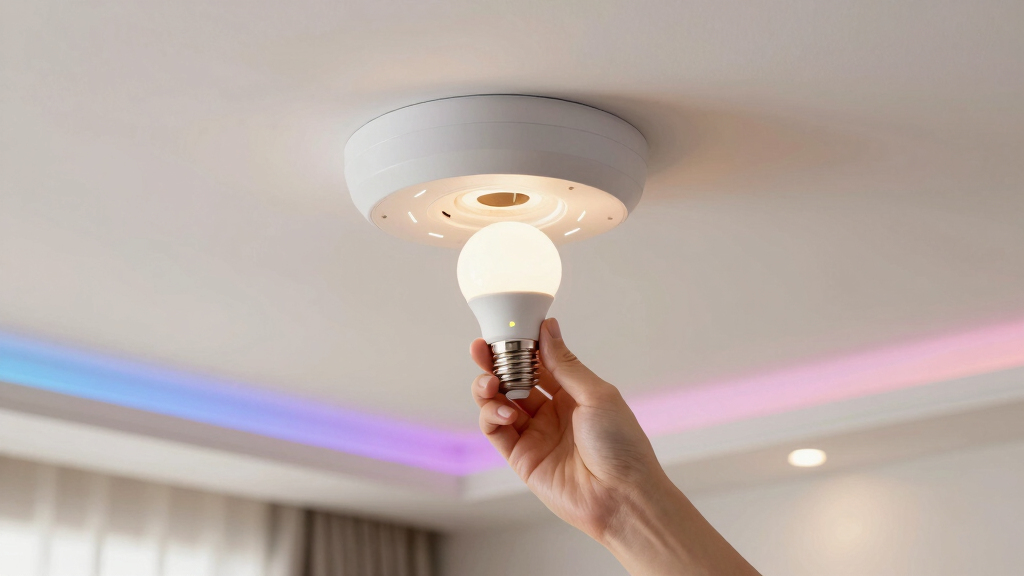

The best smart light bulbs should make everyday lighting easier, not turn every lamp into a troubleshooting project. My top pick is the Tapo L535E Matter-Certified Smart Light Bulb because it balances bright output, modern smart-home support, and strong multi-platform flexibility. The Govee 1600 Lumens Smart LED Light Bulbs stand out for rooms that need more brightness, while the Kasa Full Color A19 4-Pack makes the most sense for shoppers who want dependable app control at a fair price. The main tradeoffs are brightness versus cost, color effects versus simple white light, and app-only bulbs versus bulbs that fit better into Alexa, Google, Apple, or Matter setups. Keep reading for the full breakdown of which bulb fits each room, budget, and smart-home setup.

Play games on Amazon Luna for your game nights, included with Prime
- A rotating selection of games, no download needed
- Play on TV, laptop or phone
- Fast, free delivery for your gear, too
Key Takeaways
- The Tapo L535E earns the strongest all-around position because Matter support makes it less tied to one voice assistant than most Wi-Fi-only picks.
- The Govee 1600 Lumens bulbs are the best fit for large rooms because brightness separates them from the many 800-lumen A19 options in the lineup.
- Philips Hue remains the premium choice for buyers who care about ecosystem depth, but the higher price makes less sense for basic lamp upgrades.
- The Kasa and Tapo white-only bulbs show that not every buyer needs RGB color; simple dimmable white light can be the smarter buy for bedrooms, rentals, and hallways.
- Several Govee packs offer strong color effects, but buyers should match the bulb shape to the fixture: A19, BR30, and E12 serve very different rooms.




More Details on Our Top Picks
Govee LED Smart Light Bulbs, 1000LM Color Changing Wi-Fi & Bluetooth A19 75W Equivalent, 4-Pack
I’d place the Govee 1000LM A19 4-Pack at the top because it balances strong everyday brightness, color range, and a high CRI better than most value-minded bulbs here. Compared with the Govee 800 Lumens A19, this set gives rooms more usable light, so it makes more sense for kitchens, bedrooms, and living spaces where smart color is a bonus rather than the whole point. The Tapo L535E is brighter and better for Matter-heavy homes, but it costs more and may be more bulb than some buyers need. The tradeoff is control friction: these bulbs are not for smart switches, and the Wi-Fi/Bluetooth setup rules can feel picky. For most Alexa or Google homes, though, this is the most balanced pick.
Pros:- 1000-lumen output is brighter than standard 800-lumen smart bulbs
- RGBWW color plus 2700K-6500K white tuning covers mood and task lighting
- CRI 90+ helps colors look more natural indoors
- App, Alexa, Google Assistant, Wi-Fi, and Bluetooth control add flexibility
Cons:- Not compatible with smart switches
- Bluetooth must be disabled for some Wi-Fi features to work properly
- No Apple Home or Matter support listed
Best for: Households that want one bright, colorful A19 smart bulb set for everyday lamps and ceiling fixtures without paying a premium for Apple Home support.
Not ideal for: Homes built around wall smart switches, since these bulbs are not designed to be controlled that way.
- Bulb Type:LED A19
- Base:E26
- Brightness:1000 lumens
- Equivalent Wattage:75W equivalent
- Power Use:9W
- Color Range:RGBWW, 16 million colors
- White Temperature:2700K-6500K
- Connectivity:Wi-Fi and Bluetooth
- Compatibility:Alexa and Google Assistant
Bottom line: This is the set I’d choose first for a bright, flexible smart lighting upgrade in an Alexa or Google home.
Tapo L535E Matter-Certified Smart Light Bulb (4-Pack)
The Tapo L535E earns its spot for buyers who care less about brand lock-in and more about cross-platform control. Its Matter support makes it a cleaner fit than the Govee 1000LM A19 if the home includes Apple Home, Alexa, Google Assistant, or SmartThings. It is also the brightest A19 option in this batch at 1100 lumens, which gives it an edge in open rooms or fixtures where one bulb has to do more work. I would not call it the value pick, though. Compared with the Govee 800 Lumens A19, the price is higher, and full control still depends on app setup. This pick makes the most sense when compatibility and brightness matter more than the lowest cost.
Pros:- Matter certification supports broader smart home compatibility
- 1100-lumen output is the brightest A19 option in this batch
- 1%-100% dimming gives more precise light control
- CRI above 90 supports better-looking colors and whites
Cons:- Costs more than many standard Wi-Fi smart bulbs
- Requires app setup to access the full feature set
- May be unnecessary for single-platform Alexa or Google homes
Best for: Smart home users mixing Apple Home, Alexa, Google Assistant, or SmartThings who want bright color bulbs with Matter support.
Not ideal for: Budget-focused buyers who only use Alexa or Google and do not need Matter compatibility.
- Brightness:1100 lumens
- Equivalent Wattage:75W equivalent
- Color Options:16 million colors
- White Temperature:2500K-6500K
- Dimming Range:1%-100%
- Smart Standard:Matter-certified
- Compatibility:Apple Home, Alexa, Google Assistant, SmartThings
- CRI:>90
Bottom line: Pick this one when a brighter A19 bulb and Matter support are worth paying extra for.
Govee E12 Smart LED Bulb, 4-Pack with Color Changing and Voice Control
The Govee E12 Smart LED Bulb fills a different gap than the A19 picks: it is made for candelabra fixtures, not standard lamps. That makes it the right choice for chandeliers, sconces, and decorative fixtures where the Govee 1000LM A19 or Tapo L535E simply will not fit. Its 450-lumen output is enough for layered accent lighting, and the Matter support gives it broader smart-home appeal than the older Govee 800 Lumens A19. The tradeoff is brightness and network limits. With a lower CRI rating and no 5GHz Wi-Fi, this is less convincing as a main-room work light. I’d treat it as a style-fixture smart bulb rather than a whole-room lighting solution.
Pros:- E12 candelabra base fits decorative fixtures that A19 bulbs cannot
- Matter, Alexa, and Google Assistant compatibility support flexible control
- 2700K-6500K white tuning works for warm evening light or cooler daytime light
- 50+ preset scenes and music sync suit accent lighting
Cons:- 450 lumens is much dimmer than the A19 and BR30 options here
- Not compatible with dimmer switches
- No 5GHz Wi-Fi support
Best for: Buyers upgrading chandeliers, wall sconces, or decorative E12 fixtures who want color control without changing the fixture.
Not ideal for: Anyone replacing standard A19 bulbs or needing bright task lighting from a single bulb.
- Bulb Type:LED B11 candelabra
- Base:E12
- Brightness:450 lumens
- Equivalent Wattage:40W equivalent
- Power Use:5.8W
- White Temperature:2700K-6500K
- Connectivity:2.4GHz Wi-Fi and Bluetooth
- Compatibility:Matter, Alexa, Google Assistant
- Lifespan:25,000 hours
Bottom line: This is the smart bulb I’d pick for decorative E12 fixtures, not for replacing a room’s main light source.
Govee BR30 Smart LED Light Bulbs with RGBWW Color Changing, Alexa & Google Assistant Compatibility (4 Pack)
The Govee BR30 Smart LED Bulbs belong in this lineup because recessed cans and track lights need a different shape than the A19 picks. Compared with the Govee 1000LM A19, this model is dimmer at 850 lumens, but the BR30 flood shape spreads light in a way that makes more sense for ceilings, living rooms, and media spaces. It also has Matter support, which gives it a compatibility advantage over the Govee 800 Lumens A19. The main limitation is fixture dependence: if the room uses table lamps or standard enclosed fixtures, this is the wrong bulb. It also sticks to 2.4GHz Wi-Fi and does not work with dimmer switches, so the setup needs to match the bulb.
Pros:- BR30 shape suits recessed cans and track lighting better than A19 bulbs
- Matter, Wi-Fi, and Bluetooth support give multiple setup paths
- RGBWW color and 2700K-6500K white tuning support both ambience and daily use
- 1%-100% dimming allows softer ceiling light at night
Cons:- 850 lumens is lower than the brighter A19 options in this batch
- Not compatible with dimmer switches
- Requires 2.4GHz Wi-Fi for wireless setup
Best for: Homeowners upgrading recessed cans or track lighting who want color scenes and smart control from ceiling fixtures.
Not ideal for: Lamp-heavy rooms or fixtures that need standard A19 bulbs instead of BR30 flood bulbs.
- Bulb Type:LED BR30
- Base:E26
- Brightness:850 lumens
- Power Use:9.5W
- Color Options:16M RGBWW colors
- White Temperature:2700K-6500K
- Dimming Range:1%-100%
- Connectivity:Bluetooth, Wi-Fi, Matter
- Voltage:120V AC, 60Hz
Bottom line: Choose this set when the fixture calls for BR30 bulbs and ceiling-based smart color matters more than maximum brightness.
Govee Smart Color-Changing LED Light Bulbs with Alexa & Google Assistant, 16 Million Colors, WiFi/Bluetooth, Music Sync, A19, 800 Lumens (4 Pack)
The Govee 800 Lumens A19 4-Pack is the value-minded pick for buyers who want color scenes and simple voice control more than the brightest possible bulb. Compared with the Govee 1000LM A19 and Tapo L535E, it gives up brightness and broader smart-home standards, but it still covers the basics well: Alexa, Google Assistant, schedules, grouping, 16 million colors, and 54 preset scenes. That makes it a smart choice for bedrooms, gaming corners, and mood lighting where 800 lumens is enough. The music sync feature is fun on paper, though it relies on a phone microphone, which is less polished than hardware-based sync. I’d skip it for Apple Home users or anyone with a shaky 2.4GHz network.
Pros:- Lower-cost way to add smart color lighting across four fixtures
- 54 preset scenes make mood lighting easier without manual color tweaking
- Alexa and Google Assistant support cover common voice-control setups
- 50,000-hour listed lifespan is longer than many bulbs in this batch
Cons:- 800 lumens is less bright than the Govee 1000LM and Tapo L535E options
- No 5GHz Wi-Fi support
- Music sync depends on phone microphone access and can conflict with other app use
Best for: Renters, students, or casual smart-home buyers who want affordable color bulbs for bedrooms, lamps, or entertainment spaces.
Not ideal for: Apple Home users, 5GHz-only networks, or rooms where one bulb needs to deliver strong task lighting.
- Bulb Type:LED A19
- Base:E26
- Brightness:800 lumens
- Power Use:9W
- Color Options:16 million colors
- Connectivity:Wi-Fi and Bluetooth, not 5G
- Compatibility:Alexa and Google Assistant
- Voltage:AC 120V
- Lifespan:50,000 hours
Bottom line: This is the budget-friendly set I’d choose for colorful ambience, not for the brightest or most future-ready smart lighting setup.
Tapo L520E Smart LED Light Bulbs – Natural Daylight, Dimmable, Alexa & Google Home Compatible (4-Pack)
I rank the Tapo L520E as the practical daylight pick because it skips party colors and focuses on 4000K natural white, strong dimming control, and a low barrier to setup. Compared with the Philips Smart LED Color Light Bulb or Linkind RGBTW bulbs, this is much less flexible for mood lighting, but it makes more sense for home offices, kitchens, and study spaces where clean, consistent light matters more than color scenes. The 800-lumen output matches many 60W replacements, while the high CRI rating helps colors look less flat. The tradeoff is clear: buyers get a reliable, efficient 4-pack without a hub, but anyone building a full-color smart home will outgrow it quickly.
Pros:- Natural 4000K daylight works well for focus-heavy rooms
- Dimming from 1% to 100% gives broad brightness control
- Works with Alexa, Google Assistant, and Samsung SmartThings
- No hub required, which keeps setup simple
Cons:- No color-changing or tunable warm-white range
- Requires 2.4GHz Wi-Fi and does not support mesh-style smart lighting
- Less appealing for entertainment or decorative lighting than RGB bulbs
Best for: Home office users, renters, and families who want affordable daylight bulbs for task lighting without adding a hub.
Not ideal for: Buyers who want RGB scenes, entertainment lighting, or 5GHz Wi-Fi support.
- Light Type:LED
- Base Type:E27
- Wattage Equivalent:60 Watts
- Brightness:800 lumens
- Color Temperature:4000K natural daylight
- CRI:>90
- Connectivity:2.4GHz Wi-Fi, no hub required
- Dimming:1% to 100%
Bottom line: Choose this if smart lighting means clean daylight, scheduling, and voice control rather than color effects.
Philips Smart LED Color Light Bulb 4-Pack (A19 E26, 60W, 800LM), Motion Detection & App Control
The Philips Smart LED Color Light Bulb earns its place for buyers who want color lighting that plays nicely with newer smart-home standards. Its Matter certification gives it broader platform reach than the Tapo L520E, and its 16 million colors make it more versatile for living rooms than a daylight-only bulb. Compared with the Philips Hue Essential BR30, it is less tied to Hue’s ecosystem and needs no bridge, which lowers the starting cost. The standout twist is motion detection through the WiZ app, but that feature needs at least two bulbs, so a single-bulb setup loses part of the appeal. It is also separate from Philips Hue, which may frustrate buyers who already own Hue accessories.
Pros:- Matter support improves compatibility across major smart-home platforms
- 16 million colors plus warm and cool whites suit mixed-use rooms
- Motion detection works without a separate motion sensor when using two bulbs
- No hub required for app and voice control
Cons:- Motion detection needs at least two bulbs
- Does not work inside the Philips Hue ecosystem
- 800 lumens may feel modest in large rooms or tall fixtures
Best for: Smart-home buyers who want Matter support, color control, and app-based motion features without buying a separate hub.
Not ideal for: Existing Philips Hue households that want every bulb inside the Hue app and accessory ecosystem.
- Quantity:4-pack
- Bulb Shape:A19
- Base Type:E26
- Wattage Equivalent:60W
- Brightness:800 lumens
- Color Options:16 million colors plus warm and cool whites
- Compatibility:Alexa, Google Home, Apple HomeKit via Matter
- Motion Detection:Requires 2 or more bulbs
- Setup:Wi-Fi app control, no hub needed
Bottom line: This is the better Philips pick for buyers who want Matter-first color bulbs without committing to Hue hardware.
Govee 1600 Lumens Smart LED Light Bulbs (2-Pack), RGBWW Color Changing, E26 Base
I would put the Govee 1600 Lumens bulbs above most color bulbs when brightness is the main reason for upgrading. At 1600 lumens, they double the output of the Tapo L520E and Philips Smart LED Color bulbs, so they suit open rooms, floor lamps, and fixtures where 800 lumens feels underpowered. The 1000K-10000K white range is wider than the Philips Hue Essential BR30 range, giving more control from very warm glow to sharp cool light. The catch is that this is a 2-pack, not a 4-pack, and Govee’s app setup may require firmware work before every feature is active. It also lacks dimmer-switch support, so wall-dimmer homes need a different plan.
Pros:- 1600-lumen output is much brighter than typical 60W-equivalent smart bulbs
- Wide 1000K-10000K white range supports both warm ambience and task lighting
- Matter, Alexa, Google Assistant, and SmartThings support broad platform use
- 90+ CRI helps colors and surfaces look more natural
Cons:- Only sold here as a 2-pack, so whole-room coverage can cost more
- Not compatible with traditional dimmer switches
- Full feature access may require an app firmware update
Best for: Buyers lighting larger rooms who want strong output, rich color, and broad white-temperature control from fewer bulbs.
Not ideal for: Homes with traditional dimmer switches or buyers who need a budget 4-pack for several rooms.
- Light Type:LED
- Quantity:2-pack
- Base Type:E26
- Wattage:13 Watts
- Wattage Equivalent:100 Watts incandescent
- Brightness:1600 lumens
- Color Temperature Range:1000K-10000K
- CRI:90+
- Lifespan:25,000 hours
Bottom line: Pick this when brightness and flexible white light matter more than getting the lowest cost per bulb.
Philips Hue Essential Smart LED BR30 Bulb 4-Pack, White and Color Ambiance
The Philips Hue Essential BR30 is the most room-shaping option in this group because the BR30 form is built for recessed cans and downlights rather than standard table lamps. Compared with the Govee 1600 Lumens A19 bulbs, it is dimmer at 800 lumens, but its wide flood-style beam is better suited to ceiling fixtures. It also carries Hue’s polished app experience and smooth 2% dimming, which gives it a more refined feel than value-focused Linkind bulbs. The tradeoff is cost and ecosystem gravity: advanced features such as music syncing need a Hue Bridge, and buyers who only want basic color control may get better value from Philips Smart LED Color or Linkind. This pick makes sense when fixture type and long-term expansion matter.
Pros:- BR30 shape is well matched to recessed cans and ceiling downlights
- Millions of colors plus tunable white light support varied room moods
- Dims smoothly down to 2% for low-light scenes
- Works with Alexa, Google Assistant, and Apple Home
Cons:- Hue Bridge is needed for advanced features such as music syncing
- Higher upfront cost than many Wi-Fi-only smart bulbs
- 800 lumens may not be enough for very high ceilings
Best for: Homeowners upgrading recessed ceiling lights who want color ambiance and room-level control through the Hue platform.
Not ideal for: Budget buyers or lamp users who need standard A19 bulbs rather than BR30 flood bulbs.
- Unit Count:4-pack
- Bulb Type:BR30
- Base Type:E26
- Brightness:800 lumens
- Light Temperature Range:2200K-6500K
- Dimming:Down to 2%
- Color:White and color ambiance
- Compatibility:Alexa, Google Assistant, Apple Home
Bottom line: This is the right pick when the fixture is a recessed downlight and the buyer wants Hue’s expandable system.
Linkind Smart Light Bulbs with Alexa & Google Home Compatibility, Color Changing RGBTW LED Bulbs (4-Pack)
The Linkind RGBTW 4-Pack is my value pick for buyers who want a full set of color bulbs without paying Philips Hue prices. It gives more creative range than the Tapo L520E, with 16 million RGB colors, tunable white from 1800K to 6500K, music sync, and a large scene library. Compared with the Philips Smart LED Color Light Bulb, Linkind lacks Matter and Apple Home support, so it is less future-facing for mixed-platform homes. Against the Govee 1600 Lumens bulbs, it also trades brightness for quantity, since each bulb is a 60W-equivalent model. The dual Wi-Fi and Bluetooth control is useful for reliability, but the indoor-only design and 2.4GHz limit keep it in budget territory.
Pros:- Strong value as a 4-pack with RGB and tunable white lighting
- Wi-Fi and Bluetooth control add a backup path for everyday use
- Music sync and 104 preset scenes offer more effects than daylight-only bulbs
- Rated lifespan of 25,000 hours helps long-term value
Cons:- No Matter or Apple Home support listed
- Requires 2.4GHz Wi-Fi and does not support 5GHz networks
- Indoor-only design limits placement
Best for: Apartment dwellers and first-time smart-lighting buyers who want several color bulbs for Alexa or Google Home on a tighter budget.
Not ideal for: Apple Home users, Matter-focused smart homes, or rooms that need extra-bright 100W-equivalent bulbs.
- Light Type:LED
- Quantity:4-pack
- Bulb Shape:A19
- Base Type:E26
- Wattage:9 Watts
- Wattage Equivalent:60W incandescent
- Color Options:16M RGB plus 1800K-6500K tunable white
- Control Methods:App, Alexa, Google Home, Bluetooth, Wi-Fi
- Lifespan:25,000 hours
Bottom line: Buy this for affordable whole-room color lighting if Alexa or Google Home is already your main control system.
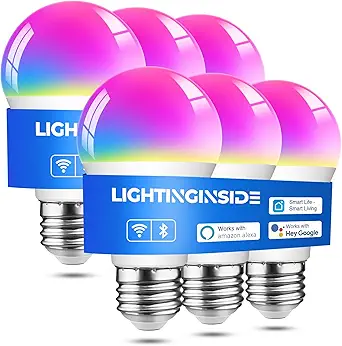
Lightinginside Smart Light Bulbs 6 Pack – Alexa/Google Home Compatible, Color Changing LED with No Hub Required
I would rank the Lightinginside Smart Light Bulbs 6 Pack as the Best Budget Multi-Room Color Pack because it covers more lamps at once than the Kasa Full Color A19 4-Pack and costs less to build around than Philips Hue. The appeal is breadth: 16 million colors, 2700K-6500K white, Alexa and Google control, and no separate hub, so this makes a practical first smart-lighting layer for bedrooms, living rooms, or rentals. Its Wi-Fi plus BLE setup is also the catch; initial pairing can feel fussier than a simple Wi-Fi-only Kasa bulb. I also would not choose it over Hue for polished scenes or richer automation. Still, the six-bulb value, 25,000-hour rating, and CRI above 90 give it a stronger whole-home argument than most cheap color packs.
Pros:- Six A19 bulbs make multi-room setup easier than smaller packs
- 16 million RGB colors plus 2700K-6500K tunable white
- No hub required for Alexa, Google Home, or SmartLife control
- CRI above 90 and 25,000-hour lifespan support everyday use
Cons:- Initial setup depends on Wi-Fi plus BLE, which can be less direct
- Music-sync mode may take extra configuration
- Frosted finish may not suit exposed-bulb fixtures
Best for: I would point this toward renters or budget-focused households outfitting several rooms with color lighting at once.
Not ideal for: I would skip it for Apple HomeKit users or buyers who want the most refined scene ecosystem, where Philips Hue is stronger.
- Light Type:LED
- Wattage:9W, 60W equivalent
- Bulb Shape:A19
- Base Type:E26
- Color Temperature:2700K-6500K tunable white plus RGB color
- Connectivity:2.4GHz Wi-Fi plus BLE dual-channel
- Compatibility:Alexa, Google Home, SmartLife app
- Lifespan:25,000 hours
- Warranty:2-year manufacturer warranty
Bottom line: I would buy this for affordable color coverage across several rooms, not for the most polished smart-home platform.
Philips Hue A19 LED Smart Light Bulb – White and Color Ambiance, 60W Equivalent (3 Pack)
I would place the Philips Hue A19 White and Color Ambiance 3 Pack as the Best Premium Ecosystem Pick because it is less about raw bulb count and more about the platform around the bulb. Next to the Lightinginside Smart Light Bulbs 6 Pack, Hue gives you fewer bulbs for more money, but it counters with stronger app scene control, Apple HomeKit support, and a mature automation path when paired with the Bridge. The Bridge requirement is the main tradeoff: Kasa and Lightinginside avoid that extra purchase, while Hue asks you to buy into a system. For buyers who want multi-assistant control, color scenes, dimming, and room-by-room routines that can grow over time, this is the polished choice. Value hunters should look elsewhere.
Pros:- Strong Hue app ecosystem with customizable scenes
- Works with Alexa, Google Assistant, and Apple HomeKit
- Millions of colors plus adjustable white light
- Good choice for expanding into larger Hue setups
Cons:- Hue Bridge is required for full automation and remote access
- Higher upfront cost than hub-free bulb packs
- Three-pack covers fewer fixtures than several value bundles
Best for: I would aim this at smart-home buyers who care about HomeKit, scenes, and future room expansion more than lowest cost.
Not ideal for: I would skip it for budget shoppers who want no-hub setup; Kasa and Lightinginside are more direct.
- Type:A19 LED smart bulb
- Wattage Equivalent:60W
- Pack Size:3 pack
- Lighting Style:White and Color Ambiance
- Color Options:Millions of colors and adjustable white light
- Control:Hue app and voice assistants
- Compatibility:Alexa, Google Assistant, Apple HomeKit
- Bridge Requirement:Hue Bridge required for full automation and remote access
Bottom line: I would choose Hue when smart-lighting polish and ecosystem depth matter more than bulb count per dollar.
Kasa Smart Light Bulbs, Full Color Changing Dimmable WiFi A19 Bulbs (4-Pack), Compatible with Alexa & Google Home
I would choose the Kasa Smart Light Bulbs Full Color 4-Pack as the Best App-Controlled Value because it balances color, scheduling, remote control, and energy tracking without the Hue Bridge tax. Against the Kasa Full Color 2-Pack, this bundle makes more sense for a living room plus bedroom setup, while the Lightinginside six-pack wins if bulb count matters most. The Kasa app is the differentiator here: energy monitoring helps buyers see usage patterns, and schedules make ordinary lamps behave like smart fixtures. The tradeoff is ecosystem reach. It is Alexa and Google friendly, but less flexible than Philips Hue A19 for HomeKit-centered homes and it still needs a 2.4GHz network. I would rank it high for practical color lighting, not premium polish.
Pros:- Full RGB color plus 2500K-6500K tunable white
- Kasa app supports remote control, scheduling, and energy monitoring
- No hub required for Alexa or Google Assistant voice control
- Four-pack is a practical size for common lamp clusters
Cons:- Only works on 2.4GHz Wi-Fi networks
- Advanced controls depend on the Kasa smartphone app
- Less ecosystem-flexible than Philips Hue
Best for: I would point this toward Alexa or Google households that want color bulbs, schedules, and usage tracking in a four-room starter setup.
Not ideal for: I would skip it for HomeKit-first homes or anyone whose router setup makes 2.4GHz devices painful to pair.
- Light Type:LED
- Wattage:9W, 60W equivalent
- Bulb Shape:A19
- Base Type:E26
- Color Range:16 million colors plus 2500K-6500K white
- Wi-Fi Protocol:IEEE 802.11b/g/n, 2.4GHz
- Compatibility:Alexa and Google Assistant
- Operating Temperature:-15°C to 40°C, 5°F to 104°F
- Humidity Range:10%-90% RH, non-condensing
Bottom line: I would pick this as the sensible middle ground for buyers who want color, control, and energy data without paying Hue prices.
Kasa Smart Light Bulbs, Full Color Changing Dimmable WiFi Bulbs for Alexa & Google Home
I would give the Kasa Smart Light Bulbs Full Color 2-Pack the Best Small-Room Color Upgrade role because it is the cleaner buy when you only need a pair of smart bulbs, not a full-room overhaul. It shares the same broad color range as the Kasa Full Color A19 4-Pack, including 16 million colors and 2500K-6500K white, but the smaller bundle keeps the commitment lower for bedside lamps, a desk, or a reading corner. Compared with the Lightinginside 6 Pack, it is less useful for outfitting several rooms, yet the Kasa app, 800-lumen output, UL certification, scheduling, and energy monitoring make it feel more grounded than a basic novelty color bulb. The limits are familiar: 2.4GHz Wi-Fi only and advanced controls live in the app.
Pros:- Two-pack suits small rooms without overbuying
- 16 million colors plus 2500K-6500K white range
- 800-lumen output matches common 60W replacement brightness
- UL certification adds reassurance for everyday fixtures
Cons:- Only two bulbs, so it is a poor fit for larger room sets
- Requires 2.4GHz Wi-Fi
- App is needed for scheduling, energy monitoring, and fuller control
Best for: I would point this toward apartment dwellers, students, or home-office users upgrading one or two lamps with color control.
Not ideal for: I would skip it for whole-home buyers because the Lightinginside six-pack or Kasa four-pack stretches farther.
- Bulb Type:A19
- Wattage Equivalent:60W
- Actual Power Draw:9W
- Brightness:800 lumens
- Color Options:16 million colors plus 2500K-6500K white
- Connectivity:2.4GHz Wi-Fi, no hub required
- Compatibility:Alexa, Google Assistant, Kasa app
- Pack Size:2 pack
- Certification:UL Certified
Bottom line: I would buy this for one small room where color matters, but I would move up to a larger pack for multi-room plans.
Kasa Smart Light Bulbs (Dimmable, Soft White, 4-Pack)
I would slot the Kasa Smart Light Bulbs Dimmable Soft White 4-Pack as the Best White-Only Pick because it drops color effects and focuses on everyday lamp control. Compared with the Kasa Full Color A19 4-Pack, this is less playful but more sensible for hallways, bedrooms, and shared spaces where soft white light is all anyone wants. It also undercuts the reason to pay for Philips Hue A19 if you do not need scenes, rainbow colors, or HomeKit. The strength is simplicity: 1-100% dimming, Alexa and Google voice control, scheduling, energy monitoring, and a CRI of at least 90 for nicer-looking warm light. The downside is fixed 2700K soft white; buyers who want daylight, tunable white, or RGB should move to the color Kasa or Hue options.
Pros:- Simple 2700K soft white light suits everyday lamps
- 1-100% dimming adds useful brightness control
- Energy monitoring and schedules help manage routine use
- CRI of at least 90 supports better-looking warm light
Cons:- No RGB color effects
- No tunable white range beyond 2700K
- Requires a 2.4GHz Wi-Fi network
Best for: I would point this toward households replacing basic warm-white bulbs in bedrooms, hallways, and lamps with simple voice control.
Not ideal for: I would skip it for buyers who want color scenes, daylight tones, or tunable white for work areas.
- Model Number:KL110P4
- Quantity:4 count
- Light Type:Smart LED bulb
- Color Temperature:2700K soft white
- CRI:>=90
- Dimming:1%-100% brightness control
- Wi-Fi Requirement:2.4GHz only, no hub required
- Compatibility:Alexa and Google Assistant
- Warranty:2-year warranty
Bottom line: I would choose this for practical soft-white smart lighting, not for mood lighting or color-heavy setups.
How We Picked
I ranked these bulbs by how well they solve real buying problems: brightness for the room, smart-home compatibility, app usability, bulb shape, color quality, and value per bulb. Products moved higher when they offered a better mix of daily usefulness and future flexibility, which is why the Matter-ready Tapo L535E sits ahead of many cheaper Wi-Fi bulbs. I also gave extra weight to packs that reduce setup friction across several rooms, since smart bulbs are rarely bought one at a time.
The order favors bulbs that are easier to recommend broadly, then narrows into more specific roles. Philips Hue ranks highly for premium ecosystem buyers, but it loses ground on price when compared with Kasa, Tapo, and Govee. Govee earns several specialist spots because its lineup covers high brightness, BR30 recessed lighting, and E12 decorative fixtures, while white-only picks stay in the guide for buyers who want reliable dimming without paying for color they may never use.
Factors to Consider When Choosing Best Smart Light Bulbs
Choosing from the best smart light bulbs is mostly about matching the bulb to the room, the fixture, and the smart-home system you already use. I would start with compatibility and brightness before getting pulled toward color effects or music modes.
Match Brightness To The Room
Lumens matter more than wattage claims because smart bulbs use watt equivalents only as a rough comparison. An 800-lumen A19 bulb works well for lamps, bedrooms, and accent lighting, but it can feel weak in a kitchen, office, or larger living room unless several bulbs are installed together. The Govee 1600 Lumens bulbs make more sense where one socket needs to light a wide area. Brighter bulbs often cost more and may run warmer, so they are not always the right pick for small bedside lamps. For multi-bulb fixtures, a balanced 800- to 1000-lumen pack can be a better buy than one very bright bulb.
Pick The Right Smart-Home Standard
The biggest split in this roundup is between Matter-certified bulbs and standard Wi-Fi bulbs that lean on a brand app plus Alexa or Google. Matter support, as seen with the Tapo L535E, is valuable if the household uses multiple platforms or may switch assistants later. Basic Wi-Fi bulbs from Govee, Kasa, and Linkind can still be easy to live with when everyone uses the same app or voice assistant. Buyers using Apple Home, mixed-platform homes, or shared households should pay more attention to standards than color modes. A cheaper bulb can become annoying if it locks the lighting routine into one ecosystem.
Choose Color Only Where It Adds Value
RGB color is useful for mood lighting, holidays, gaming rooms, and kids rooms, but it is often less useful in task-heavy spaces. For hallways, closets, laundry areas, and basic bedroom lamps, a soft white dimmable bulb may feel cleaner and cost less. The Kasa Soft White 4-Pack is a better fit for that kind of practical upgrade than a color bulb packed with effects. Color bulbs also vary in how natural their whites look, so buyers who care about reading or cooking light should not shop by color count alone. In mixed homes, I would use color bulbs in feature fixtures and white bulbs everywhere else.
Check Bulb Shape Before Price
Smart bulbs are not interchangeable just because they all connect to Wi-Fi. A19 bulbs fit most lamps and ceiling fixtures, BR30 bulbs belong in recessed cans, and E12 bulbs are made for chandeliers and decorative fixtures. The Govee BR30 and Philips Hue BR30 picks are more useful for downlights than standard A19 bulbs, even if the A19 packs look cheaper. Decorative fixtures need smaller bulbs like the Govee E12, where size and shape matter as much as app features. Buying the wrong shape is the fastest way to turn a good bulb into a bad purchase.
Balance App Features Against Setup Simplicity
Feature-heavy apps can be fun, especially with music sync, scenes, timers, and color animations. Govee is strong for playful lighting control, while Kasa and Tapo tend to make more sense for buyers who want straightforward routines and voice commands. Too many features can add clutter when all the buyer needs is dimming at sunset or a morning schedule. I would favor simpler apps for shared spaces because guests and family members are more likely to understand them quickly. For a dedicated media room or gaming setup, richer controls may be worth the extra menu layers.
Know When Paying More Makes Sense
Premium bulbs are worth it when the lighting system will grow across rooms, scenes, sensors, and automations. Philips Hue costs more, but it has the strongest ecosystem for buyers who want motion control, room grouping, and long-term expansion. For a few lamps, that premium can be hard to justify when Kasa, Tapo, and Govee cover the basics for less. The right spend depends on whether the bulb is a one-room upgrade or the start of a larger smart-lighting setup. Paying more should buy better control, better compatibility, or better light output, not just another color bulb.
Frequently Asked Questions
Are Matter Smart Bulbs Worth Paying Extra For?
Matter smart bulbs are worth it when the home uses more than one platform or when future flexibility matters. A bulb like the Tapo L535E is easier to recommend for mixed households because it is less tied to a single brand app. If the buyer only uses Alexa or Google and plans to stay there, a standard Wi-Fi bulb from Kasa or Govee can still be a better value. Matter does not automatically mean better brightness or better color, so it should be weighed against the actual light specs. I would pay extra for Matter in shared homes, Apple households, or long-term smart-home builds.
Do I Need Color-Changing Bulbs In Every Room?
No, color-changing bulbs make the most sense in rooms where lighting changes the mood or activity. Living rooms, bedrooms, gaming spaces, and holiday displays benefit more from RGB than closets or utility rooms. A soft white Kasa pack may be the smarter buy for simple dimming and scheduling. Color bulbs usually cost more, and their white light quality can vary more than shoppers expect. I would mix color bulbs in visible feature areas with white-only bulbs in practical spaces.
Which Bulb Type Should I Buy For Recessed Ceiling Lights?
For recessed ceiling cans, a BR30 smart bulb is usually the better fit because it spreads light downward and outward more naturally than a standard A19 bulb. In this lineup, the Govee BR30 is the stronger value-minded pick, while the Philips Hue Essential BR30 suits buyers already building a Hue system. A19 bulbs can physically fit some recessed fixtures, but the light pattern may look uneven. Ceiling lights also benefit from reliable grouping, since several bulbs often need to act as one room. I would choose shape first, then compare app features and ecosystem.
Are 800-Lumen Smart Bulbs Bright Enough?
800 lumens is bright enough for many lamps, bedrooms, and accent fixtures, roughly matching a traditional 60W bulb. It may feel underpowered in kitchens, home offices, and large rooms unless there are several bulbs in the same space. The Govee 1600 Lumens option is better when one bulb needs to do more of the lighting work. A 1000-lumen pack, like some Govee options, sits in the useful middle for general rooms. I would choose brightness based on the room’s job, not only the bulb count in the box.
Should I Choose Philips Hue Or A Cheaper Wi-Fi Brand?
Philips Hue is the better choice for buyers who want a polished, expandable lighting system with strong accessories and room controls. Cheaper Wi-Fi brands such as Kasa, Tapo, Govee, and Linkind make more sense for simple app control, voice commands, and multi-pack value. Hue can feel excessive for one lamp or a rental bedroom, especially when lower-cost bulbs handle dimming and schedules well. The premium becomes easier to defend when the buyer wants sensors, scenes across many rooms, or a mature ecosystem. I would choose Hue for a whole-home plan and a cheaper Wi-Fi bulb for targeted upgrades.
Conclusion
For most buyers, I would start with the Tapo L535E Matter-Certified Smart Light Bulb because it offers the best balance of compatibility, brightness, and long-term flexibility. The Kasa Full Color A19 4-Pack is my value pick for shoppers who want reliable color control without paying Hue prices, while the Philips Hue A19 White and Color Ambiance is the premium choice for a deeper smart-lighting system. Beginners should look at Kasa Soft White or Tapo L520E if they mostly want dimming, schedules, and voice control. For specific needs, choose Govee 1600 Lumens for brighter rooms, Govee BR30 or Philips Hue BR30 for recessed lighting, and Govee E12 for decorative fixtures.
Fall Picks
fall essentials
As an affiliate, we earn on qualifying purchases.