
TL;DR

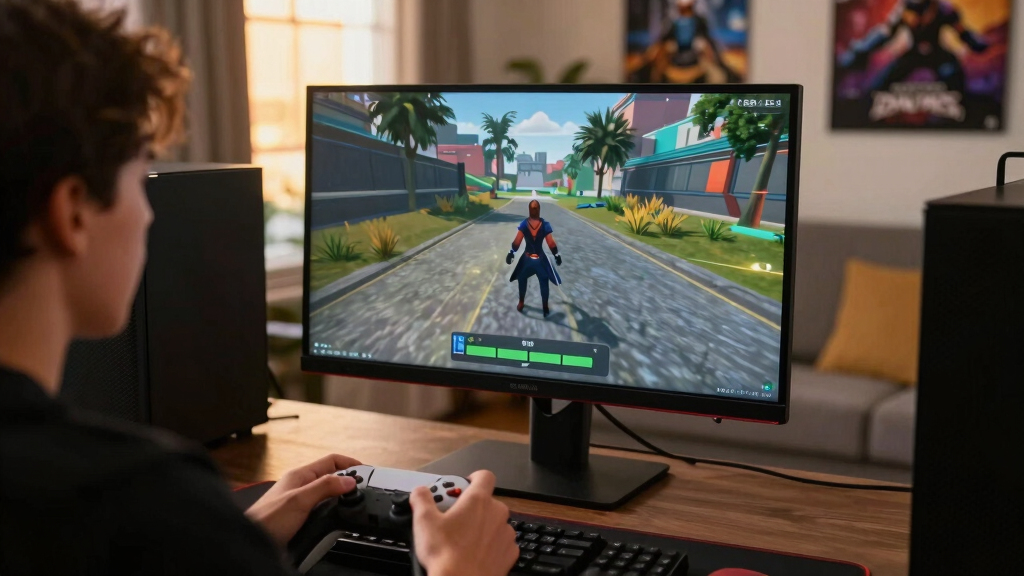
Play games on Amazon Luna for your game nights, included with Prime
- A rotating selection of games, no download needed
- Play on TV, laptop or phone
- Fast, free delivery for your gear, too
The 2012 paper ‘Corners Don’t Look Like That’ challenges common assumptions about screenspace ambient occlusion (SSAO). This review clarifies what the paper actually demonstrated and why it impacts current graphics development.
The 2012 paper titled ‘Corners Don’t Look Like That’ critically examined the assumptions underlying screenspace ambient occlusion (SSAO) techniques used in real-time rendering. The authors argued that common implementations often produce visually inaccurate results around corners and occluded areas, prompting a reevaluation of these methods. This analysis clarifies what the paper actually demonstrated and why it remains relevant for graphics developers today.
The paper, authored by Eric Heitz, David Luebke, and others, highlighted that many SSAO algorithms tend to overestimate occlusion near corners, leading to visual artifacts that do not match real-world lighting behavior. It provided a detailed critique of the assumptions used in traditional SSAO algorithms, particularly around how surface geometry influences occlusion calculations. The authors proposed alternative approaches that better account for geometric accuracy, though these were not necessarily adopted in mainstream engines at the time.
Since its publication, the paper has been cited in various discussions about improving real-time rendering fidelity. However, some claims suggesting that the paper introduced entirely new algorithms or that it proved SSAO fundamentally flawed are misconceptions. The authors clarified that their goal was to highlight inaccuracies and suggest improvements, not to dismiss SSAO altogether.
Implications for Modern Rendering Techniques
This paper’s critique remains relevant as developers seek to improve the visual realism of real-time graphics, especially in video games and simulations. Understanding the limitations identified in 2012 helps inform the development of more accurate occlusion techniques, which can reduce artifacts and improve scene depth perception. It also emphasizes the importance of geometric accuracy in shading algorithms, influencing ongoing research and engine updates.
graphics rendering ambient occlusion tools
As an affiliate, we earn on qualifying purchases.
As an affiliate, we earn on qualifying purchases.
Historical Impact and Misinterpretations of the Paper
Published in 2012, ‘Corners Don’t Look Like That’ emerged amid a period of rapid advancement in real-time rendering technology. During this time, SSAO became widely adopted due to its computational efficiency, despite known limitations. The paper critically examined these limitations, sparking discussions within the graphics community about the fidelity of SSAO implementations.
Over the years, some interpretations of the paper have exaggerated its conclusions, with claims that it proved SSAO was fundamentally flawed or obsolete. The authors have clarified that their work was aimed at highlighting specific inaccuracies and suggesting improvements, not dismissing the entire technique.
“Our goal was to identify where SSAO falls short in accurately representing occlusion, especially around corners, and to suggest ways to improve it.”
— Eric Heitz, co-author
As an affiliate, we earn on qualifying purchases.
Current Relevance and Misinterpretations Persist
It remains unclear how widely the paper’s critiques have influenced current SSAO implementations in commercial engines. There is also ongoing debate about whether newer techniques have addressed the issues raised or if misconceptions about the paper’s conclusions still circulate within the community. Additionally, the extent to which developers have adopted the proposed improvements varies across projects.
3D modeling and rendering software
As an affiliate, we earn on qualifying purchases.
As an affiliate, we earn on qualifying purchases.
Future Directions in Occlusion Algorithms
Researchers and engine developers are expected to continue refining occlusion techniques, incorporating insights from the 2012 paper. Upcoming graphics hardware and software updates may also feature more geometrically accurate occlusion methods. Further studies are likely to clarify how best to balance visual fidelity with computational efficiency in real-time rendering.
graphics development reference books
As an affiliate, we earn on qualifying purchases.
As an affiliate, we earn on qualifying purchases.
Key Questions
Did the 2012 paper prove SSAO is ineffective?
No, the paper did not claim SSAO is ineffective overall. It identified specific inaccuracies in common implementations and suggested improvements, but SSAO remains widely used in real-time graphics.
Are modern SSAO techniques addressing the issues raised?
Many newer algorithms and optimizations aim to reduce artifacts around corners, inspired by critiques like those in the 2012 paper. However, the adoption and effectiveness vary across different engines and projects.
Why do some misconceptions about the paper persist?
Misinterpretations often stem from oversimplified summaries or outdated discussions that conflate critique with disapproval of SSAO as a whole. Clarifications from the authors and ongoing research continue to refine understanding.
Will future hardware improve SSAO accuracy?
Yes, advances in graphics hardware and shader technology are expected to facilitate more geometrically accurate occlusion methods, addressing some limitations discussed in the paper.
Source: hn
Fall Picks
fall essentials
As an affiliate, we earn on qualifying purchases.