TL;DR

Play games on Amazon Luna for your game nights, included with Prime
- A rotating selection of games, no download needed
- Play on TV, laptop or phone
- Fast, free delivery for your gear, too
Gaming-themed Halloween costumes can be simple or elaborate: a signature hat, color palette, and one prop may identify a character without a full cosplay. Pick an idea that fits your budget and event, then check comfort, visibility, sizing, and prop rules before Halloween night.
A single red cap can do more costume work than a suitcase full of armor. When an outfit echoes a character you know, your friends may recognize it before you say a word.
Gaming-themed Halloween costumes range from a few pieces of everyday clothing to detailed cosplay. Here’s how to choose a look people will recognize, make it fit your budget, and wear it comfortably from the first photo to the last piece of candy.
Start with a character’s signature clothing, color palette, and one defining accessory.
Stretch your budget by reusing clothes and making only the details that identify the character.
Match costume effort to the event: crowded parties reward easy movement, while planned photo sessions can support elaborate cosplay.
Try on the full outfit, check visibility and footwear, and confirm rules for masks and props before you go.
Order early enough to check sizing and delivery, and practice makeup or prop assembly before Halloween night.
Choose a Character People Recognize at a Glance
Gaming-themed Halloween costumes work best when you start with a character’s clearest visual clues: a signature garment, familiar colors, and one memorable prop. These details matter because people usually recognize a costume from a distance and in a quick glance. A distinctive silhouette or color block can register before a small emblem or carefully replicated stitching does.
Think of characters whose looks stay distinct even when simplified: a hero’s recognizable cap, a bright outfit, or a familiar tool. Before buying anything, write down three details fans would notice first, then decide which one will carry the look from across a room. If you’re considering a current release, check recent game and costume listings in your region; trends change by year, and a viral character may not be widely recognized by every crowd. Choosing a less familiar character can still be rewarding, but you may want a name badge or a second visual clue to help people make the connection.
Key idea: Choose the details that identify the character before you spend time or money on the details that only fans notice up close. This keeps effort focused where it improves recognition most.
Make a Strong Costume Without a Big Budget
You can make a recognizable gaming costume on a small budget by combining clothes you already own with two or three handmade details. The best shortcut is a signature color palette plus an accessory that points to the character; a plain shirt can become part of a costume when the rest of the clues are right. Reusing clothes also leaves more of your budget for the detail people are most likely to notice, instead of spending it on a complete outfit that may not add much recognition.
For example, build an outfit around dark trousers and a colored shirt, then add a cardboard badge, fabric belt, or paper emblem. A potion bottle can come from a cleaned, empty plastic container with a handmade label. These quick additions work because they translate a game’s visual language into familiar shapes and colors. If you need glue, paint, or makeup, price those supplies before you begin: DIY can cost less, but several small purchases can add up quickly, and crafting takes time as well as money.
Store-bought pieces save crafting time, while handmade pieces let you adapt the fit and colors. A hybrid often gives you the useful middle ground: everyday clothes, one purchased accessory, and one personal touch. The tradeoff is that a purchased piece may fit or finish more reliably, while a handmade one can better match your budget and idea.
- Reuse: Start with clothes and shoes you already own.
- Prioritize: Make the hat, badge, or prop that carries the character’s identity.
- Personalize: Add a detail fans will recognize, such as a distinctive emblem or color block.
Pick the Right Level of Effort for Your Halloween Plans
Themed Halloween costumes range from quick, low-cost outfits to detailed cosplay, so choose a level that matches your available time and where you’ll wear it. A costume for trick-or-treating or a crowded house party has different needs from a planned convention photoshoot. The more elaborate the outfit, the more time you may need to get dressed, move through crowds, and manage accessories; that extra effort pays off most when the event gives people time to see and appreciate the details.
Use this simple comparison before you start. If you’re heading to a school party after work, a comfortable outfit with one easy prop may beat a bulky suit that takes an hour to put on. For a photoshoot, extra detail can make the character read well in close-up, but it is still worth checking whether you can stand or pose in the costume for the time you need.
| Costume approach | Best fit | What to plan for |
|---|---|---|
| Everyday clothes plus an accessory | Last-minute parties and tight budgets | Choose one unmistakable item |
| DIY outfit with several details | Fans who enjoy crafting | Leave time for fitting and makeup practice |
| Store-bought costume | Convenience and coordinated sizing | Check delivery dates, fit, and return terms |
| Full cosplay | Planned events and photo sessions | Test movement, visibility, and prop rules |
Accuracy is a choice, not a test you have to pass. You can adapt a character into your own style, make a playful version, or swap clothing pieces while keeping the defining colors and accessories. That flexibility can make the outfit easier to wear and more personal, while retaining the clues that make the character recognizable.
Turn a Solo Idea into a Couple or Group Costume
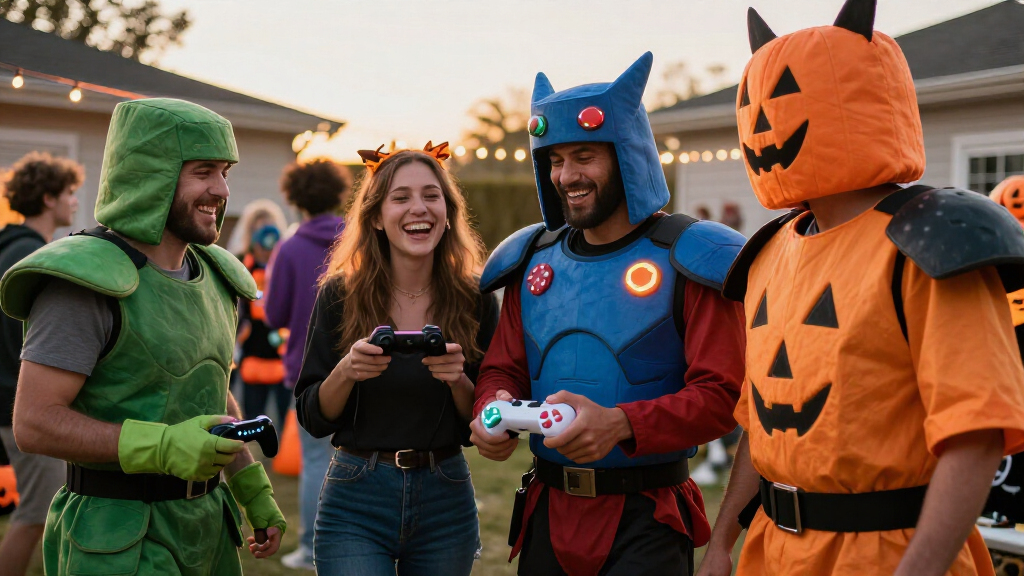
Group costumes work when everyone shares a clear link, such as a game’s team, a hero and sidekick, a pair of rivals, or a set of recognizable items. Each person should have one clue that reads clearly on its own, so the group still makes sense when people split up for snacks or photos. That individual clue also helps each person feel like part of the idea, rather than relying on everyone standing together for the costume to make sense.
For example, friends can coordinate matching color accents and distinct homemade badges rather than crafting identical full outfits. A couple could choose characters from the same game, or one person could dress as a character while the other carries a lightweight item from that world. Ask the group to agree on comfort and effort early; one person’s weekend of armor-building shouldn’t become everyone else’s expectation. Matching the effort level helps the group stay cohesive without making the costume a source of pressure.
Themed costumes draw their strongest recognition from shared visual cues, especially when the characters or items are familiar to your crowd. Build a group palette first, then give each outfit its own silhouette or accessory. A shared palette ties the looks together in photos, while distinct details let people tell the characters apart.
Keep Your Costume Comfortable, Visible, and Event-Ready
A good gaming costume lets you walk, see, sit, and stay comfortable for the whole event. Masks, long capes, rigid armor, and oversized props may look striking in a photo, but a crowded hallway or chilly walk between houses can quickly expose their drawbacks. Comfort and visibility affect more than convenience: if you are adjusting a slipping piece or cannot see the ground clearly, it is harder to enjoy the event and move confidently around other people.
Picture a child wearing a foam chest piece over a warm sweatshirt: the layers help outdoors, but the child still needs clear sightlines and an easy bathroom break. For adults, test the full outfit while walking and sitting, and try your planned shoes before the event. Lightweight foam and cardboard can give you a bold prop or armor shape without the weight of many rigid materials, though they still need secure attachment and a shape that does not block movement.
- Try it on: Wear every layer and accessory for at least a short walk. This can reveal rubbing, loose straps, or pieces that shift before you are away from home.
- Check visibility: Make sure you can see the ground and people around you. A mask that looks accurate may need to be lifted or redesigned if it narrows your view.
- Secure loose parts: Fasten straps, dangling decorations, and battery packs so they don’t snag.
- Review the venue rules: Check school, party, convention, and public-event policies for masks and weapon-like props. Rules shape what you can bring, so checking early gives you time to replace a banned item with a simple visual cue.
- Plan for weather: Add layers you can remove indoors, and consider reflective details outdoors without creating a trip or battery hazard.
Rules vary by venue, so don’t assume a toy weapon or oversized prop will be allowed just because it looks harmless. If the event bans it, a soft foam accessory or a printed symbol can preserve the character cue without the prop. Making that choice before the event prevents a favorite costume detail from becoming an entry problem.
Plan Ahead for Fit, Makeup, and Props
Planning early gives you time to find the right size, receive purchased pieces, and fix anything that pinches or falls off. Even a simple outfit deserves a quick rehearsal: try on the clothes, test the makeup, and carry the prop the way you expect to use it. A rehearsal turns small problems into easy adjustments at home instead of interruptions during the event.
If you’re ordering a costume, check the listed measurements and delivery estimate rather than relying on a size label alone. Handmade sellers and online marketplaces can offer distinctive pieces, but read the return policy before placing an order. For makeup, test a small patch and practice the design before Halloween night; a scratchy face paint sponge feels much less fun after an hour under bright party lights. Ordering early gives you room to exchange an ill-fitting piece or simplify a makeup design if it takes longer than expected.
Keep the prop check practical: does it fit through the door, stay attached, and comply with the venue’s rules? A fan might want a detailed accessory, but a lightweight version is often easier to carry from the car to the party. Choosing portability can mean giving up some fine detail, but the prop is more likely to stay with you and remain part of the costume all evening.
Frequently Asked Questions
What are the most recognizable gaming costumes?
Characters with a distinct color scheme, silhouette, or signature item tend to read quickly. Classic figures are familiar across age groups, while newer characters may be more recognizable to fans of recent releases or streams.
What gaming costume can I make at home?
Start with everyday clothes and add a defining detail such as a colored cap, handmade badge, belt, or labeled potion bottle. A signature garment and one prop can identify a character without a full replica.
How can I make a gaming costume comfortable and safe?
Try the complete outfit before Halloween and check your footwear, sightlines, and range of movement. Secure loose pieces, consider weather layers, and ask the venue about masks and weapon-like props.
Where can I buy gaming-themed costumes?
Check costume shops, game merchandise retailers, online marketplaces, and handmade sellers. Review measurements, shipping dates, and return policies, since fit and delivery times vary.
Conclusion
Pick the character you’re excited to wear, then build around the few details people recognize first. If you can move comfortably, see clearly, and enjoy the night, your costume has done its job.
Sometimes a signature hat and a good story are all it takes to turn an ordinary October evening into a little piece of game world.
Fall Picks
fall essentials
As an affiliate, we earn on qualifying purchases.