
TL;DR

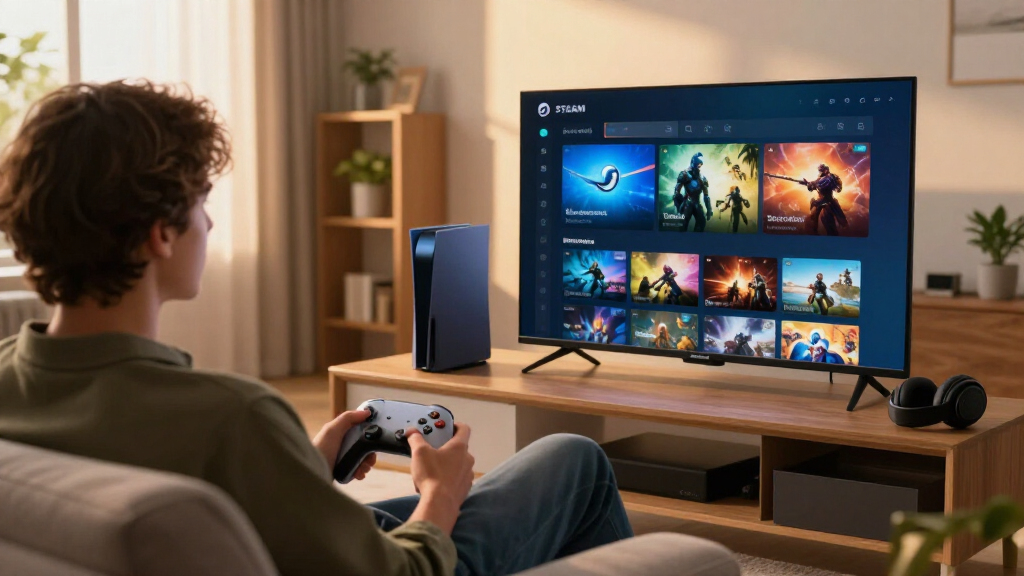
Play games on Amazon Luna for your game nights, included with Prime
- A rotating selection of games, no download needed
- Play on TV, laptop or phone
- Fast, free delivery for your gear, too
What’s New & Hot on Steam — 2026-08-07 features 12 notable new releases priced from free to $15.00, while the listed top sellers stretch from the $14.99 Big Walk to the $1,049.00 Steam Machine. Steam Machine is the only entry in this briefing with stated native Linux and Steam Deck support; treat compatibility for every other title as unconfirmed until its current Steam page or Deck badge says otherwise.
Twelve new Steam releases cost $88.87 combined, yet one item in the current seller chart carries a $1,049.00 price tag. That contrast tells you almost everything about Steam on August 7, 2026: the storefront can place a free arcade-sized curiosity, a two-dollar dodge game, and expensive hardware within the same frantic shopping window.
This guide helps you sort that noise into useful choices. You will see the new releases worth inspecting, the current top sellers, the one confirmed Linux-compatible listing in this briefing, and the prices that deserve a pause before you click Buy. The figures come from Steam store listings captured in Skeldrift’s August 7 chart snapshot [1][2]; prices, rankings, age information, and Steam Deck ratings can change after publication.
You should treat the chart as a moment frozen in glass, not a permanent verdict on quality. A game can run hot on Steam because it just launched, landed in a bundle, or caught a sudden wave of attention. Your best purchase is not always the loudest name near the top; sometimes it is the odd little $0.99 experiment glowing at the bottom of the page.
Check SPACE DASHER first if you want a zero-cost experiment, but verify controller support, content information, and your platform before installing.
Use $9.93 to inspect the five-title sampler—SPACE DASHER, PHOFACE, Clinical Waifu, No Thoughts Just Dodge, and Cellar Keeper—only if you genuinely want variety.
Treat Steam Machine as the sole listing in this briefing with stated native Linux and Steam Deck support; every other compatibility claim remains unconfirmed h…
Compare the $17.08 Big Walk and PEAK bundle with Big Walk at $14.99; the extra product costs only $2.09 in this snapshot.
Watch full-price releases until reviews describe performance on your exact PC or Steam Deck setup.
- H.P Supernatural Event Archives — $7.19
- No Thoughts Just Dodge — $2.39
- 日本事故物件監視協会3 -Japan Stigmatized Property- — $8.99
- The Forbidden Tomes of Olipos — $9.59
- PHOFACE — $0.99
- SPACE DASHER — Free
- Marie’s Adventure — $15.00
- Hololive Fantasy Battle — $9.75
- Clinical Waifu — $2.06
- We, Junk Artists — $8.49
- Cellar Keeper — $4.49
- Innocent Assault SS — $9.89
- Big Walk — $14.99
- MARVEL Tōkon: Fighting Souls — $59.99
- Steam Machine — $1049.00 ● Linux/Deck
- Big Walk and PEAK — $17.08
- IRON NEST: Heavy Turret Simulator — $14.99
- ReStory: Chill Electronics Repairs — $17.99
- Gears of War: E-Day — $69.99
Data via the Steam store (US), as of 2026-08-07.
These 12 New Releases Give You the Most Choice Below $10
What’s New & Hot on Steam — 2026-08-07 includes 12 highlighted new releases, and 10 of them cost less than $10 in the captured US-price snapshot. The range runs from the free SPACE DASHER to Marie’s Adventure at $15.00, so you can sample several unusual releases without paying the price of one large blockbuster [1][2].
- Free to $2.99: SPACE DASHER is free, PHOFACE costs $0.99, Clinical Waifu costs $2.06, and No Thoughts Just Dodge costs $2.39.
- $3.00 to $8.99: Cellar Keeper costs $4.49, H.P Supernatural Event Archives costs $7.19, We, Junk Artists costs $8.49, and 日本事故物件監視協会3 -Japan Stigmatized Property- costs $8.99.
- $9.00 to $15.00: The Forbidden Tomes of Olipos costs $9.59, Hololive Fantasy Battle costs $9.75, Innocent Assault SS costs $9.89, and Marie’s Adventure costs $15.00.
The concentration below $10 matters because it changes the risk from financial commitment to attention management. You can afford to try several titles, but every additional purchase still competes for download space, setup time, and the limited hours in which a refund decision remains useful. A low price therefore makes experimentation easier without making comparison unnecessary.
Suppose you have $10 and one quiet Friday night. You could choose the free SPACE DASHER, add PHOFACE, Clinical Waifu, No Thoughts Just Dodge, and Cellar Keeper, and reach a listed total of $9.93. That gives you five releases to inspect instead of staking the whole evening on one unknown game. The tradeoff is depth: sampling five unfamiliar games may reveal a surprise favorite, but installing and learning each one can consume more of the evening than playing a single carefully chosen title.
Low prices reduce the financial sting, but they do not tell you about length, polish, controller support, or content. A $2.39 release can become your favorite reflex game, while a $9.89 title can sit untouched after ten minutes. Check the store description, user reviews, system requirements, language support, and any available content or age rating before buying. Those details matter more at this end of the market because small releases may have fewer reviews, less extensive documentation, and slower post-launch support than established games.
Small price, small gamble—not guaranteed quality. Use Steam’s current refund rules and each product page as your final reference before experimenting.
As an affiliate, we earn on qualifying purchases.
See Exactly How the Top Sellers Compare Before You Spend
What’s New & Hot on Steam — 2026-08-07 shows a top-seller list split between games, a bundle, and hardware. Big Walk leads this supplied snapshot at $14.99, MARVEL Tōkon: Fighting Souls follows at $59.99, and the $1,049.00 Steam Machine sits third with stated native Linux and Steam Deck support [1][2].
| Rank | Listing | Captured price | What to check |
|---|---|---|---|
| 1 | Big Walk | $14.99 | Player fit and current compatibility |
| 2 | MARVEL Tōkon: Fighting Souls | $59.99 | Controller needs and online features |
| 3 | Steam Machine | $1,049.00 | Hardware specifications and region |
| 4 | Big Walk and PEAK | $17.08 | Bundle contents and owned items |
| 5 | IRON NEST: Heavy Turret Simulator | $14.99 | Input support and system requirements |
| 6 | ReStory: Chill Electronics Repairs | $17.99 | Play style and current reviews |
| 7 | Gears of War: E-Day | $69.99 | Storage, performance, and rating |
Because this list mixes product types, rank-to-rank comparison can mislead. A hardware purchase solves a broader need and carries a much longer expected lifespan than a game, while a bundle represents multiple licenses rather than one experience. The Steam Machine’s third-place position therefore does not make it a direct value rival to Big Walk; it only shows that both generated enough revenue or sales activity to appear prominently in the same captured chart.
The useful comparison is not merely first place against seventh. It is commitment against curiosity. A $14.99 purchase can be an easy weekend bet, while a $69.99 game deserves closer inspection of performance reports, required storage, accessibility settings, multiplayer conditions, and age-rating information. The higher price also increases the opportunity cost: choosing one $69.99 release means declining several cheaper games, a bundle, or part of a future hardware budget.
Imagine opening Steam after work with friends already waiting in voice chat. Big Walk at $14.99 may look easier to coordinate than asking everyone to spend $59.99 or $69.99. Yet the chart alone does not prove which title supports your group size, preferred mode, or region, so inspect the live listing before the group reaches for its wallets. Multiplayer value depends on the whole group clearing the same practical hurdles; one unsupported platform, missing mode, or unaffordable price can make the nominal chart leader useless for that evening.
Rank measures current sales activity, not lasting value or technical quality. New launches and bundles often surge like bright fireworks, then settle once the first rush passes. Use the ranking to spot attention; use current reviews and verified specifications to decide whether that attention matters to you. A high position can improve matchmaking and community activity in the short term, but it cannot establish campaign length, long-term support, or whether the game suits your preferred way to play.
As an affiliate, we earn on qualifying purchases.
Steam Deck Players Should Verify Every Badge Except This One
What’s New & Hot on Steam — 2026-08-07 identifies Steam Machine as the only listing here with stated native Linux and Steam Deck support. Compatibility for the other 18 named listings is unconfirmed in this briefing, so you should check each live Steam page and its current Deck status before buying [1][2].
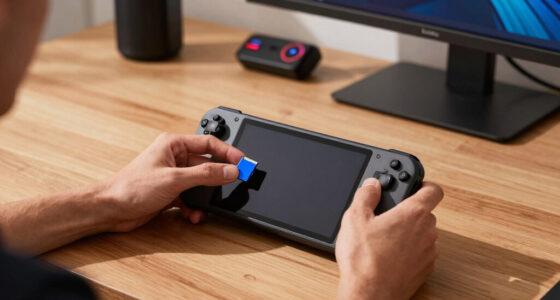
A Steam Deck badge is not decorative confetti. It can reflect controller behavior, readable text, launcher friction, and whether the game runs under the expected setup. Even so, the badge can change after patches, and a title marked Playable may ask you to use the touchscreen, summon an on-screen keyboard, or squint at lettering designed for a large monitor. That distinction matters because technical compatibility and comfortable handheld use are different standards: a game may launch reliably yet remain frustrating on a small screen or during short, offline sessions.
Take a practical example: you buy No Thoughts Just Dodge for $2.39 before a train ride, expecting instant handheld play. If its current listing lacks a confirmed rating, you could meet tiny menus or awkward controls as the doors slide shut. A two-minute check at home—badge, recent Deck reports, controller notation, and install size—can save a two-hour journey with nothing ready to play. It also reveals tradeoffs that a simple yes-or-no badge cannot show, such as heavier battery drain in exchange for smoother performance or community control layouts that work only after manual setup.
- Open the game’s current Steam store page.
- Read the latest Steam Deck compatibility details, not just the badge color.
- Check recent player reports for your SteamOS version and hardware model.
- Confirm controller support, launcher requirements, text size, and storage space.
- Install and test before travel while you still have access to reliable internet.
Read those checks as a chain rather than independent boxes. The official status establishes a baseline, recent reports reveal what patches have changed, and a local test confirms whether your own settings and tolerance match other players’ experiences. Skipping the final step leaves you exposed to account logins, shader downloads, updates, or control prompts that only appear on first launch.
This approach works well, except when a brand-new release has almost no handheld reports. In that case, waiting a day or two gives early buyers time to report crashes, battery drain, or smooth performance. Playable is not effortless, and untested is not broken; those distinctions protect you from both hype and needless pessimism. Waiting costs you immediacy, but it buys better evidence and can prevent a cheap impulse purchase from becoming a troubleshooting project.
As an affiliate, we earn on qualifying purchases.
A $10 Budget Can Buy More Variety Than One Chart Leader
The strongest value below $10 comes from matching price to your tolerance for experimentation, not automatically choosing the cheapest listing. This Steam snapshot gives you nine paid new releases below $10 plus one free option, creating room for a carefully chosen sampler without crossing a standard $10 budget [1][2].
Start with the name and store presentation that genuinely catches your attention, then inspect what the listing promises. H.P Supernatural Event Archives at $7.19 leaves $2.81 in your budget, enough to add PHOFACE at $0.99 or Clinical Waifu at $2.06. The cold glow of an archive screen and the stark face of a cheap experimental release may sound perfect for a late-night session, but the live pages must confirm what those games actually contain. This pairing favors one stronger initial preference plus a small side bet, reducing the number of unknowns without surrendering variety completely.
You can also build the $9.93 five-title sampler: SPACE DASHER, PHOFACE, Clinical Waifu, No Thoughts Just Dodge, and Cellar Keeper. That plan maximizes variety, but it can scatter your attention across a cluttered library. Five icons do not equal five satisfying evenings; one well-matched game can offer more value than a fistful of impulse purchases. Variety is most useful when you are uncertain about genre or mood, while concentration is better when you already know what experience you want.
- Choose SPACE DASHER when you want a zero-cost first look and can accept that free does not promise a particular amount of content.
- Choose the sub-$3 group when novelty matters more than extensive pre-purchase research.
- Choose a $7 to $10 title when its description, supported languages, and recent feedback fit your tastes closely.
- Wait when the listing lacks the specific details about controls, performance, content, or age rating that affect your household.
The decision is therefore less about extracting the maximum number of products from $10 and more about deciding what kind of uncertainty you prefer. Several cheap purchases spread the risk that any one game disappoints, but they also multiply setup time and weakly researched choices. One near-$10 purchase concentrates the risk, yet gives you a clearer reason to investigate reviews and commit enough time to learn the game.
Challenge yourself to wait 15 minutes before purchasing three cheap games at once. Read their recent reviews and compare screenshots rather than letting bright capsule art steer your thumb. Cheap games make experimentation painless; unchecked impulse buying turns painless clicks into an expensive gray backlog. The pause is valuable because it interrupts the urgency created by tiny prices and asks whether you want the experience or merely enjoy the feeling of finding a bargain.
As an affiliate, we earn on qualifying purchases.
The $17.08 Bundle Only Pays Off If You Want Both Games
Big Walk and PEAK costs $17.08 in the supplied snapshot, only $2.09 more than Big Walk by itself at $14.99. That small gap makes the bundle attractive if you want both included products, but its fourth-place chart position does not prove that every buyer receives the same value [1][2].
The arithmetic is simple. If Big Walk already sits at the top of your wish list, paying another $2.09 for the bundle can feel like adding dessert for pocket change. If you have no interest in PEAK, however, that extra item becomes another silent tile gathering dust in your library. The relevant question is not whether $2.09 is objectively small, but whether access to PEAK is worth more than the next-best use of that money and your future playtime.
There is another catch: Steam bundles can behave differently depending on their type and the products you already own. Before checkout, read the live cart carefully to see exactly what you receive, whether owned items change the total, and whether regional pricing alters the comparison. The captured US-dollar figures describe August 7; they do not promise your personal checkout price. Bundle structure can also affect how the transaction is presented or refunded, so the checkout details matter more than the promotional percentage alone.
Buy the bundle for the second game, not for the percentage graphic. A discount on something you will never install is still money spent.
Consider two friends planning Saturday night. One wants Big Walk and expects to try PEAK next week, so the $2.09 difference is easy to justify. The other only wants the chart leader and has a packed library already; buying Big Walk alone keeps the purchase clean and deliberate. Their different answers are both rational because value depends on expected use, not simply the ratio between list prices.
A useful test is to hide the stated discount and ask whether you would independently buy PEAK for $2.09 today. If the answer is yes, the bundle expands your options cheaply. If the answer is no or only maybe, the offer is using the low incremental price to turn uncertainty into a sale.
This logic applies beyond this pairing. Compare the standalone price, bundle total, owned products, likely playtime, and refund conditions at the moment of purchase. A bundle is broader, not automatically better, and the best deal is the one that matches what you will actually launch.
Use the Chart as a Watchlist, Not a Verdict
What’s New & Hot on Steam — 2026-08-07 is best used as a discovery snapshot, because rankings, prices, reviews, and platform labels can move after the captured date. The list tells you what is visible and selling now; it cannot tell you which release will fit your hardware, schedule, or taste next month [1][2].
Chart momentum can come from several directions: a fresh launch, a recognizable brand, a bundle, a low introductory price, or simple curiosity. MARVEL Tōkon: Fighting Souls at $59.99 and Gears of War: E-Day at $69.99 carry much higher entry prices than Big Walk or IRON NEST: Heavy Turret Simulator at $14.99. Their positions show buying activity in this snapshot, not a laboratory-style quality ranking. Price further complicates interpretation because a premium release can generate substantial chart activity from fewer purchases, while a cheaper game may need a larger audience to reach a comparable position.
A sensible watchlist turns that activity into evidence. Add an intriguing title, wait for recent reviews to cover performance and stability, then revisit the page after patches or a price change. You may hear a release described as hot on Steam today, yet discover that the most useful reviews arrive only after players have spent a full weekend with it. Early reviews are often strongest at describing first impressions and weakest at judging campaign depth, late-game repetition, server durability, or the developer’s response to bugs.
For example, a player with an older graphics card may watch Gears of War: E-Day rather than buying immediately. Reports tied to the same GPU, resolution, operating system, and game version mean more than broad claims that it runs well. A smooth desktop result does not establish Steam Deck performance, and one noisy launch-day complaint does not establish a lasting defect. Waiting trades the excitement of joining immediately for clearer performance evidence, possible patches, and potentially better pricing.
Use a simple evidence ladder when revisiting the list: begin with the live product specifications, add recent reviews from comparable hardware, look for repeated patterns across several reports, and then decide whether remaining uncertainty fits your budget. Repetition matters because one player’s crash may be local, while the same failure reported across similar systems suggests a wider risk.
The supplied research note says its prior knowledge cutoff in October 2023 could not cover August 7, 2026, which was future relative to that date. This article uses the dated Skeldrift chart briefing instead of pretending older background knowledge contains live facts. Since that date, details may move again, so Steam’s current pages remain the right checkout reference.
Frequently Asked Questions
What are the cheapest new Steam releases in this August 7 snapshot?
SPACE DASHER is free, followed by PHOFACE at $0.99, Clinical Waifu at $2.06, and No Thoughts Just Dodge at $2.39 [1][2]. These are captured US-dollar prices, so check Steam for current regional pricing and later changes.
Which listed game is number one on Steam right now?
Big Walk ranks first in Skeldrift’s supplied top-seller snapshot for August 7, 2026, at a listed price of $14.99 [2]. Steam charts can change quickly, so this rank describes the captured moment rather than a permanent position.
Which entries are confirmed for Linux or Steam Deck?
Steam Machine is the only entry explicitly identified here as having native Linux and Steam Deck support [2]. Support for the other listed products is unconfirmed in this article; check their current Steam badges and compatibility details before buying.
Is the Big Walk and PEAK bundle better than buying Big Walk alone?
The bundle costs $17.08, while Big Walk alone costs $14.99 in this snapshot, a difference of $2.09 [1][2]. It offers clear value if you want PEAK, but buying the standalone game makes more sense if the second product would remain unplayed.
Are the listed prices and rankings still current?
They are dated to August 7, 2026 and may change after publication. Check Steam’s live product pages for current price, availability, reviews, age information, and platform status before checkout.
How should I judge performance claims for these games?
Match every claim to a platform, hardware setup, resolution, and game version. A desktop PC result does not confirm Steam Deck performance, and a launch-day report may stop applying after a patch, so favor recent tests that resemble your own setup.
Conclusion
Your best move is simple: pick one candidate, verify its live Steam page, and match it to the device you actually use. The August 7 chart offers everything from a free release to $69.99 games and $1,049.00 hardware, but price and rank cannot replace current compatibility details, content information, age guidance, or recent player reports.
Let the chart point your flashlight, not choose your path. Whether you spend $0, $2.39, or $69.99, buy the game you can imagine launching tonight—not the shiny tile most likely to fade into the gray shelves of your library.
Fall Picks
fall essentials
As an affiliate, we earn on qualifying purchases.