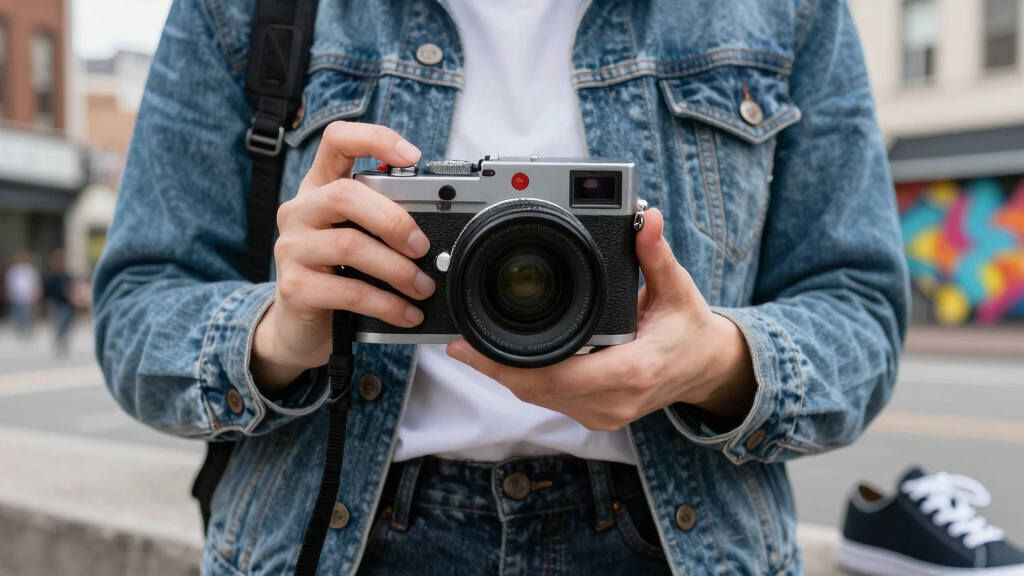

The Leica Q3 is my best overall choice among the best Leica cameras because its 60MP full-frame sensor, fast 28mm lens, and compact body suit the widest range of everyday photography. The Leica Q3 43 is the stronger fixed-lens option for portraits and natural-looking compositions, while the Leica D-Lux 8 offers beginners a smaller, more flexible zoom camera at a lower entry price. The main decision is whether to prioritize fixed-lens simplicity, interchangeable-lens freedom, or a compact zoom. Buyers must also weigh resolution against file size, autofocus against manual rangefinder control, and current models against discounted older bodies. Continue reading for my full breakdown of where each Leica fits and which listings offer genuine value.
Open a free Amazon Business account
Business pricing, bulk buying and tax-exempt orders.
Create a free accountAs an affiliate, we earn on qualifying purchases.
Complete the kit


Key Takeaways
- The Leica Q3 ranks first because its wide 28mm lens, high-resolution sensor, autofocus, and compact construction make it more adaptable than the narrower Q3 43 or manual-focus M11-P.
- The Q3 43 is the better specialist for portraits, street details, and natural perspective, but its 43mm lens is less accommodating for interiors, architecture, and group photographs.
- Several listings contain the same underlying camera: the three Q3 43 options, two D-Lux 8 packages, and two Q2 listings should be separated by price, warranty, and accessory quality rather than image performance.
- The M11-P is the premium photographer’s choice, yet its manual rangefinder operation makes it less broadly useful than the Q3 and SL3-S despite its exceptional build and 60MP sensor.
- The D-Lux 8 and V-Lux trade sensor size for convenience: the D-Lux 8 is the easier beginner and travel pick, while the V-Lux earns its place through long zoom reach that none of the full-frame fixed-lens models can match.
| Leica Q3 Compact Digital Camera (19080) (Black) |  | Best Overall | Sensor: 60MP BSI CMOS | Resolution Technology: Triple Resolution | Digital Framing: Up to 90mm | VIEW LATEST PRICE | See Our Full Breakdown |
| Leica Q3 43 Compact Digital Camera with 60MP Full-Frame Sensor, 8K Video, and 43mm ASPH. Lens |  | Best Standard-Perspective Compact | Sensor: 60MP full-frame BSI CMOS | Lens: APO-Summicron 43mm f/2 ASPH. | Maximum Video Resolution: 8K at 30p | VIEW LATEST PRICE | See Our Full Breakdown |
| Leica Q2 Digital Camera Black |  | Best Previous-Generation Value | Sensor: 47.3MP full-frame CMOS | Lens: Summilux 28mm f/1.7 ASPH. | Viewfinder: 3.68MP OLED electronic viewfinder | VIEW LATEST PRICE | See Our Full Breakdown |
| Leica M11-P Camera with 60MP BSI CMOS Sensor and 256GB Internal Memory |  | Best Premium Rangefinder | Sensor Resolution: 60MP | Sensor Type: BSI CMOS | Resolution Technology: Triple Resolution | VIEW LATEST PRICE | See Our Full Breakdown |
| Leica SL3-S Mirrorless Camera with 24-70mm f/2.8 Lens Kit |  | Best Photo-Video Hybrid | Sensor: 24MP BSI CMOS | Processor: Maestro IV | Lens: Vario-Elmarit-SL 24–70mm f/2.8 ASPH. | VIEW LATEST PRICE | See Our Full Breakdown |
| Leica Q3 43 Compact Portable Digital Camera with 64GB Card & Accessories |  | Best All-in-One Premium Bundle | Sensor: 60MP full-frame BSI CMOS | Lens: APO-Summicron 43mm f/2 ASPH. | Autofocus: Phase-detection AF | VIEW LATEST PRICE | See Our Full Breakdown |
| Leica V-LUX (Typ 114) Digital Camera |  | Best for Long-Zoom Travel | Sensor: 20MP 1-inch MOS | Lens: DC VARIO-ELMARIT f/2.8-4.0 | Optical zoom: 16x | VIEW LATEST PRICE | See Our Full Breakdown |
| Leica D-Lux 8 Compact Digital Camera with 64GB Card and Accessories |  | Best Compact Travel Kit | Sensor: 17MP Four Thirds CMOS | Lens: Leica 10.9-34mm f/1.7-2.8 | Viewfinder: 2.36MP OLED | VIEW LATEST PRICE | See Our Full Breakdown |
| Leica Q3 43 Digital Camera (Black) |  | Best Camera-Only Premium Pick | Sensor: 60MP BSI CMOS | Lens: 43mm f/2 APO-Summicron | Resolution options: 60MP, 36MP, and 18MP | VIEW LATEST PRICE | See Our Full Breakdown |
| Leica D-Lux 8 Compact Digital Camera with 17MP Sensor, 10.9-34mm f/1.7-2.8 Lens, 64GB Bundle |  | Best Streamlined D-Lux Bundle | Sensor: 17MP Four Thirds CMOS | Lens: 10.9-34mm f/1.7-2.8 | Viewfinder: 2.36MP OLED electronic viewfinder | VIEW LATEST PRICE | See Our Full Breakdown |
| Leica Q2 Digital Camera (19050) |  | Best Previous-Generation Premium Compact | Model: Leica Q2 | Product Number: 19050 | Camera Type: Digital camera | VIEW LATEST PRICE | See Our Full Breakdown |
| Leica camera | Sensor | Lens | Viewfinder |
|---|---|---|---|
| Leica Q3 Compact Digital Camer | 60MP BSI CMOS | — | — |
| Leica Q3 43 Compact Digital Ca | 60MP full-frame BSI CMOS | APO-Summicron 43mm f/2 ASPH. | — |
| Leica Q2 Digital Camera Black | 47.3MP full-frame CMOS | Summilux 28mm f/1.7 ASPH. | 3.68MP OLED electronic viewfinder |
| Leica M11-P Camera with 60MP B | — | — | — |
| Leica SL3-S Mirrorless Camera | 24MP BSI CMOS | Vario-Elmarit-SL 24–70mm f/2.8 ASPH. | 5.76M-dot EVF |
| Leica Q3 43 Compact Portable D | 60MP full-frame BSI CMOS | APO-Summicron 43mm f/2 ASPH. | — |
| Leica V-LUX | 20MP 1-inch MOS | DC VARIO-ELMARIT f/2.8-4.0 | 0.39-inch 2,360K-dot OLED EVF |
| Leica D-Lux 8 Compact Digital | 17MP Four Thirds CMOS | Leica 10.9-34mm f/1.7-2.8 | 2.36MP OLED |
| Leica Q3 43 Digital Camera | 60MP BSI CMOS | 43mm f/2 APO-Summicron | 5.76-million-dot OLED EVF |
| Leica D-Lux 8 Compact Digital | 17MP Four Thirds CMOS | 10.9-34mm f/1.7-2.8 | 2.36MP OLED electronic viewfinder |
| Leica Q2 Digital Camera | — | — | — |
More Details on Our Top Picks
Leica Q3 Compact Digital Camera (19080) (Black)
I rank the Leica Q3 first because its 60MP full-frame sensor, fast Maestro IV processing, and hybrid autofocus create the strongest balance of detail, speed, and portability here. Its digital framing options reach 90mm, giving street and travel photographers more compositional freedom than the fixed 28mm perspective of the Leica Q2, though those settings crop the image rather than provide true optical zoom. The Q3 43 offers a more natural standard-angle view, but this model is better suited to buyers who prefer a broader starting perspective. The tradeoffs are substantial: large image files place heavier demands on storage and editing hardware, while the premium price is difficult to justify for casual photography. I see it as the most adaptable high-resolution compact in this group.
Pros:- 60MP sensor provides extensive detail and cropping latitude
- Hybrid autofocus supports quicker, more reliable subject acquisition
- Digital framing options offer more compositional flexibility than a single field of view
- Compact body is easier to carry than the Leica SL3-S kit
Cons:- Digital framing crops the sensor rather than replacing an optical zoom lens
- High-resolution files require ample storage and capable editing hardware
- Premium pricing limits its appeal for occasional photographers
Best for: I recommend it to experienced street, travel, and documentary photographers who want full-frame image quality without carrying an interchangeable-lens system.
Not ideal for: I would skip it for casual photographers who need optical zoom, small files, or a budget-friendly entry into Leica cameras.
- Sensor:60MP BSI CMOS
- Resolution Technology:Triple Resolution
- Digital Framing:Up to 90mm
- Processor:Maestro IV
- Memory:8GB
- Autofocus:Hybrid contrast and phase detection
Our verdict“I would choose the Leica Q3 as the best all-round Leica compact for photographers who value resolution, portability, and flexible framing.”
Leica Q3 43 Compact Digital Camera with 60MP Full-Frame Sensor, 8K Video, and 43mm ASPH. Lens
The Leica Q3 43 makes the most sense to me for photographers who want a fixed lens that feels close to a natural viewing perspective. Its 43mm f/2 APO-Summicron is tighter than the Leica Q2’s 28mm lens, making it better suited to portraits, everyday details, and compositions with less background clutter. It also pairs a 60MP sensor with subject-tracking autofocus and 8K recording, giving hybrid creators more video headroom than the Q2. That specialization is also its limitation: buyers who favor wide street scenes or interiors may find 43mm restrictive, and there is no lens-swapping escape route. 8K footage and 60MP photographs also consume storage quickly. I rank it below the standard Q3 because its perspective is less broadly useful, but it is the stronger choice for buyers committed to standard-angle photography.
Pros:- 43mm APO-Summicron lens provides a natural perspective with a bright f/2 aperture
- 60MP full-frame sensor supports detailed prints and substantial cropping
- 8K recording gives advanced video creators greater output flexibility
- Subject-tracking autofocus is better suited to moving people than manual-focus Leica bodies
Cons:- Fixed 43mm view is less useful for wide scenes than the Leica Q2’s 28mm lens
- Large still and 8K video files demand substantial storage and processing power
- High purchase price is difficult to justify for casual content creation
Best for: I recommend it to portrait, lifestyle, and everyday photographers who prefer a natural 43mm perspective and also produce high-resolution video.
Not ideal for: I would skip it for architecture, interiors, and wide-angle street photography because the fixed 43mm lens may feel too restrictive.
- Sensor:60MP full-frame BSI CMOS
- Lens:APO-Summicron 43mm f/2 ASPH.
- Maximum Video Resolution:8K at 30p
- Additional Video Formats:4K and Full HD
- Autofocus Feature:Subject tracking
- Wireless Connectivity:Wi-Fi and Bluetooth
- Included Storage:64GB SD card
- Included Accessories:Cleaning kit and memory card wallet
Our verdict“I would pick the Q3 43 for a photographer who values a natural fixed-lens perspective more than wide-angle versatility.”
Leica Q2 Digital Camera Black
I place the Leica Q2 in the value position for buyers who want the core Leica fixed-lens formula without paying for the Q3’s 60MP sensor and newer processing platform. Its 47.3MP full-frame sensor still provides ample detail, while the 28mm f/1.7 Summilux lens favors street scenes, travel, environmental portraits, and low-light work. Compared with the Q3 43, the Q2 captures a much wider view but offers less flattering working distance for close portraits. The IP52-rated magnesium body also makes it a more reassuring outdoor companion than an unsealed compact. Buyers give up the Q3 generation’s higher resolution and more advanced autofocus, and the fixed lens cannot deliver genuine zoom versatility. It remains expensive beside mainstream cameras, so I view it as relative Leica value, not a low-cost purchase.
Pros:- 47.3MP full-frame sensor retains strong detail for large prints
- 28mm f/1.7 Summilux lens suits wide scenes and available-light photography
- IP52-rated magnesium body offers useful protection outdoors
- OLED viewfinder and touchscreen provide two clear composition interfaces
Cons:- Fixed 28mm lens cannot provide true telephoto framing
- Older generation lacks the Q3’s 60MP resolution and newer autofocus platform
- Still carries premium pricing compared with non-Leica compact cameras
Best for: I recommend it to street and travel photographers seeking a durable full-frame Leica with a bright, wide fixed lens at a lower tier than the Q3 generation.
Not ideal for: I would skip it for sports, wildlife, and portrait specialists who need long focal lengths, lens changes, or the latest autofocus technology.
- Sensor:47.3MP full-frame CMOS
- Lens:Summilux 28mm f/1.7 ASPH.
- Viewfinder:3.68MP OLED electronic viewfinder
- Display:3.0-inch touchscreen LCD
- Body Material:Magnesium alloy
- Weather Protection:IP52-rated dust and moisture sealing
Our verdict“I would choose the Q2 when Leica build quality and a wide, bright lens matter more than owning the newest Q-series technology.”
Leica M11-P Camera with 60MP BSI CMOS Sensor and 256GB Internal Memory
The Leica M11-P occupies a different position from every fixed-lens Q model: I see it as the premium choice for photographers who want the deliberate pace and lens flexibility of the M system. Its 60MP Triple-Resolution sensor can prioritize maximum detail or more manageable output, while 256GB of internal memory reduces dependence on a card during long assignments. Content-authenticity support also gives publishing professionals a traceable workflow that the Leica Q2 does not offer. This is not the easy recommendation, however. Unlike the self-contained Q3, an M body requires a compatible lens, adding cost and complexity, while manual rangefinder operation demands more involvement than hybrid autofocus. The silver finish is also less discreet for documentary work. I rank it as a specialist rather than the overall winner because its manual shooting experience rewards commitment, not convenience.
Pros:- 60MP sensor supports highly detailed professional output
- Triple-Resolution technology offers a choice between resolution and file manageability
- 256GB internal memory provides substantial built-in storage
- Content-authenticity features suit traceable editorial publishing workflows
Cons:- Body-only investment becomes more expensive once a compatible lens is added
- Manual rangefinder workflow is poorly suited to fast or unpredictable subjects
- Silver finish is less discreet and may show handling marks more readily
Best for: I recommend it to experienced documentary, fine-art, and editorial photographers committed to manual rangefinder photography and an M-lens system.
Not ideal for: I would skip it for action shooters, autofocus-dependent beginners, and buyers who want a complete camera-and-lens package from one purchase.
- Sensor Resolution:60MP
- Sensor Type:BSI CMOS
- Resolution Technology:Triple Resolution
- Internal Memory:256GB
- Camera Format:Compact full-frame
- Content Feature:Content authenticity support
- Finish:Silver
Our verdict“I would reserve the M11-P for committed rangefinder photographers who prioritize deliberate control, lens choice, and publishing provenance over autofocus convenience.”
Leica SL3-S Mirrorless Camera with 24-70mm f/2.8 Lens Kit
I would choose the Leica SL3-S kit for demanding creators who split their work between stills and professional video. Its 24–70mm f/2.8 lens covers wide, normal, and short-portrait views, making it far more adaptable on assignment than the fixed-lens Leica Q3 43. The 6K open-gate recording, RAW HDMI output, stabilization, and full-size HDMI connection also build a stronger production platform than the compact Q cameras. For action, hybrid autofocus and bursts up to 30 fps favor speed over the M11-P’s deliberate manual approach. Resolution is the compromise: its 24MP sensor offers less cropping freedom than the 60MP Q3, though a 96MP handheld multishot mode helps with static subjects. The kit is also heavier, bulkier, and more complex than any Q-series option. I rank it as the best hybrid tool, not the best everyday Leica.
Pros:- 24–70mm f/2.8 lens handles far more assignments than a fixed-lens Q camera
- 6K open-gate video, L-Log, and RAW HDMI output support professional production
- Hybrid autofocus and 30 fps bursts suit action and event coverage
- Stabilization and 96MP multishot mode broaden handheld and static-subject options
Cons:- 24MP native resolution offers less cropping latitude than the 60MP Q3 and M11-P
- Camera and f/2.8 zoom combination is heavy and bulky for everyday carry
- Complex video and connectivity features create a steep learning curve for beginners
Best for: I recommend it to professional filmmakers, event shooters, and commercial creators who need one stabilized system for fast stills and advanced video.
Not ideal for: I would skip it for travel minimalists, casual photographers, and beginners who would be burdened by the kit’s size, price, and production-focused controls.
- Sensor:24MP BSI CMOS
- Processor:Maestro IV
- Lens:Vario-Elmarit-SL 24–70mm f/2.8 ASPH.
- Video Recording:6K open-gate, L-Log, and RAW HDMI output
- Autofocus:Hybrid phase, contrast, and object detection
- Burst Shooting:Up to 30 fps
- Image Stabilization:Yes
- Viewfinder:5.76M-dot EVF
- Storage and Connectivity:CFexpress and SD slots, HDMI A, USB-C, Wi-Fi MIMO, and Bluetooth
Our verdict“I would buy the SL3-S kit when professional video, fast stills, and zoom flexibility outweigh portability and maximum native resolution.”
Leica Q3 43 Compact Portable Digital Camera with 64GB Card & Accessories
I rank the Leica Q3 43 accessory bundle highly for buyers who want a complete premium setup without sourcing basic extras separately. Its 60MP full-frame sensor preserves fine detail and leaves ample room for cropping, while the 43mm f/2 APO-Summicron lens offers a natural perspective suited to portraits, travel, and everyday scenes. Compared with the camera-only Leica Q3 43, this package adds a card, bag, tripod, filters, and cleaning gear, making it the more convenient purchase. Optical stabilization and phase-detection autofocus also make handheld shooting less demanding than the resolution might suggest. The tradeoffs are substantial: it is expensive, bulky for a compact, and limited to one focal length. I see the ready-to-shoot package as valuable only if the included accessories match the buyer’s needs.
Pros:- 60MP full-frame sensor supports detailed prints and aggressive cropping
- 43mm f/2 lens balances natural perspective with strong low-light capability
- Optical stabilization and phase-detection autofocus aid handheld shooting
- Bundle includes storage, carrying, support, filter, and cleaning accessories
Cons:- Premium price is difficult to justify for occasional photography
- Fixed 43mm lens cannot provide true wide-angle or telephoto framing
- Larger and more feature-dense than simpler compact cameras
Best for: Travel and portrait photographers who want a high-resolution fixed-lens Leica plus a complete starter accessory package
Not ideal for: Casual photographers or zoom users who would rather pay less and change framing without moving
- Sensor:60MP full-frame BSI CMOS
- Lens:APO-Summicron 43mm f/2 ASPH.
- Autofocus:Phase-detection AF
- Image stabilization:Optical
- Video recording:8K30, 4K60, ProRes HQ
- Weather sealing:IP52
- Memory card:64GB Extreme PRO UHS-I SDXC
- Included accessories:Camera bag, filter kit, tripod, cleaning kit, cables, and adapter
Our verdict“This is my bundle pick for serious photographers who want Q3 43 image quality and useful setup essentials in one purchase.”
Leica V-LUX (Typ 114) Digital Camera
I place the Leica V-LUX (Typ 114) in the long-zoom role because its 16x optical zoom covers subjects that the fixed-lens Leica Q3 43 and shorter-range D-Lux 8 cannot reach. That flexibility makes it better suited to wildlife, sporting events, and trips where changing lenses is undesirable. The 20MP 1-inch sensor cannot match the Q3 43’s full-frame detail or low-light potential, but it offers a practical balance between image quality and reach. A rotatable three-inch screen helps with overhead and low-angle framing, while UHD 4K adds useful video capability. Buyers should account for the older screen resolution, the absence of stated stabilization information, and unclear battery endurance in the supplied data. I regard its all-in-one focal range as the deciding advantage, not outright image quality.
Pros:- 16x optical zoom handles distant and nearby subjects without lens changes
- 20MP 1-inch sensor offers a useful quality-to-reach balance
- Rotatable LCD supports high-angle and low-angle composition
- UHD 4K recording expands its usefulness for travel video
Cons:- Smaller sensor trails the Q3 models in low-light quality and cropping latitude
- Product data does not specify image stabilization
- Battery-life information is not supplied
Best for: Travel, wildlife, and outdoor-event photographers who need broad zoom coverage in one self-contained camera
Not ideal for: Low-light shooters and detail-focused print makers who need the larger full-frame sensor of the Q3 43
- Sensor:20MP 1-inch MOS
- Lens:DC VARIO-ELMARIT f/2.8-4.0
- Optical zoom:16x
- Video:UHD 4K, 3840 x 2160
- Screen:3-inch 920K-dot rotatable LCD
- Viewfinder:0.39-inch 2,360K-dot OLED EVF
- Wireless feature:Image Shuttle app for remote control and image transfer
- Burst capability:Up to 50 fps with electronic shutter
Our verdict“I recommend this model when zoom reach matters more than the full-frame detail and brighter fixed lens of a Q3.”
Leica D-Lux 8 Compact Digital Camera with 64GB Card and Accessories
I select the Leica D-Lux 8 accessory kit for travelers who value portability but do not want to surrender zoom flexibility. Its 17MP Four Thirds sensor and bright 10.9-34mm f/1.7-2.8 lens form a smaller, less costly alternative to the full-frame Leica Q3 43 bundle. The Q3 43 produces more detail and offers greater cropping freedom, yet its single focal length is less adaptable during sightseeing. Against the V-LUX (Typ 114), the D-Lux 8 gives up extensive reach in exchange for a more compact body and brighter lens. The OLED viewfinder, detailed rear display, and wireless connection support comfortable everyday shooting and sharing. Resolution is modest beside the Q3 models, and the supplied data does not identify an articulated screen. I would choose this trip-ready bundle for convenience, not maximum technical performance.
Pros:- Bright f/1.7-2.8 zoom lens adapts to varied scenes and available light
- Four Thirds sensor provides a stronger imaging foundation than many small compacts
- OLED viewfinder and detailed LCD aid composition
- Bundle includes a 64GB card, bag, tripod, and cleaning equipment
Cons:- 17MP resolution provides less cropping freedom than the 60MP Q3 models
- Shorter zoom range cannot match the V-LUX for distant subjects
- Premium pricing may outweigh the convenience for occasional users
Best for: City-break and everyday photographers seeking a compact Leica with a bright zoom lens and ready-to-carry accessories
Not ideal for: Large-print photographers and distant-subject shooters who need either Q3-level resolution or V-LUX zoom reach
- Sensor:17MP Four Thirds CMOS
- Lens:Leica 10.9-34mm f/1.7-2.8
- Viewfinder:2.36MP OLED
- Screen:3.0-inch 1.84M-dot TFT LCD
- Memory card:64GB SDXC
- Connectivity:Bluetooth LE, USB-C, and HDMI Micro
- Included accessories:Camera bag, tripod, cleaning kit, cables, and straps
Our verdict“This is my compact travel choice for buyers who prefer a bright zoom and complete kit over the Q3 43’s higher resolution.”
Leica Q3 43 Digital Camera (Black)
I favor the Leica Q3 43 in black for photographers who want the camera itself and prefer choosing their own card, bag, and support gear. It shares the bundle version’s 60MP full-frame sensor and 43mm f/2 APO-Summicron lens, so buyers sacrifice no core imaging performance by skipping the accessory package. Selectable 60MP, 36MP, and 18MP outputs offer a useful way to balance detail against file size, while macro mode broadens the fixed lens’s usefulness. The 5.76-million-dot viewfinder and tilting touchscreen provide a more refined composition experience than the D-Lux 8. Yet this remains an expensive, relatively bulky compact with no optical zoom, and 8K recording adds workflow and storage demands. My ranking rewards its camera-first purchase for buyers who already own suitable accessories.
Pros:- 60MP full-frame sensor offers exceptional detail and cropping latitude
- 43mm f/2 APO-Summicron lens includes a close-focusing macro mode
- Selectable output resolutions help control file size
- High-resolution EVF, tilting touchscreen, and weather-sealed magnesium body
Cons:- Fixed lens restricts framing compared with zoom and interchangeable-lens cameras
- High purchase price narrows its appeal to committed enthusiasts and professionals
- 8K and 10-bit video can require substantial storage and processing resources
Best for: Experienced photographers who want the Q3 43 body and lens but already own premium storage and carrying accessories
Not ideal for: First-time Leica buyers seeking a complete package or photographers who need interchangeable focal lengths
- Sensor:60MP BSI CMOS
- Lens:43mm f/2 APO-Summicron
- Resolution options:60MP, 36MP, and 18MP
- Video recording:8K at 30p, 4K at 60p, 10-bit color, and ProRes 422 HQ
- Display:3-inch tilting touchscreen
- Viewfinder:5.76-million-dot OLED EVF
- Connectivity:USB-C, HDMI, and Made for iPhone
- Weather resistance:IP52
- Body material:Magnesium alloy
Our verdict“I would buy this version over the bundled Q3 43 when imaging performance matters and generic accessories add little value.”
Leica D-Lux 8 Compact Digital Camera with 17MP Sensor, 10.9-34mm f/1.7-2.8 Lens, 64GB Bundle
I assign the Leica D-Lux 8 64GB bundle a streamlined role because it packages the core travel essentials without the tripod and broader accessory assortment listed with the other D-Lux 8 kit. Both versions provide the same 17MP Four Thirds sensor, bright 10.9-34mm zoom, OLED viewfinder, and touchscreen, so image quality should not decide between them. The choice comes down to package contents: this version includes a travel bag, cleaning kit, and memory-card wallet, making it tidier for mobile storage. Compared with the Leica Q3 43, it offers more framing flexibility and easier portability but far less resolution and weaker cropping scope. Its compact body may also feel cramped in larger hands, and the flash capability is limited. I view it as the leaner travel package, provided its price undercuts the fuller D-Lux kit.
Pros:- Bright f/1.7-2.8 zoom supports flexible framing and lower-light shooting
- Compact Four Thirds design is well suited to travel
- OLED viewfinder and touchscreen provide clear composition interfaces
- Bundle covers storage, transport, and basic cleaning needs
Cons:- Small body may provide an insecure grip for users with larger hands
- 17MP files leave less room for cropping than Q3 43 images
- No high-power built-in flash for lighting larger spaces or distant subjects
Best for: Frequent travelers who want a D-Lux 8, protected card storage, and basic carrying gear without paying for a bundled tripod
Not ideal for: Buyers with large hands or photographers who need high-powered flash, extensive telephoto reach, or heavy cropping
- Sensor:17MP Four Thirds CMOS
- Lens:10.9-34mm f/1.7-2.8
- Viewfinder:2.36MP OLED electronic viewfinder
- Display:3.0-inch 1.84M-dot TFT LCD touchscreen
- Connectivity:Bluetooth LE and USB-C
- Storage interface:SD card slot
- Included memory:64GB memory card
- Included accessories:Travel bag, cleaning kit, and memory-card wallet
Our verdict“I recommend this lean D-Lux 8 bundle to travelers who need practical carrying extras but have no use for the fuller kit’s tripod.”
Leica Q2 Digital Camera (19050)
I rank the Leica Q2 as the best previous-generation premium compact for photographers who want Leica’s restrained design without moving to the newer Q3 series. Its black anodized construction gives it a durable, understated body suited to professional assignments, while stereo AAC recording adds more capable ambient audio than a basic mono setup. Compared with the Leica Q3 Compact Digital Camera, however, the Q2 gives up newer imaging technology and more modern handling features. Its fixed-lens design also makes it less flexible than the Leica M11-P or SL3-S systems, which support different lenses. Another concern is this listing’s missing sensor, resolution, and lens details, making direct specification checks harder. I see the Q2 as a focused stills camera with premium build quality, not the strongest choice for buyers seeking maximum versatility or the latest feature set.
Pros:- Black anodized body offers premium construction and an understated appearance
- Compact integrated-camera format is well suited to discreet location photography
- Stereo microphone and AAC recording support more useful ambient audio capture
- Professional positioning makes it a credible alternative to larger Leica systems
Cons:- Older generation lacks several handling and imaging advances found in the Leica Q3 line
- Fixed-lens design cannot match the versatility of the Leica M11-P or SL3-S systems
- Provided product data omits core sensor, resolution, lens, and video specifications
Best for: Street, travel, and documentary photographers who want a discreet premium Leica compact and are comfortable buying a previous-generation model
Not ideal for: Hybrid creators and specification-focused buyers who need current video features, interchangeable lenses, or clearly documented sensor and resolution details
- Model:Leica Q2
- Product Number:19050
- Camera Type:Digital camera
- Color:Black anodized
- Sound Recording Format:AAC
- Microphone:Stereo
- Speaker:Mono
Our verdict“Choose the Leica Q2 if premium construction and a focused compact format matter more to you than newer Q3 features or interchangeable-lens flexibility.”
How We Picked
I ranked these cameras by image-making capability, lens usefulness, focusing method, portability, construction, and how readily each model adapts to different assignments. I gave extra weight to cameras that pair strong image quality with approachable everyday handling, which puts the Q3 ahead of more specialized choices. Resolution alone did not determine placement; focal length, autofocus, stabilization, video capability, battery demands, and file-management burden all affect how useful a camera feels. I also examined whether a fixed lens reduces ownership friction or limits creative options. This approach favors the camera that serves the most buyers while still recognizing models built for narrower purposes.
Value was judged through total ownership cost, not simply the lowest advertised price. Bundles received credit only when the included card, battery, case, or other accessory added practical value without masking an inflated camera price. I treated repeated Q3 43, D-Lux 8, and Q2 listings as package variations rather than different imaging products. Older models could still rank well when their price advantage outweighs missing updates, but current warranty coverage and seller reliability remain part of that calculation.
Factors to Consider When Choosing Best Leica Cameras
I would choose a Leica by starting with shooting method, not megapixels or brand prestige. The biggest differences in this lineup involve lens commitment, focal length, focusing style, and portability. Once those choices are settled, resolution, video features, and bundle extras become much easier to judge.
Fixed Lens or Interchangeable Lenses
I see the lens system as the first dividing line because it shapes both creative freedom and ownership cost. The Q3, Q3 43, Q2, D-Lux 8, and V-Lux provide a complete camera-and-lens package with no separate lens purchases or exposed sensor during lens changes. An M or SL body supports different focal lengths, but additional Leica lenses can cost as much as another premium camera. The M11-P favors compact manual-focus lenses, whereas the SL3-S supports autofocus lenses and is better suited to changing professional assignments. A common mistake is buying an M body for its prestige while expecting the speed and convenience of a modern autofocus camera. I would select a fixed-lens Leica when simplicity encourages more frequent use, and an interchangeable-lens body when changing focal lengths is central to the work.
Choose a Focal Length Before Choosing a Body
A fixed-lens Leica requires a real commitment to one field of view, so focal length matters more than small specification differences. The Q3 and Q2 use a wide 28mm perspective that suits travel, environmental portraits, interiors, and layered street scenes. The Q3 43 produces a more natural perspective with less facial and edge distortion, making it better for portraits, details, and quieter compositions. Digital cropping adds flexibility, but it cannot make a 43mm lens wider when a wall or crowd prevents stepping backward. The D-Lux 8 covers several everyday focal lengths, while the V-Lux extends much farther for wildlife, sports, and distant subjects. I would review photographs I already enjoy making and identify the focal lengths that appear most often before committing to a Q-series model.
Balance Resolution Against Speed and Storage
The 60MP Q3-series and M11-P bodies provide generous cropping room and detailed files for large prints. That benefit comes with larger files, longer transfers, and heavier editing demands, which can add friction for event coverage or high-volume travel photography. The M11-P offsets part of the storage concern with substantial internal memory, but backups and computer capacity still matter. By contrast, the SL3-S favors speed and hybrid production over maximum still-image resolution, making its lower pixel count an advantage for some workflows. The D-Lux 8 and V-Lux need less storage but provide less freedom for severe crops. I would pay for very high resolution when printing large or cropping often, not merely because the larger number appears more advanced.
Match the Focusing Experience to the Subject
The M11-P asks the photographer to align a rangefinder patch manually, an experience that can be rewarding but demands time and practice. It suits deliberate street, documentary, and portrait work better than unpredictable action or casual handoffs to another person. Q-series autofocus removes that barrier while preserving direct physical controls and a compact form. The SL3-S offers the broadest working flexibility for moving subjects, video, and changing lenses, although its larger body and zoom lens are less discreet. The D-Lux 8 is easier to carry and share, while the V-Lux gives distant subjects more frame coverage without changing lenses. I would not pay extra for a rangefinder unless manual focusing is part of the experience I actively want.
Price Bundles, Model Age, and Total Cost
This roundup includes several packages built around identical camera bodies, so the longest accessory list is not automatically the best deal. A basic memory card has modest value, and generic filters, bags, or tripods may add clutter rather than usefulness. I would compare the camera price, official warranty, return terms, battery authenticity, and seller reputation before assigning value to extras. The older Q2 can be a strong full-frame bargain when its discount is large enough to offset the Q3’s newer autofocus, tilting screen, higher resolution, and updated connectivity. Fixed-lens cameras limit future lens spending, but a lens fault also affects the whole package. M and SL ownership permits body or lens upgrades separately, though the complete system can become far more expensive. I would calculate the cost of the camera, desired lenses, spare batteries, storage, protection, and likely servicing before deciding which advertised price is genuinely lower.
Frequently Asked Questions
Should I Buy the Leica Q3 or the Leica Q3 43?
I recommend the Leica Q3 for travel, interiors, environmental portraits, and buyers who want one camera for varied situations. Its 28mm lens captures more of a scene and leaves room for digital cropping when a tighter composition is needed. The Q3 43 is better for portraits, details, and street photography where a natural perspective is more useful than width. Neither camera can replace its lens, so stepping backward or forward becomes part of the shooting process. If I were uncertain about my preferred focal length, I would choose the Q3 because the wider frame is easier to crop than the 43mm view is to expand.
Is the Leica M11-P Worth More Than a Q-Series Camera?
The M11-P justifies its premium for a buyer who specifically wants optical rangefinder focusing, interchangeable M lenses, discreet operation, and a highly tactile manual process. It is not a straightforward upgrade from the Q3 because the two cameras encourage very different ways of working. The Q3 adds autofocus, a built-in lens, close-focusing convenience, and easier handling for spontaneous photographs. The M11-P offers greater lens choice but requires extra spending and confidence with manual focus. I would choose it for the rangefinder experience itself, not merely for status or sensor resolution.
Is the Leica Q2 Still a Good Buy in 2026?
The Leica Q2 remains a capable full-frame camera with a bright 28mm lens, weather-resistant construction, and enough resolution for detailed prints. Its appeal depends heavily on the gap between its price and that of a Q3. The newer model brings a tilting display, higher resolution, revised autofocus, and broader video and connectivity features, so a small discount would not make the Q2 compelling. A substantial saving with dependable warranty coverage changes that calculation for stills-focused buyers. I would also inspect battery health, return terms, and service history when the lower price comes from a used or older-stock listing.
Is the Leica D-Lux 8 a Good First Leica?
I see the D-Lux 8 as the easiest entry point for a beginner who values portability, physical controls, and a useful everyday zoom. Its smaller sensor cannot match the low-light performance, shallow depth of field, or cropping latitude of the Q3 and Q2. In return, the zoom covers more compositions without forcing the buyer to commit to 28mm or 43mm. The lower purchase price and compact body also make it less intimidating to carry regularly. I would choose it for travel and learning, but not as a cheaper substitute when full-frame image quality is the main goal.
Which Leica Is Best for Video and Moving Subjects?
The Leica SL3-S is my preferred choice for hybrid production, moving subjects, and assignments that need different lenses. Its body design and 24-70mm f/2.8 kit provide more framing flexibility than a fixed-lens Q camera. Although the Q3 offers advanced video modes, its 28mm lens and compact handling make it better suited to occasional clips than a full production setup. The M11-P is centered on manual still photography, while the older V-Lux prioritizes zoom reach rather than current hybrid capability. I would accept the SL3-S system’s added size and cost when dependable video handling or lens flexibility matters more than discreet portability.
Conclusion
For the broadest mix of image quality, portability, autofocus, and everyday flexibility, my best overall pick is the Leica Q3. The Leica Q2 is my value choice when it carries a meaningful discount, while the D-Lux 8 is the best beginner option for buyers who prefer a compact zoom. I would select the M11-P as the premium choice for photographers committed to manual rangefinder shooting and interchangeable M lenses. For specific needs, the Q3 43 suits natural-perspective portraits and street work, the SL3-S leads for hybrid production, and the V-Lux supplies the longest reach. The right choice depends less on finding the most expensive Leica and more on matching its lens, focusing method, and size to the photographs I intend to make.
College move-in / dorm season Picks
dorm essentials
As an affiliate, we earn on qualifying purchases.