
Choosing the best game development software depends on your experience level, project scope, and specific needs. Godot 4 stands out as the overall best for its open-source flexibility and powerful features. For those focused on 3D projects, Unreal Engine 5 offers cutting-edge graphics and C++ scripting. Meanwhile, Unity remains a favorite for its ease of use and large community. The main tradeoffs involve balancing complexity against ease of learning, cost versus features, and open-source options versus proprietary engines. Keep reading to see how these tools compare and find the right fit for your game development journey.

Play games on Amazon Luna for your game nights, included with Prime
- A rotating selection of games, no download needed
- Play on TV, laptop or phone
- Fast, free delivery for your gear, too
Complete the kit



Key Takeaways
- Open-source engines like Godot offer great flexibility but may require more setup and technical knowledge.
- Unreal Engine 5 excels in high-fidelity 3D graphics, making it ideal for AAA-quality projects but with steeper learning curves.
- Unity provides a balanced environment suitable for both beginners and experienced developers, with extensive tutorials and resources.
- Pricing models vary widely, from free open-source options to expensive enterprise licenses, impacting budget considerations.
- Specialized tools like GameMaker Studio 2 and Blender add unique capabilities for 2D games and asset creation, respectively.
| Godot 4 Next-Gen Game Development: AI-Powered Tools, Multiplayer Worlds & Immersive XR Design |  | Best for Advanced Developers Exploring Next-Gen Tech | Platform: Godot 4 | Focus Areas: AI, Multiplayer, XR | Target Audience: Advanced developers | VIEW LATEST PRICE | See Our Full Breakdown |
| Game Development Patterns and Best Practices: Better Games, Less Hassle |  | Best for Developers Seeking Practical Design Strategies | Focus: Design patterns, Best practices | Engine Compatibility: General, applicable across engines | Target Audience: Indie developers, small teams | VIEW LATEST PRICE | See Our Full Breakdown |
| Learning C# by Developing Games with Unity 6 |  | Best for Beginners Learning C# and Unity | Platform: Unity 6 | Focus: C#, 3D game development | Skill Level: Beginner | VIEW LATEST PRICE | See Our Full Breakdown |
| Game Development Patterns with Unity 2021: Practical Game Development Using Design Patterns and Best Practices in Unity and C# |  | Best for Intermediate to Advanced Unity Developers | Platform: Unity 2021 | Focus: Design patterns, Code quality | Skill Level: Intermediate/Advanced | VIEW LATEST PRICE | See Our Full Breakdown |
| Game Development with Godot 4 and C#: Develop a Dynamic 3D Game |  | Best for Intermediate 3D Developers Using Godot and C# | Platform: Godot 4 | Focus: 3D game development, C# | Target Skill Level: Intermediate | VIEW LATEST PRICE | See Our Full Breakdown |
| Game Programming Patterns | 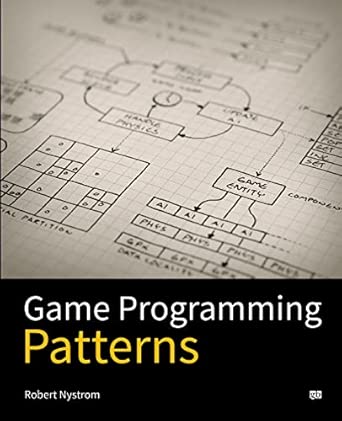 | Best for Learning Core Design Principles | Coverage: Game programming patterns and best practices | Intended Audience: Intermediate to advanced developers | Format: Printed book | VIEW LATEST PRICE | See Our Full Breakdown |
| Invent Your Own Computer Games with Python, 4th Edition |  | Best for Beginners with Programming Foundations | Language: Python | Audience: Beginners and intermediate programmers | Format: Printed book | VIEW LATEST PRICE | See Our Full Breakdown |
| GameMaker Studio 2 Game Development: Design, Code, and Launch 2D Games Using Real-World Indie Workflows |  | Best for Aspiring Indie Developers | Engine Focus: GameMaker Studio 2 | Content: Design, coding, indie workflows | Audience: Beginners and hobbyists | VIEW LATEST PRICE | See Our Full Breakdown |
| Mastering Unreal Engine 5 Game Development with C++ Scripting |  | Best for Advanced UE5 Developers | Focus: UE5 C++ scripting | Content Depth: Advanced | Audience: Intermediate to advanced developers | VIEW LATEST PRICE | See Our Full Breakdown |
| Game Programming Projects with Unity, Unreal Engine 5 & Godot 4: Build Portfolio-Ready Gameplay Systems |  | Best for Multi-Engine Portfolio Building | Engines Covered: Unity, Unreal Engine 5, Godot 4 | Focus: Portfolio-ready gameplay systems | Format: Printed book | VIEW LATEST PRICE | See Our Full Breakdown |
| Godot 4 Game Development Projects: Build Five Cross-Platform 2D and 3D Games Using One of the Most Powerful Open Source Game Engines |  | Best Overall for Beginners and Intermediates | Platform: Cross-platform | Content Focus: 2D and 3D game projects | Engine Version: Godot 4 | VIEW LATEST PRICE | See Our Full Breakdown |
| Foundations of Game Engine Development, Volume 1: Mathematics |  | Best for Aspiring Technical Developers and Engine Programmers | Subject: Mathematics for game engine development | Level: Advanced technical | Format: Printed book | VIEW LATEST PRICE | See Our Full Breakdown |
| 3D Game Development with Blender 5 and Unity 6: Create immersive 3D games in Blender and Unity using a real-time, elegant workflow | 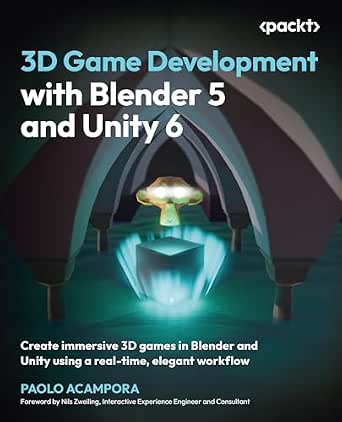 | Best for Visual Artists and Developers Focused on 3D Workflow | Tools Covered: Blender 5 and Unity 6 | Focus: Real-time 3D game development | Skill Level: Intermediate to advanced | VIEW LATEST PRICE | See Our Full Breakdown |
| game development software | Focus | Format | Pages |
|---|---|---|---|
| Godot 4 Next-Gen Game Developm | — | — | — |
| Game Development Patterns and | Design patterns, Best practices | — | — |
| Learning C# by Developing Game | C#, 3D game development | — | — |
| Game Development Patterns with | Design patterns, Code quality | — | — |
| Game Development with Godot 4 | 3D game development, C# | — | — |
| Game Programming Patterns | — | Printed book | 200+ |
| Invent Your Own Computer Games | Practical projects with Python | Printed book | 400+ |
| GameMaker Studio 2 Game Develo | — | Printed book | 300+ |
| Mastering Unreal Engine 5 Game | UE5 C++ scripting | Printed book | 250+ |
| Game Programming Projects with | Portfolio-ready gameplay systems | Printed book | 400+ |
| Godot 4 Game Development Proje | — | Printed book | — |
| Foundations of Game Engine Dev | Mathematical fundamentals | Printed book | Approx. 200 |
| 3D Game Development with Blend | Real-time 3D game development | Printed book | Approx. 300 |
More Details on Our Top Picks
Godot 4 Next-Gen Game Development: AI-Powered Tools, Multiplayer Worlds & Immersive XR Design
This book stands out for its comprehensive coverage of Godot 4’s latest features, especially AI integration, multiplayer environments, and XR design, making it ideal for experienced developers aiming to push the boundaries of game innovation. Compared to the more practical and pattern-oriented Game Development Patterns with Unity 2021, this resource dives into cutting-edge technologies but lacks concrete example projects, requiring prior knowledge. Its focus on advanced techniques means it’s less suitable for beginners or those seeking straightforward tutorials. The absence of pricing details and step-by-step guides means developers will need additional resources for implementation. Overall, this pick is perfect for seasoned programmers wanting to master the latest Godot capabilities for next-generation projects.
Pros:- Deep coverage of Godot 4’s innovative features
- Focus on AI tools, multiplayer environments, and XR design
- Suitable for developers seeking to create cutting-edge games
Cons:- Lacks detailed example projects for practical learning
- Requires existing knowledge of game development concepts
- No pricing or access information provided
Best for: Advanced game developers familiar with Godot who want to explore AI, XR, and multiplayer tech.
Not ideal for: Beginners or developers seeking hands-on tutorials with step-by-step instructions in basic game design.
- Platform:Godot 4
- Focus Areas:AI, Multiplayer, XR
- Target Audience:Advanced developers
Our verdict“This book is best suited for experienced developers aiming to master Godot 4’s latest capabilities for next-generation game projects.”
Game Development Patterns and Best Practices: Better Games, Less Hassle
This book earns its spot for distilling essential design patterns and best practices that help streamline game development, making it easier to produce quality games with less hassle. Compared with the more technical Learning C# by Developing Games with Unity 6, which focuses on beginner coding skills, this resource emphasizes architecture and process improvements for more efficient workflows. While it offers practical advice applicable across engines, it doesn’t delve into detailed technical implementations, which could be a drawback for more advanced developers seeking code examples. It’s ideal for indie developers and teams wanting to systematize their approach without getting bogged down in low-level coding. Overall, this book simplifies complex development challenges with pragmatic strategies.
Pros:- Focuses on practical game development strategies
- Highlights essential design patterns for better code organization
- Helps reduce overall development complexity
Cons:- Lacks detailed, step-by-step technical instructions
- May be too general for highly experienced developers seeking in-depth coding techniques
Best for: Indie developers and small teams looking to improve their development process through proven patterns and practices.
Not ideal for: Experts needing detailed code-level tutorials or advanced technical implementation guidance.
- Focus:Design patterns, Best practices
- Engine Compatibility:General, applicable across engines
- Target Audience:Indie developers, small teams
Our verdict“This book is ideal for developers who want to make their game creation process more organized and less stressful through proven design practices.”
Learning C# by Developing Games with Unity 6
This book makes the process of learning C# and Unity accessible through clear, step-by-step tutorials focused on creating simple 3D games, making it ideal for newcomers. Compared to the more advanced Game Development Patterns with Unity 2021, which emphasizes design patterns and best practices, this guide introduces core coding and game creation basics. Its straightforward approach means it’s less suitable for experienced developers or those aiming to develop complex games. The lack of detailed specs or advanced tutorials limits its scope, but it effectively builds foundational skills for absolute beginners. If you’re just starting out, this book offers a friendly entry point into game development.
Pros:- Clear, step-by-step instructions for beginners
- Focuses on practical hands-on game development
- Teaches core C# programming fundamentals within Unity
Cons:- Limited to basic 3D game projects
- No advanced or complex game design coverage
Best for: Beginners eager to learn C# programming and develop their first 3D games with Unity.
Not ideal for: Experienced programmers or developers seeking advanced technical guidance or complex project work.
- Platform:Unity 6
- Focus:C#, 3D game development
- Skill Level:Beginner
Our verdict“This book is perfect for newcomers ready to grasp C# fundamentals and start creating simple 3D games with Unity.”
Game Development Patterns with Unity 2021: Practical Game Development Using Design Patterns and Best Practices in Unity and C#
This book excels at providing practical insights into building maintainable and efficient games with Unity 2021, especially for developers interested in applying design patterns and best practices. Unlike the beginner-focused Learning C# by Developing Games with Unity 6, this resource emphasizes the structural aspects of game programming, making it ideal for those looking to improve their coding architecture. Its focus on software design patterns helps create more scalable projects, though the lack of specific pricing or customer ratings might make it less immediately accessible. This pick is a smart choice for developers seeking to elevate their Unity skills and produce cleaner, more manageable codebases.
Pros:- Focuses on practical application of design patterns
- Enhances code maintainability and scalability
- Suitable for developers looking to deepen Unity expertise
Cons:- No specific pricing or user ratings available
- Less suitable for absolute beginners or those seeking basic tutorials
Best for: Intermediate developers aiming to refine their Unity projects using design patterns and best practices.
Not ideal for: Total beginners without foundational Unity or C# experience, or developers seeking detailed project tutorials.
- Platform:Unity 2021
- Focus:Design patterns, Code quality
- Skill Level:Intermediate/Advanced
Our verdict“This book is best suited for Unity developers who want to write cleaner, more efficient code by mastering design patterns and best practices.”
Game Development with Godot 4 and C#: Develop a Dynamic 3D Game
This book offers a detailed guide to creating a 3D game with Godot 4 and C#, covering node systems, level design, and animations. Compared with the more technical Godot 4 Next-Gen Game Development book, which focuses on advanced techniques without step-by-step projects, this resource provides practical tutorials that help developers build tangible game components. Its focus on practical tutorials makes it accessible to those with some experience but lacking detailed specs or prerequisites. It’s an excellent choice for developers looking to expand their skills into 3D game development within Godot, although absolute beginners or those seeking highly detailed technical specifications might find it limited.
Pros:- Comprehensive guide for 3D game development in Godot 4
- Includes practical tutorials on nodes, level design, and animations
- Helps bridge the gap between theory and hands-on development
Cons:- Lacks detailed prerequisites or specifications
- Not suitable for absolute beginners or advanced technical deep-dives
Best for: Intermediate developers interested in creating 3D games with Godot 4 and C# who need practical guidance.
Not ideal for: Complete beginners or developers seeking in-depth technical theory without tutorials.
- Platform:Godot 4
- Focus:3D game development, C#
- Target Skill Level:Intermediate
Our verdict“This book is ideal for intermediate developers eager to learn 3D game creation in Godot 4 with practical tutorials.”
Game Programming Patterns
This book stands out for its deep exploration of common game programming patterns, making it an essential read for developers who want to write more flexible and maintainable code. Unlike comprehensive software tutorials like GameMaker Studio 2 Game Development, which focus on workflows, this text emphasizes conceptual understanding. While it offers clear explanations and practical examples, it falls short on detailed technical implementations and lacks accompanying code samples or online resources, making it less ideal for those seeking hands-on coding guidance. Overall, this pick is better suited for developers aiming to deepen their understanding of design patterns rather than complete beginners or those needing step-by-step tutorials.
Pros:- Comprehensive coverage of game programming design patterns
- Useful for both beginners and experienced developers
- Clear explanations with practical, real-world examples
Cons:- Lacks detailed technical implementation for some patterns
- No accompanying code samples or online resources
Best for: Intermediate to advanced programmers seeking to improve their code architecture and design skills
Not ideal for: Beginners with no prior programming experience or those looking for detailed coding tutorials
- Coverage:Game programming patterns and best practices
- Intended Audience:Intermediate to advanced developers
- Format:Printed book
- Language:English
- Pages:200+
- Difficulty:Intermediate
Our verdict“Ideal for developers who want to understand the core principles behind flexible game code architecture, rather than step-by-step tutorials.”
Invent Your Own Computer Games with Python, 4th Edition
This book makes a strong case for newcomers wanting to start game development through Python, offering practical projects and clear explanations that make complex concepts accessible. Compared to GameMaker Studio 2 Game Development, which covers visual workflows, this title emphasizes coding fundamentals, making it ideal for learners interested in programming rather than just game design. The book’s focus on practical, hands-on projects helps build confidence, but it doesn’t cover advanced topics or complex game mechanics, limiting its scope for more experienced developers. If you’re a beginner eager to learn programming through game projects, this book provides a solid foundation, but advanced users may find it too basic.
Pros:- Comprehensive guide for absolute beginners
- Includes practical, easy-to-follow game projects
- Clear explanations of Python programming concepts
Cons:- Lacks coverage of advanced game development topics
- Requires prior basic programming knowledge
Best for: Beginners with basic programming knowledge eager to learn game development fundamentals
Not ideal for: Experienced developers seeking advanced techniques or multi-engine expertise
- Language:Python
- Audience:Beginners and intermediate programmers
- Format:Printed book
- Pages:400+
- Difficulty:Beginner to intermediate
- Focus:Practical projects with Python
Our verdict“Perfect for newcomers looking to learn game programming fundamentals using Python, but less suitable for advanced or multi-engine developers.”
GameMaker Studio 2 Game Development: Design, Code, and Launch 2D Games Using Real-World Indie Workflows
This book provides a thorough walkthrough of developing 2D games with GameMaker Studio 2, emphasizing real-world indie workflows. It’s better suited for newcomers and hobbyists compared to Mastering Unreal Engine 5 Game Development with C++ Scripting, which targets more advanced programmers. While it covers essential topics like game design, coding, and launching, it lacks specific technical prerequisites and may feel too basic for seasoned developers already familiar with similar tools. The practical workflows and project-based approach make it an excellent starting point for indie enthusiasts interested in quick results, but it won’t satisfy those seeking in-depth technical mastery.
Pros:- Comprehensive guide to 2D game development with practical workflows
- Suitable for beginners and hobbyists
- Focus on indie game launch processes
Cons:- No specific technical prerequisites mentioned
- Content may be too basic for experienced developers
Best for: Beginners and hobbyists eager to create and publish 2D indie games
Not ideal for: Advanced developers or those looking for complex 3D game development insights
- Engine Focus:GameMaker Studio 2
- Content:Design, coding, indie workflows
- Audience:Beginners and hobbyists
- Format:Printed book
- Pages:300+
- Skill Level:Beginner to intermediate
Our verdict“A great starting point for aspiring indie developers focused on 2D game creation and publishing, but less suitable for advanced or 3D projects.”
Mastering Unreal Engine 5 Game Development with C++ Scripting
This book offers in-depth guidance on developing scalable gameplay systems with C++ in Unreal Engine 5, making it a strong choice for intermediate to advanced developers. Unlike Game Programming Patterns, which focuses on design principles, this title dives into technical implementation details specific to UE5’s C++ environment. It covers practical examples to help create robust game systems, but the lack of detailed content description and edition info may make it harder for some readers to gauge its comprehensiveness. It’s an excellent resource for those already familiar with UE5 looking to master C++, but beginners or those new to UE5 should look elsewhere.
Pros:- In-depth coverage of C++ scripting in UE5
- Practical examples for scalable game systems
- Suitable for developers aiming for technical mastery
Cons:- Lacks detailed content description and edition info
- May be too technical for beginners
Best for: Intermediate to advanced developers working with Unreal Engine 5 and C++
Not ideal for: Beginners or developers unfamiliar with UE5 or C++ programming
- Focus:UE5 C++ scripting
- Content Depth:Advanced
- Audience:Intermediate to advanced developers
- Format:Printed book
- Pages:250+
- Prerequisites:Familiarity with UE5 and C++
Our verdict“Designed for experienced UE5 developers seeking to deepen their mastery of C++ gameplay scripting, not for newcomers or casual learners.”
Game Programming Projects with Unity, Unreal Engine 5 & Godot 4: Build Portfolio-Ready Gameplay Systems
This book offers practical projects across three major engines—Unity, Unreal Engine 5, and Godot 4—making it highly versatile for developers aiming to diversify their portfolios. Unlike specialized resources like Invent Your Own Computer Games with Python, which targets beginners, or Mastering Unreal Engine 5, aimed at advanced users, this book balances intermediate-level projects suitable for developers eager to showcase a variety of gameplay systems. Its broad coverage helps build a well-rounded skill set but suffers from a lack of detailed product info and no available reviews, which might leave some buyers uncertain about its depth. It’s ideal for those wanting to demonstrate multi-engine proficiency for job prospects or freelance work.
Pros:- Includes projects for Unity, Unreal Engine 5, and Godot 4
- Wide range of gameplay systems covered
- Helps create portfolio-ready work for employment or freelance opportunities
Cons:- No specific product details or edition info provided
- No customer reviews or ratings available
Best for: Developers wanting to build a diverse, portfolio-ready set of gameplay systems across multiple engines
Not ideal for: Complete beginners or those seeking deep, engine-specific technical mastery
- Engines Covered:Unity, Unreal Engine 5, Godot 4
- Focus:Portfolio-ready gameplay systems
- Format:Printed book
- Pages:400+
- Audience:Intermediate developers
- Content:Projects for combat, AI, movement, UI, multiplayer
Our verdict“A practical resource for developers aiming to showcase a versatile skill set across multiple engines, with some uncertainty due to limited details.”
Godot 4 Game Development Projects: Build Five Cross-Platform 2D and 3D Games Using One of the Most Powerful Open Source Game Engines
This book stands out for its comprehensive coverage of both 2D and 3D game development using the versatile Godot 4 engine, making it a strong choice for those new to game creation. Unlike more specialized guides like 3D Game Development with Blender 5 and Unity 6, which focus on specific workflows, this resource offers a well-rounded introduction suitable for both beginners and those with some experience. Its focus on open-source technology ensures accessibility without licensing costs, but it doesn’t specify price or provide ratings, which could leave some buyers uncertain about its value. The guide’s strength lies in its practical projects, helping readers build five cross-platform games, but it might lack depth for advanced developers seeking more complex features. Overall, this makes a solid starting point for learners aiming to explore multiple genres with a powerful yet free engine.
Pros:- Covers both 2D and 3D game development in a single guide
- Focuses on the powerful open-source Godot 4 engine
- Suitable for beginners and those with some experience
Cons:- No specific price or customer ratings available
- Lacks advanced project examples for experienced developers
Best for: Beginners and intermediate developers wanting a comprehensive, practical introduction to both 2D and 3D game development in Godot 4.
Not ideal for: Experienced developers seeking advanced features or in-depth technical mastery beyond beginner projects.
- Platform:Cross-platform
- Content Focus:2D and 3D game projects
- Engine Version:Godot 4
- Skill Level:Beginner to intermediate
- Format:Printed book
- Language:English
Our verdict“A highly accessible and practical resource for newcomers eager to build diverse games with Godot 4.”
Foundations of Game Engine Development, Volume 1: Mathematics
This book is essential for those interested in the mathematical backbone of game engines, making it a key resource for aspiring engine developers. Compared with books like Game Programming Patterns, which focus more on high-level gameplay systems, this volume dives into the core math principles underpinning engine functionality, but it lacks practical coding examples, which could challenge beginners. Its detailed coverage of topics such as linear algebra, trigonometry, and physics math makes it a valuable technical reference, yet this focus on theory may be overwhelming for newcomers without prior math background. For developers looking to understand the ‘why’ behind engine mechanics, this book offers essential insights, but those seeking hands-on tutorials might find it less immediately useful.
Pros:- Comprehensive coverage of foundational math concepts
- Focuses on the core principles behind engine development
- Useful as a technical reference for serious developers
Cons:- Lacks practical implementation examples
- May be too technical for beginners without prior math knowledge
Best for: Aspiring game engine developers and technical programmers needing a solid mathematical foundation.
Not ideal for: Beginners without a strong math background or those seeking practical, project-based learning.
- Subject:Mathematics for game engine development
- Level:Advanced technical
- Format:Printed book
- Focus:Mathematical fundamentals
- Language:English
- Pages:Approx. 200
Our verdict“A vital resource for technical minds aiming to master the math that powers game engines.”
3D Game Development with Blender 5 and Unity 6: Create immersive 3D games in Blender and Unity using a real-time, elegant workflow
This book excels in guiding developers through the process of creating 3D games with Blender 5 and Unity 6, emphasizing real-time workflows that streamline production. Compared with Godot 4 Game Development Projects, which offers a broader introduction to game design, this guide specializes in the 3D pipeline, making it ideal for artists and technical developers focused on immersive environments. Its detailed coverage of Blender and Unity integration helps reduce friction in real-time development, though the technical depth might be overwhelming for complete beginners with no prior experience in either tool. This resource is perfect for those wanting to combine artistic skill with technical development in a seamless workflow.
Pros:- Comprehensive guide for Blender and Unity integration
- Focus on real-time workflows enhances efficiency
- Suitable for both artists and developers
Cons:- No specific price or rating info provided
- Content may be too technical for absolute beginners
Best for: 3D artists and developers interested in mastering efficient workflows using Blender and Unity.
Not ideal for: Beginners with no background in 3D modeling or real-time development who need beginner-friendly tutorials.
- Tools Covered:Blender 5 and Unity 6
- Focus:Real-time 3D game development
- Skill Level:Intermediate to advanced
- Format:Printed book
- Language:English
- Pages:Approx. 300
Our verdict“An excellent choice for developers and artists wanting to create immersive 3D games with efficient workflows in Blender and Unity.”
How We Picked
The selection process focused on evaluating each software’s performance, usability, feature set, and community support. We prioritized engines that support multiple platforms, offer robust debugging tools, and provide extensive documentation. Cost and licensing models were also key factors, ensuring options for different budgets. To reflect real-world needs, we balanced high-end features suitable for professional studios with accessible tools for indie developers and beginners. The ranking aims to highlight tools that deliver strong value across different project types and skill levels, emphasizing versatility, innovation, and ease of use.Factors to Consider When Choosing Best Game Development Software
When choosing game development software, it’s vital to consider how well the tool aligns with your project goals, technical skills, and budget. The right software can accelerate development, improve quality, and reduce frustration. Conversely, selecting software that’s too complex or not suited to your needs may cause delays or increase costs. Here are key factors to guide your decision-making process, ensuring you pick the best fit for your specific situation.Ease of Use and Learning Curve
For newcomers, intuitive interfaces and comprehensive tutorials are essential. Software with a gentle learning curve reduces onboarding time and helps maintain motivation. Conversely, professional-grade engines like Unreal may require significant training but offer advanced features for complex projects. Assess your current skills and project complexity to find a balance between usability and capability.
Feature Set and Flexibility
Evaluate whether the software provides necessary features such as physics engines, animation tools, AI integration, and multiplayer support. Open-source options like Godot allow deep customization, but might need more technical expertise. Proprietary engines like Unity and Unreal come with extensive built-in features, reducing the need for third-party tools. Consider your project scope to choose a tool that scales with your ambitions.
Platform Compatibility
Ensure the software supports the platforms you target—PC, consoles, mobile, VR, or web. Some tools excel in cross-platform deployment, which can save time and effort. For example, Unity and Godot are known for their broad platform support, while some specialized engines focus on specific ecosystems. Confirming compatibility early prevents costly rework later.
Cost and Licensing
Budget constraints heavily influence your choice. Free or open-source engines like Godot provide a low-cost entry point, but may lack certain professional features. Subscription-based models like Unity or licensing fees for Unreal might be justified by the advanced tools and support they offer. Weigh the upfront costs against long-term value, considering whether additional features or services are worth the investment.
Community and Support
A vibrant community and good documentation can make or break your development experience. Active forums, tutorials, and plugin ecosystems help solve problems faster and expand your capabilities. Engines like Unity benefit from extensive official and user-generated resources, making them easier to learn and troubleshoot. Smaller or newer engines may have limited support, which could slow down progress.
Frequently Asked Questions
Is it better to choose a free or paid game development engine?
The choice depends on your project’s needs and your budget. Free engines like Godot and Unity’s free tier are excellent for learning and small projects, offering robust features without upfront costs. Paid engines, such as Unreal or Unity Pro, provide advanced tools, dedicated support, and higher performance capabilities, which can be valuable for larger or commercial projects. Consider the scope of your game and whether the added features justify the investment.
Can I switch engines mid-project if I start with one?
Switching engines mid-development is possible but often challenging, as different tools have unique workflows and asset formats. It requires significant effort to migrate assets, rewrite code, and adapt to new interfaces. To avoid costly rework, it’s best to choose an engine aligned with your long-term goals from the start. However, if you plan carefully and document your work, a switch can be managed with proper planning.
Which game engine is best for 2D versus 3D games?
For 2D games, engines like GameMaker Studio 2 and Godot are highly user-friendly and optimized for sprite-based projects. For 3D games, Unreal Engine 5 and Unity offer powerful 3D rendering, physics, and asset management. Some engines, like Godot, support both 2D and 3D equally well, making them versatile choices. Your choice should depend on the complexity of your visuals and your familiarity with 3D modeling tools.
How important is community support when choosing a game engine?
Community support can significantly influence your development experience by providing tutorials, plugins, troubleshooting advice, and shared assets. Engines with active communities tend to have more learning resources and faster problem resolution. For newcomers, this support network reduces frustration and accelerates skill acquisition. For professional developers, a vibrant community can inspire new ideas and facilitate collaboration.
Should I prioritize engine features or ease of use?
Balancing features and usability depends on your project scope and experience. If you’re developing a simple game or are new to game development, ease of use might take precedence, ensuring you can produce results without excessive learning. For complex projects requiring advanced graphics or multiplayer functionality, prioritizing feature-rich engines like Unreal or Unity makes sense. Focus on what aligns with your goals and technical capacity to avoid bottlenecks.
Conclusion
For beginners or small indie projects, Godot 4 offers an accessible, cost-effective entry point with powerful capabilities. If you’re aiming for high-end visuals and AAA-quality experiences, Unreal Engine 5 is the best choice, despite its steeper learning curve and licensing costs. Unity strikes a balance suitable for both newcomers and seasoned developers, making it the most versatile option overall. Those seeking a premium, feature-packed environment should consider Unreal, while budget-conscious developers will find value in open-source options. Select the software that best matches your current skills, project ambitions, and budget to set the stage for successful game creation.
As an affiliate, we earn on qualifying purchases.Fall Picks
fall essentials