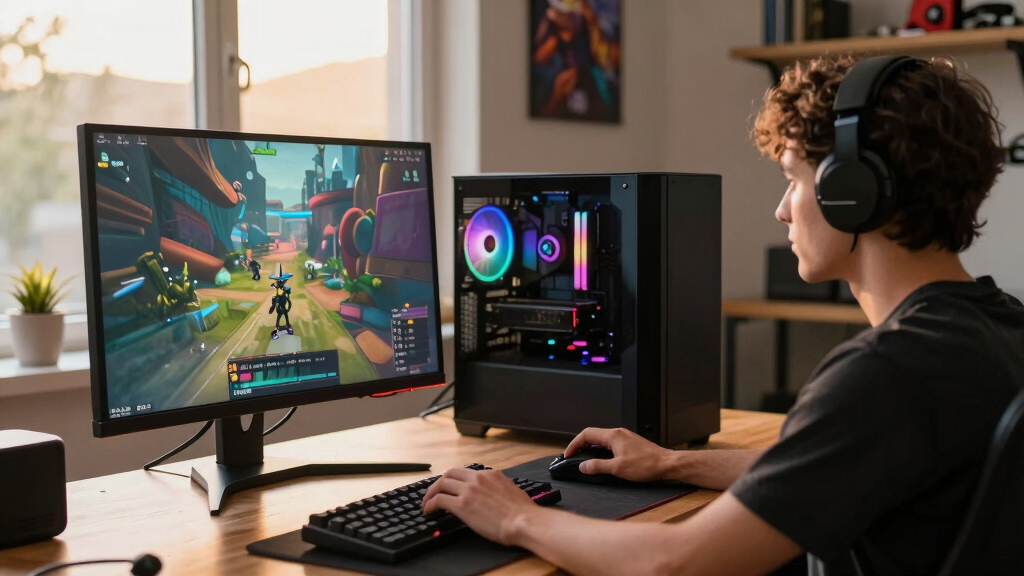

Shopping for the best 4K gaming PCs in 2026 really comes down to one question: how much GPU are you willing to pay for, because the graphics card does almost all the heavy lifting at 3840 x 2160. After comparing fifteen prebuilts across every price tier, I put the Skytech Gaming King 95 (Ryzen 7 9850X3D, RTX 5080) at the top — it’s the only configuration here with enough headroom to drive demanding titles at high settings without leaning on upscaling every session. The Lenovo Legion Tower 5i stands out as the balanced pick for most buyers, pairing an RTX 5070 Ti with 32GB of RAM at a friendlier price, while the ASUS ROG GM700 makes the case for all-AMD builds with its Ryzen 7 9800X3D and Radeon RX 9070 XT. The core tradeoff across this list is simple: RTX 5070 Ti and RX 9070 XT machines handle 4K well with some settings tweaks, while RTX 5060 Ti systems get there only with aggressive upscaling. Spend on the GPU first, the CPU second, and treat everything else as negotiable. Keep reading for the full ranked breakdown and the reasoning behind every position.
Complete the kit


Key Takeaways
- The RTX 5080-equipped Skytech King 95 is the only machine in this lineup I would call comfortable native 4K hardware; every other pick relies on DLSS or FSR upscaling to hold high frame rates in the heaviest games.
- X3D processors dominate the top half of the ranking — the Ryzen 7 9850X3D and 9800X3D appear in four of the five highest-rated builds because their extra cache lifts 1% lows even at 4K.
- 16GB of RAM is now a liability at this tier: the Skytech Shadow 5 is the only 16GB machine here, and it landed near the bottom partly for that reason.
- All-AMD configurations like the Skytech Azure 3 and ROG GM700 undercut RTX 5070 Ti rivals on price while matching them in raw rasterization, but they give back ground in ray tracing and DLSS-exclusive features.
- Spec-sheet cuts hide in unexpected places — the King 95 pairs a flagship GPU with Wi-Fi 5, and the Horizon Autherium lists an unspecified Intel Core i9, which makes its value harder to judge than rivals with named chips.
| Lenovo Legion Tower 5i Gaming PC – Intel Core Ultra 7 265F, NVIDIA GeForce RTX 5070 Ti, 32GB RAM, 1TB Storage |  | Best Overall | Processor: Intel Core Ultra 7 265F | Graphics: NVIDIA GeForce RTX 5070 Ti | Memory: 32 GB DDR5 (expandable to 128 GB) | VIEW LATEST PRICE | See Our Full Breakdown |
| KOTIN Prebuilt Gaming PC RTX 5070 12GB, Ryzen 7 9700X, 32GB DDR5, 1TB SSD, 11.3in Smart Display |  | Best for Beginners | Graphics Card: NVIDIA RTX 5070 12GB | Processor: AMD Ryzen 7 9700X | Memory: 32GB DDR5 6000MHz | VIEW LATEST PRICE | See Our Full Breakdown |
| Skytech Gaming O11 Vision Gaming PC with AMD Ryzen 7 9850X3D and NVIDIA RTX 5070 Ti |  | Best Showcase Build | Processor: AMD Ryzen 7 9850X3D 4.7GHz | Graphics: NVIDIA RTX 5070 Ti 16GB VRAM | Memory: 32GB DDR5 5600 | VIEW LATEST PRICE | See Our Full Breakdown |
| Skytech Gaming Shadow 5 Gaming PC, AMD Ryzen 7 9700X, NVIDIA RTX 5060 Ti, 16GB DDR5, 1TB NVMe SSD |  | Best Value Pick | Processor: AMD Ryzen 7 9700X (5.5GHz Turbo) | Graphics: NVIDIA GeForce RTX 5060 Ti 16GB GDDR7 | Memory: 16GB DDR5 6000 | VIEW LATEST PRICE | See Our Full Breakdown |
| Skytech Gaming King 95 Gaming PC, AMD Ryzen 7 9850X3D, NVIDIA RTX 5080 16GB VRAM, 2TB NVMe SSD, 32GB DDR5 RAM |  | Best Premium Pick | Processor: AMD Ryzen 7 9850X3D (5.6GHz Turbo) | Graphics: NVIDIA GeForce RTX 5080 16GB GDDR7 | Memory: 32GB DDR5 6000 | VIEW LATEST PRICE | See Our Full Breakdown |
| MSI Codex Z2 Gaming Desktop (Ryzen 7 8700F, RTX 5070) |  | Best Value NVIDIA Pick | Processor: AMD Ryzen 7 8700F (8 cores / 16 threads) | Graphics: NVIDIA GeForce RTX 5070 | Memory: 32GB DDR5 | VIEW LATEST PRICE | See Our Full Breakdown |
| ASUS ROG GM700 (2025) Gaming Desktop (Ryzen 7 9800X3D, RX 9070 XT) |  | Best Premium Pick | Processor: AMD Ryzen 7 9800X3D | Graphics: AMD Radeon RX 9070 XT PRIME OC (16GB) | Memory: 32GB DDR5 | VIEW LATEST PRICE | See Our Full Breakdown |
| CyberPowerPC Gamer Xtreme (Ryzen 9 9900X, RTX 5070 12GB) |  | Best for Streamers and Creators | Processor: AMD Ryzen 9 9900X, 12 cores, 4.4GHz | Motherboard: AMD B850 chipset | Graphics: NVIDIA GeForce RTX 5070 12GB | VIEW LATEST PRICE | See Our Full Breakdown |
| Skytech Gaming Azure 3 (Ryzen 7 9850X3D, RX 9070 XT) |  | Best Overall | Processor: AMD Ryzen 7 9850X3D (4.7GHz, up to 5.6GHz) | Graphics: AMD Radeon RX 9070 XT 16GB GDDR6 | Memory: 32GB DDR5 5600 | VIEW LATEST PRICE | See Our Full Breakdown |
| Skytech Gaming O11 Vision (Ryzen 7 7800X3D, RTX 5060 Ti) |  | Best Entry-Level 4K Option | Processor: AMD Ryzen 7 7800X3D (4.2GHz, up to 5.0GHz) | Graphics: NVIDIA RTX 5060 Ti 16GB GDDR7 | Memory: 32GB DDR5 5600 | VIEW LATEST PRICE | See Our Full Breakdown |
| Skytech Gaming King 95 (Ryzen 7 9800X3D, RTX 5070 Ti) |  | Best Overall | Processor: AMD Ryzen 7 9800X3D, 4.7GHz (5.2GHz boost) | Graphics: NVIDIA RTX 5070 Ti, 16GB GDDR7 | Memory: 32GB DDR5 5600 RGB | VIEW LATEST PRICE | See Our Full Breakdown |
| Horizon Autherium Dragon RGB (Intel Core i9, RTX 5070, 64GB, 5TB) |  | Best for Creators and Heavy Multitaskers | Processor: Intel Core i9, unlocked for overclocking | Graphics: NVIDIA GeForce RTX 5070 OC, 12GB | Memory: 64GB RAM | VIEW LATEST PRICE | See Our Full Breakdown |
| CyberPowerPC Gamer Xtreme (Intel Core i7-14700F, RTX 5060 Ti) |  | Best Budget Entry to 4K | Processor: Intel Core i7-14700F, 20 cores | Motherboard: Intel B760 chipset | Graphics: NVIDIA GeForce RTX 5060 Ti, 8GB | VIEW LATEST PRICE | See Our Full Breakdown |
| ZOTAC MEK Gaming PC (Ryzen 7 9700X, RTX 5070 Ti) |  | Best Compact Premium Design | Processor: AMD Ryzen 7 9700X, up to 5.5GHz | Graphics: NVIDIA GeForce RTX 5070 Ti, 16GB GDDR7 | Memory: 32GB DDR5-6000 | VIEW LATEST PRICE | See Our Full Breakdown |
| iBUYPOWER Element (Ryzen 9 7900X, RTX 5070) |  | Best Starter Bundle | Processor: AMD Ryzen 9 7900X, 12 cores | Graphics: NVIDIA GeForce RTX 5070, 12GB | Memory: 32GB DDR5 4800 | VIEW LATEST PRICE | See Our Full Breakdown |
| 4k gaming PC | Processor | Memory | Storage | Graphics |
|---|---|---|---|---|
| Lenovo Legion Tower 5i Gaming | Intel Core Ultra 7 265F | 32 GB DDR5 (expandable to 128 GB) | 1 TB SSD | NVIDIA GeForce RTX 5070 Ti |
| KOTIN Prebuilt Gaming PC RTX 5 | AMD Ryzen 7 9700X | 32GB DDR5 6000MHz | 1TB NVMe SSD | — |
| Skytech Gaming O11 Vision Gami | AMD Ryzen 7 9850X3D 4.7GHz | 32GB DDR5 5600 | 2TB Gen4 NVMe SSD | NVIDIA RTX 5070 Ti 16GB VRAM |
| Skytech Gaming Shadow 5 Gaming | AMD Ryzen 7 9700X (5.5GHz Turbo) | 16GB DDR5 6000 | 1TB NVMe M.2 SSD | NVIDIA GeForce RTX 5060 Ti 16GB GDDR7 |
| Skytech Gaming King 95 Gaming | AMD Ryzen 7 9850X3D (5.6GHz Turbo) | 32GB DDR5 6000 | 2TB NVMe M.2 SSD | NVIDIA GeForce RTX 5080 16GB GDDR7 |
| MSI Codex Z2 Gaming Desktop | AMD Ryzen 7 8700F (8 cores / 16 threads) | 32GB DDR5 | 2TB NVMe SSD | NVIDIA GeForce RTX 5070 |
| ASUS ROG GM700 | AMD Ryzen 7 9800X3D | 32GB DDR5 | 2TB PCIe Gen 4.0 SSD | AMD Radeon RX 9070 XT PRIME OC (16GB) |
| CyberPowerPC Gamer Xtreme | AMD Ryzen 9 9900X, 12 cores, 4.4GHz | 32GB DDR5 | 1TB PCIe 4.0 NVMe SSD | NVIDIA GeForce RTX 5070 12GB |
| Skytech Gaming Azure 3 | AMD Ryzen 7 9850X3D (4.7GHz, up to 5.6GHz) | 32GB DDR5 5600 | 2TB Gen4 NVMe SSD | AMD Radeon RX 9070 XT 16GB GDDR6 |
| Skytech Gaming O11 Vision | AMD Ryzen 7 7800X3D (4.2GHz, up to 5.0GHz) | 32GB DDR5 5600 | 1TB Gen4 NVMe SSD | NVIDIA RTX 5060 Ti 16GB GDDR7 |
| Skytech Gaming King 95 | AMD Ryzen 7 9800X3D, 4.7GHz (5.2GHz boost) | 32GB DDR5 5600 RGB | 1TB Gen4 NVMe SSD | NVIDIA RTX 5070 Ti, 16GB GDDR7 |
| Horizon Autherium Dragon RGB | Intel Core i9, unlocked for overclocking | 64GB RAM | 5TB total (1TB NVMe SSD + 4TB HDD) | NVIDIA GeForce RTX 5070 OC, 12GB |
| CyberPowerPC Gamer Xtreme | Intel Core i7-14700F, 20 cores | 16GB DDR5 | 1TB PCIe 4.0 NVMe SSD | NVIDIA GeForce RTX 5060 Ti, 8GB |
| ZOTAC MEK Gaming PC | AMD Ryzen 7 9700X, up to 5.5GHz | 32GB DDR5-6000 | 1TB NVMe SSD | NVIDIA GeForce RTX 5070 Ti, 16GB GDDR7 |
| iBUYPOWER Element | AMD Ryzen 9 7900X, 12 cores | 32GB DDR5 4800 | 1TB NVMe SSD | NVIDIA GeForce RTX 5070, 12GB |
More Details on Our Top Picks
Lenovo Legion Tower 5i Gaming PC – Intel Core Ultra 7 265F, NVIDIA GeForce RTX 5070 Ti, 32GB RAM, 1TB Storage
The Lenovo Legion Tower 5i earns my top spot because it pairs the RTX 5070 Ti with Intel’s Core Ultra 7 265F — enough GPU muscle for native 4K in most titles with DLSS smoothing the rest — inside a tower that’s genuinely easy to open and upgrade. Where the Skytech O11 Vision chases showpiece looks, this Legion chases longevity: memory expandable to 128GB means it won’t feel dated in three years. Compared with the KOTIN’s flashier smart display, Lenovo’s 2.5G Ethernet and WiFi 6E matter more day to day for big game downloads and streaming. The tradeoffs: 1TB fills fast with 100GB-plus installs, Lenovo doesn’t publish cooling noise figures, and big-brand pricing usually runs higher than boutique builds with identical silicon. I still call it the safest high-end buy here.
Pros:- RTX 5070 Ti handles native 4K in most games, with DLSS as headroom
- Memory expandable to 128GB — the most upgrade-friendly tower in this lineup
- 2.5G Ethernet and WiFi 6E cover fast downloads and streaming
- Three months of Xbox Game Pass included
Cons:- 1TB SSD fills quickly with modern 100GB+ game installs
- No published cooling or noise figures, so acoustics are a gamble
- Big-brand pricing tends to run above boutique equivalents
Best for: Players who want one tower to cover 4K gaming, streaming, and creative work for years, with painless upgrade paths and a nationwide warranty network.
Not ideal for: Deal hunters — boutique builds like the Skytech O11 Vision pack the same RTX 5070 Ti plus a 2TB drive, often for less money.
- Processor:Intel Core Ultra 7 265F
- Graphics:NVIDIA GeForce RTX 5070 Ti
- Memory:32 GB DDR5 (expandable to 128 GB)
- Storage:1 TB SSD
- Connectivity:2.5G Ethernet, WiFi 6E
- Included:3 months Xbox Game Pass
Our verdict“The Legion Tower 5i is my default recommendation: near-flagship 4K performance in a tower you can actually grow into.”
KOTIN Prebuilt Gaming PC RTX 5070 12GB, Ryzen 7 9700X, 32GB DDR5, 1TB SSD, 11.3in Smart Display
If this is your first gaming tower, the KOTIN prebuilt removes more friction than anything else here. It ships ready to run with Windows 11, a 360mm liquid cooler already fitted, and an 11.3-inch smart display on the case that shows temps and load at a glance — handy when you don’t yet know what normal looks like. The RTX 5070 outmuscles the Skytech Shadow 5’s 5060 Ti and handles 4K comfortably once DLSS is on, though it trails RTX 5070 Ti machines like the Legion Tower 5i in native rendering. I’d call WiFi 7 a genuine perk, not fluff, since it future-proofs wireless setups. The catch: KOTIN is a smaller brand, so warranty service is less proven than Lenovo’s, and the closed prebuilt design narrows long-term upgrade paths.
Pros:- Ready out of the box with Windows 11 preinstalled
- Built-in 11.3-inch smart display for at-a-glance temps and stats
- WiFi 7 and 850W Gold PSU give real headroom for later
- 360mm liquid cooling keeps the Ryzen 7 9700X quiet under load
Cons:- RTX 5070 leans on DLSS for smooth 4K; native performance lags 5070 Ti builds
- Lesser-known brand with a thinner warranty and support track record
- Prebuilt chassis limits deep component upgrades
Best for: First-time PC gamers who want a ready-to-run 4K-capable rig with visible system monitoring and no setup guesswork.
Not ideal for: Tinkerers planning multi-year GPU and motherboard upgrades — the closed prebuilt design and smaller-brand support network limit that path.
- Graphics Card:NVIDIA RTX 5070 12GB
- Processor:AMD Ryzen 7 9700X
- Memory:32GB DDR5 6000MHz
- Storage:1TB NVMe SSD
- Case Display:11.3-inch smart display
- Cooling:360mm liquid cooler
- Power Supply:850W 80+ Gold
- Connectivity:WiFi 7
- Operating System:Windows 11 Home
Our verdict“The KOTIN is the easiest on-ramp to 4K gaming here — buy it if you want plug-and-play with monitoring built in.”
Skytech Gaming O11 Vision Gaming PC with AMD Ryzen 7 9850X3D and NVIDIA RTX 5070 Ti
The Skytech O11 Vision is the pick I’d make when the PC has to sit on the desk, not under it. The Lian Li O11 Vision case wraps the components in panoramic glass, and Skytech backs the looks with substance: a Ryzen 7 9850X3D, whose 3D V-Cache lifts frame rates in CPU-bound games, plus an RTX 5070 Ti and a 2TB Gen4 SSD. Against the Legion Tower 5i — same GPU — you get double the storage and a faster gaming chip, but you give up Lenovo’s upgrade headroom and established support network. My real gripe is Wi-Fi 5: on a premium 2025 build, dated wireless means wired Ethernet or an adapter for fast downloads. The unspecified motherboard model also makes long-term upgrade planning harder than it should be.
Pros:- Ryzen 7 9850X3D’s 3D V-Cache delivers top-tier gaming frame rates
- RTX 5070 Ti with 16GB VRAM is built for 4K with high texture packs
- 2TB Gen4 NVMe SSD holds a large game library without juggling
- Panoramic Lian Li O11 Vision case looks premium from every angle
Cons:- Wi-Fi 5 is outdated on a premium build — wired connection is nearly required
- Motherboard model isn’t specified, complicating future upgrades
- Glass-heavy case demands tidy cabling and regular dusting to stay pretty
Best for: Style-conscious gamers who want a glass showcase tower with an elite CPU-plus-GPU pairing for 4K, and who’ll play over wired Ethernet.
Not ideal for: Anyone relying on fast wireless — Wi-Fi 5 is dated at this price, and the KOTIN’s WiFi 7 or the Legion’s WiFi 6E suit cable-free setups better.
- Processor:AMD Ryzen 7 9850X3D 4.7GHz
- Graphics:NVIDIA RTX 5070 Ti 16GB VRAM
- Memory:32GB DDR5 5600
- Storage:2TB Gen4 NVMe SSD
- Cooling:360mm AIO liquid cooler with ARGB fans
- Power Supply:850W Gold ATX 3.0
- Wireless:Wi-Fi 5 802.11ac
- Case:Lian Li PC-O11 Vision White
- Operating System:Windows 11 Home
Our verdict“Choose the O11 Vision if you want flagship-level 4K hardware inside the best-looking case in this roundup.”
Skytech Gaming Shadow 5 Gaming PC, AMD Ryzen 7 9700X, NVIDIA RTX 5060 Ti, 16GB DDR5, 1TB NVMe SSD
Full honesty up front: the Skytech Shadow 5 is the budget door into this roundup, and its RTX 5060 Ti is really a 1440p card. At 4K you’ll lean on DLSS upscaling and frame generation, while the RTX 5070 Ti and 5080 machines above render natively. What makes it worth your money anyway is the balance: the Ryzen 7 9700X won’t bottleneck a GPU upgrade later, the 360mm AIO is cooling you’d expect on pricier builds, and the 16GB of GDDR7 on the card keeps high-resolution textures viable. Against the KOTIN, you save real money but lose the smart display, WiFi 7, and 32GB of RAM — and 16GB of system memory is the first thing I’d upgrade. Skytech also notes component brands may vary, so exact parts are a mild lottery.
Pros:- Lowest-cost entry into the lineup without a cut-rate CPU
- Ryzen 7 9700X leaves headroom for a future GPU upgrade
- 360mm AIO liquid cooling is generous at this tier
- 16GB of GDDR7 VRAM helps with high-resolution textures
Cons:- RTX 5060 Ti depends on upscaling for playable 4K
- 16GB of system RAM is lean for modern games and multitasking
- Component brands may vary, so exact parts aren’t guaranteed
Best for: Budget-focused players who mostly game at 1440p now but want a CPU and cooling foundation that supports a true 4K GPU upgrade later.
Not ideal for: Purists wanting native 4K at high settings today — the RTX 5060 Ti needs heavy upscaling there, and the RTX 5070 Ti builds are the real answer.
- Processor:AMD Ryzen 7 9700X (5.5GHz Turbo)
- Graphics:NVIDIA GeForce RTX 5060 Ti 16GB GDDR7
- Memory:16GB DDR5 6000
- Storage:1TB NVMe M.2 SSD
- Cooling:360mm AIO liquid cooler with ARGB fans
- Power Supply:750W Gold
- Wireless:Wi-Fi 5 802.11ac
- Case:Skytech Shadow 5 with tempered glass
- Operating System:Windows 11 Home
Our verdict“The Shadow 5 is the smart spend for 1440p-focused players who’d rather bank savings now and upgrade the GPU later.”
Skytech Gaming King 95 Gaming PC, AMD Ryzen 7 9850X3D, NVIDIA RTX 5080 16GB VRAM, 2TB NVMe SSD, 32GB DDR5 RAM
When 4K frame rates matter more than the receipt, the Skytech King 95 is the ceiling of this roundup. The RTX 5080 with 16GB of GDDR7 is the only GPU here that holds high-refresh 4K without leaning hard on upscaling, and the Ryzen 7 9850X3D keeps minimum frame rates high in CPU-heavy titles — a pairing neither the Legion Tower 5i nor the O11 Vision, both on the RTX 5070 Ti, can match. You also get 2TB of NVMe storage and an 850W ATX 3.0 PSU built for transient GPU spikes. The drawbacks are predictable: it should be the most expensive tower here, Skytech cautions the GPU brand may vary, and Wi-Fi 5 again feels stingy on a flagship. I see it as the enthusiast’s pick, not the sensible one.
Pros:- RTX 5080 delivers the strongest native 4K performance in the roundup
- Ryzen 7 9850X3D keeps frame rates high in CPU-bound games
- 2TB NVMe SSD plus 32GB DDR5 6000 covers big libraries and heavy multitasking
- 850W Gold ATX 3.0 PSU handles GPU power spikes cleanly
Cons:- Likely the priciest tower here, with diminishing returns over 5070 Ti builds
- Wi-Fi 5 is out of place on a flagship-class machine
- GPU brand may vary, so aesthetics and cooler design aren’t guaranteed
Best for: Enthusiasts with a 4K high-refresh monitor who want the fastest native rendering in this lineup and will pay for it.
Not ideal for: Value-minded buyers — the Legion Tower 5i delivers most of the 4K experience for likely hundreds less, and Wi-Fi 5 stings at this price.
- Processor:AMD Ryzen 7 9850X3D (5.6GHz Turbo)
- Graphics:NVIDIA GeForce RTX 5080 16GB GDDR7
- Memory:32GB DDR5 6000
- Storage:2TB NVMe M.2 SSD
- Cooling:360mm AIO liquid cooler with ARGB fans
- Power Supply:850W Gold ATX 3.0
- Wireless:Wi-Fi 5 802.11ac
- Operating System:Windows 11 Home 64-bit
Our verdict“The King 95 is the no-compromise 4K choice — buy it when you want the fastest tower here and cost is secondary.”
MSI Codex Z2 Gaming Desktop (Ryzen 7 8700F, RTX 5070)
If you want RTX 5070-class 4K gaming without paying for an X3D processor, the MSI Codex Z2 is where I’d start. Its Ryzen 7 8700F is a solid eight-core chip, but it carries less cache than the Ryzen 7 9800X3D inside the ASUS ROG GM700, so it gives up ground in CPU-bound games. At native 4K that’s a trade I can live with, because the GPU does most of the work and DLSS keeps demanding titles smooth. Against the CyberPowerPC Gamer Xtreme, which mates the same RTX 5070 with a costlier Ryzen 9, the Codex Z2 strikes me as the smarter buy for pure gaming, and it doubles the storage to 2TB. The catches: the four-fan cooling setup can get audible under load, and Windows 11 Home lacks some pro features.
Pros:- RTX 5070 delivers smooth 4K with DLSS support
- 2TB NVMe SSD holds a large modern game library
- 32GB DDR5 RAM leaves headroom for multitasking
- Ryzen 7 8700F handles everyday gaming and productivity well
Cons:- 8700F’s smaller cache trails X3D chips in CPU-bound games
- Four-fan cooling can get loud under sustained load
- Windows 11 Home may require a paid upgrade for professional features
Best for: 4K gamers who want RTX 5070 performance and room for a big game library without paying extra for an X3D chip
Not ideal for: Noise-sensitive players, and anyone who needs Windows 11 Pro features for work
- Processor:AMD Ryzen 7 8700F (8 cores / 16 threads)
- Graphics:NVIDIA GeForce RTX 5070
- Memory:32GB DDR5
- Storage:2TB NVMe SSD
- Cooling:4 fans with ARGB lighting
- Connectivity:USB Type-C
- VR-Ready:Yes
- Operating System:Windows 11 Home
Our verdict“The value play for pure 4K gaming: RTX 5070 power and 2TB of storage without the X3D price premium.”
ASUS ROG GM700 (2025) Gaming Desktop (Ryzen 7 9800X3D, RX 9070 XT)
The ASUS ROG GM700 is the pick I’d make when budget matters less than polish. Pairing the Ryzen 7 9800X3D — one of the fastest gaming chips money can buy — with the Radeon RX 9070 XT’s 16GB of VRAM gives it the muscle for native 4K at high settings, and the 2TB Gen 4 SSD keeps load times short. Set it next to the Skytech Azure 3, though, and the value question gets awkward: the Azure 3 runs a slightly newer 9850X3D with the same class of Radeon card, so the GM700 is largely selling ROG design and brand cachet at a higher price. I also can’t find clear answers on how easily it upgrades down the road, which stings on a premium tower. If you want the sharpest spec sheet per dollar, the Azure 3 wins; if you want a flagship that feels curated, this is it.
Pros:- Ryzen 7 9800X3D is among the fastest gaming CPUs available
- RX 9070 XT’s 16GB VRAM handles native 4K ultra settings
- Fast 2TB PCIe Gen 4 SSD keeps load times short
- 32GB of DDR5 memory covers gaming and creative workloads
Cons:- Premium pricing buys design and branding more than a spec edge
- Upgradeability and expansion details are unclear
Best for: Buyers who want a premium, brand-name flagship with a top-tier gaming CPU and don’t mind paying for design
Not ideal for: Value-focused shoppers — the Skytech Azure 3 matches its core specs with a newer chip, likely for less money
- Processor:AMD Ryzen 7 9800X3D
- Graphics:AMD Radeon RX 9070 XT PRIME OC (16GB)
- Memory:32GB DDR5
- Storage:2TB PCIe Gen 4.0 SSD
- Operating System:Windows 11 Home
- Release Year:2025
- Design:Sleek ROG chassis
Our verdict“A polished flagship for buyers who prioritize the ROG name and design over spec-per-dollar value.”
CyberPowerPC Gamer Xtreme (Ryzen 9 9900X, RTX 5070 12GB)
Most 4K builds put the budget into the graphics card; the CyberPowerPC Gamer Xtreme splits it. The 12-core Ryzen 9 9900X is overkill for games alone, but it’s a genuine asset if you stream, record, or keep a browser full of tabs open while you play — exactly the crowd I’d aim this at. The RTX 5070 12GB handles 4K with DLSS assistance, matching what the MSI Codex Z2 offers on the graphics side, while the Codex’s weaker CPU costs less and stores more. That’s the tension here: you gain rendering and multitasking headroom, but the 1TB SSD fills quickly with modern 150GB installs, and the full-size case demands desk room. Liquid cooling on the CPU and lifetime tech support round out a package that makes more sense for creators who game than for gamers on a budget.
Pros:- 12-core Ryzen 9 9900X excels at streaming, encoding, and heavy multitasking
- RTX 5070 12GB delivers capable 4K gaming with DLSS
- Liquid-cooled CPU in a tempered glass case with custom RGB
- WiFi 6, Bluetooth 5.3, and lifetime tech support included
Cons:- 1TB SSD fills fast with modern 4K game installs
- Large chassis needs plenty of desk space
- High-end parts draw more power under load
Best for: Streamers and content creators who game at 4K and need 12 cores of CPU headroom for encoding and multitasking
Not ideal for: Pure gamers — the MSI Codex Z2 pairs the same RTX 5070 with twice the storage for less CPU money
- Processor:AMD Ryzen 9 9900X, 12 cores, 4.4GHz
- Motherboard:AMD B850 chipset
- Graphics:NVIDIA GeForce RTX 5070 12GB
- Memory:32GB DDR5
- Storage:1TB PCIe 4.0 NVMe SSD
- Cooling:Liquid-cooled CPU
- Connectivity:WiFi 6, Bluetooth 5.3, 2x USB-C 3.2, 6x USB-A, LAN
- Operating System:Windows 11 Home
- Warranty:1 year parts & labor, free lifetime tech support
Our verdict“The right call for creators who stream and multitask at 4K, but more CPU than buyers who only play games will ever use.”
Skytech Gaming Azure 3 (Ryzen 7 9850X3D, RX 9070 XT)
The Skytech Azure 3 earns my top slot because it gets the 4K fundamentals right without an obvious weak link. AMD’s Ryzen 7 9850X3D is a refinement of the 9800X3D in the ASUS ROG GM700, and the Radeon RX 9070 XT with 16GB of VRAM has enough headroom to run modern titles at native 4K ultra settings where 12GB cards start to compromise. Skytech pairs that with a 2TB SSD and a 360mm liquid cooler, so sustained sessions stay cool and your library fits without juggling installs. Compared with the GM700, you get a newer chip and likely a lower price; compared with the RTX 5060 Ti-based Skytech O11 Vision, it’s simply in another league at 4K. The gripes are real but minor: Wi-Fi 5 feels dated in 2025, component brands can vary from the photos, and no peripherals come in the box.
Pros:- Ryzen 7 9850X3D is a refinement of AMD’s best gaming chip
- RX 9070 XT 16GB runs native 4K ultra settings comfortably
- 360mm AIO liquid cooler sustains boost clocks in long sessions
- 2TB Gen4 NVMe SSD fits a full game library
Cons:- Wi-Fi 5 (802.11ac) is dated next to WiFi 6 and 7 alternatives
- Component makes and models may vary from product images
- No keyboard, mouse, or other peripherals included
Best for: 4K gamers who want the strongest all-round package — top CPU, 16GB GPU, 2TB storage, and serious cooling
Not ideal for: Buyers who depend on fast wireless — Wi-Fi 5 sits a generation or two behind the WiFi 6/7 on rival builds
- Processor:AMD Ryzen 7 9850X3D (4.7GHz, up to 5.6GHz)
- Graphics:AMD Radeon RX 9070 XT 16GB GDDR6
- Memory:32GB DDR5 5600
- Storage:2TB Gen4 NVMe SSD
- Cooling:360mm AIO liquid cooler with ARGB fans
- Case:Skytech Azure with tempered glass
- Wi-Fi:802.11ac (Wi-Fi 5)
- Operating System:Windows 11 Home
- Warranty:1 year parts and labor
Our verdict“My top pick: the most complete 4K package here, provided you can live with older Wi-Fi.”
Skytech Gaming O11 Vision (Ryzen 7 7800X3D, RTX 5060 Ti)
I’ll be honest about the Skytech O11 Vision’s place in this roundup: the RTX 5060 Ti 16GB is the weakest GPU here for 4K, and calling it a native-4K card would be a stretch. What it actually delivers is excellent 1440p performance and credible 4K once you lean on DLSS upscaling and frame generation — which, for plenty of buyers, is enough. The Ryzen 7 7800X3D remains a superb gaming processor, so unlike a budget build with a midrange CPU, this one won’t bottleneck a future GPU swap; the 650W power supply will, though, capping how far that upgrade path runs. Against the Skytech Azure 3, you’re trading raw 4K muscle for a lower price and one of the prettiest cases on the market, the Lian Li O11 Vision. Buy it as a 1440p-first machine with 4K upside, not the reverse.
Pros:- Ryzen 7 7800X3D won’t bottleneck future graphics upgrades
- RTX 5060 Ti 16GB is strong at 1440p and serviceable at 4K with DLSS
- Lian Li O11 Vision case is a genuine showpiece
- 360mm ARGB liquid cooler keeps thermals in check
Cons:- Weakest 4K GPU in this roundup — upscaling is not optional at 4K
- 650W PSU caps future GPU upgrade headroom
- 1TB storage is tight for a modern game library
Best for: 1440p-first players who want occasional 4K via DLSS, a showcase case, and a CPU that survives future GPU upgrades
Not ideal for: Native-4K purists — the RTX 5060 Ti leans on upscaling, and the 650W PSU limits big GPU upgrades later
- Processor:AMD Ryzen 7 7800X3D (4.2GHz, up to 5.0GHz)
- Graphics:NVIDIA RTX 5060 Ti 16GB GDDR7
- Memory:32GB DDR5 5600
- Storage:1TB Gen4 NVMe SSD
- Cooling:360mm ARGB AIO liquid cooler
- Power Supply:650W Gold
- Case:Lian Li PC-O11 Vision
- Operating System:Windows 11 Home
- Warranty:1 year on parts and labor
Our verdict“A great 1440p machine with 4K upside — buy it for the CPU, the case, and the price, not for native 4K.”
Skytech Gaming King 95 (Ryzen 7 9800X3D, RTX 5070 Ti)
The Skytech Gaming King 95 earns my top slot because it pairs the Ryzen 7 9800X3D — the chip that consistently leads gaming benchmarks — with an RTX 5070 Ti 16GB, a combination that handles native 4K at high settings without leaning hard on upscaling. That 16GB of GDDR7 memory matters: texture-heavy 4K titles are exactly where 8GB and 12GB cards start to stutter. Compared with the ZOTAC MEK, which runs the same GPU, the King 95’s X3D cache gives it a real frame-rate edge in CPU-bound games, and its 850W ATX 3 supply leaves headroom for a future GPU swap. The tradeoffs: the 802.11 AC Wi-Fi feels dated next to the ZOTAC’s WiFi 6E, and the graphics card brand can vary between units, so cooling quality isn’t perfectly consistent. I’d also budget for a second drive — 1TB fills up fast at 4K.
Pros:- Ryzen 7 9800X3D is the fastest gaming CPU available, giving it an edge over the Ryzen 7 9700X in the ZOTAC MEK
- RTX 5070 Ti with 16GB GDDR7 runs native 4K at high settings in most titles
- 360mm AIO liquid cooler keeps sustained 4K sessions quiet and stable
- 850W Gold ATX 3 PSU leaves room for a future GPU upgrade
Cons:- Wi-Fi 802.11 AC is a generation behind the WiFi 6E on competing picks
- Graphics card brand varies between units, so component consistency isn’t guaranteed
- 1TB SSD is tight for a 4K library of large modern installs
Best for: Players who want the strongest native 4K frame rates in this roundup without moving up to an RTX 5080 price bracket
Not ideal for: Buyers who rely on fast wireless — the older Wi-Fi AC standard lags the WiFi 6E on rivals like the ZOTAC MEK
- Processor:AMD Ryzen 7 9800X3D, 4.7GHz (5.2GHz boost)
- Graphics:NVIDIA RTX 5070 Ti, 16GB GDDR7
- Memory:32GB DDR5 5600 RGB
- Storage:1TB Gen4 NVMe SSD
- Cooling:360mm ARGB AIO liquid cooler
- Power Supply:850W Gold, ATX 3
- Connectivity:Wi-Fi 802.11 AC
- Operating System:Windows 11 Home 64-bit
- Warranty:1 year parts and labor
Our verdict“The King 95 is the one I’d buy if 4K gaming performance is the priority and everything else is secondary.”
Horizon Autherium Dragon RGB (Intel Core i9, RTX 5070, 64GB, 5TB)
The Horizon Autherium is the outlier in this lineup, and I’d frame it less as a pure gaming rig and more as a hybrid work-and-play machine. Its 64GB of RAM and 5TB of combined storage (1TB NVMe plus 4TB HDD) serve video editors and streamers who keep project files, recordings, and a dozen apps open at once — workloads where the 32GB and single 1TB drive in the Skytech King 95 would eventually pinch. The catch for 4K gaming specifically: the RTX 5070’s 12GB of VRAM trails the 16GB RTX 5070 Ti cards on this list, so the heaviest titles may need DLSS or lowered texture settings at 4K. It’s also 35 pounds and roughly 18 inches per side, dwarfing the ZOTAC MEK’s vertical footprint. The 3-year parts, 5-year labor warranty is the best coverage here and does soften the premium price.
Pros:- 64GB RAM doubles what most gaming PCs here offer, ideal for editing and streaming alongside play
- 5TB total storage (1TB NVMe + 4TB HDD) covers game libraries and project archives
- Unlocked Intel Core i9 with 360mm liquid cooling and 11 fans handles long render-and-game sessions
- 3-year parts and 5-year labor warranty is the longest coverage in the roundup
Cons:- RTX 5070’s 12GB VRAM falls short of the 16GB Ti cards for maxed-out native 4K
- Large, heavy chassis needs serious space
- Premium components push the price well above the iBUYPOWER Element for similar gaming speed
Best for: Streamers and video editors who game at 4K on the side and need huge memory and storage more than peak frame rates
Not ideal for: Space-conscious buyers — at 35 pounds and 18 inches per side, it demands a large desk or floor spot
- Processor:Intel Core i9, unlocked for overclocking
- Graphics:NVIDIA GeForce RTX 5070 OC, 12GB
- Memory:64GB RAM
- Storage:5TB total (1TB NVMe SSD + 4TB HDD)
- Cooling:360mm liquid cooling with 11 fans
- Power Supply:850W 80+ Gold
- Operating System:Windows 11 Pro
- Warranty:3-year parts, 5-year labor
Our verdict“Buy the Autherium if your PC earns its keep creating content all day and games at 4K after hours.”
CyberPowerPC Gamer Xtreme (Intel Core i7-14700F, RTX 5060 Ti)
Honesty first: the CyberPowerPC Gamer Xtreme is a 4K machine with an asterisk. Its RTX 5060 Ti 8GB is the weakest GPU in this roundup, and 8GB of VRAM means many modern titles won’t run native 4K at high settings — you’ll lean on DLSS upscaling and frame generation to get there. That’s the tradeoff for a build that typically costs well under the Skytech King 95 or ZOTAC MEK. What you still get is solid: the 20-core Core i7-14700F won’t bottleneck the card, the 1TB PCIe 4.0 SSD keeps load times short, and WiFi 6 plus Bluetooth 5.3 cover wireless out of the box. Compared with the iBUYPOWER Element, I’d pick this only if the price gap is meaningful — the Element’s RTX 5070 with 12GB is far better suited to 4K. Treat this as a strong 1440p rig with occasional 4K duty.
Pros:- 20-core i7-14700F provides more CPU muscle than the GPU needs, so it won’t hold back a future card upgrade
- Typically the cheapest way into this RTX 50-series lineup
- WiFi 6, Bluetooth 5.3, and USB-C come standard
- Free lifetime tech support adds long-term value for first-time owners
Cons:- 8GB VRAM limits native 4K — DLSS upscaling is mandatory in demanding games
- 16GB RAM is half what the other picks here carry
- Clearly outclassed at 4K by the RTX 5070 in the similarly positioned iBUYPOWER Element
Best for: Budget-focused buyers upgrading from a console who mainly play at 1440p and want 4K as an occasional option
Not ideal for: Anyone set on native 4K at high settings — the 8GB VRAM is a hard ceiling in newer AAA titles
- Processor:Intel Core i7-14700F, 20 cores
- Motherboard:Intel B760 chipset
- Graphics:NVIDIA GeForce RTX 5060 Ti, 8GB
- Memory:16GB DDR5
- Storage:1TB PCIe 4.0 NVMe SSD
- Connectivity:WiFi 6, Bluetooth 5.3, USB-C 3.2
- Operating System:Windows 11 Home
- Warranty:1 year parts and labor, lifetime tech support
Our verdict“The Gamer Xtreme makes sense only at a real discount — it’s a 1440p machine that can visit 4K, not live there.”
ZOTAC MEK Gaming PC (Ryzen 7 9700X, RTX 5070 Ti)
The ZOTAC MEK matches the Skytech King 95’s RTX 5070 Ti 16GB, so native 4K performance is genuinely on the table — where it differs is polish. The vertical chassis with tempered glass and easy-clean dust filters is built for a desk or living room you actually look at, and it reads more like a high-end console than a tower. ZOTAC also fits faster DDR5-6000 memory and newer connectivity (WiFi 6E, DisplayPort 2.1b) than the King 95’s older Wi-Fi AC. Two things keep it from my top spot. The Ryzen 7 9700X is a fine CPU but gives up measurable frame rates to the King 95’s 9800X3D in CPU-limited games, and the 750W PSU leaves less upgrade headroom than the King 95’s 850W unit. ZOTAC’s documentation around expansion is also thin, so buy the configuration you’ll be happy with long-term rather than planning a rebuild later.
Pros:- Same RTX 5070 Ti 16GB as the top pick, so native 4K frame rates are excellent
- Vertical tempered-glass design with easy-clean filters suits visible setups
- Faster DDR5-6000 RAM than the King 95’s 5600 kit
- WiFi 6E, Bluetooth 5.3, and DisplayPort 2.1b are the most current connections here
Cons:- Ryzen 7 9700X trails the 9800X3D in CPU-bound gaming scenarios
- 750W PSU and unclear expansion options limit future upgrades
- Premium pricing for design you may not care about if the PC sits under a desk
Best for: Style-conscious buyers who want true native 4K power in a smaller, display-worthy vertical case
Not ideal for: Tinkerers planning major upgrades — limited expansion documentation and a 750W PSU restrict the path forward
- Processor:AMD Ryzen 7 9700X, up to 5.5GHz
- Graphics:NVIDIA GeForce RTX 5070 Ti, 16GB GDDR7
- Memory:32GB DDR5-6000
- Storage:1TB NVMe SSD
- Cooling:360mm AIO liquid cooling
- Power Supply:750W 80+ Gold
- Connectivity:WiFi 6E, Bluetooth 5.3, HDMI 2.1b, DisplayPort 2.1b
- Chassis:Vertical design, tempered glass, easy-clean filters
- Warranty:1-year system, 3-year GPU
Our verdict“Pick the MEK if you want flagship-level 4K visuals from a machine that looks as good as it performs.”
iBUYPOWER Element (Ryzen 9 7900X, RTX 5070)
The iBUYPOWER Element is the pick I’d hand to someone buying their first serious gaming PC. The RTX 5070 12GB sits comfortably between the CyberPowerPC Gamer Xtreme’s 8GB RTX 5060 Ti and the 16GB Ti cards above it: native 4K is realistic in plenty of titles, with DLSS covering the heaviest ones. The Ryzen 9 7900X brings 12 cores, which over-serves pure gaming but gives streamers and AI hobbyists real headroom — more multi-threaded muscle than the Ryzen 7 chips in the ZOTAC MEK or Skytech King 95. The bundled keyboard and mouse mean you can plug in and play on day one, which none of the pricier picks here include. The compromises are real, though: DDR5-4800 memory is slower than the 5600–6000 kits elsewhere in this roundup, and with no liquid cooler listed, sustained loads will run warmer and louder than the AIO-cooled competition.
Pros:- RTX 5070 12GB is a clear 4K step up from the CyberPowerPC’s 8GB RTX 5060 Ti
- 12-core Ryzen 9 7900X excels at streaming and multitasking beyond gaming
- Included gaming keyboard and mouse make it a complete out-of-box setup
- 32GB RAM matches the capacity of the pricier picks
Cons:- DDR5-4800 memory is the slowest kit in this lineup
- Air cooling only, so sustained 4K sessions run warmer and louder than AIO rivals
- 1TB SSD fills quickly with a 4K game library
Best for: First-time PC buyers who want a complete day-one setup with genuine 4K capability and peripherals included
Not ideal for: Enthusiasts chasing maximum 4K settings — step up to the RTX 5070 Ti in the Skytech King 95 or ZOTAC MEK instead
- Processor:AMD Ryzen 9 7900X, 12 cores
- Graphics:NVIDIA GeForce RTX 5070, 12GB
- Memory:32GB DDR5 4800
- Storage:1TB NVMe SSD
- Operating System:Windows 11 Home
- Connectivity:Wi-Fi ready, 6x USB 3.1, Ethernet
- Case:Tempered glass with 16-color RGB lighting
- Included Accessories:Gaming keyboard and RGB gaming mouse
Our verdict“The Element is the easiest complete entry into 4K gaming, provided you accept slower memory and louder cooling.”
How We Picked
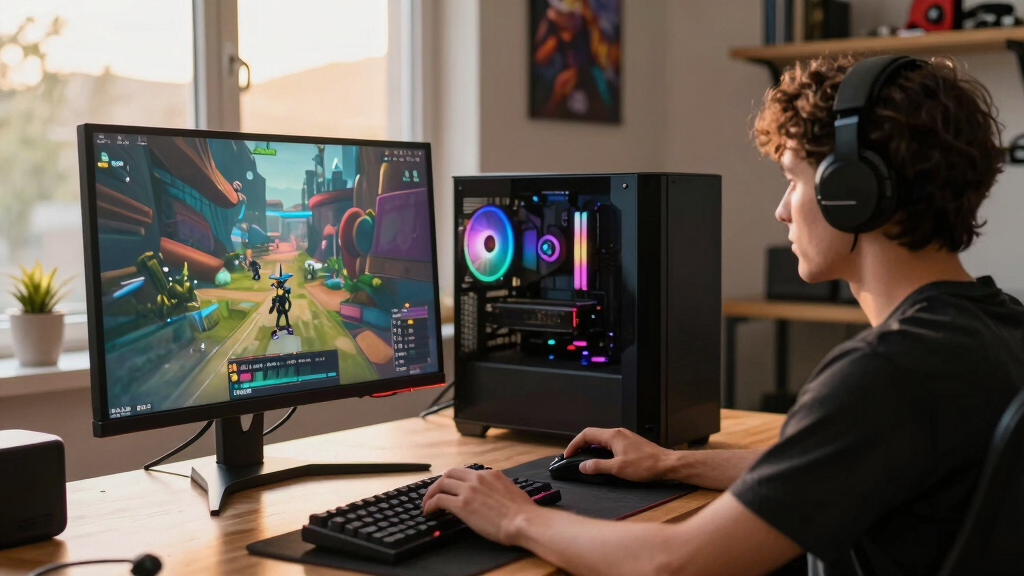
I ranked these fifteen machines the way a 4K buyer should shop: GPU tier first, because the graphics card decides most of your experience at this resolution, then CPU pairing, memory, storage, cooling, power delivery, and connectivity. An RTX 5080 build outranks an RTX 5070 Ti build almost every time at 4K, and a 5070 Ti or RX 9070 XT outranks a plain 5070. Within the same GPU tier, I gave the edge to systems with X3D processors, 32GB of DDR5, and 360mm liquid cooling, since those choices protect frame pacing and leave upgrade headroom.
Price set the tiebreakers. Machines that charge flagship money for midrange parts — or hide cuts like 16GB of RAM, Wi-Fi 5, or unspecified CPUs — dropped below rivals with the same headline GPU. Where two systems were evenly matched, I favored the one with the better power supply and case airflow, because those determine how well the rig holds boost clocks through long sessions. The result is an ordering that tracks real 4K frame rates per dollar, not spec-sheet bingo.
| 4k gaming PC | Operating System |
|---|---|
| Lenovo Legion Tower 5i Gaming | — |
| KOTIN Prebuilt Gaming PC RTX 5 | Windows 11 Home |
| Skytech Gaming O11 Vision Gami | Windows 11 Home |
| Skytech Gaming Shadow 5 Gaming | Windows 11 Home |
| Skytech Gaming King 95 Gaming | Windows 11 Home 64-bit |
| MSI Codex Z2 Gaming Desktop | Windows 11 Home |
| ASUS ROG GM700 | Windows 11 Home |
| CyberPowerPC Gamer Xtreme | Windows 11 Home |
| Skytech Gaming Azure 3 | Windows 11 Home |
| Skytech Gaming O11 Vision | Windows 11 Home |
| Skytech Gaming King 95 | Windows 11 Home 64-bit |
| Horizon Autherium Dragon RGB | Windows 11 Pro |
| CyberPowerPC Gamer Xtreme | Windows 11 Home |
| ZOTAC MEK Gaming PC | — |
| iBUYPOWER Element | Windows 11 Home |
Factors to Consider When Choosing Best 4k Gaming PCs
The product reviews tell you which tower to buy; this section covers the judgment calls behind those picks. These are the factors I weighed for every machine in the ranking, plus the mistakes that most often separate a satisfying 4K purchase from an expensive regret.
The GPU Does Nearly All the Work at 4K
At 3840 x 2160 you’re pushing four times the pixels of 1080p, and in most games the graphics card becomes the ceiling long before anything else does. That’s why every machine in the top half of this roundup carries an RTX 5070 Ti, RX 9070 XT, or RTX 5080 — those are the tiers where high settings at 4K stop being a negotiation. An RTX 5070 gets you there with upscaling and a few trimmed settings, and an RTX 5060 Ti needs aggressive upscaling plus realistic expectations. If your budget forces a choice between a stronger GPU with a midrange CPU or the reverse, take the stronger GPU every time at this resolution. The reverse imbalance is the single most common mistake in this category: a Ryzen 9 or Core i9 paired with a 5060 Ti will lose to a Ryzen 7 with a 5070 Ti in nearly every 4K game. Buy the GPU tier first, then fill in the rest of the sheet.
Why X3D Chips Still Matter at 4K
Conventional wisdom says the CPU barely matters at 4K, and it’s half right. In a pure GPU-bound scene, a Ryzen 7 9700X and a Ryzen 7 9850X3D will land within a few frames of each other. Where the X3D chips earn their premium is in the messy stuff: simulation-heavy games, MMO cities, open-world streaming hitches, and the 1% lows that decide whether motion feels smooth or stuttery. That gap widens if you pair the PC with a high-refresh 4K monitor, where the CPU has more chances to become the limiter. My rule of thumb: if the X3D version of a build costs within about $150 of the standard version, take it. If the gap is bigger, put that money toward the GPU tier instead, because the graphics card still pays a larger dividend at 4K. The one exception is buyers who also stream, edit, or compile — a 12-core chip like the Ryzen 9 9900X pulls ahead there in ways a gaming cache boost can’t match.
Memory, Storage, and the 16GB Trap
32GB of DDR5 is the practical standard for this category in 2026, and it’s one reason the top-ranked machines all carry it. Modern releases with high-resolution texture packs, plus a browser, Discord, and a launcher stack in the background, will push past 16GB more often than spec sheets suggest. A 16GB machine like the Skytech Shadow 5 isn’t broken — it just asks you to manage background apps and budget for a RAM upgrade sooner. Storage follows similar math: a 1TB NVMe drive holds maybe six to eight large modern installs, so heavy libraries argue for the 2TB configurations. The good news is that both are cheap, easy upgrades later, which is why I weighted them below GPU and CPU in the ranking. Pay for the parts that are hard to change; treat RAM and storage as adjustable.
Cooling, Power, and the Specs That Age the Rig
Sustained 4K sessions push a GPU to its power limit for hours, and that’s where case airflow and cooling stop being cosmetic. A 360mm liquid cooler, like the ones in the KOTIN and King 95 builds, keeps boost clocks stable and fan noise down in a way budget air towers can’t match. The power supply matters just as much for the long game: an 850W 80+ Gold unit leaves clean headroom for a future GPU upgrade, while a no-name 600W unit quietly caps the rig’s upgrade path. Glass showcase cases like the O11 Vision look great on a desk, but only when the fan layout compensates for the restricted front intake — worth checking before you buy on looks alone. These details rarely headline a product listing, yet they decide whether the PC performs the same in year three as it did in week one.
Upscaling Is Your Budget Lever
Every card in this roundup supports some form of AI upscaling, and learning to use it is the biggest money-saver available to a 4K buyer. NVIDIA’s DLSS 4 on the RTX 50 series pairs upscaling with multi frame generation, which can double or triple perceived frame rates in supported titles at a modest cost to latency and image sharpness. AMD’s FSR 4 on the RX 9070 XT has closed much of the image-quality gap, though its game support list still trails DLSS. The practical takeaway: a well-configured RTX 5070 with DLSS Quality mode often looks and plays better than native rendering on a card one tier up. Buyers who refuse upscaling on principle should budget for the RTX 5080 class or accept lower settings. Everyone else can treat upscaling support as a discount on a GPU tier — and shop accordingly.
Common Mistakes 4K Buyers Make
Four mistakes account for most buyer’s remorse in this category. The first is paying for a showcase case over a GPU tier — RGB and panoramic glass add nothing to frame rates, and several mid-list machines make exactly that trade. The second is assuming any desktop labeled gaming PC is 4K-capable; the RTX 5060 Ti entries here do 4K only with heavy upscaling, and they’re honestly better 1440p machines. The third is ignoring the monitor pairing: a 4K rig on a 60Hz panel wastes the hardware, and a high-refresh 4K panel on a 5060 Ti wastes the panel. The fourth is overlooking quiet spec cuts — Wi-Fi 5 on a 2026 flagship, an unspecified Core i9 generation, 16GB of RAM at a premium price. Read the full sheet, not the headline, and the ranking logic in this roundup will start to look obvious.
Frequently Asked Questions
Can an RTX 5060 Ti PC actually handle 4K gaming?
Yes, but only on the right terms. With DLSS set to Quality mode and frame generation on, an RTX 5060 Ti build like the CyberPowerPC Gamer Xtreme (i7-14700F) or Skytech Shadow 5 will run most games at 4K with medium-to-high settings, and lighter esports titles will fly. Native 4K at ultra settings is outside this card’s reach in demanding releases, and its VRAM budget already feels tight with high-resolution texture packs. If 4K is your primary goal rather than an occasional bonus, I’d stretch to an RTX 5070 Ti machine — the experience difference is large enough to feel every session. If you’re mainly a 1440p player who wants 4K headroom for less demanding games, the 5060 Ti entries are the cheapest respectable way in.
Do I need a Ryzen X3D processor for 4K gaming?
Need is too strong a word — at 4K the graphics card limits frame rates in most games, so a standard Ryzen 7 or Core Ultra 7 will get you most of the way there. What the X3D chips add is consistency: their extra cache lifts minimum frame rates in CPU-sensitive titles like simulation games, strategy games, and large multiplayer matches, which smooths out the stutters you feel most. The effect grows if you own a high-refresh 4K monitor, where the CPU has more room to become the bottleneck. My advice is to treat X3D as a tiebreaker, not a mandate. If two builds sit within roughly $150 of each other, take the X3D one. If choosing X3D means dropping a GPU tier, skip it — the GPU upgrade pays more at 4K.
How much should I spend on a 4K gaming PC in 2026?
Based on this lineup, three price bands cover most buyers. Around $1,100 to $1,400 gets you an RTX 5060 Ti machine that reaches 4K through upscaling — acceptable for mixed 1440p and 4K use. The $1,600 to $2,100 band is the sweet spot, where RTX 5070 Ti and RX 9070 XT builds like the Legion Tower 5i and Skytech Azure 3 deliver genuinely comfortable 4K with modest settings compromises. Above roughly $2,500 you’re in RTX 5080 territory with the King 95, buying headroom for native rendering and longer relevance. Returns diminish fast past that point. Whatever band you land in, remember to budget for the monitor itself — a capable 4K high-refresh panel adds $400 to $800 and is easy to forget until the tower arrives.
Should I buy an all-AMD build or an NVIDIA-based one for 4K?
Both camps have a real case in 2026, and this roundup includes strong examples of each. All-AMD machines like the Skytech Azure 3 and ASUS ROG GM700 pair the RX 9070 XT’s 16GB of VRAM with excellent rasterization performance per dollar, and FSR 4 has narrowed the upscaling gap considerably. NVIDIA builds counter with a more mature DLSS 4 ecosystem, stronger ray tracing, multi frame generation, and better support in creative and AI-adjacent workloads. If your use is almost purely gaming and price-per-frame drives the decision, the AMD options usually win the math. If you care about ray-traced visuals, stream with NVENC, or use the PC for work beyond games, the NVIDIA builds justify their premium. There’s no wrong answer here — only a wrong answer for your specific mix of games and tasks.
Is a prebuilt 4K PC worth it, or should I build my own?
The old price penalty for prebuilts has mostly closed. With GPU and memory pricing where it sits in 2026, machines like the Lenovo Legion Tower 5i often cost within a few percent of the same parts bought separately, and they add a single warranty, assembled cable work, and a working Windows install. Building your own still wins on part-level control — you pick the exact PSU, motherboard, and case, and you skip the quiet spec cuts some prebuilts hide. The honest split: if you’ve never built a PC or your time is worth more than the small savings, buy from an established integrator and check the PSU and RAM specs before checkout. If you enjoy the process and want full control over every component, building remains the better value in quality terms even when the dollar math is a wash.
Conclusion
Fifteen machines is a lot to hold in your head, so here’s the short version by buyer type. If you want the best overall 4K gaming PC and the budget allows it, the Skytech Gaming King 95 with the RTX 5080 is the machine I’d buy — it’s the only pick here that treats native 4K as routine rather than aspirational. For the best value, the Skytech Azure 3 delivers near-flagship 4K performance with an all-AMD build at several hundred dollars less, with the Lenovo Legion Tower 5i close behind for buyers who prefer NVIDIA’s feature set. The best premium showpiece is the ASUS ROG GM700, which wraps top-tier parts in the strongest build quality and brand polish of the group. Beginners should start with the Legion Tower 5i: mainstream support, sensible parts, and three months of Game Pass to stock the library on day one. If you’re shopping on the tightest budget, the CyberPowerPC Gamer Xtreme with the i7-14700F is the cheapest honest entry point — just plan on leaning on DLSS. And if desk presence matters as much as frame rates, the Skytech O11 Vision is the one your setup photos will thank you for. Match the machine to how you actually play, not to the biggest number on the box, and any of the top five will serve you well into the next GPU generation.