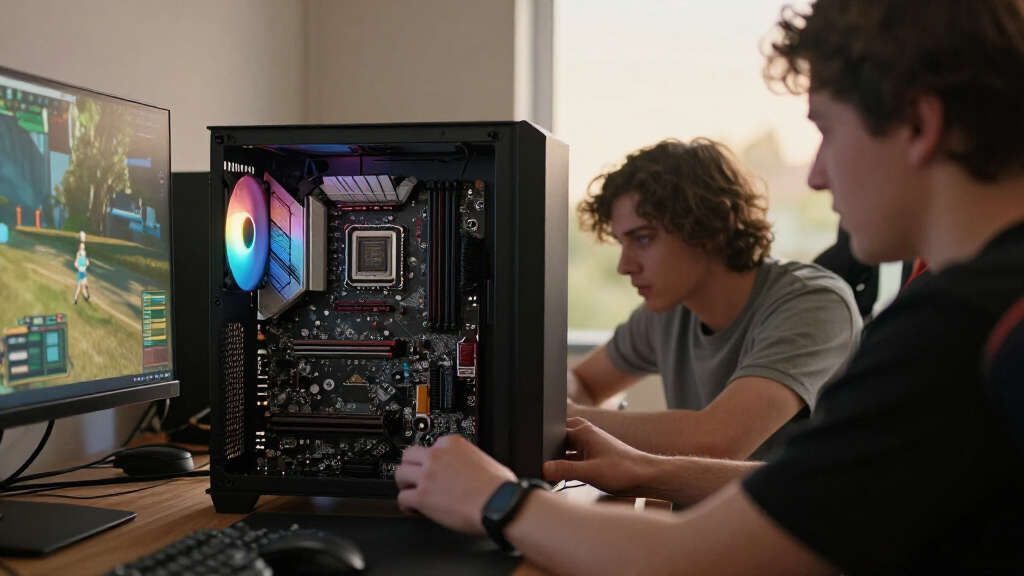

Choosing the best LGA 1700 motherboards requires balancing chipset capabilities with your specific workload needs. The ASUS TUF Gaming Z790-Plus WiFi stands out as the Best Overall pick for its robust power delivery and reliable connectivity. For budget-conscious builders, the MSI PRO B760-P WiFi DDR4 offers excellent value without sacrificing essential features. The primary tradeoff in this category lies between overclocking headroom on Z790 boards and the cost savings of B760 or H610 platforms. Continue reading to see which option aligns with your build goals and budget constraints.

Play games on Amazon Luna for your game nights, included with Prime
- A rotating selection of games, no download needed
- Play on TV, laptop or phone
- Fast, free delivery for your gear, too
Complete the kit

Key Takeaways
- Z790 chipsets remain the only viable choice for CPU overclocking, making them mandatory for enthusiast K-series processors.
- DDR5 support is now standard on most mid-to-high-end boards, but DDR4 variants still offer significant cost savings for non-gaming tasks.
- The ASUS TUF Gaming series consistently delivers better VRM thermal performance than similarly priced MSI PRO and Gigabyte Eagle models.
- Entry-level H610 boards lack sufficient power phases for sustained heavy loads, limiting them to basic office or media PC builds.
- WiFi 6E and 2.5Gb Ethernet are becoming standard on B760 boards, eliminating the need for separate network cards in most modern builds.
| ASUS Prime B760M-A D4 Micro-ATX Motherboard |  | Best Micro-ATX Pick with Four RAM Slots | Socket and chipset: LGA 1700; Intel B760 | Form factor: Micro-ATX | Compatible processors: 12th- and 13th-Gen Intel Core, Pentium Gold, and Celeron | VIEW LATEST PRICE | See Our Full Breakdown |
| MSI PRO Z790-A WiFi II ATX Motherboard |  | Best for Storage-Heavy DDR5 Builds | Socket and chipset: LGA 1700; Intel Z790 | Form factor: ATX | Compatible processors: Intel Core 12th, 13th, and 14th Gen; Pentium Gold and Celeron | VIEW LATEST PRICE | See Our Full Breakdown |
| ASUS TUF Gaming Z790-Plus WiFi ATX Motherboard |  | Best for Gaming-Focused Z790 Builds | Socket and chipset: LGA 1700; Intel Z790 | Form factor: ATX | Compatible processors: 12th-, 13th-, and 14th-Gen Intel Core | VIEW LATEST PRICE | See Our Full Breakdown |
| ASUS B760M-AYW WiFi D4 II MicroATX Motherboard |  | Best Compact Pick with Built-In Wi-Fi | Socket and chipset: LGA 1700; Intel B760 | Form factor: MicroATX | Compatible processors: 12th-, 13th-, and 14th-Gen Intel Core; Pentium Gold and Celeron | VIEW LATEST PRICE | See Our Full Breakdown |
| MSI PRO B760-P WiFi DDR4 ATX Motherboard |  | Best Value DDR4 ATX Upgrade Platform | Socket and chipset: LGA 1700; Intel B760 | Form factor: ATX | Compatible processors: 12th-, 13th-, and 14th-Gen Intel Core; Pentium Gold and Celeron | VIEW LATEST PRICE | See Our Full Breakdown |
| ASUS TUF Gaming B760-Plus WiFi ATX Motherboard |  | Best B760 Gaming Pick | Form factor: ATX | Chipset: Intel B760 | Processor socket: LGA 1700 | VIEW LATEST PRICE | See Our Full Breakdown |
| ASUS Z790-AYW WiFi W II ATX Motherboard |  | Best White Z790 Build | Form factor: ATX | Chipset: Intel Z790 | Processor socket: LGA 1700 | VIEW LATEST PRICE | See Our Full Breakdown |
| GIGABYTE Z790 AORUS Elite AX ATX Motherboard |  | Best for Multiple M.2 Drives | Form factor: ATX | Chipset and socket: Intel Z790, LGA 1700 | Compatible processors: Intel Core 12th, 13th, and 14th generation | VIEW LATEST PRICE | See Our Full Breakdown |
| GIGABYTE Z790 Eagle AX ATX Motherboard for Intel LGA 1700 |  | Best Z790 Feature Balance | Form factor: ATX | Chipset and socket: Intel Z790, LGA 1700 | Compatible processors: Intel Core 12th, 13th, and 14th Generation | VIEW LATEST PRICE | See Our Full Breakdown |
| ASUS ROG Maximus Z790 Hero WiFi 6E ATX Gaming Motherboard | 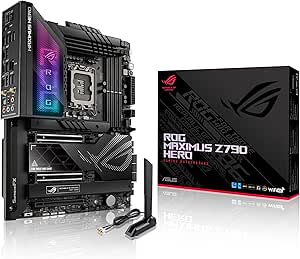 | Best Premium Overclocking Board | Form factor: ATX | Chipset and socket: Intel Z790, LGA 1700 | Supported processors: 12th, 13th, and 14th Gen Intel Core | VIEW LATEST PRICE | See Our Full Breakdown |
| MSI PRO B760M-P DDR4 Micro-ATX Motherboard |  | Best Value DDR4 Upgrade | Form factor: Micro-ATX | Socket and chipset: LGA 1700; Intel B760 | Compatible processors: Intel Core 12th, 13th, and 14th Gen; Pentium Gold; Celeron | VIEW LATEST PRICE | See Our Full Breakdown |
| ASUS Z790 MAX GAMING WIFI7 ATX Motherboard |  | Best for Wi-Fi 7 and Modern Connectivity | Form factor: ATX | Socket and chipset: LGA 1700; Intel Z790 | Compatible processors: Intel Core 12th, 13th, and 14th Gen; Pentium Gold; Celeron | VIEW LATEST PRICE | See Our Full Breakdown |
| MSI PRO H610M-G DDR4 Micro-ATX Motherboard |  | Best for Basic, Compact Builds | Form factor: Micro-ATX | Socket and chipset: LGA 1700; Intel H610 | Compatible processors: Intel Core 12th, 13th, and 14th Gen; Pentium Gold; Celeron | VIEW LATEST PRICE | See Our Full Breakdown |
| GIGABYTE B760M Gaming Plus WiFi DDR4 Micro-ATX Motherboard |  | Best DDR4 Expansion Pick | Form factor: Micro-ATX | Socket and chipset: LGA 1700; Intel B760 | Compatible processors: Intel Core 12th, 13th, and 14th Gen | VIEW LATEST PRICE | See Our Full Breakdown |
| ASRock H610M-HDV/M.2 R2.0 Micro-ATX Motherboard |  | Best for Multi-Display Budget Builds | Form factor: Micro-ATX | Socket and chipset: LGA 1700; Intel H610 | Compatible processors: Intel Core 12th, 13th, and 14th Gen | VIEW LATEST PRICE | See Our Full Breakdown |
| LGA 1700 motherboard | Form factor | Memory | Compatible processors | Socket and chipset |
|---|---|---|---|---|
| ASUS Prime B760M-A D4 Micro-AT | Micro-ATX | DDR4; 4 slots | 12th- and 13th-Gen Intel Core, Pentium Gold, and Celeron | LGA 1700; Intel B760 |
| MSI PRO Z790-A WiFi II ATX Mot | ATX | 4 DDR5 DIMM slots; up to 256 GB | Intel Core 12th, 13th, and 14th Gen; Pentium Gold and Celeron | LGA 1700; Intel Z790 |
| ASUS TUF Gaming Z790-Plus WiFi | ATX | DDR5; up to 256 GB | 12th-, 13th-, and 14th-Gen Intel Core | LGA 1700; Intel Z790 |
| ASUS B760M-AYW WiFi D4 II Micr | MicroATX | DDR4; 2 slots; up to 96 GB | 12th-, 13th-, and 14th-Gen Intel Core; Pentium Gold and Celeron | LGA 1700; Intel B760 |
| MSI PRO B760-P WiFi DDR4 ATX M | ATX | Dual-channel DDR4; 4 slots; up to 128 GB | 12th-, 13th-, and 14th-Gen Intel Core; Pentium Gold and Celeron | LGA 1700; Intel B760 |
| ASUS TUF Gaming B760-Plus WiFi | ATX | DDR5, 4 slots, up to 128 GB | — | — |
| ASUS Z790-AYW WiFi W II ATX Mo | ATX | DDR5, 4 slots, up to 192 GB | Intel Core 12th, 13th, and 14th Gen; Pentium Gold; Celeron | — |
| GIGABYTE Z790 AORUS Elite AX A | ATX | DDR5, 4 DIMM slots, up to 128 GB | Intel Core 12th, 13th, and 14th generation | — |
| GIGABYTE Z790 Eagle AX ATX Mot | ATX | DDR5, dual channel, 4 DIMM slots | Intel Core 12th, 13th, and 14th Generation | — |
| ASUS ROG Maximus Z790 Hero WiF | ATX | DDR5, up to 128 GB; listed clock speed 7000 MHz | — | — |
| MSI PRO B760M-P DDR4 Micro-ATX | Micro-ATX | DDR4 dual-channel; 4 slots; up to 128 GB | Intel Core 12th, 13th, and 14th Gen; Pentium Gold; Celeron | LGA 1700; Intel B760 |
| ASUS Z790 MAX GAMING WIFI7 ATX | ATX | DDR5; up to 192 GB | Intel Core 12th, 13th, and 14th Gen; Pentium Gold; Celeron | LGA 1700; Intel Z790 |
| MSI PRO H610M-G DDR4 Micro-ATX | Micro-ATX | DDR4; 2 slots; up to 64 GB | Intel Core 12th, 13th, and 14th Gen; Pentium Gold; Celeron | LGA 1700; Intel H610 |
| GIGABYTE B760M Gaming Plus WiF | Micro-ATX | DDR4; 4 slots; up to 128 GB | Intel Core 12th, 13th, and 14th Gen | LGA 1700; Intel B760 |
| ASRock H610M-HDV/M.2 R2.0 Micr | Micro-ATX | DDR4; 2 slots; up to 64 GB | Intel Core 12th, 13th, and 14th Gen | LGA 1700; Intel H610 |
More Details on Our Top Picks
ASUS Prime B760M-A D4 Micro-ATX Motherboard
I’d choose the ASUS Prime B760M-A D4 for a compact LGA 1700 build that still needs room to expand memory. Unlike the ASUS B760M-AYW WiFi D4 II, it has four DDR4 slots, which gives builders more flexibility to add RAM later; the tradeoff is that the AYW includes built-in Wi-Fi 6, while this Prime model lists wired networking only. Two M.2 slots and PCIe 4.0 cover the core needs of a mainstream gaming or work PC, and 2.5Gb Ethernet provides a faster wired connection than standard Gigabit networking. Its HDMI and DisplayPort outputs also suit compatible processor graphics. This is a practical, space-conscious option, but buyers wanting DDR5, onboard Wi-Fi, or a larger expansion layout should look at the MSI PRO Z790-A WiFi II instead.
Pros:- Four DDR4 memory slots allow more flexible capacity upgrades
- Two M.2 slots and PCIe 4.0 support common fast-storage and graphics builds
- 2.5Gb Ethernet and multiple video outputs add useful connectivity
- Micro-ATX size, heatsinks, fan controls, and Aura Sync headers suit compact builds
Cons:- DDR4-only design rules out DDR5 memory
- No built-in Wi-Fi is listed
- Two M.2 slots offer less storage expansion than the MSI PRO Z790-A WiFi II
Best for: Micro-ATX builders who want four DDR4 memory slots, two M.2 drives, and fast wired networking in a compact LGA 1700 system.
Not ideal for: Buyers who need built-in Wi-Fi, DDR5 memory, or more storage and expansion options than a B760M board provides.
- Socket and chipset:LGA 1700; Intel B760
- Form factor:Micro-ATX
- Compatible processors:12th- and 13th-Gen Intel Core, Pentium Gold, and Celeron
- Memory:DDR4; 4 slots
- Storage:2 M.2 slots
- Graphics interface:PCIe 4.0
- Networking:Realtek 2.5Gb Ethernet
- Video outputs:DisplayPort and 2 HDMI
Our verdict“Choose the Prime B760M-A D4 for a compact, wired DDR4 build where four memory slots matter more than onboard Wi-Fi or Z790 expansion.”
MSI PRO Z790-A WiFi II ATX Motherboard
The MSI PRO Z790-A WiFi II is the strongest fit here for a builder who wants broad storage capacity and current-generation connectivity on LGA 1700. Its four PCIe Gen4 M.2 slots make it easier to build around several fast drives than the two-slot ASUS Prime B760M-A D4 or ASUS B760M-AYW WiFi D4 II. Z790, a PCIe 5.0 graphics slot, and support for 12th-, 13th-, and 14th-Gen Intel Core processors give it more headroom than the B760 boards in this group. Wi-Fi 6E, Bluetooth 5.3, 2.5Gb Ethernet, and USB 20Gbps Type-C also cover a wide range of connections. The cost of that flexibility is an ATX footprint and a DDR5-only memory platform; buyers keeping DDR4 should choose an MSI PRO B760-P WiFi DDR4 instead.
Pros:- Four PCIe Gen4 M.2 slots support a storage-heavy build
- PCIe 5.0 x16 graphics slot and Z790 chipset provide an expansive platform
- Wi-Fi 6E, Bluetooth 5.3, and 2.5Gb Ethernet offer flexible networking
- USB 20Gbps Type-C and six SATA ports broaden device and drive connections
Cons:- DDR5-only memory support means existing DDR4 cannot be reused
- ATX dimensions rule it out for many compact cases
- Memory speeds above the standard specification require overclocking
Best for: ATX builders using DDR5 who want four M.2 drives, Wi-Fi 6E, and a PCIe 5.0 graphics slot on an LGA 1700 system.
Not ideal for: DDR4 owners, compact-case builders, or anyone who does not need Z790-level storage and connectivity options.
- Socket and chipset:LGA 1700; Intel Z790
- Form factor:ATX
- Compatible processors:Intel Core 12th, 13th, and 14th Gen; Pentium Gold and Celeron
- Memory:4 DDR5 DIMM slots; up to 256 GB
- PCIe graphics slot:PCIe 5.0 x16
- M.2 storage:4 PCIe Gen4 x4 slots
- Networking:Wi-Fi 6E, Bluetooth 5.3, and 2.5Gb Ethernet
- USB-C:USB 20Gbps Type-C
- SATA:6 ports
Our verdict“Pick this MSI for a DDR5 ATX build where four M.2 slots and modern connectivity matter more than reusing DDR4 or saving space.”
ASUS TUF Gaming Z790-Plus WiFi ATX Motherboard
The ASUS TUF Gaming Z790-Plus WiFi suits builders who want a gaming-oriented Z790 board without stepping up to a more elaborate flagship platform. It pairs DDR5 and PCIe 5.0 with four M.2 slots, Wi-Fi 6, and 2.5Gb Ethernet, giving a gaming system room for fast storage and a next-generation graphics card. Compared with the MSI PRO Z790-A WiFi II, it lists Wi-Fi 6 rather than Wi-Fi 6E and has four SATA ports rather than six, while adding a Thunderbolt 4 header for a compatible expansion card. Fan controls and heatsinks help support a system with several heat-producing components. That header is not a complete Thunderbolt connection by itself, and buyers who prioritize wireless speed or the most storage connections may find MSI’s board a better match.
Pros:- DDR5 and PCIe 5.0 support suit a modern gaming build
- Four M.2 slots provide room for multiple fast drives
- Wi-Fi 6 and 2.5Gb Ethernet support wired and wireless networking
- Thunderbolt 4 header allows an add-in connectivity option
Cons:- Thunderbolt 4 requires compatible additional hardware rather than providing a finished port
- Wi-Fi 6 is a step below the Wi-Fi 6E on the MSI PRO Z790-A WiFi II
- Four SATA ports provide less capacity for SATA drives than that MSI alternative
Best for: Gaming PC builders who want a DDR5 Z790 board with PCIe 5.0 graphics support, four M.2 slots, and a Thunderbolt 4 expansion header.
Not ideal for: Buyers who need built-in Thunderbolt ports, Wi-Fi 6E, more than four SATA drives, or a DDR4-compatible board.
- Socket and chipset:LGA 1700; Intel Z790
- Form factor:ATX
- Compatible processors:12th-, 13th-, and 14th-Gen Intel Core
- Memory:DDR5; up to 256 GB
- Memory speed:Up to 7200 MHz
- Expansion:PCIe 5.0
- Storage:4 M.2 slots; 4 SATA ports
- Networking:Wi-Fi 6 and 2.5Gb Ethernet
- USB-C connectivity:Front USB 3.2 Gen 2 Type-C header; USB 3.2 Gen 2×2 Type-C; Thunderbolt 4 header
Our verdict“Choose the TUF Gaming Z790-Plus WiFi for a DDR5 gaming build that values four M.2 slots and PCIe 5.0 more than Wi-Fi 6E or extra SATA ports.”
ASUS B760M-AYW WiFi D4 II MicroATX Motherboard
For a small LGA 1700 build that needs wireless networking without an add-in card, I’d shortlist the ASUS B760M-AYW WiFi D4 II. It combines built-in Wi-Fi 6 and 2.5Gb Ethernet with DDR4 support and a PCIe 5.0 x16 slot, a useful mix for a compact system using a current graphics card. Compared with the ASUS Prime B760M-A D4, the AYW adds Wi-Fi and lists PCIe 5.0, but cuts memory expansion from four slots to two. Its two M.2 slots suit a straightforward boot-drive-plus-games layout; the MSI PRO B760-P WiFi DDR4 is a better fit if you want four memory slots and an ATX layout. This board’s 96 GB memory ceiling and single HDMI output make it a more focused choice than an all-purpose expansion platform.
Pros:- Built-in Wi-Fi 6 and 2.5Gb Ethernet provide both wireless and fast wired networking
- PCIe 5.0 x16 slot supports a current graphics-card build
- Micro-ATX size and two M.2 slots suit compact systems
- Supports 12th-, 13th-, and 14th-Gen Intel processors
Cons:- Two memory slots limit upgrade flexibility compared with the ASUS Prime B760M-A D4
- DDR4-only support excludes DDR5 memory
- 96 GB maximum capacity and one HDMI output limit some workstation and display setups
Best for: Compact PC builders who want onboard Wi-Fi 6, DDR4 support, and PCIe 5.0 graphics connectivity without adding a network card.
Not ideal for: Upgraders who want four RAM slots, a memory capacity above 96 GB, multiple display outputs, or extensive expansion.
- Socket and chipset:LGA 1700; Intel B760
- Form factor:MicroATX
- Compatible processors:12th-, 13th-, and 14th-Gen Intel Core; Pentium Gold and Celeron
- Memory:DDR4; 2 slots; up to 96 GB
- Graphics slot:PCIe 5.0 x16
- Storage:2 M.2 slots; 4 SATA ports
- Networking:Wi-Fi 6 and Realtek 2.5Gb Ethernet
- Video output:HDMI
- USB connectivity:Front and rear USB 5Gbps
Our verdict“Pick the B760M-AYW WiFi D4 II for a compact DDR4 system where onboard Wi-Fi and PCIe 5.0 matter more than extra RAM slots.”
MSI PRO B760-P WiFi DDR4 ATX Motherboard
The MSI PRO B760-P WiFi DDR4 makes the most sense for an ATX build that needs broad processor support and wants to keep using DDR4. Its four memory slots and 128 GB ceiling give it a clear capacity advantage over the two-slot ASUS B760M-AYW WiFi D4 II, while Wi-Fi 6E and Bluetooth 5.3 add wireless flexibility. A 12+1 Duet Rail power design, heatsink, and M.2 thermal protection are useful foundations for a mainstream system with several components. Compared with the ASUS Prime B760M-A D4, this MSI adds Wi-Fi and uses a full-size ATX layout, though its listed PCIe support is Gen4 rather than the Prime’s stated PCIe 4.0 class and it has no specified M.2 count here. It remains a DDR4-only B760 board, not a Z790 choice for buyers seeking the broadest expansion.
Pros:- Four DDR4 slots support up to 128 GB of memory
- Wi-Fi 6E, Bluetooth 5.3, and 2.5Gb LAN cover modern networking needs
- 12+1 Duet Rail power design and heatsinking support a mainstream LGA 1700 build
- ATX layout offers a larger board footprint than compact Micro-ATX alternatives
Cons:- DDR4-only memory support limits future memory-platform upgrades
- Memory speeds above the standard specification require overclocking
- PCIe 4.0 lacks the PCIe 5.0 graphics-slot support found on the ASUS B760M-AYW WiFi D4 II
Best for: ATX builders who want to reuse DDR4, install up to 128 GB of memory, and have Wi-Fi 6E alongside 2.5Gb wired networking.
Not ideal for: Buyers moving to DDR5, seeking a PCIe 5.0 graphics slot, or requiring a clearly specified high-count M.2 layout.
- Socket and chipset:LGA 1700; Intel B760
- Form factor:ATX
- Compatible processors:12th-, 13th-, and 14th-Gen Intel Core; Pentium Gold and Celeron
- Memory:Dual-channel DDR4; 4 slots; up to 128 GB
- Memory speed:Up to 5333+ MHz (OC)
- Networking:Wi-Fi 6E, Bluetooth 5.3, and 2.5Gb LAN
- Expansion:PCIe 4.0
- Storage:4 SATA 3 ports; M.2 support
- Power design:12+1 Duet Rail; 8-pin plus 4-pin CPU power connectors
Our verdict“Choose the MSI PRO B760-P WiFi DDR4 for an ATX build that prioritizes DDR4 capacity and Wi-Fi 6E over DDR5 or PCIe 5.0 graphics support.”
ASUS TUF Gaming B760-Plus WiFi ATX Motherboard
The ASUS TUF Gaming B760-Plus WiFi is a practical choice for an LGA 1700 gaming PC when you want DDR5, current connectivity, and a full-size ATX layout without stepping up to a Z790 board. Its PCIe 5.0 graphics support and three M.2 slots cover the main expansion needs of many builds, while Wi-Fi 6 and 2.5Gb Ethernet give you wired and wireless networking options. Compared with the GIGABYTE Z790 AORUS Elite AX, it has one fewer M.2 slot and a B760 chipset, so it is less suited to storage-heavy or chipset-tuning-focused systems. In return, its feature set is easier to match to a straightforward gaming build. The tradeoff is the required DDR5 memory, and its LGA 1700 socket limits CPU choice to supported Intel generations.
Pros:- Supports Intel Core processors from the 12th through 14th generations
- PCIe 5.0 graphics support and three M.2 slots
- Wi-Fi 6 and 2.5Gb Ethernet are built in
- Enhanced cooling features suit sustained gaming loads
Cons:- Requires DDR5 memory, so existing DDR4 kits cannot be reused
- B760 chipset is a less fitting choice for buyers seeking Z790 platform features
- LGA 1700 limits compatibility to supported Intel processor generations
Best for: Gamers building a DDR5-based 12th-, 13th-, or 14th-generation Intel system who want ATX expansion and built-in Wi-Fi without needing a Z790 chipset.
Not ideal for: Builders reusing DDR4 memory or planning a storage-heavy setup that would benefit from more than three M.2 slots.
- Form factor:ATX
- Chipset:Intel B760
- Processor socket:LGA 1700
- Memory:DDR5, 4 slots, up to 128 GB
- M.2 slots:3
- Graphics interface:PCI Express 5.0
- Networking:Wi-Fi 6, 2.5Gb Ethernet
- USB connectivity:USB 3.2 Type-C
Our verdict“Choose this TUF board for a balanced DDR5 gaming build; pick the Z790 AORUS Elite AX if you need a fourth M.2 slot or prefer its higher-tier chipset.”
ASUS Z790-AYW WiFi W II ATX Motherboard
The ASUS Z790-AYW WiFi W II gives a white-themed LGA 1700 build a Z790 foundation without reaching for the extensive extras of the ROG Maximus Z790 Hero. It supports DDR5 up to 192 GB, a PCIe 5.0 x16 graphics slot, and three M.2 drives, making it a capable fit for gaming and general-purpose systems across Intel’s 12th, 13th, and 14th generations. Wi-Fi 6 and 2.5Gb LAN cover common network needs, while the Thunderbolt (USB4) header support gives compatible builds a path to that connectivity. Compared with the GIGABYTE Z790 AORUS Elite AX, this ASUS board lists a higher memory ceiling but has one fewer M.2 slot. Its Wi-Fi is also Wi-Fi 6 rather than Wi-Fi 6E, and buyers should check whether its appearance and header options suit their case and peripherals.
Pros:- White ATX design for coordinated builds
- Z790 chipset with support for 12th-, 13th-, and 14th-generation Intel processors
- DDR5 support up to 192 GB and a PCIe 5.0 x16 slot
- Includes Wi-Fi 6, 2.5Gb LAN, and Thunderbolt (USB4) header support
Cons:- Wi-Fi 6 is an older wireless standard than the Wi-Fi 6E on both listed GIGABYTE Z790 boards
- Three M.2 slots provide less drive expansion than the Z790 AORUS Elite AX
- Requires a compatible LGA 1700 processor and DDR5 memory
Best for: Builders planning a white ATX PC around a supported Intel Core, Pentium Gold, or Celeron processor who want Z790 and high DDR5 capacity.
Not ideal for: Buyers who need Wi-Fi 6E, four M.2 slots, or a board selected primarily for extensive premium connectivity.
- Form factor:ATX
- Chipset:Intel Z790
- Processor socket:LGA 1700
- Compatible processors:Intel Core 12th, 13th, and 14th Gen; Pentium Gold; Celeron
- Memory:DDR5, 4 slots, up to 192 GB
- Graphics interface:PCI Express 5.0 x16
- M.2 slots:3
- Networking:Wi-Fi 6, 2.5Gb LAN
- USB and storage connections:Thunderbolt (USB4) header support; 4 SATA ports
Our verdict“Pick this board for a white Z790 build with a generous listed memory ceiling, but favor the Z790 AORUS Elite AX for four M.2 slots and Wi-Fi 6E.”
GIGABYTE Z790 AORUS Elite AX ATX Motherboard
For an LGA 1700 system with several fast drives, the GIGABYTE Z790 AORUS Elite AX stands out for its four PCIe 4.0 x4 M.2 slots—one more than the ASUS Z790-AYW WiFi W II and the Z790 Eagle AX. That extra slot can reduce pressure to add storage cards or replace existing drives as a library grows. It also pairs DDR5 support with Wi-Fi 6E, 2.5GbE, USB-C, and a PCIe 5.0 slot, giving it a useful mix for gaming and productivity builds. The listed 16+1+2-phase power design and thermal guards support a more demanding component setup. The tradeoffs are DDR5-only memory and a listed maximum of 128 GB, below the 192 GB specified for the ASUS Z790-AYW. Its four M.2 slots are PCIe 4.0 x4, not PCIe 5.0.
Pros:- Four PCIe 4.0 x4 M.2 slots offer the most listed onboard M.2 capacity in this batch
- Wi-Fi 6E and 2.5GbE are included
- PCIe 5.0 support and USB 3.2 Gen 2×2 Type-C connectivity
- 16+1+2-phase power design and thermal guards support component cooling
Cons:- The four M.2 slots are PCIe 4.0 x4 rather than PCIe 5.0
- Listed memory capacity tops out at 128 GB, lower than the ASUS Z790-AYW WiFi W II
- Requires DDR5 memory and a compatible LGA 1700 processor
Best for: LGA 1700 builders who plan to install several M.2 SSDs and want Wi-Fi 6E, DDR5, and Z790 connectivity on an ATX board.
Not ideal for: Buyers who need more than 128 GB of listed memory capacity, want M.2 storage running at PCIe 5.0, or are reusing DDR4.
- Form factor:ATX
- Chipset and socket:Intel Z790, LGA 1700
- Compatible processors:Intel Core 12th, 13th, and 14th generation
- Memory:DDR5, 4 DIMM slots, up to 128 GB
- Power design:16+1+2 phases with 70A power stages
- M.2 storage:4 PCIe 4.0 x4 slots
- Networking:Wi-Fi 6E, 2.5GbE
- USB:USB 3.2 Gen 2×2 Type-C
- SATA ports:6
Our verdict“Choose the AORUS Elite AX if four onboard M.2 slots and Wi-Fi 6E matter more than the ASUS Z790-AYW’s higher listed memory capacity.”
GIGABYTE Z790 Eagle AX ATX Motherboard for Intel LGA 1700
The GIGABYTE Z790 Eagle AX offers a straightforward way to get Z790 and Wi-Fi 6E in an LGA 1700 DDR5 build. It supports Intel Core processors from the 12th through 14th generations, has four memory slots, and pairs USB-C 3.2 Gen 2×2 with 2.5GbE and three M.2 slots. That makes it a sensible middle ground for buyers who want modern connectivity but do not need the four M.2 slots of the Z790 AORUS Elite AX or the extensive storage and Thunderbolt 4 provision on the ROG Maximus Z790 Hero. M.2 thermal guards and a digital VRM design add practical support for a populated build. One specification deserves verification before purchase: the supplied information lists maximum RAM as both 128 GB and 256 GB. The listed port and SATA details may also be incomplete.
Pros:- Supports Intel Core processors from the 12th through 14th generations
- Wi-Fi 6E, 2.5GbE, and fast USB-C connectivity
- Three M.2 slots with thermal guards
- Z790 chipset and four DDR5 DIMM slots
Cons:- Maximum RAM is inconsistently listed as 128 GB and 256 GB
- Supplied port and SATA information may be incomplete or inconsistent
- Three M.2 slots are fewer than on the Z790 AORUS Elite AX
Best for: Builders who want an ATX Z790 DDR5 board with Wi-Fi 6E and USB-C but do not need four M.2 drives or premium Thunderbolt features.
Not ideal for: Buyers who need confirmed memory capacity or complete port details before choosing, or who require four M.2 slots.
- Form factor:ATX
- Chipset and socket:Intel Z790, LGA 1700
- Compatible processors:Intel Core 12th, 13th, and 14th Generation
- Memory:DDR5, dual channel, 4 DIMM slots
- Maximum RAM:Listed inconsistently as 128 GB and 256 GB
- M.2 storage:3 slots
- Networking:Wi-Fi 6E, 2.5GbE
- USB:USB-C 3.2 Gen 2×2
- Memory clock speed:4400 MHz
Our verdict“Choose the Z790 Eagle AX for a less storage-heavy Z790 build with Wi-Fi 6E, but verify its memory ceiling and board connections before buying.”
ASUS ROG Maximus Z790 Hero WiFi 6E ATX Gaming Motherboard
The ASUS ROG Maximus Z790 Hero is the premium choice here for builders who can use its unusually broad set of enthusiast features. Its 20+1 power stages rated for 90 A, cooling controls, and overclocking tools are aimed at high-performance LGA 1700 systems, while five M.2 slots and six SATA ports give storage-heavy builds room to grow. Dual Thunderbolt 4 ports add a connection option the other boards in this batch do not list; the Z790 AORUS Elite AX, for example, offers four M.2 slots but no listed Thunderbolt ports. The Hero also includes Wi-Fi 6E, Bluetooth 5.2, and 2.5Gb Ethernet. That breadth is excessive for a basic gaming PC, and its listed maximum of 128 GB is lower than the ASUS Z790-AYW WiFi W II’s 192 GB. Choose it for the features, not merely the Z790 name.
Pros:- 20+1 power stages rated for 90 A with overclocking and cooling tools
- Five M.2 slots and six SATA ports
- Two Thunderbolt 4 ports
- Wi-Fi 6E, Bluetooth 5.2, and 2.5Gb Ethernet
Cons:- Its extensive feature set is unnecessary for many standard gaming builds
- Listed memory capacity is 128 GB, below the ASUS Z790-AYW WiFi W II’s 192 GB
- Requires DDR5 memory and a supported LGA 1700 Intel processor
Best for: Enthusiasts building an LGA 1700 system around overclocking, multiple storage drives, and Thunderbolt 4 peripherals.
Not ideal for: Basic gaming or office builds that will not use its premium power, storage, or Thunderbolt features, and buyers who need more than 128 GB of RAM.
- Form factor:ATX
- Chipset and socket:Intel Z790, LGA 1700
- Supported processors:12th, 13th, and 14th Gen Intel Core
- Memory:DDR5, up to 128 GB; listed clock speed 7000 MHz
- Power stages:20+1, rated for 90 A
- Storage:5 M.2 slots, 6 SATA ports
- Networking:Wi-Fi 6E, Bluetooth 5.2, Intel 2.5Gb Ethernet
- Thunderbolt:2 Thunderbolt 4 ports
Our verdict“Pick the ROG Maximus Z790 Hero when you will use its overclocking tools, five M.2 slots, and dual Thunderbolt 4; otherwise, the AORUS Elite AX is a simpler fit.”
MSI PRO B760M-P DDR4 Micro-ATX Motherboard
The MSI PRO B760M-P DDR4 is a practical choice for a compact LGA 1700 build that needs more memory flexibility than entry-level H610 boards provide. Its four DDR4 slots support up to 128 GB, while B760 and PCIe 4.0 give it a broader feature base than the MSI PRO H610M-G DDR4, which has only two memory slots and supports 64 GB. The M.2 slot’s Shield Frozr adds cooling around a drive, and HDMI plus DisplayPort allow display output when paired with a compatible processor. The tradeoff is a straightforward feature set: there is one listed M.2 slot, four SATA ports, and memory speeds above 4800 MHz require overclocking. Choose it for a capable DDR4 foundation, not for plentiful storage expansion or premium connectivity.
Pros:- Four DDR4 slots support up to 128 GB
- Supports Intel 12th-, 13th-, and 14th-gen processors
- PCIe 4.0 and an M.2 slot with Shield Frozr
- HDMI and DisplayPort outputs for compatible processor graphics
Cons:- Only one M.2 slot is listed
- Four SATA ports limit drive connections compared with the GIGABYTE B760M Gaming Plus WiFi DDR4
- Memory speeds above 4800 MHz require overclocking
Best for: Builders assembling a compact 12th-, 13th-, or 14th-gen Intel PC who want four DDR4 slots and room to expand memory later.
Not ideal for: Buyers planning several M.2 drives, extensive SATA storage, or a premium feature set; a higher-feature board such as the GIGABYTE B760M Gaming Plus WiFi DDR4 offers two M.2 slots.
- Form factor:Micro-ATX
- Socket and chipset:LGA 1700; Intel B760
- Compatible processors:Intel Core 12th, 13th, and 14th Gen; Pentium Gold; Celeron
- Memory:DDR4 dual-channel; 4 slots; up to 128 GB
- Memory speed:Up to 4800+ MHz (OC)
- Expansion:PCIe 4.0
- Storage:1 M.2 slot with Shield Frozr; 4 SATA ports
- Display outputs:1 HDMI; DisplayPort
- Warranty:3 years
Our verdict“Choose the MSI PRO B760M-P DDR4 for a compact, expandable DDR4 system, but pick the GIGABYTE B760M Gaming Plus WiFi DDR4 if you need two M.2 slots.”
ASUS Z790 MAX GAMING WIFI7 ATX Motherboard
The ASUS Z790 MAX GAMING WIFI7 is the most forward-looking connectivity pick in this group. It combines DDR5, PCIe 5.0, and Wi-Fi 7 with three M.2 slots and 14+1 DrMOS power stages, giving a performance-focused build more headroom than the DDR4-based MSI PRO B760M-P DDR4. Rear 20Gbps USB-C and a front USB-C connection also make it a better fit for systems with fast external storage or newer peripherals. Its ATX format and Z790 chipset suit a larger, feature-rich build, but the listed Realtek Ethernet is 1Gb, and four SATA ports leave less room for traditional drives than the GIGABYTE B760M Gaming Plus WiFi DDR4. Wireless support has a software caveat: full Wi-Fi 7 functionality on Windows 11 requires version 24H2 or later, and no Windows 10 Wi-Fi driver is listed.
Pros:- DDR5 memory and PCIe 5.0 support
- Wi-Fi 7 and rear 20Gbps USB-C
- Three M.2 slots for multiple NVMe drives
- 14+1 DrMOS power stages and USB4 header support
Cons:- Full Wi-Fi 7 functionality on Windows 11 requires version 24H2 or later
- No Windows 10 Wi-Fi driver is listed
- Four SATA ports and 1Gb Ethernet may constrain some storage and network plans
Best for: Builders creating an ATX LGA 1700 system around DDR5, multiple M.2 drives, fast USB-C devices, and Wi-Fi 7 on a supported Windows 11 setup.
Not ideal for: DDR4 system upgraders, Windows 10 users relying on onboard Wi-Fi, or builders who need faster-than-1Gb listed Ethernet.
- Form factor:ATX
- Socket and chipset:LGA 1700; Intel Z790
- Compatible processors:Intel Core 12th, 13th, and 14th Gen; Pentium Gold; Celeron
- Memory:DDR5; up to 192 GB
- M.2 slots:3
- Power stages:14+1 DrMOS
- Wireless and Ethernet:Wi-Fi 7; Realtek 1Gb LAN
- USB-C:Rear 20Gbps; front 5Gbps
- Expansion and storage:PCIe 5.0 support; 4 SATA ports; USB4 header support
Our verdict“Pick the ASUS Z790 MAX GAMING WIFI7 for a DDR5 ATX build centered on Wi-Fi 7 and fast USB-C, but skip it if you need DDR4 or Windows 10 wireless support.”
MSI PRO H610M-G DDR4 Micro-ATX Motherboard
For a modest LGA 1700 desktop, the MSI PRO H610M-G DDR4 keeps the platform simple: it supports Intel Core processors from the 12th through 14th generations and takes DDR4 memory up to 64 GB. Its Micro-ATX layout and four SATA ports suit a basic office or everyday PC where expansion demands are limited. Compared with the B760-based MSI PRO B760M-P DDR4, this H610 board gives up two memory slots, half the listed maximum capacity, and the broader B760 feature tier. The two-slot layout also means a memory upgrade may require replacing existing modules rather than adding to them. Its 3200 MHz memory limit and basic expansion profile make it a poor match for buyers seeking faster memory, plentiful future upgrades, or a feature-rich gaming build.
Pros:- Supports Intel Core 12th-, 13th-, and 14th-gen processors
- Compact Micro-ATX form factor
- Four SATA ports for conventional drives
- DDR4 support keeps the board compatible with existing DDR4 memory
Cons:- Two memory slots and a 64 GB maximum limit upgrade options
- Memory speed is listed up to 3200 MHz
- H610 chipset offers a more basic feature set than the MSI PRO B760M-P DDR4
Best for: Budget-conscious builders making a compact work or general-use PC with moderate memory needs and a small number of drives.
Not ideal for: Users who expect to expand memory beyond 64 GB, want four memory slots, or need a more feature-rich board for a gaming or storage-heavy build.
- Form factor:Micro-ATX
- Socket and chipset:LGA 1700; Intel H610
- Compatible processors:Intel Core 12th, 13th, and 14th Gen; Pentium Gold; Celeron
- Memory:DDR4; 2 slots; up to 64 GB
- Memory speed:Up to 3200 MHz
- SATA ports:4
- USB ports:10
- Warranty:3 years
Our verdict“Choose the MSI PRO H610M-G DDR4 for a basic compact PC with modest memory needs; spend up to the MSI PRO B760M-P DDR4 if you want four slots and 128 GB capacity.”
GIGABYTE B760M Gaming Plus WiFi DDR4 Micro-ATX Motherboard
The GIGABYTE B760M Gaming Plus WiFi DDR4 stands apart from the simpler MSI PRO B760M-P DDR4 by offering two PCIe 4.0 M.2 slots and six SATA ports, making it the strongest fit here for a compact PC that will grow into a larger storage setup. Four DDR4 slots support up to 128 GB, and a reinforced PCIe 4.0 x16 slot adds support for a substantial graphics card. Enlarged MOSFET heatsinks are aimed at keeping power-delivery components cool, while front Type-C connectivity helps when the case has a matching port. The compromise is that this is still a DDR4 board, with listed memory speed up to 3200 MHz; the ASUS Z790 MAX GAMING WIFI7 offers DDR5 and PCIe 5.0 for builders prioritizing newer standards. The supplied data also does not specify wireless details despite the model name.
Pros:- Two PCIe 4.0 M.2 slots
- Six SATA ports for multiple storage drives
- Four DDR4 slots support up to 128 GB
- Reinforced PCIe 4.0 x16 slot and enlarged MOSFET heatsinks
Cons:- Uses DDR4 rather than DDR5
- Listed memory speed is up to 3200 MHz
- Supplied specifications do not detail its wireless capability
Best for: Compact-build owners who want DDR4 compatibility, two NVMe drive slots, six SATA connections, and room to add memory or a graphics card.
Not ideal for: Builders prioritizing DDR5, PCIe 5.0, or fully specified wireless features; the ASUS Z790 MAX GAMING WIFI7 is a better fit for a newer-standard ATX build.
- Form factor:Micro-ATX
- Socket and chipset:LGA 1700; Intel B760
- Compatible processors:Intel Core 12th, 13th, and 14th Gen
- Memory:DDR4; 4 slots; up to 128 GB
- Memory speed:Up to 3200 MHz
- M.2 storage:2 PCIe 4.0 M.2 slots
- PCIe x16 slot:1 reinforced PCIe 4.0 slot
- SATA ports:6
- Cooling and connectivity:Enlarged MOSFET heatsinks; USB Type-A and front Type-C
Our verdict“Choose this GIGABYTE for a compact DDR4 system with substantial drive expansion; choose the ASUS Z790 MAX GAMING WIFI7 if DDR5 and PCIe 5.0 matter more.”
ASRock H610M-HDV/M.2 R2.0 Micro-ATX Motherboard
The ASRock H610M-HDV/M.2 R2.0 is a sensible low-feature LGA 1700 option when a compact system needs PCIe 4.0, an Ultra M.2 connection, and three-display support. That display flexibility gives it a distinct use for office desks or basic setups running several screens from compatible processor graphics. Like the MSI PRO H610M-G DDR4, it uses H610, two memory slots, and a 64 GB maximum, so neither is a strong choice for extensive memory upgrades. The ASRock description specifically calls out Ultra M.2 and triple-display support, while the MSI lists 10 USB ports; choose between them based on those stated needs rather than expecting a broad expansion feature set. Four SATA ports and only two RAM slots keep this board best suited to simpler builds.
Pros:- Supports Intel Core 12th-, 13th-, and 14th-gen processors
- PCIe 4.0 and Ultra M.2 support
- Triple-display support
- Three-year manufacturer warranty
Cons:- Two memory slots limit upgrade flexibility
- Maximum memory capacity is 64 GB
- Four SATA ports and H610 chipset suit simpler expansion plans
Best for: Office and everyday PC builders who need a compact DDR4 board with an M.2 drive and support for up to three displays from compatible hardware.
Not ideal for: Buyers planning more than 64 GB of memory, several future RAM upgrades, or extensive storage expansion; a B760 board such as the GIGABYTE B760M Gaming Plus WiFi DDR4 offers more room to grow.
- Form factor:Micro-ATX
- Socket and chipset:LGA 1700; Intel H610
- Compatible processors:Intel Core 12th, 13th, and 14th Gen
- Memory:DDR4; 2 slots; up to 64 GB
- Graphics interface:PCI Express 4.0
- Storage:Ultra M.2; 4 SATA ports
- Display support:Triple-display support
- Dimensions:12.2 × 8.27 × 1.97 in
- Warranty:3 years
Our verdict“Pick the ASRock H610M-HDV/M.2 R2.0 for a compact, basic multi-display PC, but choose the GIGABYTE B760M Gaming Plus WiFi DDR4 for more memory and storage expansion.”
How We Picked
I evaluated these motherboards based on three core pillars: power delivery efficiency, expandability, and value proposition. For power delivery, I looked at VRM phase counts and heatsink mass, as these directly impact stability under sustained CPU loads. Expandability was judged by the number of M.2 slots, USB ports, and PCIe lane allocation, ensuring users can add future peripherals without bottlenecking. Value was determined by comparing feature sets against typical market positioning, filtering out boards that overcharge for cosmetic elements over functional hardware.
The ranking logic prioritizes reliability and long-term usability. Boards that offer stable performance out of the box ranked higher than those requiring manual tuning for basic functionality. I also considered brand consistency, favoring manufacturers with proven BIOS update histories, as LGA 1700 boards benefit significantly from firmware improvements for memory compatibility and security patches.
| LGA 1700 motherboard | Socket and chipset | Form factor |
|---|---|---|
| ASUS Prime B760M-A D4 Micro-AT | LGA 1700; Intel B760 | Micro-ATX |
| MSI PRO Z790-A WiFi II ATX Mot | LGA 1700; Intel Z790 | ATX |
| ASUS TUF Gaming Z790-Plus WiFi | LGA 1700; Intel Z790 | ATX |
| ASUS B760M-AYW WiFi D4 II Micr | LGA 1700; Intel B760 | MicroATX |
| MSI PRO B760-P WiFi DDR4 ATX M | LGA 1700; Intel B760 | ATX |
| ASUS TUF Gaming B760-Plus WiFi | — | ATX |
| ASUS Z790-AYW WiFi W II ATX Mo | — | ATX |
| GIGABYTE Z790 AORUS Elite AX A | — | ATX |
| GIGABYTE Z790 Eagle AX ATX Mot | — | ATX |
| ASUS ROG Maximus Z790 Hero WiF | — | ATX |
| MSI PRO B760M-P DDR4 Micro-ATX | LGA 1700; Intel B760 | Micro-ATX |
| ASUS Z790 MAX GAMING WIFI7 ATX | LGA 1700; Intel Z790 | ATX |
| MSI PRO H610M-G DDR4 Micro-ATX | LGA 1700; Intel H610 | Micro-ATX |
| GIGABYTE B760M Gaming Plus WiF | LGA 1700; Intel B760 | Micro-ATX |
| ASRock H610M-HDV/M.2 R2.0 Micr | LGA 1700; Intel H610 | Micro-ATX |
Factors to Consider When Choosing Best LGA 1700 Motherboards
Selecting the right LGA 1700 motherboard involves more than just picking a brand. These factors help you avoid common pitfalls and ensure your build matches your intended use case.Chipset Choice: Z790 vs. B760 vs. H610
The chipset dictates your system’s flexibility. Z790 is the only option that supports CPU overclocking and offers the most PCIe lanes for multi-GPU or extensive storage setups. B760 restricts CPU overclocking but retains memory overclocking and sufficient lanes for single-GPU gaming rigs. H610 is strictly for non-overclockable CPUs and basic tasks, often lacking M.2 slots or fast USB ports. If you plan to upgrade your CPU later, investing in Z790 provides future-proofing that B760 cannot match.
Memory Support: DDR4 vs. DDR5
LGA 1700 supports both DDR4 and DDR5, but you must choose one type per board. DDR5 offers higher bandwidth and better latency at high speeds, making it ideal for content creation and high-frame-rate gaming. DDR4 remains a cost-effective choice for general productivity, where the performance gap is negligible. Be aware that DDR5 kits are still more expensive, and some budget Z790 boards force you into DDR5, potentially inflating your total build cost unnecessarily if you do not need the bandwidth.
VRM Quality and Thermal Management
Not all motherboards handle power equally. High-end CPUs like the i9-13900K or i9-14900K draw significant power, requiring robust VRM (Voltage Regulator Module) designs. Entry-level boards often have thin heatsinks that throttle performance under sustained loads. Look for boards with substantial metal heatsinks over the VRM area. If you choose a mid-range board, check reviews for thermal throttling issues, as a hot VRM can reduce CPU boost clocks even if the CPU itself is cool.
Connectivity and Expansion Slots
Check the number of M.2 slots and their generation. Many B760 boards offer only one or two M.2 slots, while Z790 boards typically provide three or more. Additionally, verify the PCIe lane distribution; some boards disable SATA ports when certain M.2 slots are populated. For peripherals, USB 3.2 Gen 2×2 is useful for external fast storage, but less common on budget boards. Ensure the rear I/O includes enough USB ports for your keyboard, mouse, and headsets without needing a hub.
Form Factor and Case Compatibility
ATX boards offer the most space for expansion and better thermal separation, while Micro-ATX (mATX) boards fit smaller cases and often cost less. The tradeoff with mATX is fewer PCIe slots and often reduced VRM cooling due to limited space. If you are building in a compact case, verify that the motherboard’s heatsinks do not interfere with your RAM height or case fans. Always measure your case’s motherboard tray before purchasing a non-standard form factor.
Frequently Asked Questions
Do I really need a Z790 motherboard for gaming?
You do not strictly need a Z790 motherboard for gaming unless you plan to overclock your CPU. Most modern games are GPU-bound, meaning a B760 board paired with a fast GPU will deliver nearly identical frame rates to a Z790 setup. However, if you use a K-series processor and want to squeeze out extra performance for streaming or productivity, Z790 provides the necessary power delivery and BIOS options. For pure gaming on a non-K CPU, B760 offers better value by redirecting funds to your graphics card.Is it worth paying extra for WiFi 6E or WiFi 7 on a motherboard?
WiFi 6E offers significant benefits if you have a router that supports the 6GHz band, reducing congestion and latency in dense housing areas. WiFi 7 is currently overkill for most users, as router adoption is still low and the performance gains are marginal for typical online gaming. If you use Ethernet, you can skip onboard WiFi entirely and save money. However, if you rely on wireless connections for laptops or smart home devices, WiFi 6E is a worthwhile investment for future-proofing your network infrastructure.Will a DDR4 motherboard bottleneck a high-end CPU?
DDR4 will not bottleneck a high-end CPU in most gaming scenarios, though it may limit performance in memory-sensitive tasks like video editing or large dataset processing. The bandwidth difference is noticeable in synthetic benchmarks but often translates to only a few frames per second in games. If you are building a high-end system with an i7 or i9, pairing it with DDR5 is recommended to maximize the platform’s potential. However, if you already own fast DDR4 RAM, reusing it on a compatible board is a financially sound decision that does not severely hinder performance.Can I use any DDR5 RAM with any LGA 1700 motherboard?
No, you must check the motherboard’s Qualified Vendor List (QVL) for supported memory kits. While DDR5 is standardized, early LGA 1700 boards had compatibility issues with certain high-speed kits, requiring BIOS updates to run at rated speeds. Newer boards have improved memory training, but stability can still vary between manufacturers. Always verify that your specific RAM kit is listed as compatible to avoid boot failures or unstable XMP profiles, especially if you are aiming for speeds above 6000 MT/s.How important is BIOS update support for LGA 1700 boards?
BIOS support is critical for LGA 1700 because Intel released new CPU generations on this socket, requiring firmware updates for compatibility. Boards with USB BIOS Flashback allow you to update the BIOS without a CPU installed, which is invaluable if you buy a motherboard before the new CPU arrives. Even if you do not need this feature now, a manufacturer’s commitment to long-term BIOS updates ensures security patches and performance optimizations remain available. Avoid boards from brands with poor update histories, as you may miss out on critical stability fixes.Conclusion
Choosing the right LGA 1700 motherboard depends on your specific performance needs and budget. The ASUS TUF Gaming Z790-Plus WiFi is the Best Overall choice for gamers and creators who want reliable power delivery and modern connectivity. If you are on a tight budget, the MSI PRO B760-P WiFi DDR4 provides excellent Value by offering solid features without the premium price tag. For Beginners or office builds, the ASRock H610M-HDV/M.2 keeps costs low while supporting basic needs. Enthusiasts seeking maximum overclocking potential should look at the GIGABYTE Z790 AORUS Elite AX for its robust VRM and premium build quality. Evaluate your CPU choice and future upgrade path to make the final decision.
Halloween Picks
halloween
As an affiliate, we earn on qualifying purchases.