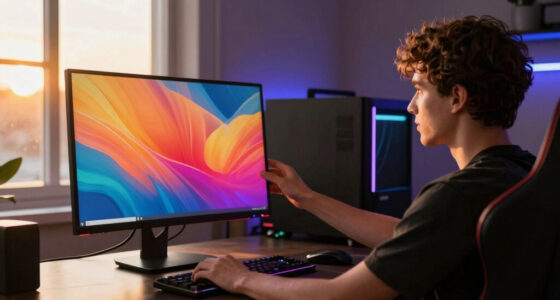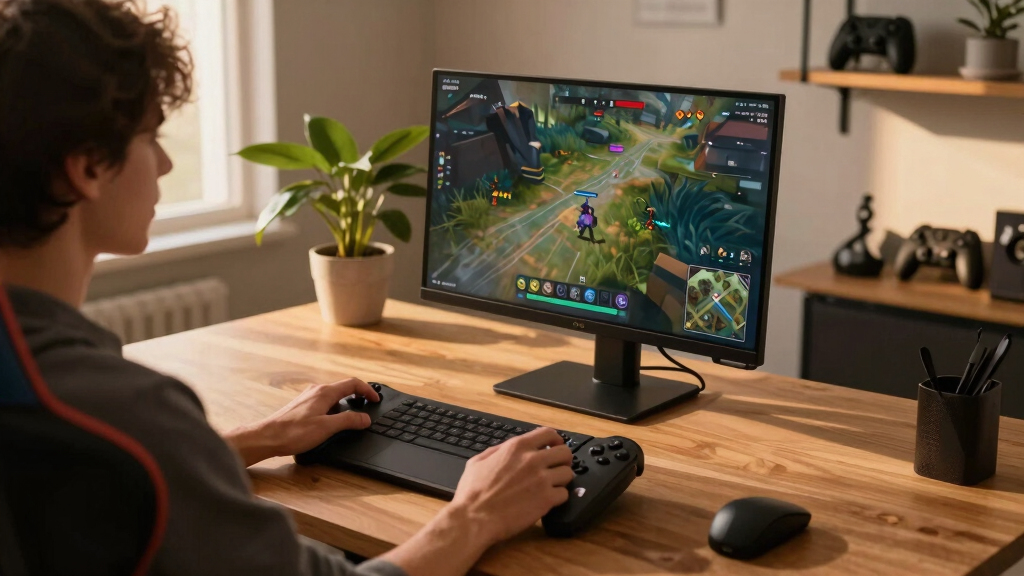
The best 144Hz portable monitor for Steam Deck docked is the UPERFECT 16-inch 2.5K QLED because it balances sharpness, color, brightness, FreeSync, and a Steam Deck-friendly size better than the rest of this lineup. The ARZOPA Z1FC is the easier value pick if I wanted smooth 1080p gaming without paying for extra pixels, while the VisionOwl 16-inch 2.5K stands out for buyers who want a sharper 16:10 screen with a practical kickstand. The main tradeoff is simple: 1080p models are easier on the Steam Deck, while 2.5K and 2K panels look cleaner but may push more games below 144fps unless settings are lowered. Size matters too, since the UPERFECT 24-inch QLED feels more like a small desktop monitor than a travel screen. Keep reading for the full breakdown by performance fit, portability, image quality, setup ease, and value.

Play games on Amazon Luna for your game nights, included with Prime
- A rotating selection of games, no download needed
- Play on TV, laptop or phone
- Fast, free delivery for your gear, too
Key Takeaways
- The UPERFECT 16-inch 2.5K QLED is the best overall pick because it pairs a sharp panel with strong color, FreeSync, decent brightness, and a size that still makes sense beside a Steam Deck dock.
- ARZOPA Z1FC wins on value: its 1080p resolution is less demanding for Steam Deck games, and that makes the 144Hz refresh rate more usable than higher-resolution picks in many titles.
- VisionOwl beats InnoView for buyers who want a sharper work-and-play screen, while InnoView is better for a simpler 1200p setup with fewer premium ambitions.
- Upperizon has the strongest spec sheet for color and resolution, but its 120Hz HDMI limit matters if the buyer relies on HDMI from a dock instead of USB-C DisplayPort.
- The UPERFECT 24-inch QLED is the least portable but most desk-friendly option, making it a better fit for a semi-permanent docked Steam Deck setup than for travel.
| VisionOwl V16QH 16-inch 2.5K 144Hz Portable Monitor |  | Best Overall for Docked Steam Deck | Screen Size: 16 inches | Resolution: 2560 x 1600 | Aspect Ratio: 16:10 | VIEW LATEST PRICE | See Our Full Breakdown |
| ARZOPA Z1FC 16.1-inch 144Hz Portable Gaming Monitor |  | Best Value 1080p Pick | Screen Size: 16.1 inches | Resolution: 1920 x 1080 | Aspect Ratio: 16:9 | VIEW LATEST PRICE | See Our Full Breakdown |
| Upperizon 16-inch 2K QHD 144Hz Portable Monitor |  | Best Color-Focused 2K Pick | Screen Size: 16 inches | Resolution: 2560 x 1600 | Aspect Ratio: 16:10 | VIEW LATEST PRICE | See Our Full Breakdown |
| InnoView INVPM401 16-inch 144Hz Portable Gaming Monitor |  | Best Budget FreeSync Pick | Screen Size: 16 inches | Resolution: 1920 x 1200 | Aspect Ratio: 16:10 | VIEW LATEST PRICE | See Our Full Breakdown |
| UPERFECT QLED 24-inch 144Hz Portable Monitor |  | Best Big-Screen Desk Pick | Screen Size: 23.8 inches | Resolution: 1920 x 1080 | Refresh Rate: Title lists 144Hz; product table lists 120Hz | VIEW LATEST PRICE | See Our Full Breakdown |
| UPERFECT Portable Gaming Monitor 144Hz 2.5K 16-inch QLED |  | Best Color-Rich 16-Inch Pick | Screen size: 16 inches | Resolution: 2560 x 1600 (2.5K) | Refresh rate: 144Hz | VIEW LATEST PRICE | See Our Full Breakdown |
More Details on Our Top Picks
VisionOwl V16QH 16-inch 2.5K 144Hz Portable Monitor
I rank the VisionOwl V16QH first because it gives docked Steam Deck buyers the best mix of sharp 2560×1600 detail, 144Hz motion, and real setup convenience. Compared with the Upperizon 16-inch 2K, it is not the widest-gamut choice, but its 470-nit brightness and full-size HDMI make it the easier all-round pick for a desk, hotel room, or couch-side dock. Against the ARZOPA Z1FC, the higher resolution makes SteamOS menus, launchers, and desktop mode look much cleaner. The tradeoff is performance headroom: many Deck games will need lower render settings or scaling rather than native 2.5K at high frame rates. This pick makes the most sense if I want one portable screen that also feels credible for work.
Pros:- 2560×1600 resolution gives SteamOS and desktop mode much sharper text than 1080p picks
- 470-nit brightness is the strongest listed brightness among the 16-inch options here
- Full-size HDMI is sturdier and less fussy than Mini HDMI
- Includes sleeve, power adapter, HDMI cable, and two USB-C display cables
Cons:- 2.5K resolution is demanding for Steam Deck games chasing high frame rates
- Color coverage is narrower than the Upperizon 16-inch 2K
- Single-cable USB-C depends on a source with DP Alt Mode or Thunderbolt support
Best for: I would point this at Steam Deck owners who split time between docked gaming and desktop-mode work, and who want a bright 16-inch screen with cleaner text than 1080p.
Not ideal for: I would skip it for players focused on demanding AAA games at native 2.5K, because the Deck may need scaling or lower settings.
- Screen Size:16 inches
- Resolution:2560 x 1600
- Aspect Ratio:16:10
- Refresh Rate:144Hz
- Brightness:470 nits
- Color:10-bit IPS, 110% sRGB
- Adaptive Sync:FreeSync
- Ports:Full-size HDMI, 2 USB-C
- Weight:1.5 lb
Bottom line: This is my first pick for Steam Deck owners who want the strongest balance of sharpness, brightness, ports, and portability.
ARZOPA Z1FC 16.1-inch 144Hz Portable Gaming Monitor
The ARZOPA Z1FC earns its place as my value pick because 1080p at 144Hz is a practical target for Steam Deck docked play. Compared with the VisionOwl V16QH or Upperizon 16-inch 2K, it asks less of the Deck, so lightweight shooters, indie games, and older PC titles have a better chance of feeling smooth without heavy upscaling. It also has a built-in kickstand, two USB-C ports, and Mini HDMI, making it simple for a compact dock setup. The compromises are clear: brightness is only 300 nits, the listing says no adaptive sync, and Mini HDMI is less reassuring than the full-size HDMI on VisionOwl or InnoView. I would choose it for sensible gaming value, not premium image quality.
Pros:- 1080p resolution is easier for Steam Deck to drive than 2.5K options
- 144Hz refresh rate suits lighter games that can push higher frame rates
- 106% sRGB IPS panel is solid for a value gaming display
- Built-in kickstand and plug-and-play USB-C support keep setup simple
Cons:- Main feature copy says no adaptive sync or FreeSync
- 300-nit brightness trails VisionOwl, Upperizon, and UPERFECT
- Mini HDMI is less robust than full-size HDMI on VisionOwl and InnoView
Best for: I would buy this for Steam Deck players who mostly play lighter games, indies, emulators, and older PC titles where 1080p high-refresh play is realistic.
Not ideal for: I would skip it for FreeSync-focused players or anyone who wants the brighter, sharper image of the VisionOwl or Upperizon 2K panels.
- Screen Size:16.1 inches
- Resolution:1920 x 1080
- Aspect Ratio:16:9
- Refresh Rate:144Hz
- Brightness:300 nits
- Color Gamut:106% sRGB
- Contrast Ratio:1000:1
- Ports:2 USB-C, 1 Mini HDMI
- Listed Weight:1.42 kg
Bottom line: This is the sensible buy if I care more about smooth 1080p Deck gaming than maximum sharpness or wide-gamut color.
Upperizon 16-inch 2K QHD 144Hz Portable Monitor
I place the Upperizon 16-inch 2K behind VisionOwl because it is more specialized: it trades some brightness for 145% sRGB and 100% DCI-P3, which suits buyers who want games, media, and desktop mode to look richer. Compared with ARZOPA, the 2560×1600 panel is far sharper; compared with UPERFECT 24-inch QLED, it is much easier to pack. The catch is refresh routing. It reaches 144Hz over USB-C, while HDMI is limited to 120Hz, so a Steam Deck dock using HDMI may not get the headline rate. The wide-gamut panel can also make SDR games look overcooked. I would pick it for color and portability before pure dock simplicity.
Pros:- Widest listed color coverage among the 16-inch reviewed picks
- 2560×1600 resolution gives sharper text and UI than ARZOPA or InnoView
- Aluminum alloy chassis, adjustable kickstand, and VESA support add desk flexibility
- Includes sleeve, power adapter, HDMI cable, and two USB-C cables
Cons:- 144Hz is limited to USB-C, while HDMI tops out at 120Hz
- 2.5K resolution can be heavy for Steam Deck in modern games
- Wide color gamut may oversaturate SDR games if color controls are limited
Best for: I would aim this at Steam Deck owners who also use the monitor for media, light creative work, or desktop mode and want richer color than the basic 1080p picks.
Not ideal for: I would skip it for players who rely on an HDMI dock and want a clean path to the full 144Hz refresh rate.
- Screen Size:16 inches
- Resolution:2560 x 1600
- Aspect Ratio:16:10
- Refresh Rate:144Hz via USB-C, 120Hz via HDMI
- Brightness:400 nits
- Color:145% sRGB, 100% DCI-P3, 10-bit
- Ports:2 USB-C, HDMI
- Stand and Mounting:0 to 180-degree kickstand, VESA compatible
- Weight:1.6 lb
Bottom line: This is my color-first 16-inch pick for buyers who want a sharper, richer portable screen and can work around the HDMI refresh limit.
InnoView INVPM401 16-inch 144Hz Portable Gaming Monitor
The InnoView INVPM401 is my budget FreeSync choice because it sits between ARZOPA’s easy 1080p and VisionOwl’s sharper 2.5K panel. Its 1920×1200 resolution keeps the Deck load reasonable while adding a little vertical room for SteamOS desktop mode, web pages, and launchers. It also brings FreeSync and a crosshair assist, both more gaming-specific than ARZOPA’s feature set. The problem is docked connectivity: HDMI tops out at 120Hz, so 144Hz depends on USB-C video rather than a typical HDMI dock path. Color is another weakness, with the listed gamut well behind Upperizon and VisionOwl. I would buy it for adaptive-sync value, not for the cleanest 144Hz dock setup.
Pros:- 1920×1200 resolution adds vertical space while staying lighter than 2.5K for Steam Deck
- FreeSync support is a real gaming advantage over ARZOPA
- Standard HDMI port is sturdier than Mini HDMI
- Light 1.73 lb design with protective sleeve
Cons:- HDMI connection is capped at 120Hz
- Power adapter is not included
- Listed color gamut is far weaker than VisionOwl and Upperizon
Best for: I would choose this for budget-minded Steam Deck players who want FreeSync and a taller 16:10 screen without paying for a 2.5K panel.
Not ideal for: I would skip it for HDMI-dock users chasing full 144Hz, or buyers who want a power adapter included in the box.
- Screen Size:16 inches
- Resolution:1920 x 1200
- Aspect Ratio:16:10
- Refresh Rate:144Hz
- HDMI Refresh Limit:Up to 120Hz
- Brightness:300 nits
- Adaptive Sync:FreeSync
- Ports:Standard HDMI, 2 USB-C, 3.5mm audio
- Weight:1.73 lb
Bottom line: This is the pick I would use when FreeSync matters more than color quality or a guaranteed 144Hz HDMI dock setup.
UPERFECT QLED 24-inch 144Hz Portable Monitor
The UPERFECT 24-inch QLED is the outlier I would only rank for players who want a larger desk screen more than a backpack monitor. Next to VisionOwl V16QH and Upperizon 16-inch 2K, its 23.8-inch panel makes split-screen co-op, menus, and couch-distance play easier to read, while 450-nit brightness and 2000:1 contrast give it punch. The downsides are just as visible. A 1080p image across 24 inches is less crisp than the 2.5K 16-inch models, and the product data conflicts: the title says 144Hz, but the spec table lists 120Hz. Add the 5.37-pound listed weight, and I see this as a portable-ish desk display, not a travel-first Steam Deck companion.
Pros:- 23.8-inch screen is much easier to read from farther back than 16-inch portable displays
- QLED panel, 145% sRGB color, and 450-nit brightness give it a punchier image
- 2000:1 contrast is higher than the smaller IPS options listed here
- Stand and VESA support make more sense for a semi-permanent docked setup
Cons:- Much less travel-friendly than the 16-inch options
- 1080p across 24 inches is less sharp than the 2.5K VisionOwl and Upperizon panels
- Refresh-rate data conflicts, with the title listing 144Hz and the product table listing 120Hz
Best for: I would point this at Steam Deck owners who play docked at a desk or shared table and want a much larger screen than the 16-inch travel monitors.
Not ideal for: I would skip it for frequent travelers or buyers who want a clean, conflict-free 144Hz spec from the product data.
- Screen Size:23.8 inches
- Resolution:1920 x 1080
- Refresh Rate:Title lists 144Hz; product table lists 120Hz
- Display Type:QLED LCD
- Brightness:450 nits
- Contrast Ratio:2000:1
- Color Gamut:145% sRGB
- Ports:HDMI, USB-C, 3.5mm audio
- Listed Weight:5.37 lb
Bottom line: This is the big-screen choice I would keep on a desk, but it is the weakest fit for true portable 144Hz certainty.
UPERFECT Portable Gaming Monitor 144Hz 2.5K 16-inch QLED
I would rank the UPERFECT 16-inch 2.5K QLED as the color-first choice for a docked Steam Deck setup. Compared with the ARZOPA 16.1-inch 1080p, it gives the Deck’s interface, indie art, and streaming video more pixel density and a wider 100% DCI-P3 QLED panel, while staying far easier to pack than the UPERFECT 24-inch QLED. The tradeoff is that the Steam Deck will not make every game feel like a native 2.5K/144Hz showcase, so this pick makes the most sense when sharp desktop use and rich color matter as much as high refresh play. It also beats simpler 1200p travel screens for clarity, but its premium panel, 18W draw, and reliance on USB-C or mini HDMI make it less carefree than lighter, cheaper options.
Pros:- 2560 x 1600 resolution gives Steam Deck desktop mode more workspace than 1080p travel monitors
- 100% DCI-P3 QLED panel suits colorful games and video better than basic IPS picks
- 144Hz with FreeSync gives docked play smoother motion when the Deck or another console can feed it
- Built-in kickstand, sleeve case, and 75mm VESA support make desk and travel setups flexible
Cons:- Steam Deck performance will often cap well below 2.5K at 144Hz in demanding games
- Mini HDMI and USB-C setup may need extra cables or power planning while docked
- Likely pricier than 1080p and 1200p alternatives with enough speed for casual play
Best for: Steam Deck owners who dock at a desk or hotel room and want a sharp 16:10 screen for games, desktop mode, and media without carrying a 24-inch panel.
Not ideal for: Players chasing the simplest low-cost travel screen for handheld-only gaming; the higher resolution, QLED panel, and 18W draw are more than they need.
- Screen size:16 inches
- Resolution:2560 x 1600 (2.5K)
- Refresh rate:144Hz
- Panel type:QLED
- Color gamut:100% DCI-P3
- Brightness:400 nits
- Aspect ratio:16:10
- Adaptive sync:FreeSync
- Weight:1.5 pounds
Bottom line: Choose this if you want the sharpest 16-inch, color-rich docked Steam Deck screen in the group and can accept paying for pixels the Deck will not always fully use.
How We Picked
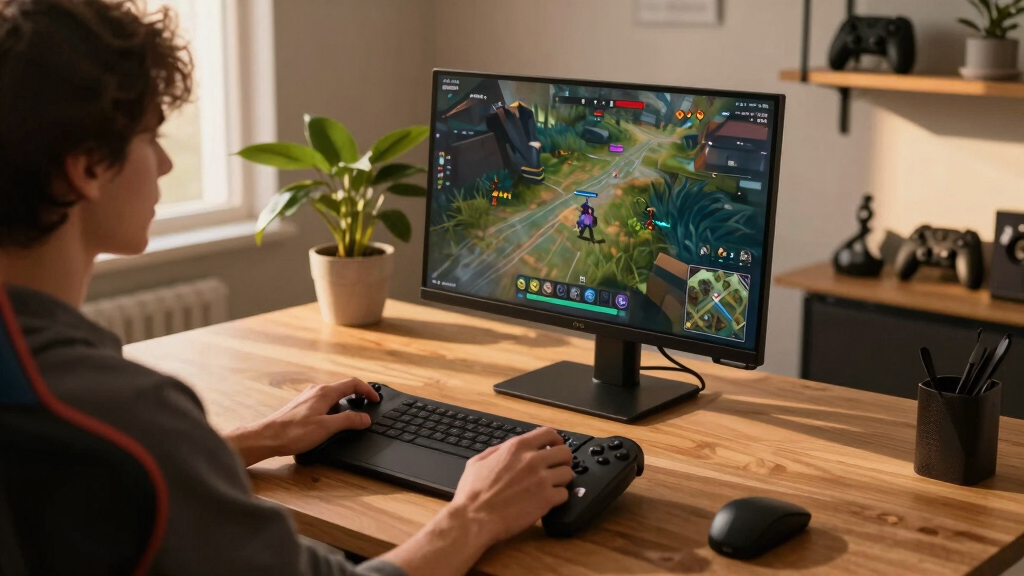
I ranked these monitors around the way a docked Steam Deck is actually used: a compact gaming setup where refresh rate, resolution, connection type, screen size, and stand design all affect the result. I gave extra weight to 1080p or 1200p practicality because the Steam Deck can more often take advantage of 144Hz at those resolutions, while sharper 2K and 2.5K panels had to justify their extra load with better color, brightness, aspect ratio, or versatility.
The order also reflects setup friction. A portable monitor can have great panel specs and still be a poor Steam Deck companion if it needs awkward power routing, has a weak stand, or loses refresh-rate headroom over HDMI. That is why the ranking favors models that make sense as a docked gaming display first, then rewards extras like QLED color, VESA support, FreeSync, 16:10 space, and stronger brightness when they clearly improve the buying decision.
Factors to Consider When Choosing Best 144Hz Portable Monitors For Steam Deck Docked
Choosing among the best 144Hz portable monitors for Steam Deck docked is less about chasing the biggest number and more about matching the display to the games, dock, desk, and travel pattern. I would start with resolution and connection support, then decide how much portability I am willing to give up for a larger or better-looking panel.
Resolution Changes How Useful 144Hz Feels
A 144Hz monitor only helps when the Steam Deck can feed it enough frames, and that is easier at 1080p or 1200p than at 2K or 2.5K. This is why the ARZOPA and InnoView picks make sense for performance-first buyers, even though they are not the sharpest screens here. Higher-resolution models like the VisionOwl, Upperizon, and UPERFECT 16-inch QLED look cleaner for menus, desktop mode, lighter games, and productivity. The tradeoff is that demanding games may need lower settings, FSR, or a lower in-game resolution to feel smooth. I would not buy a 2.5K portable monitor only because it sounds more premium; I would buy it if I also wanted sharper text, richer color, and more non-gaming use.
Check The Dock Connection Before Chasing 144Hz
Many Steam Deck docks lean on HDMI output, while several portable monitors reserve their best refresh behavior for USB-C DisplayPort. That makes the connection path a real buying filter, not a small detail. The Upperizon is the clearest example in this group because it lists 144Hz over USB-C but 120Hz over HDMI, which could disappoint a buyer using a basic dock. Mini HDMI ports can also need short, careful cable runs to avoid clutter on a small desk. Before paying more, I would match the monitor to the dock I already have or budget for a dock that can pass the refresh rate I want.
Portable Size Is Not Always The Best Docked Size
A 16-inch screen is the sweet spot for most docked Steam Deck setups because it gives a clear upgrade over handheld play without taking over the desk. The UPERFECT 24-inch QLED flips that equation: it is less of a travel display and more of a compact desktop monitor that happens to be movable. That larger size helps if the Deck lives on a desk, but it adds more cable and stand planning. Smaller 16-inch models are easier to pack, position, and power from a minimal setup. I would choose size based on where the monitor will spend most of its life, not on the idea that bigger is automatically better.
Brightness And Color Matter More Than HDR Labels
Portable monitor listings often mention HDR, but the real buyer benefit usually comes from brightness, contrast, and color coverage. The QLED UPERFECT models and the high-gamut Upperizon are more appealing if the screen will be used for vibrant games, media, or shared desk work. A simpler 1080p monitor can still be the smarter gaming buy if the panel is bright enough for the room and does not force the Steam Deck to work too hard. I would treat HDR as a secondary perk here, not the reason to buy. For docked play, a readable screen with steady motion will matter more than a label that portable panels may not fully deliver.
Stand Design Can Make Or Break The Setup
The Steam Deck docked experience depends on how quickly the monitor sits at the right angle and stays there. Built-in kickstands, protective sleeves, and VESA support all solve different problems. A kickstand is easiest for travel and quick setup, while VESA mounting is better for a desk where the monitor should sit higher and cleaner. Sleeve-style stands can protect the panel, but they often take more desk depth and may feel less stable. I would favor a monitor with both a solid kickstand and VESA support if I planned to move between desk and travel use.
Know When To Pay More
Paying more makes sense when the upgrade solves a real need: sharper text in desktop mode, better color for media, stronger brightness, FreeSync support, or a sturdier mounting setup. It makes less sense if the Steam Deck will mostly run demanding games at modest settings, where a premium 2.5K panel may spend much of its time displaying a lower internal resolution. The ARZOPA is attractive because it keeps the spend tied to gaming performance, while the UPERFECT 16-inch QLED earns its higher place by being useful beyond pure frame chasing. The 24-inch UPERFECT makes sense only if portability is secondary. I would spend extra for versatility, not just for a longer spec list.
Frequently Asked Questions
Is A 144Hz Portable Monitor Worth It For A Docked Steam Deck?
Yes, but the value depends on the games. The Steam Deck will not push every modern title to 144fps, especially at 2K or 2.5K, but lighter games, indie titles, emulators, and older PC games can benefit from the extra refresh headroom. A 144Hz screen can also make frame pacing feel cleaner when paired with lower refresh caps like 72Hz or 90Hz. I would buy 144Hz for flexibility rather than expecting every game to max it out. For pure value, a 1080p 144Hz pick such as the ARZOPA makes the most sense.
Should I Choose 1080p, 1200p, 2K, Or 2.5K For Steam Deck Docked?
I would choose 1080p or 1200p if gaming smoothness is the main goal. Those resolutions are a better match for the Steam Deck’s GPU and make the 144Hz refresh rate more reachable. A 2K or 2.5K monitor is better if the screen will also handle desktop mode, browsing, streaming, or laptop use. The sharper panels in this roundup look more refined, but games may need lower render settings to stay smooth. The best choice depends on whether the monitor is a gaming accessory or a shared display for work and play.
Do I Need USB-C For 144Hz, Or Will HDMI From A Steam Deck Dock Work?
HDMI can work, but the exact refresh rate depends on the dock, cable, and monitor input limits. Some portable monitors reach their full refresh rate through USB-C DisplayPort Alt Mode and run lower over HDMI. The Upperizon listing is a good warning sign because it separates 144Hz USB-C from 120Hz HDMI. If I already owned an HDMI-only dock, I would check the monitor’s supported HDMI refresh rate before buying. USB-C can be cleaner when supported, but it still may need extra power depending on the monitor.
Is The 24-Inch UPERFECT Too Big To Count As Portable?
For travel, yes, it is much less portable than the 16-inch models in this roundup. For a docked Steam Deck desk setup, that size can be a strength because it feels closer to a normal gaming monitor. The larger panel gives more visual impact, but it also needs more room, a better stand position, and a less improvised cable layout. I would not pick it for hotel rooms, backpacks, or couch-side setups. I would pick it for someone who wants a movable desktop screen rather than a true travel monitor.
Which Monitor Is Easiest For A Beginner Steam Deck Dock Setup?
The ARZOPA Z1FC is the easiest recommendation for beginners because its 1080p resolution keeps expectations realistic and setup goals simple. It gives the buyer the 144Hz refresh target without forcing the Steam Deck into a demanding high-resolution workload. The InnoView is also approachable, especially with its 1200p format and sleeve-style protection, but the missing adapter note means buyers should plan accessories carefully. I would steer beginners away from paying extra for 2.5K unless they already know they want sharper desktop-mode use. Simple, smooth, and affordable is the better starting point.
Conclusion
For most buyers, I would choose the UPERFECT 16-inch 2.5K QLED as the best overall because it offers the strongest mix of screen quality, gaming features, portability, and versatility. The ARZOPA Z1FC is the best value and the pick I would point to for Steam Deck owners who mainly want smooth 1080p docked play without overspending. The VisionOwl 16-inch 2.5K is the best fit for buyers who want a sharper 16:10 screen for both gaming and desktop use, while the InnoView 16-inch 1200p is the best for beginners who want a simple middle ground. The Upperizon 16-inch 2K is the best color-forward pick if USB-C is the main connection, and the UPERFECT 24-inch QLED is the best specific-needs choice for a semi-permanent desk setup where portability matters less than screen size.
Fall Picks
fall essentials
As an affiliate, we earn on qualifying purchases.