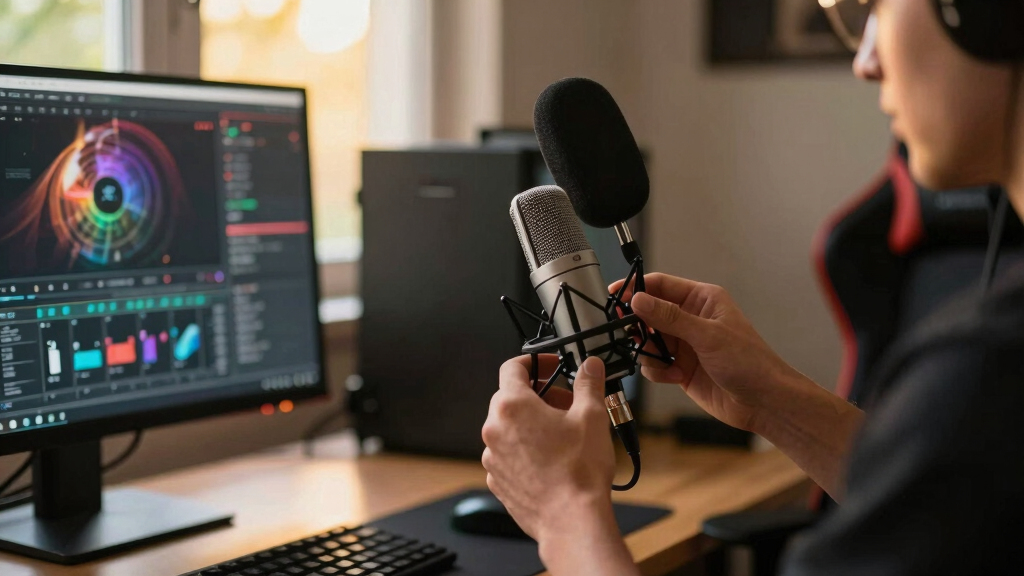

The best XLR microphone for most streamers is the Audio-Technica AT2035 because its controlled condenser sound, useful filters, and shock mount create a strong balance between clarity and flexibility. I rank the RØDE PodMic highly for untreated rooms, where its dynamic design rejects more background sound than the condenser picks. The FIFINE K688 kit is the easier starting point because it combines USB and XLR connections with a boom arm. The main tradeoff is studio-like detail versus room-noise control, followed by the cost and complexity of the required audio interface. Continue reading for my full ranking logic, buying factors, and recommendations by streamer type.

Play games on Amazon Luna for your game nights, included with Prime
- A rotating selection of games, no download needed
- Play on TV, laptop or phone
- Fast, free delivery for your gear, too
Complete the kit

Key Takeaways
- The Audio-Technica AT2035 earns the top position because its high-pass filter, pad, shock mount, and balanced sound offer more streaming flexibility than the simpler AT2020.
- The RØDE PodMic is the strongest untreated-room pick; it captures less keyboard and room sound than the condenser models, though it places greater demands on interface gain and close microphone technique.
- The FIFINE K688 has the easiest upgrade path because streamers can begin over USB and move to an XLR interface later, while the included boom arm reduces the initial setup burden.
- The RØDE NT1 Signature Series offers the most refined premium package, but its low-noise condenser performance pays off most in a quiet room and does not automatically make it the best choice for a noisy desk.
- The AKG P120 beats the AT2020 on value-oriented controls by adding a pad and bass-cut filter, while the AT2020 remains the more straightforward entry-level condenser for buyers who favor simplicity and a widely supported mounting ecosystem.
| Audio-Technica AT2020 Cardioid Condenser Studio XLR Microphone |  | Best Entry-Level Condenser | Microphone Type: Condenser | Polar Pattern: Cardioid | Frequency Response: 20–20,000 Hz | VIEW LATEST PRICE | See Our Full Breakdown |
| Audio-Technica AT2035 Cardioid Condenser Microphone |  | Best for On-Mic Control | Microphone Type: Condenser | Polar Pattern: Cardioid | Diaphragm: Large | VIEW LATEST PRICE | See Our Full Breakdown |
| RØDE PodMic Cardioid Dynamic Broadcast Microphone |  | Best Overall | Microphone Type: Dynamic broadcast microphone | Polar Pattern: Cardioid | Connection: XLR | VIEW LATEST PRICE | See Our Full Breakdown |
| AKG Pro Audio P120 Condenser Microphone |  | Best Budget Pick | Microphone Type: Condenser | Polar Pattern: Cardioid | Frequency Bandwidth: 20–20,000 Hz | VIEW LATEST PRICE | See Our Full Breakdown |
| RØDE NT1 Signature Series Large-Diaphragm Condenser Microphone |  | Best Premium Vocal Detail | Microphone Type: Large-diaphragm condenser | Capsule: True 1-inch condenser | Polar Pattern: Cardioid | VIEW LATEST PRICE | See Our Full Breakdown |
| FIFINE K688 Podcast Microphone Kit |  | Best All-in-One Starter Kit | Microphone type: Dynamic | Connectivity: USB and XLR | Polar pattern: Cardioid | VIEW LATEST PRICE | See Our Full Breakdown |
| XLR microphones for streamer | Microphone Type | Polar Pattern | Maximum SPL | Included Accessories |
|---|---|---|---|---|
| Audio-Technica AT2020 Cardioid | Condenser | Cardioid | 144 dB | — |
| Audio-Technica AT2035 Cardioid | Condenser | Cardioid | — | Custom shock mount and pouch |
| RØDE PodMic Cardioid Dynamic B | Dynamic broadcast microphone | Cardioid | — | — |
| AKG Pro Audio P120 Condenser M | Condenser | Cardioid | 150 dB | — |
| RØDE NT1 Signature Series Larg | Large-diaphragm condenser | Cardioid | 142 dB | Shock mount, pop filter, and 6 m XLR cable |
| FIFINE K688 Podcast Microphone | Dynamic | Cardioid | 130 dB | Boom arm, windscreen, and shock mount |
More Details on Our Top Picks
Audio-Technica AT2020 Cardioid Condenser Studio XLR Microphone
I rank the Audio-Technica AT2020 as the entry point for streamers who want condenser detail without paying for extra controls. Its 20–20,000 Hz response captures a broader, more open vocal sound than the RØDE PodMic, while the 144 dB maximum SPL leaves ample room for loud speech or other recording work. Compared with the AT2035, however, it lacks a high-pass filter, input pad, and included shock mount, so desk vibration and low-frequency noise must be handled elsewhere in the setup. Its sensitivity also makes an untreated room more audible than a dynamic model would. I see the AT2020 as a strong first studio-style microphone, but the PodMic remains the safer choice around keyboards, fans, and reflective walls.
Pros:- Detailed 20–20,000 Hz frequency response suits speech and other recording work
- 144 dB maximum SPL provides substantial headroom
- Cardioid pattern limits sound arriving from behind the microphone
- Accessible route into studio-style XLR audio
Cons:- Requires 48V phantom power and an XLR audio interface
- No onboard high-pass filter or pad
- Sensitive capsule can reveal room reflections and background noise
Best for: I recommend it for new XLR streamers recording in a quiet, treated room who want detailed condenser sound on a controlled budget.
Not ideal for: I would skip it for streamers in echo-prone bedrooms or noisy gaming spaces because its condenser capsule can expose surrounding sound.
- Microphone Type:Condenser
- Polar Pattern:Cardioid
- Frequency Response:20–20,000 Hz
- Maximum SPL:144 dB
- Impedance:100 Ω
- Power Requirement:48V phantom power
- Output:XLR
Our verdict“My pick for budget-minded streamers who want condenser clarity and already have a quiet recording space.”
Audio-Technica AT2035 Cardioid Condenser Microphone
I give the Audio-Technica AT2035 this role because its switchable 80 Hz high-pass filter lets streamers reduce desk rumble and low-frequency buildup before the signal reaches software. The 10 dB pad also makes it more adaptable than the AT2020 when recording loud voices or instruments. Its large diaphragm aims for a natural vocal presentation, while the included custom shock mount removes an accessory purchase from the initial setup. The RØDE NT1 Signature offers much lower stated self-noise and adds a pop filter and cable, making that model the stronger premium package. The AT2035 instead occupies the practical middle ground: more control than the AT2020, but fewer bundled pieces than the NT1. I would still reserve it for reasonably quiet rooms because it remains a sensitive condenser microphone.
Pros:- Switchable 80 Hz high-pass filter helps reduce rumble and bass buildup
- 10 dB pad expands its usefulness with loud sources
- Large diaphragm supports a natural vocal character
- Custom shock mount is included
Cons:- Requires an XLR interface with phantom power
- Costs more than entry-level condensers such as the AT2020
- Condenser sensitivity can expose a poor-sounding room
Best for: I recommend it for streamers who also record instruments or varied vocal sources and want hardware controls before processing.
Not ideal for: I would skip it for untreated gaming rooms where a dynamic microphone would reject more keyboard noise and room reflections.
- Microphone Type:Condenser
- Polar Pattern:Cardioid
- Diaphragm:Large
- High-Pass Filter:Switchable 80 Hz
- Pad:-10 dB
- Output:XLR
- Included Accessories:Custom shock mount and pouch
Our verdict“My choice for streamers who want a versatile condenser with useful physical controls and a shock mount in the box.”
RØDE PodMic Cardioid Dynamic Broadcast Microphone
I rank the RØDE PodMic first for streamers because its dynamic cardioid design fits real gaming spaces better than a sensitive studio condenser. It is built around close speech, and the integrated pop filter, internal shock mounting, and swing mount address plosives, handling noise, and positioning without turning the setup into an accessory hunt. Compared with the Audio-Technica AT2020, the PodMic sacrifices some airy condenser detail but is better suited to keeping room reflections and nearby equipment from dominating a broadcast. The FIFINE K688 is more flexible for beginners because it offers USB alongside XLR; the PodMic is XLR-only and needs an interface. Its broadcast-focused design also makes it less versatile for distant sources. For a dedicated streaming desk, though, I find its balance of focus, construction, and built-in features the most convincing.
Pros:- Dynamic cardioid design is well matched to close-miked streaming speech
- Integrated pop filter helps control vocal plosives
- Internal shock mounting reduces handling and structure-borne noise
- Robust broadcast-grade construction suits permanent desk setups
Cons:- Cannot connect directly to a computer through USB
- Requires an external XLR audio interface
- Less suited than a condenser to distant or highly detailed recording
Best for: I recommend it for streamers using mechanical keyboards, fans, or moderately untreated rooms who can speak close to the microphone.
Not ideal for: I would skip it for buyers who need direct USB connection or one microphone for detailed, distant instrument recording.
- Microphone Type:Dynamic broadcast microphone
- Polar Pattern:Cardioid
- Connection:XLR
- Required Equipment:Audio interface with XLR input
- Pop Protection:Integrated pop filter
- Shock Isolation:Internal shock mount
- Mounting:Integrated swing mount
- Intended Use:Podcasting, broadcasting, and streaming
Our verdict“My best overall choice for a dedicated XLR streaming station where focused speech matters more than USB convenience.”
AKG Pro Audio P120 Condenser Microphone
I select the AKG P120 for streamers seeking maximum recording flexibility at the budget end. Its 150 dB maximum SPL and -20 dB pad provide more loud-source headroom than the AT2020, which makes the P120 useful beyond commentary for instruments or forceful vocals. The bass-cut filter can reduce low-frequency clutter, although its 300 Hz turnover is less voice-friendly than the AT2035’s 80 Hz filter and may thin out a naturally deep speaking voice. A stated 19 dB-A equivalent noise level also puts it well behind the RØDE NT1 Signature for quiet, polished narration. I view the metal construction and broad 20–20,000 Hz bandwidth as strong value, but this is not the refined choice for silent studios. Its budget advantage comes with higher self-noise and no listed accessory bundle.
Pros:- 150 dB maximum SPL handles very loud sources
- -20 dB pad adds flexibility beyond everyday streaming
- 20–20,000 Hz bandwidth covers the full audible range
- Durable construction supports regular desk or studio use
Cons:- 19 dB-A equivalent noise can become apparent in quiet recordings
- 300 Hz bass-cut filter may remove too much body from deeper voices
- No shock mount or pop filter is listed with the microphone
Best for: I recommend it for budget streamers who also record loud vocals or instruments and want a pad plus bass-cut switch.
Not ideal for: I would skip it for quiet narration channels where audible microphone self-noise or a thinner filtered voice would be distracting.
- Microphone Type:Condenser
- Polar Pattern:Cardioid
- Frequency Bandwidth:20–20,000 Hz
- Maximum SPL:150 dB
- Equivalent Noise Level:19 dB-A
- Sensitivity:24 mV/Pa
- Pad:-20 dB
- Bass-Cut Filter:300 Hz, 6 dB/octave
- Electrical Impedance:≤200 Ω
Our verdict“My value pick for streamers who want a durable condenser with unusually strong loud-source handling for the money.”
RØDE NT1 Signature Series Large-Diaphragm Condenser Microphone
I reserve the premium role for the RØDE NT1 Signature Series because its 4 dBA self-noise is the clearest advantage for streamers producing polished narration, role-play, or vocal-heavy content. Quiet passages can be recorded with less microphone hiss than the AKG P120, while the true one-inch capsule is designed for a smooth, detailed vocal capture. The package also includes a shock mount, pop filter, and 6 m XLR cable, giving it a fuller setup than the AT2035. That refinement demands a suitable room: its high sensitivity can expose reflections, computer fans, and traffic that the dynamic RØDE PodMic is better placed to suppress. It also requires phantom power and lacks the PodMic’s broadcast-first simplicity. I rank it below the PodMic for typical streaming spaces, but above every condenser here for low-noise vocal production.
Pros:- Very low 4 dBA self-noise supports clean quiet passages
- True one-inch condenser capsule targets detailed vocal reproduction
- Shock mount, pop filter, and 6 m XLR cable are included
- 10-year warranty adds long-term value
Cons:- High sensitivity can reveal room reflections and equipment noise
- Requires phantom power and an XLR audio interface
- Premium capability may be wasted in an untreated streaming space
Best for: I recommend it for vocal-focused streamers with acoustic treatment who want low-noise narration and a well-equipped XLR package.
Not ideal for: I would skip it for noisy bedrooms, untreated offices, or buyers without an interface that supplies phantom power.
- Microphone Type:Large-diaphragm condenser
- Capsule:True 1-inch condenser
- Polar Pattern:Cardioid
- Self-Noise:4 dBA
- Maximum SPL:142 dB
- Power Requirement:Phantom power
- Included Accessories:Shock mount, pop filter, and 6 m XLR cable
- Warranty:10 years
Our verdict“My premium recommendation for streamers whose treated room can make full use of its exceptionally low-noise condenser capture.”
FIFINE K688 Podcast Microphone Kit
I rank the FIFINE K688 as the best starter kit because it combines a dynamic cardioid microphone, boom arm, shock mount, and windscreen in one package. Its USB and XLR connectivity lets a new streamer begin with a PC connection, then add an interface or mixer later without replacing the microphone. Compared with the RØDE PodMic, the K688 offers a simpler entry point and more included hardware; the PodMic is the stronger fit for a dedicated broadcast-style XLR setup. The dynamic capsule should also reject more room noise than the Audio-Technica AT2020, making it friendlier to untreated bedrooms. The tradeoff is that the mute button, gain control, and headphone monitoring depend on USB. Over XLR, those controls move to external equipment, and the adjustable hardware requires careful handling.
Pros:- USB offers an easy PC setup, while XLR supports a later move to an audio interface or mixer
- Dynamic cardioid design helps limit background noise in untreated streaming rooms
- Boom arm, shock mount, and windscreen reduce the need for separate accessory purchases
- 130 dB SPL handling accommodates loud speech and energetic delivery
Cons:- Mute, gain, and headphone-monitoring functions are unavailable through the XLR connection
- XLR operation requires a separate mixer or audio interface
- Mic and boom-arm angles need careful adjustment to avoid stressing the hardware
Best for: First-time streamers recording in untreated bedrooms who want a complete desk setup now and an XLR upgrade path later
Not ideal for: Streamers who want onboard mute, gain, and headphone controls while using XLR, since those functions require USB
- Microphone type:Dynamic
- Connectivity:USB and XLR
- Polar pattern:Cardioid
- Maximum SPL:130 dB
- Included accessories:Boom arm, windscreen, and shock mount
- Compatibility:PC, XLR mixer, and audio interface
- USB controls:Mute button, gain knob, and headphone jack
- Boom arm material:Metal
Our verdict“I recommend the K688 to new streamers who want a ready-to-use USB kit with room to grow into XLR.”
How We Picked
I compared these microphones through the needs of live streamers rather than treating them as interchangeable studio tools. My main criteria were voice clarity, background-noise control, interface requirements, useful onboard controls, mounting practicality, included accessories, and long-term value. I gave extra weight to how each microphone handles keyboard noise, room reflections, inconsistent speaking distance, and the plosives that occur during energetic commentary. I also compared the complete setup burden, since a low microphone price can lose its appeal after adding an interface, stand, shock mount, pop filter, or gain booster.
My ranking places the Audio-Technica AT2035 first for its broad mix of sound quality and useful controls, followed by the RØDE PodMic for superior room rejection. The FIFINE K688 ranks next because its USB/XLR design makes entry and later expansion unusually easy, while the RØDE NT1 takes the premium role for quiet spaces. I place the AKG P120 ahead of the AT2020 for value because it supplies more recording controls at the entry level. The AT2020 remains worthwhile, but its basic feature set gives buyers fewer ways to correct rumble or loud sources without relying on other equipment.
| XLR microphones for streamer | Microphone Type | Included Accessories |
|---|---|---|
| Audio-Technica AT2020 Cardioid | Condenser | — |
| Audio-Technica AT2035 Cardioid | Condenser | Custom shock mount and pouch |
| RØDE PodMic Cardioid Dynamic B | Dynamic broadcast microphone | — |
| AKG Pro Audio P120 Condenser M | Condenser | — |
| RØDE NT1 Signature Series Larg | Large-diaphragm condenser | Shock mount, pop filter, and 6 m XLR cable |
| FIFINE K688 Podcast Microphone | Dynamic | Boom arm, windscreen, and shock mount |
Factors to Consider When Choosing Best XLR Microphones For Streamers
I recommend choosing an XLR microphone around the room, audio chain, and speaking habits rather than chasing the most sensitive capsule. A revealing condenser can sound excellent in a controlled room yet make a typical streaming desk harder to manage. The following factors explain where spending more helps, where it does not, and which setup mistakes can limit an otherwise capable microphone.
Match the Microphone Type to the Room
I would start with the room because it shapes the recording before software gets involved. Dynamic microphones usually suit untreated bedrooms, shared spaces, loud keyboards, and nearby computer fans because they are commonly used close to the mouth and pick up less distant sound. Condenser microphones capture more fine vocal detail, but that sensitivity can expose wall reflections, street noise, and desk movement. Acoustic treatment does not need to resemble a studio; curtains, rugs, soft furnishings, and moving away from bare walls can make a clear difference. Noise-removal software can reduce steady hum, but aggressive settings may thin the voice or clip quiet words. I would choose a dynamic model for a difficult room and reserve a detailed condenser for a space that already sounds controlled during normal conversation.
Budget for the Complete Audio Chain
An XLR microphone needs more than the microphone itself, so I compare total setup cost rather than the price on the box. Condensers normally require an interface that supplies 48-volt phantom power, while low-output dynamics may need generous clean gain. A weak interface can force its preamp near maximum, raising hiss and leaving little room for adjustment. An inline preamp can solve that problem, but it adds expense, another cable connection, and usually a phantom-power requirement of its own. Buyers also need to allow for an XLR cable, stable mount, and a way to monitor audio without distracting delay. I see a USB/XLR hybrid as a sensible bridge when buying an interface immediately would consume money better spent on lighting, a camera, or room improvements.
Plan Placement Around Streaming Habits
Microphone placement affects speech clarity and desk comfort more than many small specification differences. I favor a boom arm with quiet joints because it keeps the microphone close while preserving keyboard and mouse space. Side-address condensers must face the correct direction, whereas an end-address broadcast microphone often fits more naturally beside a monitor. A microphone placed too far away requires extra gain and captures more of the room, even when the model has a cardioid pattern. Shock mounts reduce vibration reaching a sensitive condenser, but they cannot rescue a stand that shakes whenever the desk is bumped. I would also check the microphone’s weight, mount thread, and cable path before buying an arm, since poor mechanical fit can turn routine repositioning into a recurring annoyance.
Choose Controls That Solve Real Problems
I value onboard controls when they address problems that software cannot cleanly fix after clipping or vibration enters the signal. A high-pass filter can reduce air-conditioning rumble, desk thumps, and excessive proximity bass before those sounds reach the stream. A pad is useful for unusually loud voices, instruments, or sources placed very close to a condenser, but many conversational streamers will rarely activate it. Direct mute and headphone controls are more helpful on USB/XLR hybrids during a simple USB setup than after moving to an interface or mixer. Software EQ can shape tone, yet it cannot fully remove strong room echo without affecting speech quality. I would pay for controls tied to known problems rather than choosing the model with the longest feature list.
Know When Premium Sound Is Worth Paying For
A premium condenser makes the most sense when the rest of the signal path lets its advantages remain audible. I would expect the largest gains from lower self-noise, smoother high-frequency response, stronger accessories, and more consistent construction rather than a dramatic change that every viewer hears through phone speakers. Quiet solo streams, voice-over work, music, and reusable recorded content provide more room for those gains to matter. Fast-paced multiplayer streams with game audio, chat, and compression can hide subtle microphone differences. Room treatment and stable placement often produce a larger improvement than replacing a competent entry-level microphone with a costlier capsule. I would spend more after fixing room reflections, mounting noise, and interface limitations, not before.
Frequently Asked Questions
Should I Buy the Audio-Technica AT2020 or AT2035 for Streaming?
I would choose the AT2035 for most dedicated XLR setups because its high-pass filter, pad, and included shock mount provide more control over rumble, loud inputs, and desk vibration. The AT2020 offers a simpler route into condenser sound and can make sense when the price gap funds a better interface or boom arm. Both models benefit from a quiet room and close, consistent placement. The AT2035’s added flexibility matters more for streamers who also record voice-over, instruments, or reusable video narration. For a stream-only setup with a firm budget, the AT2020 remains the leaner purchase.
Is the RØDE PodMic Better Than a Condenser in an Untreated Room?
For many untreated rooms, I would favor the RØDE PodMic because its close-working dynamic format reduces the amount of distant reflection, keyboard noise, and household sound entering the mix. It will not remove noise on its own, and poor placement can still produce a boomy or dull voice. Keeping it near the mouth lets the interface use less gain while improving the ratio between speech and room sound. A condenser can deliver more open detail when the room is quiet and softened with furnishings or acoustic treatment. The PodMic is the safer choice when isolation matters more than airy detail.
Will I Need a Gain Booster for the PodMic or FIFINE K688?
I would check the interface’s available clean gain before adding another device. Dynamic microphones such as the PodMic and K688 often need more amplification than sensitive condensers, especially when the speaker sits too far away. A modern interface with a capable preamp may provide enough level when the microphone is kept close and the voice is projected naturally. An inline preamp becomes useful when the gain control must stay near maximum and audible hiss remains after placement is corrected. I would treat a booster as a solution to a measured gain problem, not an automatic purchase.
Can I Start With the FIFINE K688 Over USB and Switch to XLR Later?
Yes, and that upgrade path is the main reason I rate the FIFINE K688 kit for beginners. USB operation avoids the immediate cost of an interface, while the XLR output leaves room for a mixer, interface, or multi-microphone setup later. The controls available during USB use may not operate the same way through XLR because the external audio device takes over amplification and monitoring. Buyers should also expect the sound level and processing workflow to change when they switch connections. I see the K688 as a better starting platform than a fixed USB-only microphone when future expansion is likely.
When Is the RØDE NT1 Worth More Than the AKG P120?
I would pay more for the RØDE NT1 Signature Series when recording takes place in a quiet room and the microphone will serve streaming, voice-over, music, or other detailed work. Its low-noise design and included shock mount, pop filter, and cable create a more complete premium package. The AKG P120 offers stronger budget value when the goal is clear stream audio without paying for refinements that game sound and platform compression may mask. Neither condenser is a smart shortcut around echo, fan noise, or distant placement. The NT1 earns its premium through refinement and package quality, while the P120 leaves more of the budget available for the room and audio interface.
Conclusion
My best overall pick is the Audio-Technica AT2035 because it combines detailed condenser sound with controls that the AT2020 lacks. For value, I would choose the AKG P120, while the RØDE NT1 Signature Series is my premium recommendation for quiet rooms, voice-over work, and buyers who want a fuller accessory package. Those choices favor detail, so each works best when room reflections and background noise are already controlled.
Beginners who want to start without an interface should choose the FIFINE K688 kit for its USB/XLR upgrade path and included boom arm. The RØDE PodMic is my pick for untreated rooms, loud keyboards, and streamers who can keep the microphone close to their mouth. I would select the Audio-Technica AT2020 for buyers who want a straightforward entry-level condenser and would rather direct extra money toward an interface or mounting system. The final choice comes down to room quality: the AT2035 covers the widest range of polished setups, while the PodMic and K688 are more forgiving starting points for typical streaming desks.
Fall Picks
fall essentials
As an affiliate, we earn on qualifying purchases.