
TL;DR

Play games on Amazon Luna for your game nights, included with Prime
- A rotating selection of games, no download needed
- Play on TV, laptop or phone
- Fast, free delivery for your gear, too
How Steam Machine Handles Controller Layouts Across Games comes down to Steam Input: it detects your controller, applies a per-game layout, and lets you edit or swap that layout before or during play. It can use native gamepad support, community layouts, or keyboard-and-mouse mapping, so even older PC games can feel playable from the couch.
Your controller is lying to the game, in the best possible way. On a Steam Machine, one button press can look like an Xbox input, a keyboard key, a mouse click, or a custom command depending on the game you launch.
That trick matters because PC games were never built around one standard controller. You might play a polished platformer at noon, a mouse-heavy strategy game after dinner, and a 2008 shooter at midnight, all from the same couch with the same pad in your hands.
This guide shows you how Steam Machine handles controller layouts across games, why Steam Input does the heavy lifting, and what you can change when a layout feels sticky, twitchy, or just plain wrong.
Steam Machine uses Steam Input to translate controller presses into native gamepad, keyboard, mouse, or mixed inputs.
Per-game layouts let you save different controls for different games, so one controller can feel right across shooters, racers, RPGs, and strategy titles.
Community layouts are useful starting points, especially for older PC games or titles with weak controller support.
Wrong button prompts often come from input translation, not broken controls; a PlayStation pad may still trigger Xbox-style prompts in some games.
Before blaming a game, check controller order, Steam Input status, dead zones, and the game’s own remapping menu.
How Steam Machine Handles Controller Layouts Across Games
TL;DR: Steam Input detects your controller, applies a per-game layout, and lets you edit or swap that layout before or during play. One button press can become Xbox input, a keyboard key, a mouse click, or a custom command depending on the game.
Your controller is lying to the game, in the best possible way.
Input translation, couch editionDifferent games can keep different layouts, sensitivity settings, and controller-specific profiles.
Native gamepad, Steam remap, keyboard-and-mouse mapping, or community configuration.
Turns controller presses into the signal each PC game can read.
Profiles can change from shooter to racer to strategy game.
Xbox, PlayStation, Steam Controller, and third-party pads can each behave differently.
Layouts, dead zones, gyro, and sensitivity can be adjusted while playing.
Why one controller feels different in every game
PC games do not share one universal control expectation. Steam Machine uses Steam Input as the translator between your hands and whatever the game was built to understand.
Modern games read controller input directly
Racing, action, sports, and platform games often understand Xbox-style controls immediately, with analog triggers and familiar button prompts.
Older PC games can still work from the sofa
Steam can map stick movement, buttons, and trackpads to WASD, mouse clicks, scroll wheels, or keyboard shortcuts.
Different pads can use different layouts
An Xbox controller, PlayStation controller, Steam Controller, or third-party pad can each keep a separate setup for the same game.
What happens when you press play
Steam Input loads before the game needs your controls. It checks the controller, the game, the available profiles, and the selected layout.
Detect Controller
Steam identifies the connected pad and its supported features.
Check Game Needs
The game may expect XInput, mouse input, keyboard commands, or mixed controls.
Load Layout
Steam applies a developer, default, personal, or community profile.
Translate Presses
Buttons become gamepad commands, keys, clicks, mouse movement, or macros.
Edit Anytime
The overlay lets you adjust sensitivity, bindings, dead zones, and action sets.
Which layout type should you choose?
The best setup depends on how the game was designed. Native support feels smoothest, while keyboard-and-mouse mapping is the rescue tool for desk-first PC games.
| Layout Type | Best For | Couch Feel | Tradeoff | Signal |
|---|---|---|---|---|
| Native controller | Modern action, racing, sports, and platform games | Smooth analog control with familiar prompts | Limited if the game’s own layout is awkward | ✓ Best feel |
| Steam Input remap | Games with controller support that needs adjustment | Mostly natural, with your preferred button changes | Prompts may not match your physical controller | ✓ Flexible |
| Keyboard-and-mouse mapping | Strategy games, launchers, menus, and older PC titles | Playable from the sofa, but less console-like | Tiny UI targets can feel touchy | ~ Useful |
| Community layout | Games with odd controls or weak defaults | Ready-made and shaped by player testing | May need tuning for your controller and hands | ✓ Fast start |
| No Steam Input | Games with excellent built-in support and correct prompts | Direct, clean, and simple | No Steam-level remap safety net | ✗ Less control |
Where Steam Input does the most work
Not every game needs the same amount of translation. The more PC-native the controls are, the more Steam Input becomes an adapter rather than a pass-through.
Feel spectrum
Native gamepad support usually feels polished. Mouse mapping can feel snappy or floaty until sensitivity, acceleration, and dead zones are tuned.
Trace the control signal
When something feels wrong, follow the chain. Most problems come from translation settings, controller order, prompts, or a mismatch between Steam Input and the game’s own remapping menu.
Controller
Xbox, PlayStation, Steam Controller, or third-party pad connects.
Steam Detects
Device type, order, and feature support are checked.
Layout Loads
Default, developer, personal, or community profile applies.
Input Translates
Buttons become gamepad, keyboard, mouse, or mixed signals.
Game Responds
The game displays prompts and reacts to the translated input.
You Tune
Adjust bindings, sensitivity, gyro, dead zones, or action sets.
Before blaming the game, check the translation layer.
Wrong button prompts often mean the game is receiving Xbox-style input even when you are holding a PlayStation pad. Sticky aim, twitchy camera movement, and dead buttons usually start with Steam Input status, controller order, dead zones, or overlapping remaps.
- 01Check whether Steam Input is enabled, disabled, or forced for the game.
- 02Confirm the right controller is first in the controller order.
- 03Inspect dead zones and sensitivity before changing every binding.
- 04Compare Steam Input mappings with the game’s own remapping menu.
- 05Try a high-rated community layout before building one from scratch.
Why Your Controller Works Differently From Game to Game
How Steam Machine Handles Controller Layouts Across Games starts with a simple truth: every PC game expects different inputs. Steam Machine uses Steam Input to translate your controller into whatever the game understands, whether that means XInput buttons, keyboard keys, mouse movement, or a mixed setup.[1]
Think of it like ordering coffee in another country. You ask for one thing, the barista hears another language, and the menu still gets you something close to what you wanted. Steam Input plays that menu role, turning your A button, right trigger, or trackpad swipe into useful game commands.
A modern racing game may already know what to do with an Xbox-style controller. A city builder may expect WASD, mouse clicks, and scroll-wheel zoom. A retro PC RPG may have no idea what your controller is. Steam Machine smooths those gaps so you can stay on the sofa instead of reaching for a keyboard every five minutes.
Key idea: Steam Machine does not force every game into one controller layout. It lets each game keep its own needs while giving you a shared place to manage the controls.
As an affiliate, we earn on qualifying purchases.
What Steam Input Actually Does When You Press Play
Steam Input is the control system that detects your controller, loads a layout, and sends the game the input style it can read. According to Valve Steam Input documentation, it supports remapping, action sets, controller-specific layouts, and game-by-game configurations.[1]
- Steam detects your controller when it connects, whether it is an Xbox pad, PlayStation pad, Steam Controller, or many third-party devices.
- Steam checks the game for native controller support, developer layouts, and community layouts.
- Steam applies a layout before launch, often using a default profile that matches the game type.
- The game receives inputs as controller commands, keyboard keys, mouse movement, or a blend of those signals.
- You can edit the layout from Steam before launch or through the overlay while the game is running.
Imagine booting a shooter that expects mouse aim. Steam can map your right stick or trackpad to mouse movement, set right trigger to left mouse click, and turn left bumper into the reload key. The game thinks you are using a desk setup. You are holding a controller with a cold drink nearby.
This is also why two games can feel wildly different on the same hardware. In one game, the right stick may move a camera with buttery analog control. In another, it may mimic a mouse, which can feel snappier, floatier, or more sensitive until you adjust it.
As an affiliate, we earn on qualifying purchases.
How Per-Game Layouts Save You From Constant Remapping
How Steam Machine Handles Controller Layouts Across Games gets much easier because Steam saves controls per game. You can keep one layout for Elden Ring-style action, another for a strategy game, and another for an older shooter without rebuilding your setup every time.
Per-game profiles are the quiet magic here. You might set gyro aiming for a first-person game, swap face buttons for a platformer, and map the right trackpad to mouse control in a management sim. Steam remembers those choices the next time you launch each title.
Say you play a farming game after work. You map Y to the inventory, make left trigger a tool wheel, and set the right stick to a gentle camera speed. Later, you open a fighting game, and Steam loads a completely different layout with punch, kick, block, and throw sitting exactly where your hands expect them.
- Global layouts work well when you want a familiar baseline across many games.
- Per-game layouts work best when a game has unusual controls or a genre-specific feel.
- Temporary edits help when you want to test a fix before saving it for good.
As an affiliate, we earn on qualifying purchases.
Which Layout Type Should You Choose?
The best Steam Machine controller layout depends on the game’s input style. Use native gamepad support for smooth console-like play, use Steam Input remapping for awkward layouts, and use keyboard-and-mouse mapping when a game was built for a desk.[1]
| Layout Type | Best For | What It Feels Like | Example Scenario |
|---|---|---|---|
| Native controller | Modern action, racing, sports, and platform games | Smooth analog movement with familiar button prompts | You launch a racing game and the triggers already control gas and brake. |
| Steam Input remap | Games with controller support that feels awkward | Mostly natural, with your preferred button changes | You move dodge from a face button to a bumper because your thumb needs a break. |
| Keyboard-and-mouse mapping | Strategy games, older PC titles, launchers, and menus | Controller-driven, but sometimes less fluid than native support | You map a trackpad to mouse movement so you can manage a city from the couch. |
| Community layout | Games with odd controls or no obvious setup | Ready-made, often shaped by players who already solved the hard part | You download a popular layout for an old RPG with keyboard-only menus. |
The tradeoff is feel. A native layout can feel like polished plastic under your thumbs. A keyboard-and-mouse layout can feel more like a clever adapter: useful, sometimes brilliant, but occasionally a little crunchy around menus or tiny UI buttons.
As an affiliate, we earn on qualifying purchases.
How Community Layouts Help When Defaults Feel Wrong
Community layouts give you player-made controller setups for games where the default controls feel clumsy. Steam lets players share configurations, so you can often skip the trial-and-error stage and start with a layout someone already tuned through real play.[2]
This helps most with games that were not designed for controllers. Think of a grand strategy game with tiny map icons, stacked menus, and hotkeys scattered across the keyboard. A good community layout might put pause on A, speed controls on bumpers, map zoom on triggers, and mouse movement on a trackpad or stick.
You still need taste. A popular layout may fit someone else’s hands, not yours. Try it for 10 minutes, notice the move that annoys you twice, then change that one thing instead of rebuilding the whole setup.
- Check recent layouts when a game has been patched or re-released.
- Read layout notes if the creator explains action sets or mode shifts.
- Keep your own copy before making edits, so updates do not wipe your favorite tweaks.
How to Fix a Game That Does Not Support Controllers
How Steam Machine Handles Controller Layouts Across Games is most impressive when a game has no controller support at all. Steam Input can map keyboard keys and mouse actions onto your controller, which lets many older or PC-first games work from the couch.
- Open the game’s controller settings in Steam before launch.
- Choose a keyboard-and-mouse template as your starting point.
- Map movement keys such as WASD to the left stick or directional pad.
- Map mouse movement to the right stick, trackpad, or gyro if your controller supports it.
- Put common hotkeys on bumpers, triggers, or a radial menu.
- Test one scene for five minutes, then adjust sensitivity and dead zones.
Here is a practical example. You launch an older dungeon crawler that expects arrow keys, number keys, and mouse clicks. You map movement to the left stick, attacks to the face buttons, potions to a radial menu, and cursor control to the right trackpad. Suddenly the game feels less like old software and more like a strange little console port made just for you.
Some games still resist. Anti-cheat systems, launchers, unusual input hooks, or tiny UI elements can limit how well controller mapping works. Mark any rumor that a specific game blocks Steam Input as unconfirmed unless you have tested the same platform, game version, and controller firmware.
Why Controller Prompts Sometimes Show the Wrong Buttons
Wrong button prompts happen when the game and Steam disagree about what controller you are using. A PlayStation controller may behave correctly through Steam Input while the game shows Xbox-style A/B/X/Y prompts because it only supports that prompt set.
This is not always a bug. Many PC games use XInput, the Xbox-style controller standard, because it gives developers a predictable target. Steam can translate a DualSense or DualShock input into that format, but the game may still paint the screen with green A buttons and red B buttons.
You feel this most during quick prompts. The screen flashes Press Y, your thumb looks for triangle, and for half a second your brain stalls like a car at a cold traffic light. The fix is usually patience, a prompt mod if the game supports one, or a layout that matches the shown buttons closely enough to build muscle memory.
Practical warning: If a performance or compatibility claim depends on SteamOS, Steam Deck, Windows, or a specific Steam Machine build, check the exact platform and version before treating it as current.
How Action Sets Make One Controller Do More
Action sets let one controller layout change inside a game. Steam Input can swap controls for driving, walking, menus, aiming, or map screens, so the same buttons can do different jobs at different moments without forcing you into a crowded layout.[1]
Use a cooking analogy. Your kitchen knife slices tomatoes, chops herbs, and crushes garlic, but your hand changes the angle for each job. Action sets do the same thing for controls: one tool, several modes, each shaped for the task in front of you.
In an open-world game, your normal layout might put jump, crouch, reload, and sprint on familiar buttons. Enter a vehicle, and an action set can turn triggers into gas and brake, move camera controls, and place the horn or handbrake somewhere sensible. Open the map, and the same right stick might become a cursor.
The danger is overbuilding. If you create five layers before playing for an hour, you may forget where everything lives. Start with one extra action set for the most annoying screen, such as inventory or map, then add more only when your hands ask for it.
What to Check Before Blaming the Game
Controller problems on Steam Machine often come from settings, not the game itself. Before you assume a title is broken, check controller order, Steam Input status, layout selection, dead zones, and whether the game has its own remapping menu.
- Controller order: If two pads are connected, the game may read Player 2 instead of Player 1.
- Steam Input setting: Some games behave better with Steam Input enabled; others prefer native controller input.
- Dead zones: Stick drift or sluggish aim often comes from dead-zone values that are too low or too high.
- In-game remapping: A game’s own settings can clash with Steam’s layout if both remap the same action.
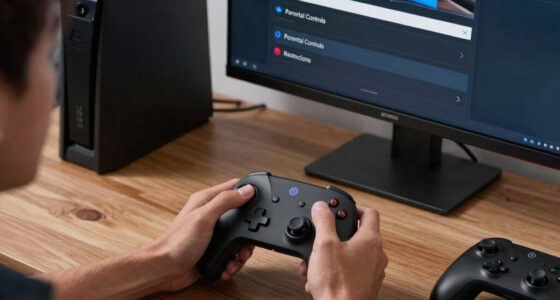
- Age ratings and profiles: For younger players, check the game’s rating and account settings before sharing community layouts with chat, browser, or overlay shortcuts.
Here is the couch test. If your character spins slowly while the controller sits on the table, raise the right-stick dead zone a little. If the camera feels like it is dragging through wet paint, lower smoothing or sensitivity. Change one setting, test one scene, repeat.
Direct challenge: do not accept a bad layout after 30 seconds of frustration. Spend 3 minutes checking the basics and you may save yourself a whole evening of blaming the wrong thing.
What Steam Machine Does Better Than a Normal Console
Steam Machine gives you more control than a typical console because controller layouts are not locked to what the developer shipped. You can remap deeply, share profiles, use non-standard controllers, and make keyboard-heavy PC games work from a living-room setup.
That flexibility comes with a small tax. Consoles usually feel cleaner because one platform holder controls the hardware, prompts, certification path, and expected controller shape. Steam Machine lives closer to the PC world, where choice is the point and occasional tinkering is the price.
For some players, that trade is worth it. You can use a fight stick for arcade games, a PlayStation pad for action titles, an Xbox-style controller for racers, and a gyro-capable controller for shooters. One box, several handshakes.
| Experience | Typical Console | Steam Machine |
|---|---|---|
| Default feel | Usually consistent and simple | Varies by game, then improves with profiles |
| Remapping depth | Often basic or system-level | Deep per-game layouts through Steam Input |
| Old PC games | Usually unavailable or limited | Often playable with keyboard-and-mouse mapping |
| Controller variety | Usually tied to one family of controllers | Broad support for Xbox, PlayStation, Steam Controller, and many third-party pads |
The Best Setup Habit for Fewer Control Headaches
The best habit is to treat layouts like saved game settings. Check them once, name them clearly, and keep the ones that work. A good Steam Machine setup is not about endless tweaking; it is about building a small shelf of trusted profiles.
When you start a new game, give the default layout one honest try. If it fights you, try a community profile with strong usage signals, then make two or three personal edits. Save it with a plain name like Action – gyro aim or Strategy – couch mouse.
After a few weeks, you will notice patterns. Shooters may need gyro or trackpad aim. Strategy games may need radial menus. Platformers may need clean face buttons and low input weirdness. Your Steam Machine starts to feel less like a box of settings and more like a controller wardrobe: grab the right fit, play.
Frequently Asked Questions
Can Steam Machine use different controller layouts for different games?
Yes. Steam Input can save per-game layouts, so your shooter, platformer, racing game, and strategy game can each use different controls. You can also keep separate layouts for different controller types.
Can Steam Machine make keyboard-only games work with a controller?
Often, yes. Steam Input can map keyboard keys and mouse movement to sticks, buttons, triggers, trackpads, or gyro controls. Some games still feel awkward if they rely on tiny UI elements, launchers, or unusual input systems.
Many PC games use Xbox-style XInput prompts even when Steam Input supports your PlayStation controller. The controls may work correctly while the on-screen labels still show A/B/X/Y. Some games offer prompt settings or mods, but many do not.
Are community controller layouts safe to use?
Community layouts are usually just shared input mappings, and they can save a lot of time. Still, check what a layout does before using it, especially if it includes overlay shortcuts, browser actions, or unusual button combinations on a shared family system.
Should I turn Steam Input on for every game?
Not always. Some games work best with Steam Input enabled, while others feel cleaner with native controller support. If controls feel delayed, duplicated, or mislabeled, test both options and keep the one that feels better on your exact platform and game version.
Conclusion
Remember this: Steam Machine handles controller layouts by making Steam Input the translator between your hands and each game. Start with the default, borrow from the community when needed, then save small edits that make the game feel natural.
Once you get that rhythm, the whole library feels less like a pile of mismatched PC controls and more like a shelf of games waiting for the right grip.
Columbus Day / Indigenous Peoples' Day Picks
long weekend sales
As an affiliate, we earn on qualifying purchases.