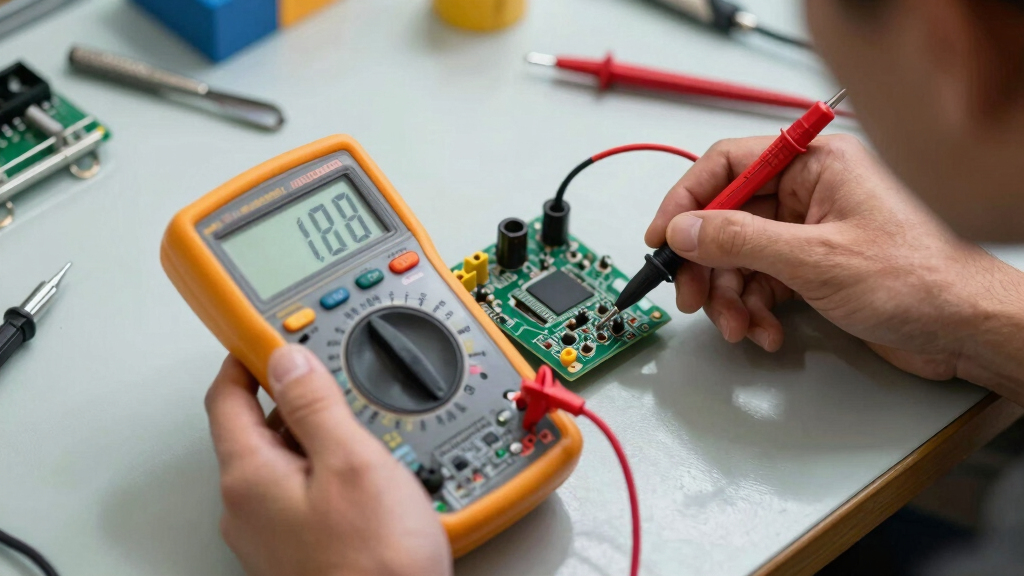

The Klein Tools MM720 is my best overall digital multimeter because it combines True RMS measurement, a 1,000-volt range, and a low-impedance mode in a versatile package. I rate the KAIWEETS 6000 Count model as the strongest value choice, while the Fluke 117 is my premium recommendation for electricians who want non-contact voltage detection and a work-focused feature set. The main tradeoffs are measurement capability, electrical safety category, ease of use, portability, and how much long-term durability is worth paying for. Continue reading for my full breakdown of the best digital multimeters and the buyer types each model serves best.

Play games on Amazon Luna for your game nights, included with Prime
- A rotating selection of games, no download needed
- Play on TV, laptop or phone
- Fast, free delivery for your gear, too
Complete the kit


Key Takeaways
- The Klein Tools MM720 ranks first because its True RMS accuracy, LoZ mode, and 1,000-volt range cover more demanding jobs than the lower-priced Klein MM420 and MM325.
- The KAIWEETS 6000 Count offers the strongest feature-to-price balance, though the Fluke 117 and Fluke 115 carry greater appeal for buyers prioritizing professional build quality and established service support.
- The Fluke 117 is the premium electrician-focused pick because its non-contact voltage detection separates it from the Fluke 115, which is better aligned with bench work and field service diagnostics.
- The basic AstroAI 2000 Count model is the easiest low-cost entry point, but its simpler measurement system leaves less room for troubleshooting variable-frequency equipment or complex electronics.
- Compactness comes with compromises: the Fluke 106 is easier to carry than the Klein MM720, yet its smaller interface and narrower feature set make it less suitable as an all-purpose primary meter.
| Klein Tools MM720 Digital Multimeter |  | Best Overall | Voltage: Up to 1000V AC/DC | Current: Up to 10A AC/DC | Resistance: Up to 60 MΩ | VIEW LATEST PRICE | See Our Full Breakdown |
| Klein Tools MM420 Digital Multimeter |  | Best Jobsite Midrange Pick | Voltage: Up to 600V AC/DC | Current: Up to 10A AC/DC | Resistance: Up to 50 MΩ | VIEW LATEST PRICE | See Our Full Breakdown |
| AstroAI Digital Multimeter Tester 2000 Counts |  | Best for Beginners | Display Resolution: 2000 counts | Digit Format: 3½ digits, maximum reading 1999 | Display: Backlit LCD | VIEW LATEST PRICE | See Our Full Breakdown |
| Fluke 17B+ Digital Multimeter |  | Best for Industrial Troubleshooting | Safety Rating: CAT III 600V | Voltage: Up to 1000V AC/DC | Current: Up to 10A | VIEW LATEST PRICE | See Our Full Breakdown |
| KAIWEETS HT118A Digital Multimeter | 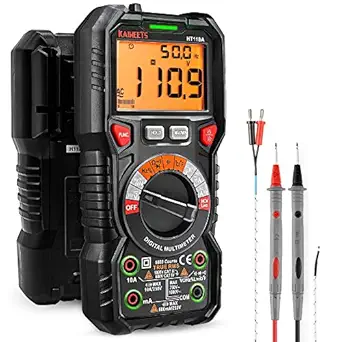 | Best Feature Value | Display Resolution: 6000 counts | Voltage: Up to 1000V DC and 750V AC | Current: Up to 10A AC/DC | VIEW LATEST PRICE | See Our Full Breakdown |
| Fluke 115 Multimeter |  | Best for Field Service Technicians | Measurement Type: True RMS | Display Resolution: 6000 counts | Safety Rating: CAT III 600V | VIEW LATEST PRICE | See Our Full Breakdown |
| Fluke 117 Digital Multimeter |  | Best for Commercial Electricians | Measurement Type: True RMS | Voltage Detection: Non-contact AC detection | Voltage Selection: Automatic AC/DC selection | VIEW LATEST PRICE | See Our Full Breakdown |
| AstroAI Digital Multimeter and Analyzer TRMS 6000 Counts |  | Best Feature Value | Measurement Type: True RMS | Display Resolution: 6000 counts | Maximum DC Voltage: 1000V | VIEW LATEST PRICE | See Our Full Breakdown |
| Klein Tools MM325 Digital Multimeter | 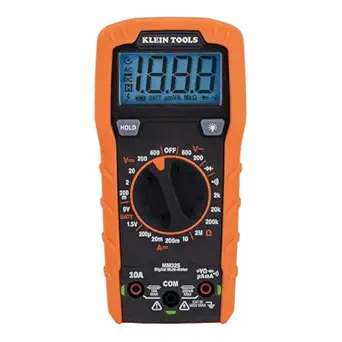 | Best Rugged Basic Meter | AC/DC Voltage Range: Up to 600V | DC Current Range: Up to 10A | Resistance Range: Up to 2MΩ | VIEW LATEST PRICE | See Our Full Breakdown |
| Fluke 15B+ Digital Multimeter |  | Best for Straightforward Electrical Troubleshooting | Safety Rating: CAT III 600V | AC/DC Voltage Range: Up to 1000V | AC/DC Current Range: Up to 10A | VIEW LATEST PRICE | See Our Full Breakdown |
| Fluke 106 Palm-Sized Digital Multimeter |  | Best Compact | Power source: Battery powered | Maximum operating voltage: 600V | Safety rating: CAT III 600V | VIEW LATEST PRICE | See Our Full Breakdown |
| digital multimeter | Display |
|---|---|
| Klein Tools MM720 Digital Mult | Large reverse-contrast LCD |
| Klein Tools MM420 Digital Mult | Backlit LCD |
| AstroAI Digital Multimeter Tes | Backlit LCD |
| Fluke 17B+ Digital Multimeter | — |
| KAIWEETS HT118A Digital Multim | 2.9-inch backlit LCD |
| Fluke 115 Multimeter | — |
| Fluke 117 Digital Multimeter | Large backlit display |
| AstroAI Digital Multimeter and | Large backlit LCD |
| Klein Tools MM325 Digital Mult | Backlit |
| Fluke 15B+ Digital Multimeter | Basic display with no stated backlight |
| Fluke 106 Palm-Sized Digital M | — |
More Details on Our Top Picks
Klein Tools MM720 Digital Multimeter
I place the Klein Tools MM720 at the top of this batch because it offers the best all-round capability without becoming a specialist meter. Its 1000V AC/DC ceiling, True RMS readings, and low-impedance mode make it more useful than the Klein MM420 when variable waveforms or ghost voltages could confuse a diagnosis. It also matches the KAIWEETS HT118A on 60 MΩ resistance while adding convenient lead storage and a magnetic hanger. I see the reverse-contrast screen as a strong fit for crowded panels, though buyers who want a simpler meter may find the many modes excessive. The required battery details are also unclear in the supplied data. The AstroAI 2000 Counts presents a leaner alternative for basic checks, but the MM720 earns its ranking through range, waveform handling, and diagnostic depth.
Pros:- True RMS measurement supports more dependable readings on non-sinusoidal signals
- LoZ mode helps reject misleading ghost voltages
- Broad 1000V, 10A, and 60 MΩ measurement capacity
- Magnetic hanger, kickstand, and lead holders improve hands-free work
Cons:- The large function set creates a steeper learning curve for casual users
- Battery type and included-battery status are unclear in the supplied product data
Best for: I recommend it to electricians, HVAC technicians, and serious DIY buyers who need True RMS accuracy, ghost-voltage rejection, and broad diagnostic functions.
Not ideal for: I would skip it for occasional household checks because its extensive controls and measurement modes add unnecessary complexity.
- Voltage:Up to 1000V AC/DC
- Current:Up to 10A AC/DC
- Resistance:Up to 60 MΩ
- Ranging:Auto-ranging
- Measurement Technology:True RMS with LoZ mode
- Additional Measurements:Temperature, capacitance, frequency, diode, and continuity
- Display:Large reverse-contrast LCD
- Worksite Features:Test-lead holders, kickstand, and magnetic hanger
Our verdict“I recommend the MM720 as the strongest all-purpose choice for buyers who value diagnostic range over simplicity.”
Klein Tools MM420 Digital Multimeter
I rank the Klein Tools MM420 as the practical middle ground for buyers who need a dependable jobsite meter without the MM720’s broader diagnostic menu. Its 6.6-foot drop resistance is the defining advantage: it suits ladders, tool bags, and active work areas better than the budget AstroAI 2000 Counts. Auto-ranging and True RMS also reduce setup mistakes and improve readings on irregular AC signals. The tradeoff is capability. Its 600V ceiling and 50 MΩ range trail the MM720, and the supplied feature set is centered on core electrical measurements rather than temperature, capacitance, or frequency work. I also dislike that the required two AAA batteries are not included. This model sits below the MM720 in versatility, but its tougher construction and simpler controls make it the more focused choice for routine service calls.
Pros:- True RMS and auto-ranging simplify routine electrical measurements
- Rated to withstand drops from 6.6 feet
- Backlit display remains readable in dim work areas
- Protected test leads add practical jobsite durability
Cons:- Lower voltage and resistance limits than the Klein MM720
- Fewer diagnostic functions than the MM720 and KAIWEETS HT118A
- Two required AAA batteries are not included
Best for: I recommend it to maintenance technicians, apprentices, and residential electricians who want True RMS readings in a durable, straightforward meter.
Not ideal for: I would skip it for technicians who regularly work above 600V or need temperature, frequency, and capacitance diagnostics.
- Voltage:Up to 600V AC/DC
- Current:Up to 10A AC/DC
- Resistance:Up to 50 MΩ
- Ranging:Auto-ranging
- Measurement Technology:True RMS
- Display:Backlit LCD
- Drop Resistance:6.6 feet (2 meters)
- Power:2 AAA batteries, not included
Our verdict“I recommend the MM420 for routine field work where durability and clean operation matter more than an extensive function list.”
AstroAI Digital Multimeter Tester 2000 Counts
I make the AstroAI 2000 Counts my beginner pick because it keeps the core jobs accessible: checking voltage, current, resistance, and diodes. The backlit display and data hold help new users capture a reading without juggling the probes, while double fuses and a silicone cover provide useful physical protection. Compared with the KAIWEETS HT118A, however, its 2000-count display offers less resolution and its measurement menu omits capacitance and temperature. Its two-sample-per-second response is also better suited to steady household or automotive checks than rapidly changing signals. I would not choose it for demanding AC work because AC current support is restricted and it cannot read AC voltage below 100mV. The included leads and batteries make setup easier, but buyers must still learn correct socket placement before measuring current.
Pros:- Simple core measurement set is approachable for first-time owners
- Backlight and data hold make readings easier to capture
- Double-fuse protection and silicone cover support safer handling
- Test leads and batteries are included
Cons:- Restricted AC-current measurement and no AC-voltage readings below 100mV
- Lower 2000-count resolution than the KAIWEETS HT118A
- Correct jack selection is required to avoid misuse during current tests
Best for: I recommend it to beginners handling battery checks, simple automotive troubleshooting, hobby electronics, and low-frequency household diagnostics.
Not ideal for: I would skip it for electricians diagnosing variable AC loads or buyers who need 6000-count resolution, capacitance, or temperature measurement.
- Display Resolution:2000 counts
- Digit Format:3½ digits, maximum reading 1999
- Display:Backlit LCD
- Measurement Functions:AC/DC voltage, current, resistance, and diode testing
- Sampling Speed:2 readings per second
- Reading Control:Data-hold function
- Power Management:Automatic shutoff
- Protection:Double fuses and silicone cover
Our verdict“I recommend this AstroAI for learning and occasional troubleshooting, not for advanced AC diagnostics.”
Fluke 17B+ Digital Multimeter
I select the Fluke 17B+ for technicians who want a broad traditional measurement set backed by a stated CAT III 600V safety rating. It covers voltage, current, resistance, continuity, diodes, capacitance, frequency, and temperature, giving it more diagnostic breadth than the Klein MM420. The included Type K thermocouple also makes it ready for heating and equipment checks without another accessory purchase. Yet its position is specialized rather than dominant. Unlike the Klein MM720, the supplied data does not identify True RMS or LoZ capability, which makes the Klein more attractive for distorted waveforms and ghost-voltage checks. The meter can measure up to 1000V, but its CAT III classification stops at 600V; those figures describe different limits. I would also favor another model if a backlight, wireless transfer, or CAT IV coverage is required.
Pros:- Wide measurement menu supports electrical and equipment troubleshooting
- CAT III 600V rating is clearly stated
- Measures voltage up to 1000V AC/DC and current up to 10A
- Type K thermocouple is included for temperature checks
Cons:- No CAT IV rating
- True RMS and LoZ capability are not identified in the supplied data
- Display backlighting and connectivity are not specified
Best for: I recommend it to commercial and industrial maintenance technicians who need temperature, capacitance, frequency, and standard electrical tests in one meter.
Not ideal for: I would skip it for utility-side work requiring CAT IV coverage or waveform diagnostics that specifically call for documented True RMS and LoZ modes.
- Safety Rating:CAT III 600V
- Voltage:Up to 1000V AC/DC
- Current:Up to 10A
- Resistance and Continuity:Supported
- Diode Test:Supported
- Capacitance:Supported
- Frequency:Supported
- Temperature:Up to 400°C
- Included Accessory:Type K thermocouple
Our verdict“I recommend the Fluke 17B+ for maintenance professionals who prioritize a broad conventional test set and a stated CAT III rating.”
KAIWEETS HT118A Digital Multimeter
I position the KAIWEETS HT118A as the feature-value pick because it combines a 6000-count display, True RMS, auto-ranging, temperature measurement, and high stated safety categories in one package. Its CAT III 1000V and CAT IV 600V certifications give buyers clearer safety information than the AstroAI 2000 Counts, while the 2.9-inch backlit screen provides more resolution and viewing area. It also reaches 60 MΩ resistance and 10A AC/DC, placing its core range close to the Klein MM720. The Klein remains my stronger overall choice because it explicitly adds LoZ mode, a magnetic hanger, and integrated lead storage. KAIWEETS also uses a bulkier body that can be awkward in confined panels, and the probe caps must be removed for some connections. I recommend it when function-per-dollar matters more than compact handling.
Pros:- 6000-count True RMS measurement provides finer readings than a 2000-count beginner meter
- CAT III 1000V and CAT IV 600V certifications are clearly stated
- Large backlit screen supports easier reading
- Temperature, capacitance, diode, and continuity modes broaden its diagnostic use
Cons:- Bulkier housing is less convenient in confined work areas
- Protective caps must be removed before using the leads in some connections
- No LoZ mode is identified for rejecting ghost voltages
Best for: I recommend it to automotive troubleshooters, advanced DIY buyers, and electrical trainees who want broad functions and clearly stated safety certifications.
Not ideal for: I would skip it for technicians working in tight enclosures or buyers who want LoZ ghost-voltage rejection and integrated lead management.
- Display Resolution:6000 counts
- Voltage:Up to 1000V DC and 750V AC
- Current:Up to 10A AC/DC
- Resistance:Up to 60 MΩ
- Measurement Technology:True RMS with auto-ranging
- Display:2.9-inch backlit LCD
- Safety Certifications:IEC CAT III 1000V and CAT IV 600V
- Protection:Double ceramic fuse, thermistor, and double insulation
Our verdict“I recommend the HT118A to buyers who want 6000-count resolution and broad functions without making compactness the priority.”
Fluke 115 Multimeter
I rank the Fluke 115 as the strongest field-service pick because its compact body combines True-RMS accuracy with the measurements technicians regularly need, including frequency and capacitance. Its Min/Max/Average recording can reveal intermittent changes that a single reading may miss, giving it a practical advantage over the simpler Fluke 15B+. The white LED backlight also makes panel work easier than it would be with the 15B+ and its basic display. Compared with the Fluke 117, however, the 115 lacks non-contact voltage detection, automatic AC/DC selection, and low-impedance mode. Its CAT III 600V rating also limits where it belongs. I would choose it for portable diagnostic depth, but not for higher-category distribution work or buyers seeking connected reporting.
Pros:- True-RMS measurement supports accurate readings on non-linear loads
- Min/Max/Average recording helps identify fluctuating electrical behavior
- Compact design suits frequent field visits
- White LED backlight improves readability inside dark panels
Cons:- CAT III 600V rating is restrictive for higher-category electrical environments
- No non-contact voltage detection or low-impedance mode
- Costs more than basic meters aimed at occasional household work
Best for: Field service technicians who troubleshoot controls, equipment, and branch circuits and need portable True-RMS measurement with recording functions
Not ideal for: Technicians working above CAT III 600V or electricians who prioritize non-contact voltage screening and low-impedance measurement
- Measurement Type:True RMS
- Display Resolution:6000 counts
- Safety Rating:CAT III 600V
- Primary Measurements:Voltage and current
- Resistance Functions:Resistance and continuity
- Additional Measurements:Frequency and capacitance
- Recording:Min/Max/Average
- Display Lighting:White LED backlight
Our verdict“The Fluke 115 is my choice for field technicians who value portable diagnostic capability more than voltage screening or connected features.”
Fluke 117 Digital Multimeter
I place the Fluke 117 at the front for commercial electrical work because it pairs True-RMS measurement with non-contact voltage detection and automatic AC/DC selection. Those features reduce setup friction during repeated checks, while low-impedance mode helps suppress ghost voltage readings from capacitive coupling. The Fluke 115 offers frequency, capacitance, and Min/Max/Average recording, making that model better for detailed field diagnostics; the 117 instead favors fast circuit identification. Its voltage detector remains a screening aid rather than a substitute for a contact test, and the supplied data does not point to Bluetooth or logging support. The stated 400-hour typical battery life suits long work cycles, though backlight and detector use can alter runtime. I favor this model for electricians who value efficient voltage checks over broader measurement depth.
Pros:- Non-contact AC voltage detection supports quick preliminary screening
- Low-impedance mode helps reject misleading ghost voltages
- Automatic AC/DC selection reduces dial changes during repetitive work
- True-RMS measurement handles non-linear AC loads accurately
Cons:- Non-contact detection cannot replace a direct measurement when proving circuit state
- Less focused on recording and component diagnostics than the Fluke 115
- No stated Bluetooth or remote reporting capability
Best for: Commercial electricians performing repeated voltage checks in buildings where ghost voltages and mixed AC/DC circuits can slow troubleshooting
Not ideal for: Electronics technicians who need extensive recording, frequency, capacitance, or connected data features
- Measurement Type:True RMS
- Voltage Detection:Non-contact AC detection
- Voltage Selection:Automatic AC/DC selection
- Low-Impedance Mode:Included
- DC Millivolt Range:600.0 mV
- DC Millivolt Resolution:0.1 mV
- Operating Temperature:-10°C to +50°C
- Typical Battery Life:400 hours
- Display:Large backlit display
Our verdict“The Fluke 117 makes the most sense for commercial electricians who want faster voltage troubleshooting and better control of ghost readings.”
AstroAI Digital Multimeter and Analyzer TRMS 6000 Counts
I give the AstroAI TRMS 6000 Counts meter the feature-value role because it covers temperature, duty cycle, frequency, capacitance, and standard electrical measurements in one affordable-style package. That breadth makes it more flexible for automotive and household diagnostics than the Klein Tools MM325, which centers on core voltage, current, resistance, diode, and continuity checks. Auto-ranging and True-RMS measurement reduce setup and waveform errors, while ceramic fuses add overload protection. The tradeoff is portability: at 492 grams, it is less convenient to carry than the compact Fluke 115 or palm-sized Fluke 106. The supplied specifications also omit a formal CAT safety category, so I would not choose it over a clearly rated Fluke for demanding distribution panels. Its 1000V DC ceiling expands range, but range alone does not define safe working conditions.
Pros:- Broad measurement set includes temperature, frequency, duty cycle, and capacitance
- 6000-count True-RMS design offers more measurement detail than basic 2000-count meters
- Auto-ranging simplifies movement between different circuits
- Ceramic fuses provide overload protection
Cons:- 492-gram weight makes it less portable than compact alternatives
- No formal CAT safety category is stated in the supplied product data
- Test-lead caps must be handled correctly before measurement
Best for: Budget-focused automotive and household troubleshooters who want temperature, frequency, capacitance, and duty-cycle functions in one meter
Not ideal for: Industrial electricians who require a clearly documented CAT rating or technicians who carry a meter throughout the day
- Measurement Type:True RMS
- Display Resolution:6000 counts
- Maximum DC Voltage:1000V
- Ranging:Automatic
- Measurements:Voltage, current, resistance, capacitance, frequency, duty cycle, diode, continuity, and temperature
- Display:Large backlit LCD
- Protection:Ceramic overload fuses
- Weight:492 grams
- Dimensions:7.48 x 3.54 x 1.38 inches
Our verdict“This AstroAI is my value choice for buyers who want the widest function set and can accept extra weight and less explicit safety documentation.”
Klein Tools MM325 Digital Multimeter
I assign the Klein Tools MM325 the rugged basic-meter spot because its two-meter drop resistance addresses the knocks that happen in tool bags and active job sites. It measures the core quantities needed for straightforward household, automotive, and light trade work, and lead-alert protection helps catch an incorrect test-lead setup. Compared with the AstroAI TRMS 6000 Counts meter, though, the MM325 offers a narrower 600V ceiling, 2MΩ resistance limit, and no stated temperature, capacitance, frequency, or True-RMS capability. The Klein Tools MM420 is also the better fit for buyers who specifically want auto-ranging and True RMS. In return, the MM325 supplies a focused interface, backlighting, included leads, and documented drop durability. I would rank it above feature-heavy choices for rough handling, but below them for waveform analysis or component-level diagnosis.
Pros:- Two-meter drop resistance suits demanding job-site handling
- Lead-alert protection helps reduce setup mistakes
- Backlit display supports work in dim locations
- Test leads, batteries, and instructions are included
Cons:- No stated True-RMS or low-impedance capability
- 2MΩ resistance limit is restrictive for some electronics work
- Measurement selection is much narrower than the AstroAI TRMS model
Best for: Apprentices, maintenance staff, and DIY users who need a durable meter for basic 600V circuit checks
Not ideal for: HVAC, electronics, or variable-speed equipment technicians who need capacitance, frequency, temperature, or True-RMS readings
- AC/DC Voltage Range:Up to 600V
- DC Current Range:Up to 10A
- Resistance Range:Up to 2MΩ
- Test Functions:Diode and continuity
- Display:Backlit
- Lead Protection:Lead-alert system
- Drop Resistance:6.6 feet (2 meters)
- Included Items:Test leads, batteries, and instructions
Our verdict“The MM325 is my rugged entry-level pick for buyers who need dependable basic measurements without paying for specialized functions.”
Fluke 15B+ Digital Multimeter
I select the Fluke 15B+ for straightforward electrical troubleshooting because it covers AC/DC voltage, AC/DC current, resistance, continuity, diode testing, and capacitance without layering on specialized controls. Its 1000V measurement range is broader than the 600V Klein Tools MM325, while the 10A current range suits many residential, commercial, and automotive checks. Buyers still need to match the job to its CAT III 600V rating; a displayed range is not permission to work in a higher-category environment. Compared with the Fluke 117, the 15B+ omits non-contact detection, automatic AC/DC selection, low-impedance mode, and a stated backlight. It also lacks the Fluke 115’s Min/Max/Average recording. I rank it for buyers who want Fluke fundamentals with capacitance, not those who need speed-oriented electrician aids, data capture, or high-current measurement.
Pros:- Measures AC and DC voltage up to 1000V
- Supports both AC and DC current measurement up to 10A
- Capacitance, diode, resistance, and continuity functions cover common diagnostic tasks
- CAT III 600V rating provides a defined safety boundary
Cons:- Basic display has no stated backlight
- No Min/Max/Average recording, non-contact detection, or low-impedance mode
- 10A current ceiling rules out direct high-current measurements
Best for: Residential and automotive troubleshooters who want a Fluke meter with capacitance and a broad voltage range but few advanced controls
Not ideal for: Commercial electricians needing non-contact detection or LoZ mode, and technicians measuring currents above 10A
- Safety Rating:CAT III 600V
- AC/DC Voltage Range:Up to 1000V
- AC/DC Current Range:Up to 10A
- Resistance:Supported
- Continuity:Supported
- Diode Testing:Supported
- Capacitance:Supported
- Display:Basic display with no stated backlight
Our verdict“The Fluke 15B+ is my practical choice for buyers who want broad core measurements and capacitance without paying for the Fluke 117’s electrician-focused aids.”
Fluke 106 Palm-Sized Digital Multimeter
I rank the Fluke 106 as the compact pick because its 200-gram body is easier to carry between service calls or fit inside a crowded tool bag. It still handles voltage, resistance, continuity, capacitance, and frequency, covering common troubleshooting without the bulk of the Fluke 115. The tradeoff is capability: its CAT III 600V rating falls short of the Klein Tools MM720’s 1000V range, and the 10A current input limits heavier-current work. Buyers also miss connected features such as Bluetooth, while unspecified battery life makes runtime harder to predict. I would choose this over larger models when portability matters more than advanced analysis, but I would favor the MM720 or Fluke 115 for broader professional workloads. Included leads and batteries make the 106 a ready-to-carry secondary meter.
Pros:- Compact 5.59-inch body fits easily in a portable tool kit
- Light 200-gram weight reduces bulk during service calls
- Measures voltage, resistance, continuity, capacitance, and frequency
- Includes test leads and batteries for immediate setup
Cons:- 10A current input is restrictive for higher-current diagnostics
- 600V ceiling is lower than the Klein Tools MM720’s 1000V range
- No Bluetooth connectivity, and published battery-life information is absent
Best for: Mobile technicians and maintenance workers who need a small meter for routine voltage, continuity, resistance, capacitance, and frequency checks
Not ideal for: Industrial electricians working above 600V or buyers who need advanced current analysis, remote logging, or Bluetooth connectivity
- Power source:Battery powered
- Maximum operating voltage:600V
- Safety rating:CAT III 600V
- Maximum current input:10A
- Measurements:Voltage, resistance, continuity, capacitance, and frequency
- Weight:200 grams
- Dimensions:5.59 x 2.72 x 1.1 inches
- Included accessories:Test leads and batteries
Our verdict“I recommend the Fluke 106 for technicians who want Fluke reliability in a pocketable meter and can accept a 600V ceiling and limited advanced features.”
How We Picked
I ranked these meters by examining measurement capability, electrical safety ratings, input protection, usability, and value for the intended buyer. True RMS support received extra weight because it improves AC readings on distorted waveforms, while LoZ mode, non-contact voltage detection, capacitance, temperature, and current ranges earned credit when they solved a clear diagnostic need. I also compared display readability, control layout, portability, and whether each model reduced friction for beginners or working technicians.
My ranking favors useful capability over feature count. A long specification list did not place a meter above a model with stronger protection, clearer controls, or a better-defined professional role. I treated the Klein MM720 as the best all-around balance, the KAIWEETS as the value leader, and the Fluke 117 as the premium electrician choice. Lower-ranked meters still earn distinct places when they offer simpler operation, smaller size, or a lower entry price.
Factors to Consider When Choosing Best Digital Multimeters
Choosing among the best digital multimeters starts with the work the meter will face, not the longest feature list. I would match the meter to the highest-energy environment, the types of signals being measured, and the functions that will be used regularly. The factors below explain where paying more produces a practical benefit and where a simpler meter is the smarter purchase.
Match the Safety Category to the Work
I treat the CAT rating as a boundary for where a meter belongs, not as a marketing number. CAT II generally covers plug-in appliances and similar loads, while CAT III applies to building distribution circuits and permanently installed equipment. CAT IV is intended for measurements closer to the utility connection, where transient energy can be much higher. Voltage rating alone does not describe protection; a 600-volt CAT III meter and a 600-volt CAT IV meter are built for different exposure levels. I also look for properly rated leads, guarded inputs, and fused current terminals, since the meter body is only part of the safety system. Buyers working only on low-voltage electronics may not need the highest category, but household panels and commercial electrical systems justify stronger protection.
Decide Whether True RMS Matters
I recommend True RMS when measurements may involve motor drives, dimmers, electronic power supplies, HVAC controls, or other non-sinusoidal AC signals. An average-responding meter can give a misleading reading when a waveform is distorted, even if its basic accuracy specification looks respectable. For batteries, automotive DC circuits, and simple resistance checks, that advantage may have little effect on daily work. Buyers sometimes pay for True RMS without checking the meter’s frequency limits, which determine whether it can follow the signals they expect to measure. I would pair waveform capability with the application instead of treating True RMS as a universal requirement. This distinction helps explain why a feature-rich professional meter can justify its price for one buyer while a basic model remains sufficient for another.
Choose Auto-Ranging or Manual Control
Auto-ranging removes the need to estimate a signal range before each reading, which makes it friendly for household troubleshooting and occasional use. Manual ranging can respond more predictably when a value fluctuates near a range boundary, and some technicians prefer that direct control. Many advanced meters offer both, giving the buyer speed for routine checks and control for unstable readings. I would not choose by range mode alone because display refresh rate, continuity response, and button layout often have a larger effect on workflow. A beginner also needs clearly marked input jacks, since placing a lead in the current terminal during a voltage test can create a dangerous fault. The best interface is the one that makes the correct setup obvious before the probes touch the circuit.
Separate Useful Functions From Spec-Sheet Extras
I place more value on a few job-specific functions than on a crowded list of rarely used modes. LoZ helps reject ghost voltage on electrical wiring, non-contact detection speeds up preliminary checks, and temperature measurement can aid HVAC diagnosis. Capacitance and frequency are more relevant for electronics, motors, and control systems than for basic outlet or battery checks. A 6,000-count display provides finer resolution than a 2,000-count display, but extra counts do not automatically mean better accuracy. I compare the meter’s accuracy specification and resolution together because either number can be misleading on its own. Buyers should identify three or four recurring measurements and pay for functions that make those tasks faster or more reliable.
Know When Durability Is Worth the Premium
A meter carried between job sites faces drops, dust, damaged leads, and repeated current measurements that a drawer-kept household meter may never encounter. I would pay more for robust input protection, a protective holster, replaceable fuses, and dependable parts availability when the tool supports paid work. Brand reputation has value here because calibration services, manuals, accessories, and replacement leads may remain available longer. An inexpensive meter can still be sensible as a backup, a vehicle tool, or a device for low-energy hobby circuits. The mistake is treating a low purchase price as the same thing as long-term value in a demanding setting. Professional buyers gain more from predictable protection and service life, while occasional users can direct their budget toward clear controls and the functions they actually need.
Frequently Asked Questions
Is the Klein Tools MM720 or Fluke 117 the better all-purpose meter?
I favor the Klein Tools MM720 for broad versatility because its 1,000-volt capability, True RMS measurement, and LoZ mode suit a wider mix of electrical tasks. The Fluke 117 is better for electricians who value non-contact voltage detection, a focused control layout, and Fluke’s professional ecosystem. Buyers who regularly move between electrical, HVAC, and general diagnostic work may get more functional coverage from the Klein. Those working mainly on commercial wiring may prefer the Fluke’s task-specific design. The right choice rests on whether wider measurement capability or electrician-centered workflow matters more.
Is a budget digital multimeter safe for household electrical work?
A budget meter can be suitable for household checks only when its CAT rating and voltage rating match the circuit being measured. I would inspect the leads, current-input fuse information, and independent safety markings rather than relying on the maximum voltage printed on the dial. Low-cost models make more sense for batteries, continuity, small electronics, and de-energized resistance checks than for service panels. Outlet and panel work can expose a meter to high-energy faults that demand strong input protection. When safety documentation is vague, I would keep that meter away from mains circuits.
Do I need a 6,000-count meter instead of a 2,000-count model?
A 6,000-count display shows more detail before the meter changes ranges, which helps when comparing close voltage, resistance, or capacitance readings. A 2,000-count model remains adequate for checking whether a battery is charged, a fuse has continuity, or a basic circuit has power. Counts describe display resolution rather than accuracy, so a higher count cannot compensate for a weak accuracy specification. I would choose 6,000 counts for electronics, HVAC diagnosis, and frequent troubleshooting where small differences matter. For occasional home use, the simpler 2,000-count option may be easier to justify.
Should I choose the Fluke 115 or Fluke 117?
The Fluke 115 makes more sense for field service, electronics, and general troubleshooting where direct probe measurements are the main task. The Fluke 117 is better aligned with electricians because non-contact voltage detection can speed up preliminary wire and circuit checks. Non-contact detection does not replace a direct measurement, but it can help identify likely live conductors before probing. If that feature will be used daily, the 117 earns its higher position in this roundup. If it will sit unused, the 115 offers a more focused route to professional True RMS measurement.
Can one digital multimeter cover automotive, household, and electronics work?
One versatile meter can cover much of this work when it includes DC current, True RMS AC, capacitance, frequency, and a wide resistance range. Household mains work also calls for the correct safety category, while automotive diagnosis benefits from good DC resolution and dependable current protection. Electronics users may care more about fast continuity, low-current ranges, and fine display resolution than a high maximum voltage. I would select a broad model such as the Klein MM720 if these tasks are evenly divided. A specialized meter or separate clamp meter becomes more useful when high current, microamp signals, or advanced electronics are regular parts of the workload.
Conclusion
For the widest mix of buyers, my best overall pick is the Klein Tools MM720 because it pairs True RMS measurement and LoZ with a broader voltage range than many alternatives here. The KAIWEETS 6000 Count is my best value choice for buyers who want a large function set without moving into premium pricing. Beginners should start with the AstroAI 2000 Count model when affordability and simple household or hobby measurements come before advanced waveform accuracy. My premium recommendation is the Fluke 117, especially for electricians who will use its non-contact voltage detection, while the Fluke 115 is the better specific-needs pick for field service diagnostics. Buyers wanting a pocket-friendly secondary meter should choose the Fluke 106, and those seeking a less expensive middle ground between basic and advanced Klein models should examine the MM420. I would make the final choice by matching the meter’s safety category, waveform capability, and interface to the highest-risk task it will perform.
Halloween Picks
halloween
As an affiliate, we earn on qualifying purchases.