
If you’re building a high-performance gaming PC in 2026, choosing the right CPU can make all the difference. The Intel Core i9-13900KF stands out as the best overall pick thanks to its blend of high core count and top-tier speeds, ideal for demanding games and multitasking. For those seeking raw value, the Intel Core i5-13400 offers solid performance at a more accessible price point. Meanwhile, the Intel Core i9-13900KS provides premium performance for enthusiasts willing to pay a premium for the absolute best. However, tradeoffs such as cost, power consumption, and compatibility can complicate the decision. Keep reading for a detailed breakdown of each option to find the best fit for your build.

Play games on Amazon Luna for your game nights, included with Prime
- A rotating selection of games, no download needed
- Play on TV, laptop or phone
- Fast, free delivery for your gear, too
Complete the kit


Key Takeaways
- The top-tier Intel Core i9-13900KF and i9-13900KS dominate in raw performance, but come with higher costs and power demands.
- AMD Ryzen options like the Ryzen 9 9950X3D provide competitive gaming performance with a focus on multi-threaded efficiency.
- Budget-conscious gamers should consider mid-range CPUs like the Intel Core i5-13400, which balances cost and performance well.
- Core count and clock speeds are critical, but platform compatibility and future upgrade paths are equally important considerations.
- Premium CPUs often require high-quality cooling solutions and a robust motherboard, increasing overall build costs.


| gaming cpus for high performance pc build | Processor Series | Processor Speed | Processor Socket | Wattage |
|---|---|---|---|---|
| Intel Core i9-12900KF Gaming D | Core i9 | 3.2 GHz (up to 5.2 GHz) | LGA 1700 | 125W |
| Intel Core i7-14700KF Desktop | Core i7 | Up to 5.6 GHz | LGA 1700 | 125W |
| Intel Core i9-13900KF Desktop | Core i9 | Up to 5.8 GHz | LGA 1700 | — |
| CLX Horus Gaming PC with AMD R | — | — | — | — |
| Intel Core i5-13400 Desktop Pr | — | — | — | — |
| Intel Core i5-13600K Desktop P | Core i5 | Up to 5.1 GHz | LGA 1700 | 181 watts |
| Intel Core i9-13900KS Desktop | Intel Core i9 | Up to 6.0 GHz | LGA 1700 | 150 watts |
More Details on Our Top Picks
Intel Core i9-12900KF Gaming Desktop Processor, 16 Cores (8P+8E), up to 5.2 GHz, Unlocked, LGA1700, 125W
The Intel Core i9-12900KF stands out for its balanced combination of high core count and impressive clock speeds, making it ideal for gamers who want top-tier performance without compromising multitasking. Compared to the Intel Core i7-14700KF, it offers slightly lower core count but is often more affordable, yet still delivers exceptional gaming responsiveness. Its unlocked design allows overclocking, but at the expense of higher power draw and heat output, which means a robust cooling solution is essential. This CPU’s compatibility is somewhat limited to newer motherboards, and it requires a dedicated GPU, making it less appealing for budget builds or integrated graphics needs.
bestFor: High-end gamers and streamers seeking the best balance of performance and overclocking potential.
notIdealFor: Budget builders or users with limited cooling capacity, due to its high power consumption and heat generation.
- High core and thread count optimize multitasking and gaming
- Unlocked for overclocking potential
- Efficient architecture reduces power waste compared to previous generations
- Requires discrete graphics card, increasing overall build cost
- High power consumption at 125W may demand advanced cooling solutions
Verdict: This CPU is perfect for gamers who want premium performance and overclocking flexibility, provided they are prepared for the cooling and power requirements.
Pros:- High core and thread count optimize multitasking and gaming
- Unlocked for overclocking potential
- Efficient architecture reduces power waste compared to previous generations
Cons:- Requires discrete graphics card, increasing overall build cost
- High power consumption at 125W may demand advanced cooling solutions
Best for: High-end gamers and streamers seeking the best balance of performance and overclocking potential.
Not ideal for: Budget builders or users with limited cooling capacity, due to its high power consumption and heat generation.
- Processor Series:Core i9
- Processor Speed:3.2 GHz (up to 5.2 GHz)
- Processor Socket:LGA 1700
- Secondary Cache:20 MB
- Wattage:125W
- Processor Threads:24
Our verdict“This CPU is perfect for gamers who want premium performance and overclocking flexibility, provided they are prepared for the cooling and power requirements.”
Intel Core i7-14700KF Desktop Processor, 20 Cores, Unlocked, Up to 5.6 GHz
The Intel Core i7-14700KF offers a substantial upgrade in core count over the i9-12900KF, with 20 cores and a turbo boost up to 5.6 GHz, making it suitable for heavy multitasking alongside gaming. It supports both DDR4 and DDR5 memory, providing flexibility for builders who want to upgrade gradually. While the i9-13900KF features more cores, the 14700KF’s high clock speeds and lower power consumption (125W) make it a compelling choice for high-performance gaming without excessive thermal management. However, as with other unlocked CPUs, it requires a compatible motherboard and discrete GPU, which can add to the overall cost.
bestFor: Enthusiasts who need a versatile CPU capable of gaming, streaming, and productivity tasks on a budget-conscious high-end build.
notIdealFor: Users seeking integrated graphics or minimal power consumption, as it has no integrated GPU and still demands a capable cooling solution.
- High core and thread count for demanding multitasking
- Supports both DDR4 and DDR5 for flexible memory options
- Strong turbo speeds up to 5.6 GHz for gaming responsiveness
- Requires a discrete GPU, increasing overall costs
- Potential BIOS updates needed on some motherboards
Verdict: Best suited for users who want a high-core CPU with excellent gaming and multitasking performance without the premium price of the i9-13900KF.
Pros:- High core and thread count for demanding multitasking
- Supports both DDR4 and DDR5 for flexibility
- Strong turbo speeds up to 5.6 GHz for gaming responsiveness
Cons:- Requires a discrete GPU, increasing overall costs
- Potential BIOS updates needed on some motherboards
Best for: Enthusiasts who need a versatile CPU capable of gaming, streaming, and productivity tasks on a high-end build.
Not ideal for: Users seeking integrated graphics or minimal power consumption, as it has no integrated GPU and still demands a capable cooling solution.
- Processor Series:Core i7
- Processor Speed:Up to 5.6 GHz
- Processor Socket:LGA 1700
- Secondary Cache:33 MB
- Wattage:125W
- Processor Count:20
Our verdict“This CPU is ideal for demanding users who want a balance of high core count and high clock speeds for gaming and productivity.”
Intel Core i9-13900KF Desktop Processor, 24 Cores, Up to 5.8 GHz
The Intel Core i9-13900KF pushes performance boundaries with 24 cores—divided into 8 performance and 16 efficiency cores—and an impressive boost up to 5.8 GHz. It surpasses the i7-14700KF in core count and raw speed, making it a prime choice for gamers who also edit videos or stream simultaneously. Its support for PCIe 5.0 and DDR5 ensures maximum future-proofing, though it does require a high-quality cooling solution due to its 253W TDP. Unlike the i5-13400, which has integrated graphics, this CPU’s discrete GPU requirement makes it less suitable for budget or compact builds.
bestFor: Power users who demand top-tier CPU performance for gaming, streaming, and content creation.
notIdealFor: Budget-conscious builders or those preferring integrated graphics, as it lacks onboard GPU and has high thermal output.
- Massive core and thread count handle multitasking effortlessly
- Supports cutting-edge PCIe 5.0 and DDR5 standards
- Unlocked for overclocking, unlocking maximum performance
- High power consumption and thermal demands require advanced cooling
- Requires a robust, compatible motherboard and BIOS update
Verdict: This CPU is tailored for gamers and creators who want unmatched performance and are prepared for premium cooling and power needs.
Pros:- Massive core and thread count handle multitasking effortlessly
- Supports cutting-edge PCIe 5.0 and DDR5 standards
- Unlocked for overclocking, unlocking maximum performance
Cons:- High power consumption and thermal demands require advanced cooling
- Requires a robust, compatible motherboard and BIOS update
Best for: Power users who demand top-tier CPU performance for gaming, streaming, and content creation.
Not ideal for: Budget-conscious builders or those preferring integrated graphics, as it lacks onboard GPU and has high thermal output.
- Processor Series:Core i9
- Processor Speed:Up to 5.8 GHz
- Processor Socket:LGA 1700
- Cores:24
- Threads:32
- Cache:36 MB
Our verdict“Ideal for demanding enthusiasts seeking maximum CPU power for gaming and content creation, provided cooling and power supply are capable.”
CLX Horus Gaming PC with AMD Ryzen 9 9950X3D, GeForce RTX 5090, 2TB SSD, 8TB HDD, 96GB DDR5, WiFi, Windows 11
The CLX Horus Gaming PC combines a AMD Ryzen 9 9950X3D with a GeForce RTX 5090, offering an extraordinary gaming experience. Its 96GB DDR5 RAM and extensive storage options make it a powerhouse for multitasking, streaming, and gaming at 4K. Compared to high-end CPUs like the Intel Core i9-13900KF, this prebuilt emphasizes seamless overall performance and user convenience, especially for those who prefer a ready-to-go solution. However, its price point is steep, reflecting the premium components, and its large size demands ample space. Power consumption and heat output are also significant considerations, requiring strong cooling and power supplies.
bestFor: Hardcore gamers and content creators seeking a plug-and-play high-performance system with premium specs.
notIdealFor: Budget-conscious buyers or those with limited space, due to size and cost.
- Powerful AMD Ryzen 9 9950X3D for demanding tasks
- High-end GeForce RTX 5090 for stunning visuals
- Massive 96GB DDR5 RAM for smooth multitasking
- Premium price and large footprint may limit accessibility
- High power draw and heat output require strong cooling solutions
Verdict: An excellent choice for those wanting top-tier prebuilt gaming performance with all-in-one convenience, assuming budget and space are not constraints.
Pros:- Powerful AMD Ryzen 9 9950X3D handles demanding multitasking
- High-end GeForce RTX 5090 delivers exceptional graphics
- Extensive 96GB DDR5 RAM supports seamless multitasking
Cons:- Premium cost makes it inaccessible for many users
- Large size requires significant space and cooling capacity
Best for: Hardcore gamers and creators demanding a prebuilt system with extreme specs for 4K gaming and multitasking.
Not ideal for: Budget buyers or users with space limitations, due to its size and cost.
Our verdict“Best for users who want a prebuilt gaming PC with extreme performance and are willing to invest in premium hardware and space.”
Intel Core i5-13400 Desktop Processor (13th Gen, 10 Cores, Up to 4.6 GHz)
The Intel Core i5-13400 offers a compelling mix of performance and affordability, featuring 10 cores (6 P-cores + 4 E-cores) and boosting up to 4.6 GHz. It supports PCIe 5.0 and DDR5, making it a practical choice for gamers who want to future-proof their build without breaking the bank. Compared to the i7-14700KF and higher-tier options, it provides excellent value for entry to mid-level high-performance gaming, but its lower core count and integrated graphics limit its appeal for demanding multitasking or professional content creation. The 65W power draw keeps cooling requirements modest, suitable for standard mid-range cooling setups.
bestFor: Budget-conscious gamers seeking a modern CPU with good future-proofing and integrated graphics.
notIdealFor: Power users or streamers who need higher core counts for multitasking and content creation, as it lacks the raw throughput of higher-end models.
- Hybrid architecture balances performance and efficiency
- Supports PCIe 5.0 and DDR5 for upgradeability
- Includes integrated Intel UHD Graphics 770 for casual gaming or backup display
- Limited to 65W power consumption, restricting overclocking and performance headroom
- Less suitable for high-end multitasking or professional workloads
Verdict: Best for budget builders wanting a modern, feature-rich CPU that handles gaming and everyday tasks well.
Pros:- Hybrid architecture offers a good performance-to-efficiency balance
- Supports PCIe 5.0 and DDR5 for future upgrades
- Includes integrated graphics for casual gaming and display needs
Cons:- Limited to 65W, restricting overclocking potential
- Lower core count compared to higher-tier CPUs limits multitasking
Best for: Budget-conscious gamers and mainstream users who want modern features without high power demands.
Not ideal for: Enthusiasts or streamers who require high core counts and overclocking headroom for demanding multitasking.
Our verdict“A smart choice for budget-conscious gamers who want modern features and integrated graphics for casual gaming and everyday use.”
Intel Core i5-13600K Desktop Processor, 14 Cores, Up to 5.1 GHz
The Intel Core i5-13600K stands out for offering a compelling balance between price and performance, making it ideal for gamers who want high speeds without stretching their budget. Compared with the Core i9-13900KS, it delivers nearly comparable gaming performance, but at a significantly lower cost and power draw. Its 14 cores and turbo up to 5.1 GHz ensure smooth gameplay and multitasking, while support for PCIe 5.0 and DDR5 future-proofs your build. The main tradeoff is its high wattage at 181W, which demands a robust cooling solution and a compatible motherboard. It doesn’t include a thermal solution, so you’ll need to budget for that separately. This pick makes the most sense for gamers seeking a high-performance CPU that won’t break the bank but still handles demanding titles with ease.
Pros:- Excellent balance of price and performance
- Supports PCIe 5.0 & DDR5 for future upgrades
- Strong multitasking with 14 cores and 20 threads
Cons:- High power consumption at 181W requires robust cooling
- No included thermal solution, adding to overall cost
Best for: Budget-conscious gamers who want high frame rates and future-proof features without overspending
Not ideal for: Enthusiasts who prefer absolute top-tier performance or overclocking headroom, as the i5-13600K doesn’t match the core count or extreme speeds of higher-end chips
- Processor Series:Core i5
- Processor Speed:Up to 5.1 GHz
- Processor Socket:LGA 1700
- Cache Memory:24 MB
- Processor Cores:14
- Threads:20
- Wattage:181 watts
- Platform Compatibility:Windows 10, Windows 11, macOS El Capitan 10.11
Our verdict“This CPU is perfect for gamers who want high performance without paying a premium, provided they invest in cooling and compatible components.”
Intel Core i9-13900KS Desktop Processor (Renewed)
The Intel Core i9-13900KS earns its spot as the top-tier processor for gamers who push their systems to the limit. Its 24 cores—comprising 8 performance cores and 16 efficiency cores—deliver exceptional multitasking and demanding gaming performance, especially when paired with high-end GPUs. The turbo speed of up to 6.0 GHz and a large 36MB cache mean faster load times and smoother gameplay in the most CPU-intensive titles. Compared to the i5-13600K, it offers superior core count and raw speed, but this comes with significant tradeoffs—mainly the high power draw at 150W and the fact it’s a renewed product, which could impact warranty or longevity. It requires a compatible LGA 1700 motherboard and a robust cooling solution. This CPU suits gamers and creators who demand the absolute best performance and are comfortable with the higher costs and potential risks of a refurbished unit.
Pros:- Unmatched core count and multi-threaded performance
- Maximum turbo speed up to 6.0 GHz for demanding tasks
- Large 36MB cache enhances responsiveness
Cons:- High power consumption at 150W, requiring advanced cooling
- Refurbished status may limit warranty and reliability
Best for: High-end gamers and content creators seeking top performance and willing to invest in premium hardware
Not ideal for: Casual gamers or users on a budget, as the price and refurbishment status make it less accessible and potentially less reliable long-term
- Processor Series:Intel Core i9
- Processor Speed:Up to 6.0 GHz
- Processor Socket:LGA 1700
- Secondary Cache:36 MB
- Wattage:150 watts
- Processor Count:24
Our verdict“This CPU is best suited for enthusiasts who need absolute top-tier performance and are prepared for the associated costs and maintenance risks.”
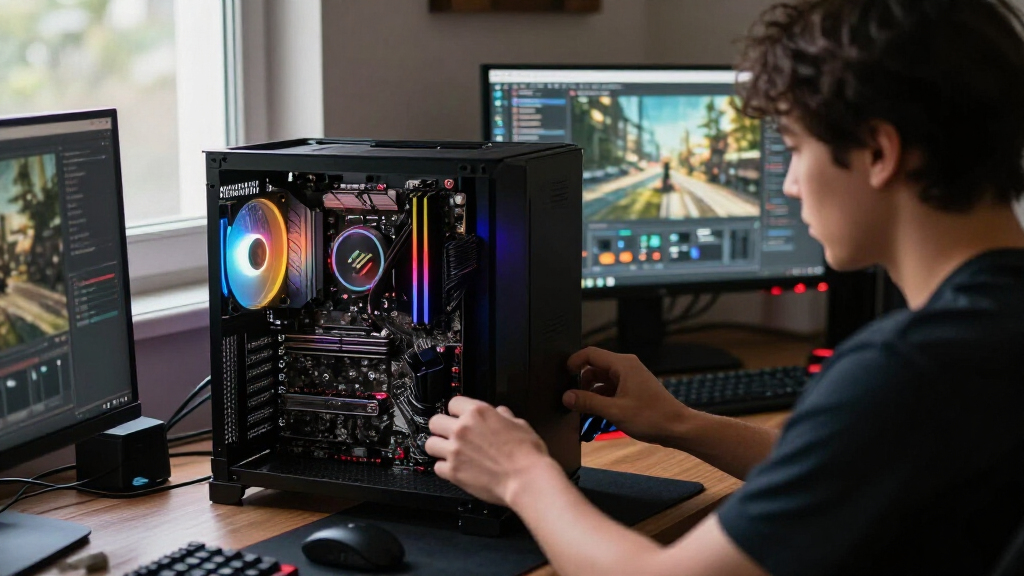
How We Picked
My evaluation process focused on performance benchmarks relevant to gaming, including frame rates and multitasking ability. I also considered build compatibility, power efficiency, and price-to-performance ratios to ensure each CPU offers real value. The ranking reflects a balance between raw power and practical usability for high-performance gaming, with an eye on future-proofing and platform stability. I prioritized CPUs that excel in demanding gaming scenarios while also considering broader system factors like thermals and motherboard support. The final lineup was curated to highlight options across different budgets and performance needs, ensuring there’s a standout choice for every type of enthusiast.
| gaming cpus for high performance pc build | Processor Series |
|---|---|
| Intel Core i9-12900KF Gaming D | Core i9 |
| Intel Core i7-14700KF Desktop | Core i7 |
| Intel Core i9-13900KF Desktop | Core i9 |
| CLX Horus Gaming PC with AMD R | — |
| Intel Core i5-13400 Desktop Pr | — |
| Intel Core i5-13600K Desktop P | Core i5 |
| Intel Core i9-13900KS Desktop | Intel Core i9 |
Factors to Consider When Choosing 13 Best Gaming Cpus For High Performance Pc Builds
Selecting the best gaming CPU for a high-performance build involves more than just raw specs. It’s essential to consider how the CPU’s features align with your gaming style, budget, and future upgrade plans. A well-chosen processor can boost frame rates, reduce bottlenecks, and extend the lifespan of your entire system. Here are key factors to keep in mind when making your decision.Performance and Core Count
For gaming, higher clock speeds often translate directly into smoother gameplay, but core count also matters for multitasking and streaming. Modern CPUs with 8 cores or more generally deliver excellent gaming performance, especially if paired with a capable GPU. However, beyond a certain point, additional cores may yield diminishing returns for gaming alone, so balancing core count with clock speed is vital.
Platform Compatibility and Future Upgrades
Choosing a CPU also means considering the motherboard socket, chipset, and compatibility with future upgrades. Investing in a platform that supports the latest PCIe standards, DDR5 memory, and future CPU generations can save money down the line. Skipping platform compatibility might lead to costly upgrades sooner than expected.
Power Consumption and Cooling
High-performance CPUs tend to consume more power and generate more heat. Ensure your build includes a high-quality cooling solution—air or liquid—to maintain stability and longevity. Overclocking potential can also boost performance but requires additional cooling investments.
Price-to-Performance Ratio
Not all high-end CPUs justify their price tags through proportionate gains in gaming performance. It’s wise to compare benchmarks and reviews to identify CPUs that offer the best value for your specific needs, especially if your budget limits you from opting for the absolute top-tier models.
Integrated Graphics and Overclocking Features
While most high-end gaming CPUs focus on raw performance, some come with integrated graphics, which can be useful for troubleshooting or non-gaming tasks. Additionally, CPUs with unlocked multipliers provide overclocking headroom, offering extra performance if you’re comfortable tuning your system.
Frequently Asked Questions
Is it worth paying extra for an unlocked CPU for gaming?
Unlocked CPUs provide the flexibility to overclock, which can boost gaming performance when paired with adequate cooling and a suitable motherboard. If you enjoy tuning your system or want to squeeze every bit of performance for competitive gaming, paying extra for an unlocked processor makes sense. However, for most gamers who prefer stability and simplicity, a locked CPU still offers excellent performance without the added complexity.
How important is core count versus clock speed for gaming?
For gaming, higher clock speeds often have a more immediate impact on frame rates than core count, especially in titles that are not heavily multi-threaded. That said, modern games are increasingly optimized for multi-core processors, making a balanced approach with at least 8 cores and high clock speeds ideal. Ultimately, the best combination depends on the specific game and whether you’re multitasking or streaming alongside gaming.
Do I need a high-end CPU if I have a powerful GPU?
While a powerful GPU is the primary driver of frame rates, a high-end CPU prevents bottlenecks that can limit performance. Pairing a top-tier GPU with a mid-range CPU might result in underutilized graphics hardware. For the best gaming experience, choose a CPU that matches your GPU’s capabilities, ensuring smooth gameplay without bottlenecks.
Should I prioritize single-core performance or core count?
Single-core performance is critical for many games because it directly influences frame rates. However, as titles become more optimized for multi-core processing, having a higher core count can benefit gaming when streaming or multitasking. Striking a balance—such as a CPU with high clock speeds and enough cores—is generally the best approach for high-performance builds.
How much does motherboard choice influence CPU performance?
The motherboard determines compatibility and can affect features like memory speed, PCIe support, and overclocking potential. A high-quality motherboard with the latest chipset can unlock extra performance and future upgrade paths. Choosing the right platform ensures you get the most out of your CPU, especially if you plan to overclock or upgrade later.
Conclusion
For most gamers seeking the best overall performance, the Intel Core i9-13900KF offers a compelling balance of speed, core count, and future-proofing. Budget-conscious builders should consider the Intel Core i5-13400, which delivers solid gaming without breaking the bank. Enthusiasts aiming for the pinnacle of performance might lean toward the Intel Core i9-13900KS, assuming they’re ready to invest in premium cooling and a high-end motherboard. Beginners or those upgrading existing systems should focus on compatibility and balanced specs, while streamers and multitaskers benefit from higher core counts. By aligning your choice with your specific needs and budget, you’ll maximize your gaming experience in 2026.
As an affiliate, we earn on qualifying purchases.Halloween Picks
halloween