
TL;DR
An XDA Developers writer describes reusing components from an upgraded desktop to build a second PC for his wife, rather than selling the parts. The article says the machine adds a separate gaming system to the household and could serve as a backup or support other uses, including VR; it does not provide VR testing, headset details or performance results.
An XDA Developers writer has described how he reused components left over from a desktop upgrade to build a second gaming PC for his wife, giving the household another machine instead of selling the parts. The account presents the build as a practical way to keep older hardware in use, with the system also available as a backup and potentially for other tasks, including VR; it does not report specific VR tests or results.

Play games on Amazon Luna for your game nights, included with Prime
- A rotating selection of games, no download needed
- Play on TV, laptop or phone
- Fast, free delivery for your gear, too
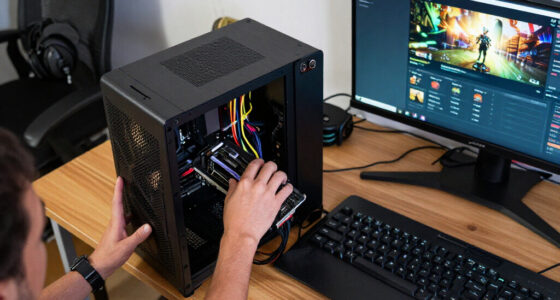
The writer says he had parts left after changing the platform in his main desktop. Rather than replace every component, he assembled the remaining hardware into a compact system. The article identifies an AMD Ryzen 9 9950X, 32GB of DDR4 memory and a Radeon RX 7900 XT as components in the completed PC. It also says the machine uses an ITX motherboard and an NZXT H1 case, though the account does not give a full parts list or explain every component’s prior use.
The system was built for the writer’s wife, who had previously played games on Nintendo Switch consoles and a mini PC connected to a television. The writer says the second desktop has enabled them to play on separate machines, either independently or together. He also regards it as a backup gaming PC and notes that its compact case gives it flexibility around the home.
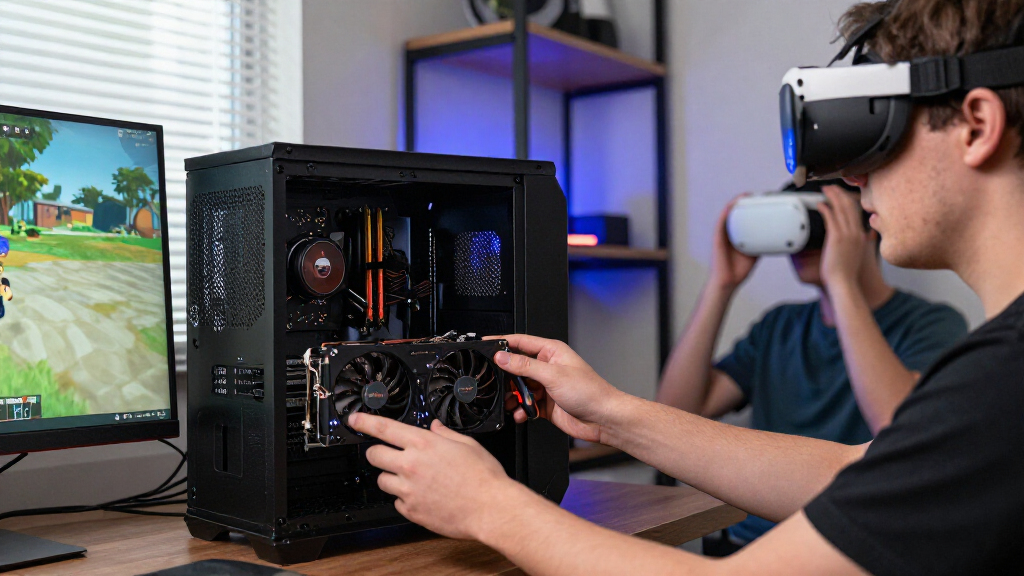
The article’s headline refers to VR, but the supplied account does not specify a headset, VR games, setup steps, frame rates or compatibility testing. It is best understood as a personal report about repurposing a desktop for another user and possible household uses, not a published VR performance review.
PC Reuse · Household Gaming · At a Glance
How I Turned Old PC Parts Into A Second PC For VR
An XDA Developers writer reused components from a desktop upgrade to build a separate gaming PC for his wife. The story makes a case for extending hardware’s useful life, while leaving VR performance untested.
Compact ITX system in an NZXT H1 case, for another player in the household.
The headline references VR; the account does not document a VR test.
01 / Why keep the parts?
A second PC adds more than backup
The value described is specific to one household. The account does not compare resale proceeds with the cost of a new machine.
Two people, two systems
The writer and his wife can play on separate machines, either independently or together.
Another gaming option
The second desktop can serve as a backup if the main PC is unavailable or needs repair.
More life from old parts
Retaining components offered practical use beyond a resale return the writer expected to be lower than their original cost.
Components named
- ProcessorAMD Ryzen 9 9950X
- Memory32GB DDR4
- GraphicsRadeon RX 7900 XT
- Form factor / caseITX · NZXT H1
This is not a complete parts list. The account does not itemize every reused or newly purchased component.
Reusing does not mean zero cost
A similar build may still need a motherboard, case, cooling, storage or other parts. The writer also says he bought new components during his primary desktop upgrade.
Check compatibility first, then weigh the added household use against any remaining expense. No total build cost is provided.
02 / What the report does—and does not—show
VR results and parts details remain unclear
The supplied account does not say that the PC was connected to a VR headset or tested with VR games. It names no headset, resolution, refresh rate, frame rate or compatibility results.
There is also an unresolved processor reference: the system description names a Ryzen 9 9950X, while a later passage mentions a Ryzen 9 5950X as an example of an older capable processor. The article does not clearly identify the 5950X as part of the finished build.
So the report supports a story about repurposing a desktop for another player and possible household uses—not a measured claim about VR capability.
“A PC build never really comes to an end.”
Richard · PC Hardware Lead, XDA Developers
Built for the writer’s wife using components left after an upgrade.
The compact PC could be reassigned; home-lab, storage and media-server uses are mentioned as alternatives, not completed setups.
No headset test, full bill of materials or final build cost is supplied.
03 / The reuse path
From desktop upgrade to shared play
New processor, board, memory, cooler and case for the writer’s primary system.
Some hardware could be reused or kept as replacement components.
ITX motherboard and NZXT H1 case form another desktop system.
His wife gets a gaming PC; the household gains a backup option.
04 / Key questions
What readers can take away
The article is a first-person account, with several details still open for anyone considering a similar build.
Was the PC tested with a VR headset?
No headset model, game test or performance measurement is included. VR testing is not established.
Why keep the older components?
The writer wanted a separate gaming PC for his wife and a backup system, and saw more practical use than selling the parts.
Did the build cost nothing?
No total is given. Reused parts can reduce purchases, but a build may still need additional hardware.
Is the Ryzen 9 5950X installed?
The account does not clearly say. It names a Ryzen 9 9950X in the system description and mentions the 5950X separately.
A Second PC Adds More Than Backup
The example shows one way an upgrade can extend the useful life of hardware that might otherwise be sold or left unused. A second computer can make it easier for two people in a household to play at the same time, and it can reduce reliance on a single machine if that system needs repair. Those benefits are specific to the writer’s household; the article does not compare the build’s cost with selling the parts or buying a new PC.
Repurposing components is not automatically free. A build may still require a case, motherboard, cooling, storage or other parts, and the account says the writer purchased some new components during his own upgrades. For readers considering a similar setup, the relevant calculation is whether the available parts work together and whether the added utility is worth any remaining expense. The author also points to home-lab, network-storage and media-server uses as alternatives, but does not report setting those up on this PC.
Popular right now

De'Longhi Stilosa Compact Manual Espresso Machine with Milk Frother

Sony WH-1000XM6 Wireless Noise-Canceling Headphones, Black

Bose QuietComfort Headphones – Wireless Bluetooth Over-Ear Noise Cancelling Headphones, Petal Pink Limited Edition
As an affiliate, we earn on qualifying purchases.
Parts Left After a Desktop Upgrade
The build followed a change to the writer’s primary computer. He says he moved away from a system based on a Ryzen 9 9950X, citing a desire for more gaming performance and memory for his own workloads. He describes buying a new processor, motherboard and memory for the updated desktop, as well as changing the cooler and case. Some components were therefore left available for another machine.
The account contains a hardware detail that is not fully reconciled: it describes the reused system as using a Ryzen 9 9950X, while a later passage discusses a Ryzen 9 5950X as an example of an older, capable processor. It does not clearly establish that the 5950X is installed in the wife’s PC. The stated parts list for that build names the 9950X, so the two processor references should not be treated as interchangeable.
The writer says resale would have recovered less than the original purchase cost, while keeping the components offered a way to use them. He also notes that retained parts can serve as replacements if a component fails. These are the author’s reasons for keeping the hardware, rather than a measured comparison of resale value, power use or repair savings.
“A PC build never really comes to an end.”
— Richard, PC Hardware Lead at XDA Developers
VR Results and Parts List Remain Unclear
The account does not say whether the second PC has been connected to a VR headset or tested with any VR titles. It gives no headset model, resolution, refresh rate, frame-rate measurements or platform details, so readers cannot use it to judge VR performance. The headline’s VR framing should not be read as proof of a completed VR test.
The exact final parts configuration is also not fully documented. The article names a Ryzen 9 9950X and RX 7900 XT for the system, then separately mentions a Ryzen 9 5950X without clearly identifying it as part of that build. It also does not itemize any newly purchased parts or state the total cost. Those gaps limit conclusions about the build’s price and how easily another reader could reproduce it.
The PC Could Serve Other Uses
The writer says the computer could be reassigned if his wife later prefers a gaming handheld or laptop, leaving the desktop available for another purpose. He also describes the compact ITX system as easy to place around the home and as a backup if his main PC is unavailable.
No further tests, VR setup details or planned hardware changes are provided. The next useful information for readers would be a confirmed parts list, the cost of any additional components, and hands-on results with a named headset and games. Until then, the report supports the case for reusing old hardware in a second household PC, but not a specific claim about VR capability.
Key Questions
What components does the account name for the second PC?
The writer lists an AMD Ryzen 9 9950X, 32GB of DDR4 memory and a Radeon RX 7900 XT, alongside an ITX motherboard and NZXT H1 case. The article does not provide a complete parts list.
Was the PC tested with a VR headset?
The supplied account gives no headset model, VR game tests or performance measurements. It does not establish that the system was tested for VR.
Why did the writer keep the older parts?
He wanted to build a separate gaming PC for his wife and keep the components available as a backup. He also argues that reused hardware can have more practical value than a low resale return.
Did the second PC cost nothing to build?
No. Reusing parts can reduce the amount of new hardware needed, but the article does not provide a total cost and says the writer bought some new components during his desktop upgrade.
Is a Ryzen 9 5950X part of the finished build?
The account does not clearly say so. It names a Ryzen 9 9950X in the system description, then mentions a Ryzen 9 5950X separately as an example of an older processor.
Source: XDA Developers