TL;DR

Get games and gaming gear delivered free — and shop member deals
- Fast, free delivery on millions of items
- Access to Prime Big Deal Days deals on October 6–7
- Prime Video, Amazon Music and more included
Wine is the base compatibility layer that lets Windows apps speak to Linux, while Proton is Valve’s Steam-focused gaming stack built on Wine, DXVK, VKD3D-Proton, and extra patches. For gaming on Linux, the right order is Wine first, Proton second, SteamOS third, then game-by-game compatibility checks through Steam and ProtonDB.
Your Steam library was built for Windows, but a Linux handheld can still make it feel strangely at home.
That trick works because three pieces stack on top of each other: Wine, Proton, and SteamOS. Get the order wrong and Linux gaming sounds like magic smoke; get it right and it starts to feel like plumbing you can actually trust.
You’ll learn what each layer does, where it helps, where it breaks, and what to check before you blame Linux, your GPU, or the game itself.
Wine, Proton, and Linux Gaming Explained in the Right Order
Wine is the base compatibility layer that helps Windows apps speak to Linux. Proton is Valve’s Steam-focused gaming stack built on Wine, DXVK, VKD3D-Proton, and extra patches. SteamOS makes the whole stack feel console-like on Steam Deck.
Get the order right and the magic becomes plumbing.
Your Steam library was built for Windows, but a Linux handheld can still make it feel strangely at home when Wine, Proton, and SteamOS each do their own job.
Translates Windows behavior into Linux calls.
Bundles Wine with Steam and graphics fixes.
Wine first, Proton second, SteamOS third.
DXVK and VKD3D-Proton translate DirectX calls.
Steam Deck status and recent ProtonDB reports.
Online games can fail even when graphics are fine.
The Stack, From Foundation To Handheld
Linux gaming is easiest to understand as layers. Wine handles broad Windows compatibility, Proton focuses that work on Steam games, and SteamOS wraps the result in a handheld-friendly operating system.
The translator
Wine is not an emulator. It translates Windows system calls into calls Linux understands, which helps apps, launchers, installers, tools, and many older games run outside Windows.
The Steam shortcut
Proton is Valve’s gaming-focused compatibility tool for Steam Play. It packages Wine with patches, DXVK, VKD3D-Proton, controller handling, and Steam integration.
The console shell
SteamOS supplies Game Mode, system updates, suspend and resume, controller layouts, and the store experience. Proton still does the Windows-game work underneath.
The Practical Flow
When a Windows Steam game runs on Linux, the work moves through a chain. Each layer removes a different kind of friction before the game reaches your screen.
Game asks Windows
The title expects Windows files, APIs, audio, networking, input, and DirectX graphics.
Wine translates
Windows behavior is mapped to Linux behavior without booting a full copy of Windows.
Proton optimizes
Steam-specific patches and DirectX-to-Vulkan tools reduce setup and improve game compatibility.
SteamOS presents
The Deck experience wraps the game in controller, power, update, and library management.
Side-By-Side: Use The Simplest Layer That Fits
Wine and Proton solve related problems, but they serve different users. The table is a map, not a law: start simple, then change versions or tools only to solve a clear problem.
| Layer | Best Use | What You Usually Touch | Example Scenario | Fit |
|---|---|---|---|---|
| Wine | Windows apps, launchers, tools, installers, and non-Steam games. | Prefixes, DLL settings, installers, logs, and manual tuning. | You run a mod manager for an old RPG outside Steam. | ✓ Control |
| Proton | Windows Steam games on Linux with fewer manual steps. | Steam compatibility settings and Proton version selection. | You force Proton Experimental after a game receives a fresh patch. | ✓ Gaming |
| SteamOS | Console-like play on Steam Deck and handheld sessions. | Game Mode, Deck Verified status, controller layouts, and updates. | You launch a verified game from the couch with a controller. | ~ Wrapper |
| Rumors | Future fixes, promised patches, or untested compatibility claims. | Developer posts, Valve notes, tested builds, and public reports. | A forum says support is coming, but no release proves it yet. | ✗ Evidence |
Where Compatibility Usually Breaks
Performance claims need platform, driver, game, and Proton version context. A game that behaves beautifully on Steam Deck OLED may behave differently on an older laptop or a desktop with stale drivers.
Before a 100 GB download, check the blockers.
Steam Deck verification, Steam community notes, and recent ProtonDB reports can reveal anti-cheat failures, launcher loops, unreadable text, broken cutscenes, or version-specific fixes before you spend the evening watching a progress bar.
The Pre-Install Checklist
Compatibility is not one universal score. The smartest read comes from matching recent reports to your exact hardware, driver stack, game version, and Proton build.
Check Steam Deck status
Verified, Playable, Unsupported, and Unknown labels give a fast first pass, especially for controller support, text readability, and default settings.
Read recent ProtonDB reports
Weight newer reports more heavily than old fixes. Patches can change launchers, cutscenes, performance, and online behavior overnight.
Compare your platform
Steam Deck, AMD desktop, Intel laptop, and NVIDIA rigs can produce different results even when the Proton version is the same.
Change Proton with intent
Use Steam’s default first if the game already runs. Try Experimental or Proton GE when reports point to a specific fix you actually need.
Traceability Chain
When troubleshooting, follow the chain instead of blaming Linux, your GPU, or the game at random. Each checkpoint narrows the problem.
Key Takeaways
- Start with Wine in your mental model: it is the base layer that translates Windows behavior for Linux.
- Use Proton for Steam games because it bundles Wine with gaming-specific fixes, DXVK, VKD3D-Proton, and Steam integration.
- Check Steam Deck status and recent ProtonDB reports before large downloads, especially for online games with anti-cheat.
- Change Proton versions only to solve a clear problem, and note your platform, driver, and game version when judging performance.
- Treat rumors about future support as unconfirmed until developers, Valve, or tested public builds back them up.
Wine compatibility layer for Linux
As an affiliate, we earn on qualifying purchases.
As an affiliate, we earn on qualifying purchases.
Start With Wine, Because Proton Stands On It
Wine is a compatibility layer that lets many Windows programs run on Linux by translating Windows system calls into calls Linux understands. According to the Wine project, Wine is not an emulator; it does not boot a full copy of Windows in the background [1]. It acts more like a live interpreter at a busy train station.
That matters because games constantly ask Windows for things: files, memory, controller input, audio, networking, and graphics. Wine answers those requests on Linux. When it works, a Windows game does not know it left home.
Imagine launching an older visual novel or a lightweight strategy game outside Steam. Wine may be enough by itself. You install the Windows version, pick a Wine prefix, and the game opens in a plain window with familiar fonts and menus.
Core tension: Wine makes Windows software feel less foreign, but it does not make every Windows game feel native.
The tradeoff is control. Wine gives you knobs, logs, and a lot of room to tune things. That freedom helps when you run non-Steam games, mod tools, launchers, or old installers with tiny gray buttons from 2008.
Proton gaming stack for Steam on Linux
As an affiliate, we earn on qualifying purchases.
As an affiliate, we earn on qualifying purchases.
Use Proton When You Want Steam To Do The Heavy Lifting
Proton is Valve’s gaming-focused version of Wine, built into Steam Play so you can install many Windows-only Steam games on Linux and press Play. Valve describes Proton as a compatibility tool for Steam Play that combines Wine with game-focused patches and translation layers [2]. It turns a workbench into a console-style button.
Wine, Proton, and Linux Gaming Explained in the Right Order means you do not treat Proton as a mystery app. Proton packages Wine with pieces such as DXVK for DirectX 9, 10, and 11 translation, plus VKD3D-Proton for many DirectX 12 games. Those layers translate DirectX graphics calls into Vulkan, the low-level graphics API Linux drivers can handle well.
Here is the practical scene: you install Elden Ring on a Steam Deck, tap Play, and Steam chooses a Proton build behind the curtain. You see shader compilation, a black screen for a breath, then the title screen blooms gold and ash. You did not configure Wine by hand; Proton carried the tray.
Performance claims need a platform and version. A game that runs smoothly on Steam Deck OLED with a current stable Proton build may behave differently on a laptop with older NVIDIA drivers. Check the game’s Steam Deck status and recent ProtonDB reports before you call any result universal.
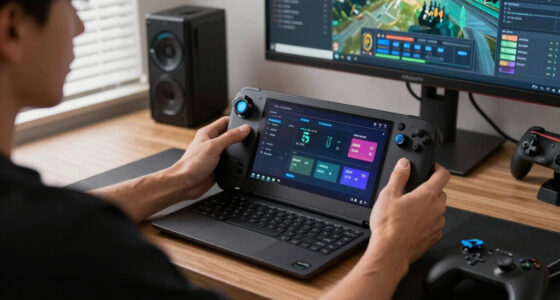
Steam Deck Linux gaming accessories
As an affiliate, we earn on qualifying purchases.
As an affiliate, we earn on qualifying purchases.
See The Difference Fast With This Side-By-Side View
Wine and Proton solve related problems, but they serve different users. Wine gives you a broad Windows compatibility layer for Linux apps and games. Proton gives you a Steam-ready gaming path with fewer manual steps, more bundled fixes, and graphics tools tuned for modern games.
| Layer | Best Use | What You Usually Touch | Example Scenario |
|---|---|---|---|
| Wine | Running Windows apps, launchers, tools, and non-Steam games | Prefixes, DLL settings, installers, logs | You run a mod manager for an old RPG outside Steam. |
| Proton | Playing Windows Steam games on Linux | Steam compatibility settings and Proton version | You force Proton Experimental for a game that just received a patch. |
| SteamOS | Console-like Linux gaming on Steam Deck | Game Mode, Deck Verified status, system updates | You launch a verified game from the couch with a controller. |
The table is a map, not a law. Some players use Proton outside Steam through launchers, and some still use plain Wine for games. The smart move is to start with the simplest layer that fits the job.
As an affiliate, we earn on qualifying purchases.
Know What SteamOS Adds On Top
SteamOS is the Linux operating system layer that makes Proton feel appliance-like on Steam Deck. It handles the handheld interface, system updates, controller layout, suspend and resume, and the Steam store experience. Proton runs the Windows game; SteamOS wraps that game in a living-room shell.
Wine, Proton, and Linux Gaming Explained in the Right Order puts SteamOS after Proton because SteamOS is not the compatibility trick by itself. It is the stage, the lighting, and the controller-friendly doorway. Proton still does much of the Windows-game work underneath.
Think of a handheld session on a train. You wake the Deck, hear the soft click of the sticks, resume a game, and maybe never see the desktop. That smoothness comes from SteamOS tying Linux services, Steam, controller input, and power management into one path.
The exception: SteamOS does not bless every game. Anti-cheat, launchers, codecs, and fresh patches can still break playability. Rumors about future compatibility fixes stay unconfirmed until Valve, the developer, or a tested Proton release proves them in public.
Check A Game Before You Install 100 GB
You can save time by checking compatibility before a huge download. Steam Deck verification, Steam community notes, and ProtonDB reports give you a quick read on whether a game launches, whether text is readable, and whether players needed tweaks. ProtonDB is community-run, so treat reports as useful signals, not official promises [3].
- Check the Steam store page for Steam Deck compatibility and recent developer notes.
- Search ProtonDB for the exact game and sort your mental weight toward recent reports.
- Match your hardware: Steam Deck, AMD desktop, Intel laptop, or NVIDIA rig can give different results.
- Scan for blockers such as anti-cheat failures, launcher loops, unreadable text, or broken cutscenes.
- Pick a Proton version only after you know whether stable, Experimental, or Proton GE helped other players.
Here is the real pain this avoids: you download a 120 GB shooter over hotel Wi-Fi, only to learn the anti-cheat refuses Linux. A two-minute check would have saved an evening of progress bars and fan noise.
Age ratings still matter. If you set up a Steam Deck for a child, do not let compatibility become the only filter. Check the game’s rating, store content notes, and account restrictions before handing over the device.
Use The Right Proton Version Without Guessing
The best Proton version is the one that solves your game’s current problem on your current setup. Stable Proton usually gives you the safest first try. Proton Experimental may help newer releases, while Proton GE can include community patches that have not landed in Valve’s build.
Do not switch versions because a forum post from two years ago sounded confident. A patch can change the whole story overnight. One update may fix cutscenes and break a launcher; another may turn a stuttery mess into smooth glass.
- Start with Steam’s default Proton if the game already runs.
- Try Proton Experimental for a new game, a recent game patch, or a known upstream fix.
- Try Proton GE when recent community reports point to a specific media, launcher, or game patch fix.
- Change one thing at a time so you know what helped.
For example, if a game plays audio but shows a black screen during intro videos, a different Proton build may include media fixes. If the game crashes after a launcher update, a recent ProtonDB thread may point you to a temporary launch option.
Understand Why Some Games Still Refuse To Work
Some Windows games fail on Linux because compatibility is more than graphics translation. Proton can translate many game calls, but anti-cheat systems, launchers, DRM, video codecs, kernel-level drivers, and online services can still block the path. One locked door can stop the whole parade.
Wine, Proton, and Linux Gaming Explained in the Right Order helps you diagnose the failure. If a game never opens, suspect launchers, runtime dependencies, or anti-cheat. If it opens but runs like wet cardboard, look at graphics settings, shader compilation, drivers, and Proton version.
Anti-cheat is the most visible example. Some multiplayer games work because their anti-cheat vendors and developers support Proton. Others do not, even when the single-player engine would run well.
You should mark leaks and rumors carefully here. A claim that a studio plans Linux anti-cheat support is unconfirmed until the developer announces it or players can test it in a released build. Hope is not a compatibility report.
Make Linux Gaming Feel Less Like Tinkering
You make Linux gaming easier by keeping the stack boring and changing settings slowly. Update Steam, keep GPU drivers current through your distribution, prefer recent Proton reports, and avoid piling on random fixes. A calm setup beats a folder full of mystery launch options.
Use a simple rule: fix the symptom you can see. If frame pacing feels uneven, lower heavy settings like shadows, ray tracing, or crowd density first. If a launcher freezes, search that launcher plus the game name before reinstalling the whole operating system.
Here is a practical weekend setup. You install three games: one Deck Verified indie, one unsupported multiplayer title, and one older Windows RPG. The indie starts clean, the multiplayer fails anti-cheat, and the RPG needs Proton GE for video playback. That is not one Linux gaming result; that is three different compatibility stories.
According to Valve’s Steam Deck compatibility system, a game’s status can reflect input, display, seamlessness, and system support, not only raw frame rate [4]. That means a playable game may still need tiny text fixes, controller remapping, or a keyboard pop-up.
Frequently Asked Questions
Is Proton better than Wine for gaming?
Proton is usually better for Steam games because Valve tunes it for gaming and integrates it directly into Steam Play. Wine still matters for non-Steam games, Windows tools, mod managers, and launchers outside Steam.
Can every Windows game run on Linux through Proton?
No. Many Windows games run well through Proton, but anti-cheat, launchers, DRM, codecs, and fresh updates can still break compatibility. Check recent Steam and ProtonDB reports for the exact game before you download.
Do I need the command line for gaming on Linux?
Not for most Steam games. Proton works through Steam’s normal interface, especially on SteamOS and Steam Deck. You may still use the command line for advanced troubleshooting, non-Steam games, or custom tools.
What are DXVK and VKD3D-Proton?
DXVK translates DirectX 9, 10, and 11 to Vulkan, while VKD3D-Proton handles many DirectX 12 workloads. They help Windows games talk to Linux graphics drivers in a language those drivers can run efficiently.
Is native Linux gaming better than Proton?
A good native Linux version can be excellent, but Proton often gives you access to a much larger Windows game library. The better choice depends on the game, the port quality, your hardware, and how recently the game was patched.
Conclusion
Remember the order: Wine is the foundation, Proton is the gaming tool, and SteamOS is the polished room you play in. Once you see the stack, Linux gaming stops looking like a magic trick and starts looking like a set of parts you can reason about.
Before your next giant install, check the reports, pick the plainest working path, and let the game earn its space on your drive.
Fall Picks
fall essentials
As an affiliate, we earn on qualifying purchases.